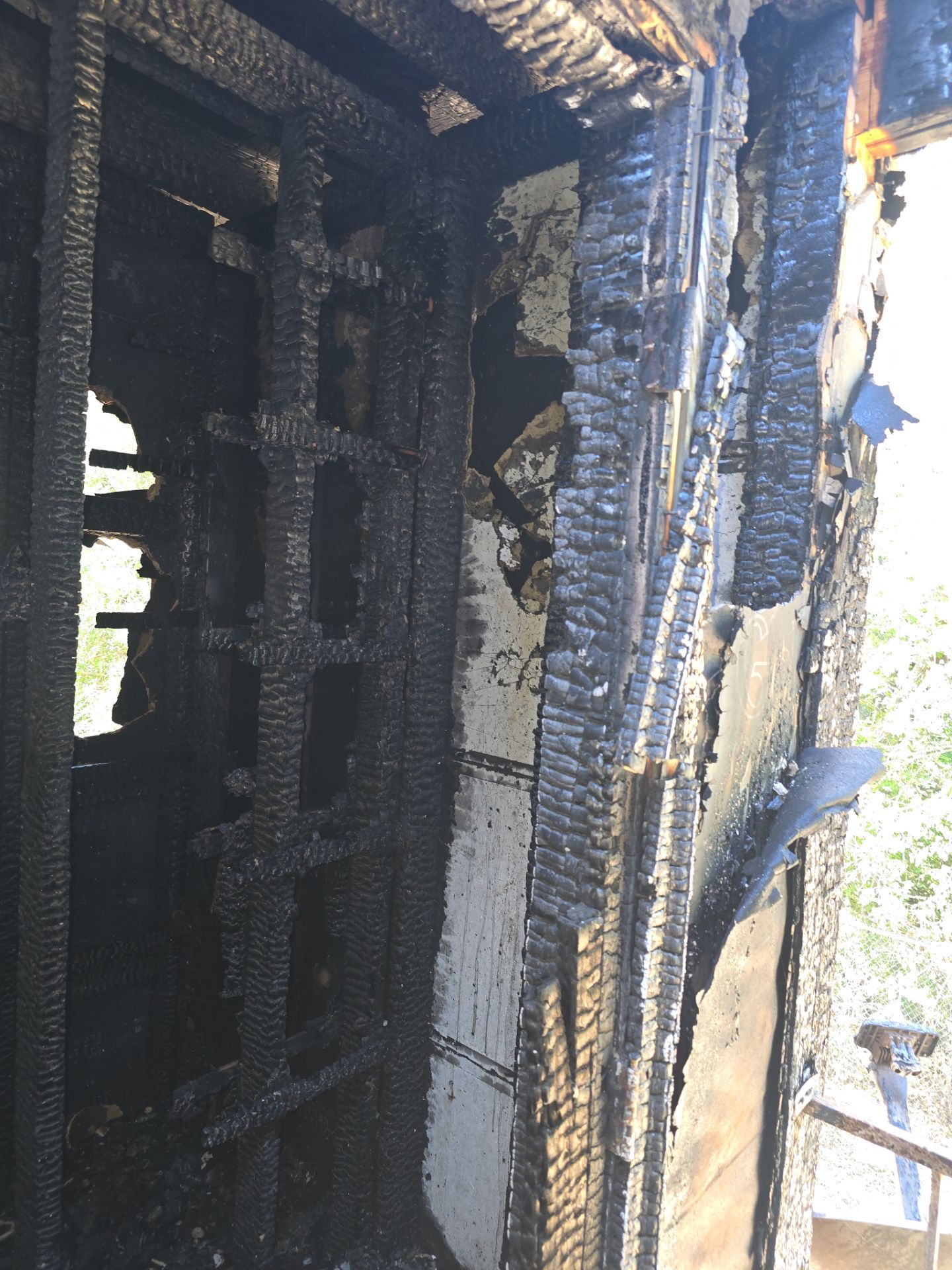
How to Start a Commercial Tornado Damage Claim
For commercial tornado damage claims, property owners should first secure the site and prevent further damage when it is safe to do so. They should then photograph roof and building-envelope damage, notify the insurer promptly, and check the policy for proof-of-loss deadlines, wind coverage, deductibles, and business interruption coverage. Repair estimates, expense records, and a detailed log of all communications help establish the full scope of the claim.
A tornado loss can involve far more than immediately visible structural damage. Owners of offices, warehouses, retail centers, industrial parks, and multifamily properties may also need to document damaged equipment, interrupted operations, lost rental income, or compromised interior assemblies. Proper coverage and claim payment depend on the specific policy terms, timely statutory compliance, and the technical evidence supporting each element of the loss.
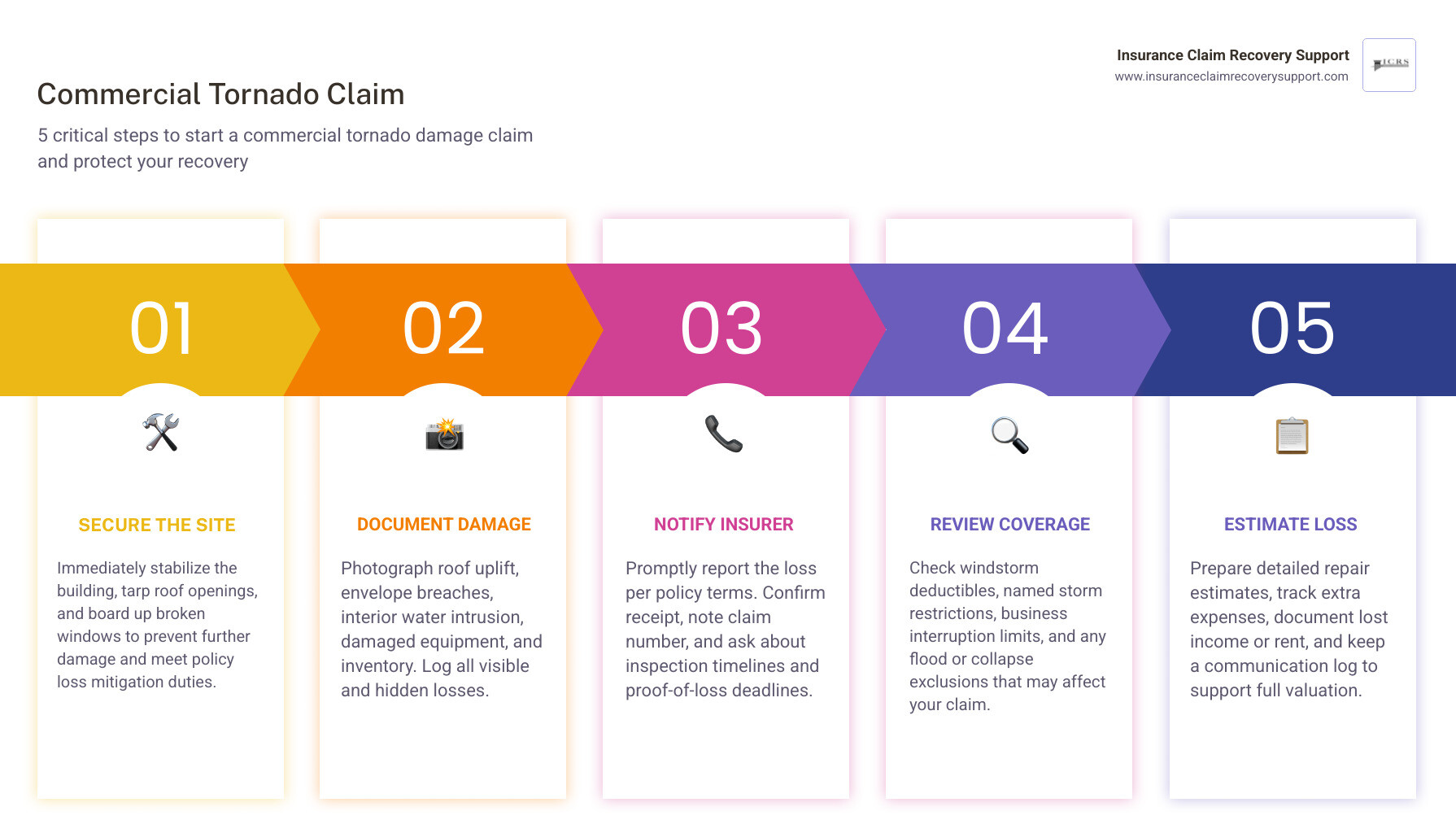
Commercial tornado damage claims definitions:
- commercial property damage claims
- business insurance property damage
- denied insurance claim for fire damage to commercial property
Navigating Commercial Tornado Damage Claims from Assessment to Settlement
Recovering from catastrophic storm destruction requires an organized, comprehensive approach. Commercial policyholders must balance immediate emergency stabilization with rigorous, forensic loss documentation. Understanding commercial property damage helps owners protect their legal rights and avoid common coverage pitfalls throughout the adjustment process.
- Secure the Property: Board up compromised openings, tarp damaged low-slope roofs, secure perimeter fencing, and extract standing water to mitigate secondary mold, moisture intrusion, and ongoing structural deterioration.
- Review Policy Conditions: Identify specific post-loss duties, notification windows, proof-of-loss deadlines, and required endorsement forms.
- Issue Written Notice: Notify the insurance carrier in writing to start the formal statutory claim clock and create an indisputable record.
- Compile Independent Scopes: Do not rely solely on the carrier’s field adjuster to discover hidden structural, mechanical, roofing, or envelope damage.
Documenting Complex Commercial Tornado Damage Claims Step-by-Step
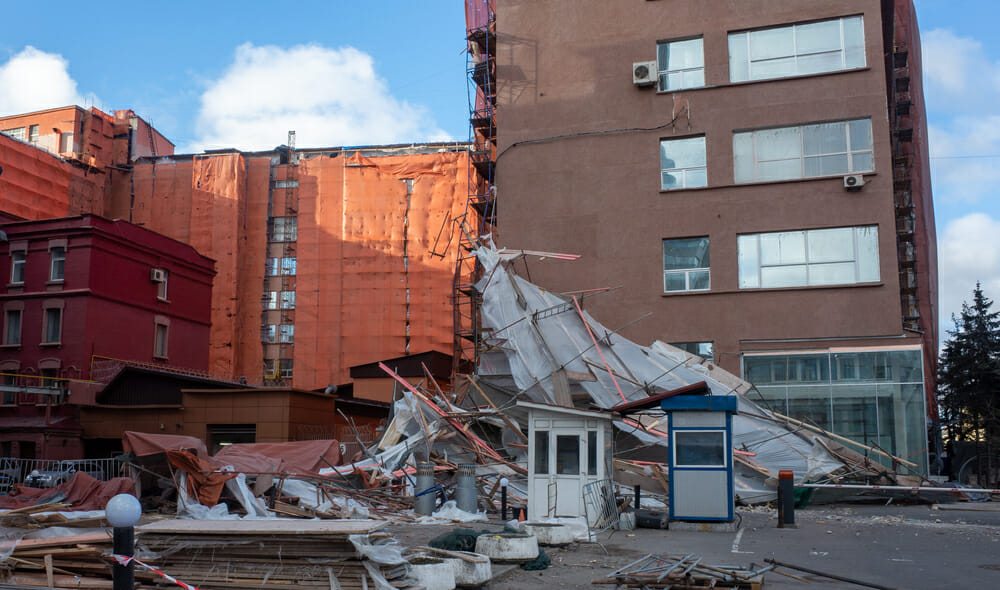
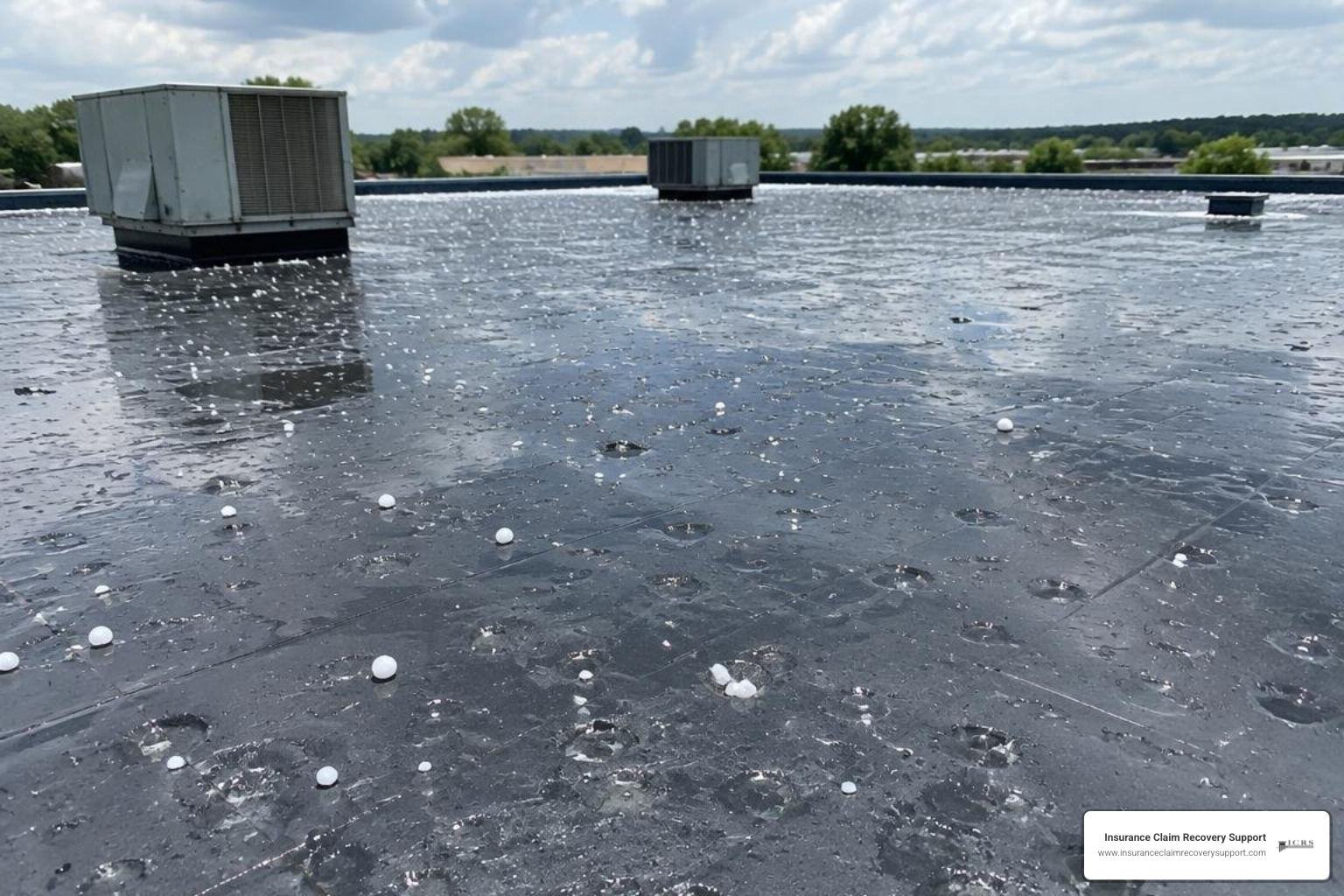
Tornado winds generate severe uplift and lateral pressure forces that compromise commercial roof membranes, parapet walls, rooftop HVAC units, and primary structural connections. Following a systematic storm damage claim process ensures every affected component is captured in the initial scope of work.
Policyholders must maintain contemporaneous logs of all contractor visits, structural inspections, and carrier correspondence. Valuation methods significantly affect payouts:
| Valuation Factor | Actual Cash Value (ACV) | Replacement Cost Value (RCV) |
|---|---|---|
| Definition | Cost to repair or replace minus physical depreciation | Full cost to repair or replace with like kind and quality |
| Initial Payout | Initial check issued by insurer after deductible | ACV is paid first; depreciation withheld until repairs finish |
| Depreciation Recovery | Not recoverable under ACV-only terms | Released after proof of actual incurred repair costs |
| Code Upgrades | Typically excluded unless endorsed | Covered under Ordinance or Law limits when repairs commence |
Evaluating Business Interruption and Time Element Losses
Structural restoration is only one part of recovery. High-wind disasters often halt commercial operations, displace commercial tenants, disrupt supply chains, and destroy ongoing revenue streams. Properly structured business interruption claims compensate owners for net income losses, continuing normal operating expenses, and extra expenses incurred to minimize business downtime.
Time element disputes often involve multi-million-dollar gaps between insured calculations and carrier audits. In a notable dispute, a Tennessee federal court analyzed multi-million dollar time element damages where an insurer paid $17,768,200 for direct physical damage, but the insured pursued an additional $23,315,448 in lost profits, extra expenses, and professional fees. Proving these complex claims requires detailed historical profit-and-loss statements, production records, inventory tracking, and expert forensic accounting analysis.
Understanding Covered Causes of Loss, Policy Definitions, and Endorsements
Policyholders must examine whether their commercial insurance covers tornado damage through standard windstorm provisions or restricts it via specialized exclusions. Commercial property forms classify perils into basic, broad, or special causes of loss, with specific deductibles applying to wind and hail. Anti-concurrent causation language can also impact claims when wind and water damage occur simultaneously.
Named Storm Restrictions vs. Tornado Wind Coverage Disputes
A frequent point of contention is whether wind damage falls under a restrictive hurricane or named storm endorsement. Policy definitions dictate how courts evaluate coverage and apply separate percentage-based deductibles.
For example, a Texas federal court ruled on Named Storm coverage limitations, finding that an endorsement unambiguously limited recovery to events officially named by the National Hurricane Center. Because the damaging tornado was not part of a Named Storm system, coverage was denied under that specific form. Navigating complex state-specific interpretations is one reason why commercial claims are different in Texas and require careful review of endorsement hierarchies and policy definitions.
Commercial Lease Obligations and Major Casualty Clauses
Commercial leases add another layer of complexity when property is leased to third-party operators. Leases typically contain “major casualty” clauses defining rights and rent abatement provisions if restoration cannot be completed within a set period (often 180 to 270 days).
Disputes frequently emerge when insurance policy limits fall short of true reconstruction costs. An Arkansas federal court ruling on replacement cost gaps highlighted a scenario where a tenant maintained only $5,149,999 in property insurance on a building with estimated replacement costs ranging between $9.4 million and $27.5 million. The court held that the tenant breached its lease obligation to maintain full replacement cost insurance, setting damages as the difference between the insurance payout and actual replacement cost.
Overcoming Insurer Delays, Underpayments, and Bad Faith Tactics
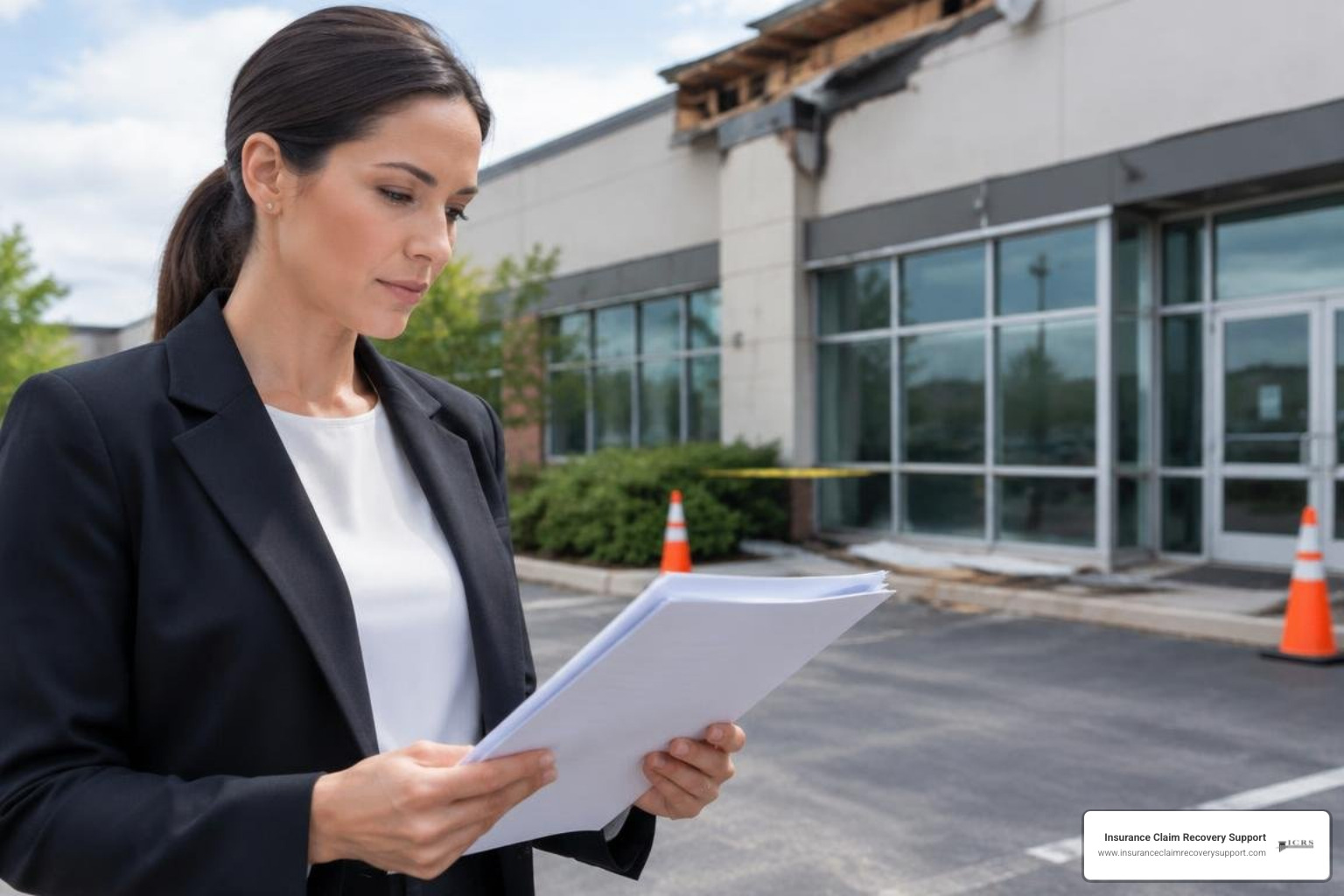
Commercial property and multifamily tornado claims can encounter delays caused by adjuster turnover, engineering reviews, and disputes about the scope of damage. Policyholders should keep a detailed claim file, respond to written requests, compare carrier estimates with independent scopes, and ask for written explanations of coverage or valuation decisions. These records can help identify whether the dispute concerns documentation, policy interpretation, or the amount of loss and can support escalation under the policy or applicable state law.
In severe scenarios, extended delays and unreasonable claim handling can create a coverage dispute that requires closer review. For instance, a hotel owner filed a lawsuit over a 317-day tornado claim delay following an April 2024 storm. Claim-handling deadlines and available remedies vary by jurisdiction and policy, so commercial policyholders should review their policy terms and state requirements before deciding how to escalate. Commercial and multifamily policyholders facing systemic delays can review a bad faith insurance guide to evaluate their legal remedies and strategic options.
Resolving High-Stakes Coverage Disputes in Commercial Tornado Damage Claims
When carriers undervalue commercial roof assemblies or miss structural connection failures in commercial and multifamily buildings, policyholders must take formal steps to correct the scope.
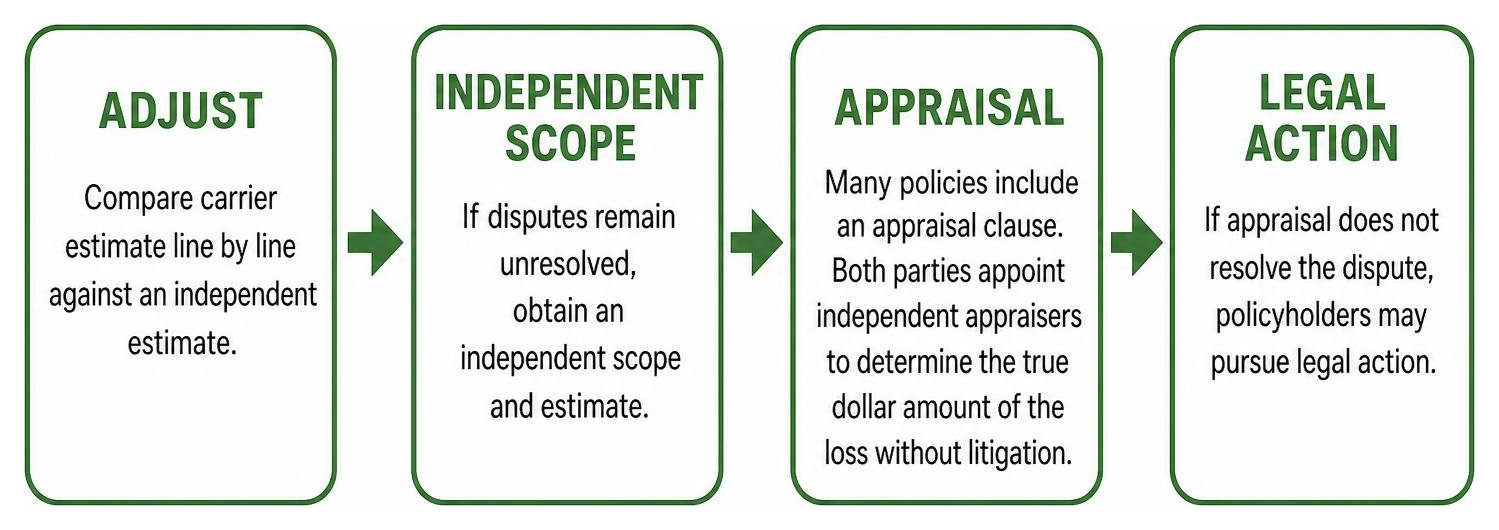
When dealing with denied or underpaid insurance claims, owners should compare the carrier’s estimate line by line against an independent estimate. If disputes remain unresolved, many commercial policies include an appraisal clause that allows both parties to appoint independent appraisers to establish the true dollar amount of the loss without full litigation.
Leveraging Expert Engineering and Cost Estimation Testimony
Proving complex wind and structural claims for commercial and multifamily assets requires qualified technical experts. Structural engineers evaluate foundation shifting, frame displacement, and roof uplift, while certified cost estimators calculate accurate regional material and labor pricing.
To withstand legal scrutiny under Daubert standards, expert testimony must rely on scientifically sound methodologies, such as non-destructive testing, core sampling, and infrared moisture scans. Knowing how to negotiate with insurance adjusters starts with presenting an unassailable, expert-backed claim file.
Frequently Asked Questions About Commercial Tornado Damage Claims
Does a commercial property policy automatically cover all tornado wind and structural collapse damage?
Most standard “all-risk” commercial property policies cover windstorm and structural collapse unless specifically excluded. However, policies often separate wind damage from storm surge, surface water, or flooding, and specific endorsements may impose higher percentage-based windstorm deductibles. Reviewing tornado damage claims coverage requires checking all endorsements, anti-concurrent causation clauses, interior water intrusion provisions, and water exclusions.
What statutory deadlines must insurers follow when adjusting commercial tornado losses?
Statutory deadlines vary by state. Many jurisdictions require insurers to acknowledge claims within 15 days, inspect property within a reasonable window, and approve or deny claims within 15 to 30 business days after receiving a sworn proof of loss. Failure to meet statutory deadlines without reasonable justification can expose carriers to statutory interest and attorney fees.
How do commercial lease agreements affect insurance payouts after a major tornado loss?
Commercial lease covenants dictate whether the landlord or tenant is responsible for insuring the building envelope, mechanical systems, tenant improvements, and betterments. Leases also govern who receives insurance proceeds, whether rent abates during rebuilding, and when parties may terminate the agreement. Understanding commercial property damage legal remedies is crucial when lease obligations conflict with actual policy payouts or insurer valuations.
Conclusion
Managing large-scale commercial tornado losses requires detailed evidence, accurate damage scoping, and a thorough understanding of policy language. Insurance Claim Recovery Support LLC represents commercial property owners, multifamily operators, and asset managers in qualifying large-loss property claims of $250,000 or more after the deductible, preparing the technical and financial documentation needed to pursue a full and fair settlement.
For property decision-makers navigating complex storm losses, securing professional commercial claim help ensures their interests are independently protected throughout the adjustment process.