Your First Steps After a Commercial Property Loss
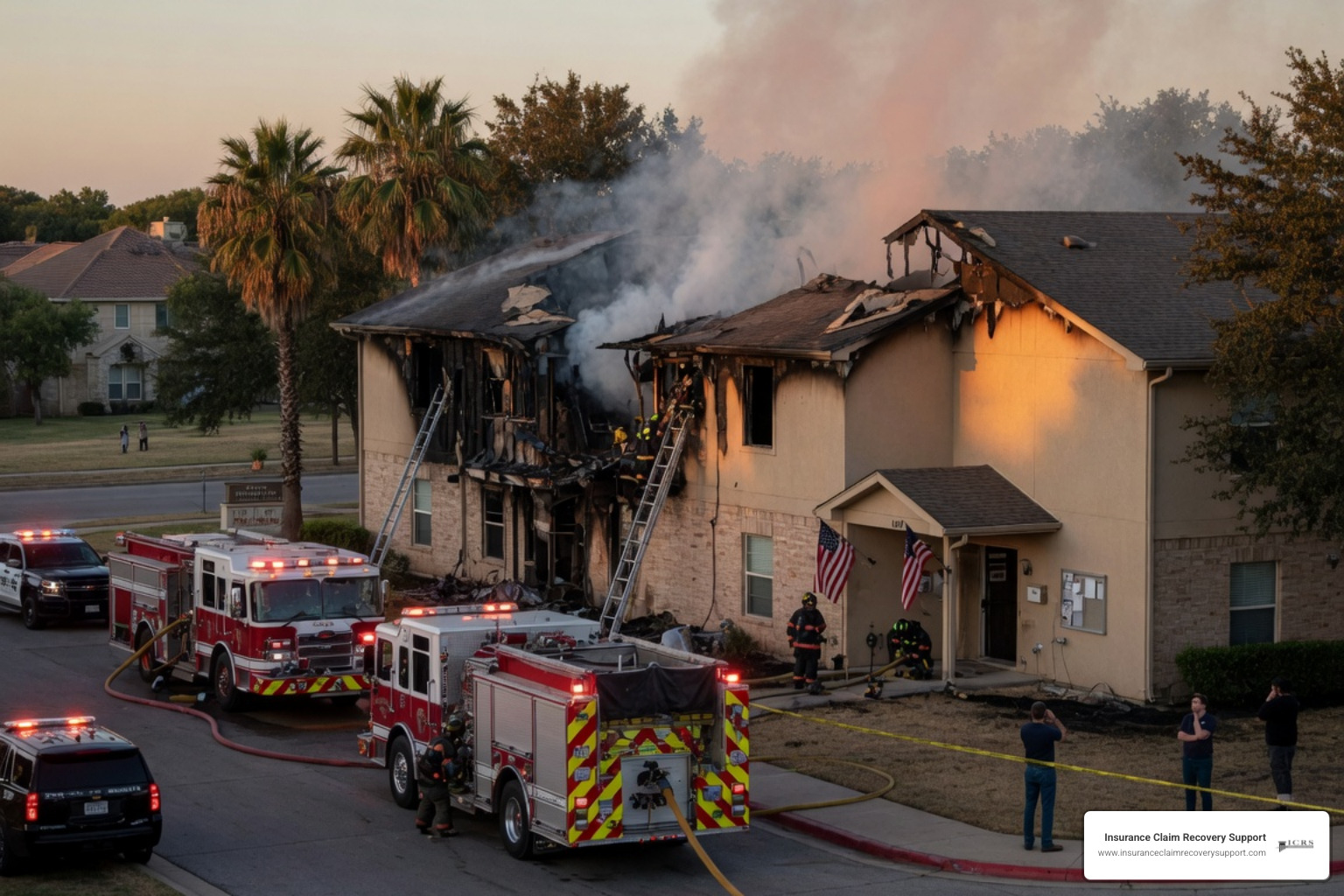
When an unforeseen event like a fire, storm, or flood devastates your business property, the aftermath can be overwhelming. Such events cause significant operational delays and revenue loss, making it critical to understand your options.
Here’s when to consider hiring a commercial property damage claims attorney:
- If your claim is denied, delayed, or significantly undervalued by your insurer.
- When facing complex policy language or disputes over coverage.
- If your business interruption losses are substantial.
- For damage resulting from catastrophic events like major fires, storms, or floods.
- If you suspect your insurance company is engaging in bad faith tactics.
Dealing with commercial property damage is complex. Since insurance companies are for-profit businesses aiming to minimize payouts, expert guidance is invaluable.
I’m Scott Friedson, a Multi-State Licensed Public Adjuster and CEO of Insurance Claim Recovery Support (ICRS) LLC. With over 15 years of experience, I’ve settled hundreds of millions in property damage claims for commercial and multifamily property owners. We often increase claim recoveries by 30% to over 3,800% and help clients avoid unnecessary litigation. My team at ICRS is dedicated to ensuring policyholders receive the maximum benefits they are entitled to.
Commercial property damage claims attorney glossary:
The Professional’s Role: When to Hire a Commercial Property Damage Claims Attorney
When your business property is damaged by a fire, storm, or burst pipe, the challenge of dealing with your insurance company can be daunting. This is where professional help becomes essential.
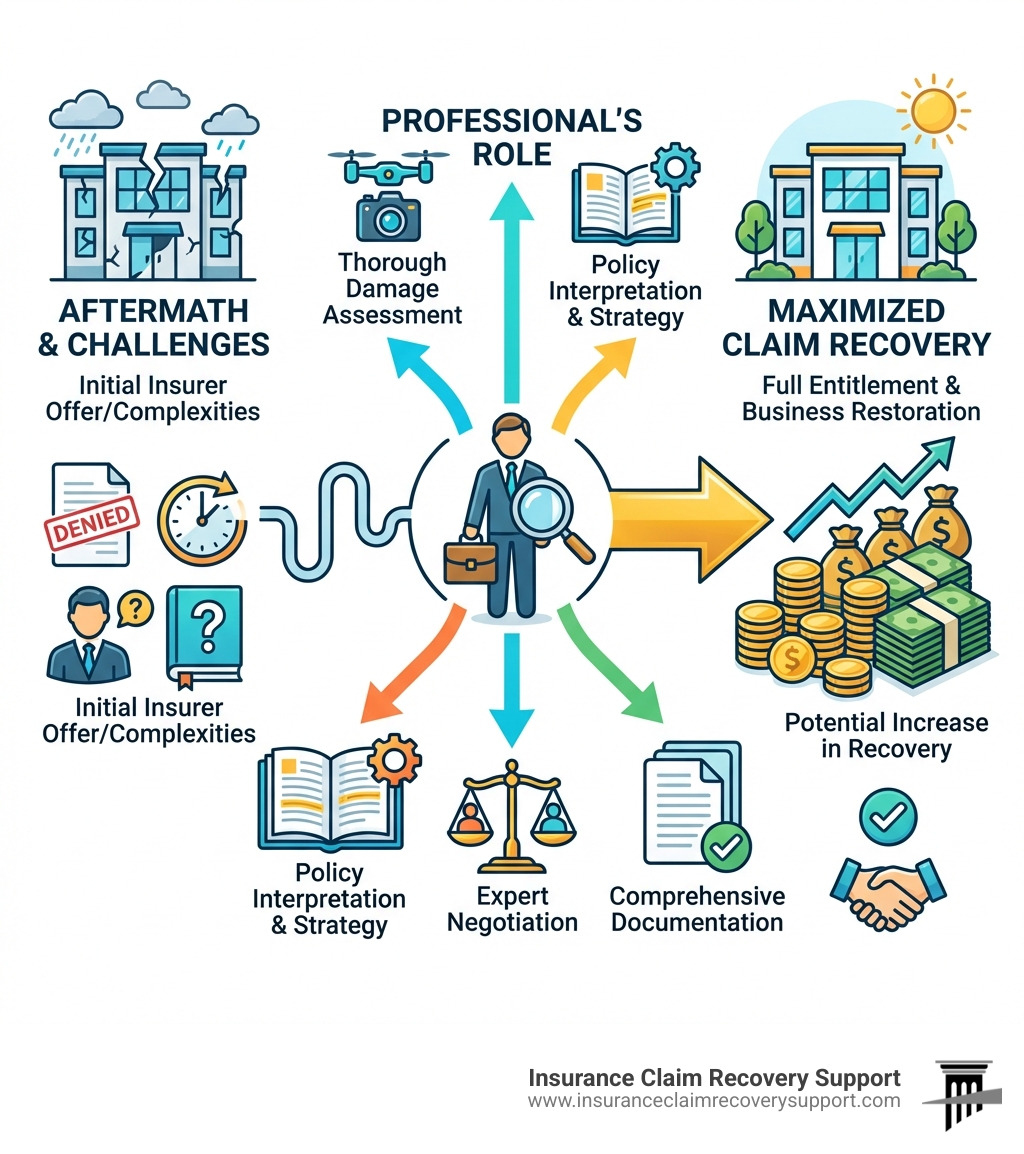
Insurance companies are for-profit businesses, which can lead to claim denials, underpayments, or delays. They may use complex policy language to their advantage. An advocate like a commercial property damage claims attorney or a public adjuster levels the playing field, interprets policy terms, and negotiates on your behalf to ensure you receive full recovery. We are here to help you steer these disputes. For more information, see our page on insurance claims dispute assistance.
The Litigation Path: What a Commercial Property Damage Claims Attorney Does
When negotiations fail, legal action may be necessary. A commercial property damage claims attorney then steps in to represent your interests in court.
An attorney is typically hired when an insurer denies a claim, refuses to pay a fair amount, or engages in “bad faith” tactics like breach of contract or unfair settlement practices. If an insurer violates your rights to limit your payout, it’s time to contact an attorney specializing in these claims.
The litigation process involves:
- Legal Findy: Attorneys gather evidence, interview witnesses, and exchange information with the insurance company’s legal team.
- Negotiation: Attorneys continue to negotiate with the insurer, often leading to a settlement before a trial.
- Court Representation: If a settlement cannot be reached, the attorney will represent your business in court.
Hiring an attorney is often a last resort but necessary when an insurer is uncooperative. Insurance companies have vast legal resources, putting unrepresented claimants at a disadvantage. However, litigation can be a long and costly process. For a deeper dive into this, visit our guide on can you sue your insurance company.
| Feature | Lawsuit (Attorney-Led) | Public Adjuster-Led Claim (ICRS) |
|---|---|---|
| Primary Goal | Enforce policy, seek damages (including bad faith penalties) | Maximize settlement, avoid litigation |
| Timeline | Can take years (findy, trials, appeals) | Weeks to months (negotiation, resolution) |
| Cost | Attorney fees (contingency or hourly), court costs | Public adjuster fees (percentage of settlement) |
| Focus | Legal dispute resolution, court proceedings | Claim preparation, negotiation, policy interpretation |
| Risk | High risk of time, cost, uncertain outcome | Low risk, high success rate without litigation |
| Outcome | Court judgment or settlement | Maximized settlement |
An Alternative to Lawsuits: The Public Adjuster’s Approach
Many property owners prefer an alternative to lengthy court battles. A public adjuster, like us at Insurance Claim Recovery Support (ICRS), can resolve claims efficiently. We specialize in maximizing settlements and avoiding litigation, with a 90% success rate in settling claims without lawsuits.
A public adjuster is a licensed professional who represents only the policyholder. We advocate for you at every step, handling the entire claim process to save you time and stress.
Our approach includes:
- Policyholder Advocacy: We protect your rights and ensure your voice is heard.
- Maximizing Settlements: Our expertise helps identify all covered damages, often significantly increasing initial settlement offers.
- Avoiding Litigation: We resolve disputes through expert documentation and negotiation, avoiding costly lawsuits.
- Damage Documentation: We build a strong case by carefully documenting all damage with photos, videos, and reports.
- Policy Interpretation: We decipher complex policy language and challenge insurer misinterpretations.
- Negotiation with Insurer: We manage all negotiations, countering lowball offers and unfair denials.
Engaging a public adjuster early in a large loss claim is a strategic move to protect your rights and maximize recovery. Our expertise is trusted by property managers, commercial owners, and various institutions across Texas, Florida, and other states we serve. Learn more about what we do as A Public Adjuster.
Common Insurance Company Problems and How to Overcome Them
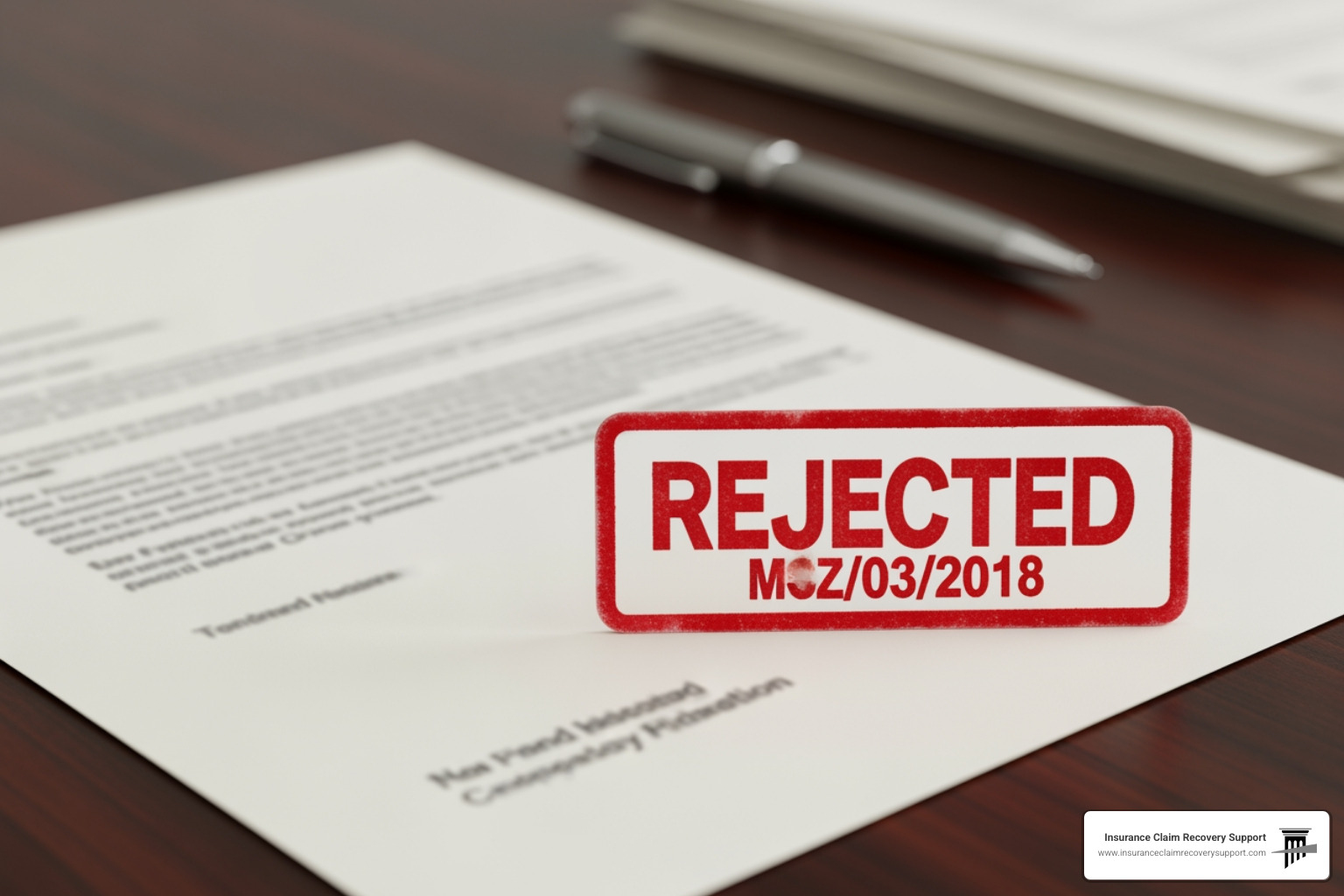
Even if you pay premiums diligently, your insurer may try to minimize your payout. This can lead to several common problems:
- Claim Denials: Your claim may be denied for reasons like non-payment or suspected fraud. However, denials can also stem from adjuster errors or bad faith.
- Underpaid Claims: The insurer may offer a “low-ball” settlement that doesn’t cover the full cost of repairs.
- Delayed Payments: Unreasonable delays in processing your claim can severely impact your business operations.
These issues can be “bad faith tactics,” such as providing misleading information, ignoring evidence, or failing to explain a denial. When your insurer fails to support you, we step in.
- Challenging Denials: We analyze the reason for denial, build a strong counter-argument with evidence, and appeal the decision. We help you steer the complexities of a potential lawsuit for bad faith. Get help with denied claim.
- Fighting Underpayments: We work with experts to accurately value your damages and counter lowball offers with comprehensive documentation to secure the full recovery you deserve.
- Expediting Delayed Claims: We hold insurers accountable to legal deadlines, like the Texas Prompt Payment of Claims Act (TPPCA), which can impose penalties for delays. This ensures timely processing. Find more on underpaid, delayed insurance claim.
Our proactive approach ensures your insurer honors its policy, allowing you to focus on your business.
Your Comprehensive Guide to the Commercial Claims Process
Navigating the insurance claims process after commercial property damage can feel like a full-time job. Understanding the steps can lead to a smoother recovery.
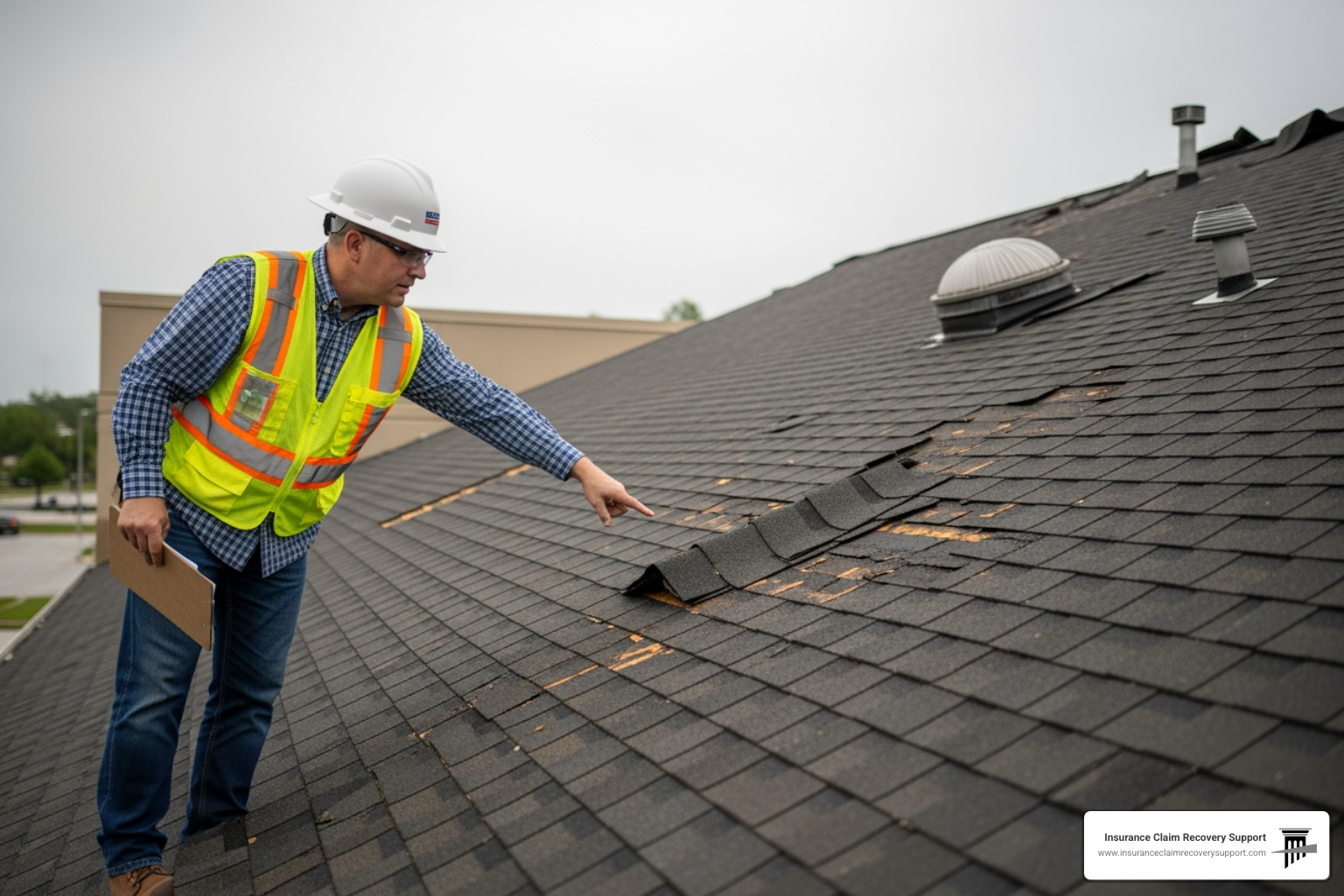
The process involves key stages from documentation to settlement. We guide you through each one, ensuring nothing is overlooked, as detailed in our guide on the hurricane insurance claim process.
Step 1: Secure, Document, and Mitigate the Damage
Your immediate actions after property damage can significantly impact your claim’s success.
- Safety First: Ensure the safety of all personnel. Evacuate if necessary before assessing the damage.
- Document Everything: Before any cleanup, thoroughly document all damage with photos and videos. Create an inventory of all damaged property and equipment.
- Prevent Further Damage (Mitigation): You are required to take reasonable steps to prevent further damage, like tarping a roof. Keep all receipts for these mitigation expenses. See our page on flood cleanup for tips.
- Notify Your Insurer: Report the damage to your insurer as soon as possible to avoid potential denial for late reporting.
- Keep Damaged Materials: Do not discard damaged materials until your claim is settled, as they may be needed for inspection.
- Review Your Policy: Familiarize yourself with your policy’s coverage and limits. We will conduct a thorough review as well.
- Cooperate with Adjusters: Cooperate with the insurance company’s adjuster, but remember their loyalty is to their employer. Be cautious with your statements.
- Prepare a Sworn Proof of Loss (SPOL): If requested, you must submit a Sworn Proof of Loss (SPOL), a formal, sworn statement detailing your claim.
For proactive measures, consider reviewing guidance on disaster preparedness for businesses. Resources like Guidance on disaster preparedness from Ready.gov can offer valuable insights.
Step 2: Understanding What You Can Recover
Understanding the full scope of what your policy covers is critical. We work to ensure you recover everything you’re entitled to.
What you can typically recover includes:
- Repair and Replacement Costs: Costs to repair or replace the damaged building, equipment, inventory, and fixtures.
- Business Personal Property (BPP): Coverage for the contents of your building, such as furniture and supplies.
- Business Interruption Claims: If damage forces a shutdown, this coverage can compensate for:
- Lost Revenue: Lost net income during the shutdown.
- Continuing Expenses: Ongoing expenses like rent, utilities, and payroll.
- Extra Expenses: Costs to operate from a temporary location or minimize the shutdown. This is key in a Commercial Large Loss Claim.
- Civil Authority Coverage: Compensation for lost income if a government order prevents access to your property.
- Cleanup Costs: Costs for debris removal and site cleanup.
- Incidental Expenses: Related costs like temporary security.
We account for all aspects of your loss, from structural damage to business interruption. Our expertise in areas like fire insurance claim ensures every detail is considered for your maximum recovery.
When to Hire a Commercial Property Damage Claims Attorney vs. a Public Adjuster
Understanding when to hire a public adjuster versus a commercial property damage claims attorney is crucial. Both are advocates, but their roles differ.
When to Hire a Public Adjuster (like ICRS):
You should hire a public adjuster to maximize your claim, avoid litigation, steer complex policies, and fight delays or underpayments. Our 90% settlement success rate without lawsuits demonstrates our ability to resolve claims through expert negotiation. We specialize in large-loss claims like fire, hurricane, and business interruption for a wide range of commercial clients. For more, visit our page on Commercial Property Damage.
When to Consider a Commercial Property Damage Claims Attorney:
Consider hiring a commercial property damage claims attorney if your claim is formally denied after negotiation fails, you suspect bad faith from the insurer, or the case involves complex legal issues beyond policy interpretation. An attorney is also necessary if you are facing a lawsuit related to the damage.
Engaging a public adjuster early often prevents the need for an attorney. We build a comprehensive case to resolve claims efficiently. However, if a legal dispute is unavoidable, we can advise on when to bring in legal counsel. Contact us for professional claims help for a free consultation.
Learn more about the benefits of a public insurance adjuster at http://www.whatisapublicadjuster.com
Fact vs. Myth: Common Questions About Commercial Property Damage Claims
Navigating commercial property damage claims can be confusing. Let’s separate fact from fiction.
FAQ: Do I always need an attorney to resolve my claim?
Myth: No. A public adjuster can often resolve your claim without litigation. At ICRS, we have a 90% success rate in settling claims without lawsuits, saving you the time and expense of court.
FAQ: Can a public adjuster really help me avoid a lawsuit?
Fact: Absolutely. By preparing a thorough claim and using expert negotiation, we resolve disputes before they escalate into legal battles, saving you stress and legal fees.
FAQ: What if my claim is denied or underpaid?
Fact: A denial or underpayment is a signal to get professional help. We review the insurer’s decision, gather evidence, and dispute the outcome on your behalf. Often, denials are overturned and low offers are significantly increased once an advocate is involved.
FAQ: How long does the claims process take?
Myth: There’s no fixed timeline. Simple claims may take weeks, but large commercial losses can take months. Laws like the Texas Prompt Payment of Claims Act set deadlines, but delays can happen. Our role is to manage the process and hold the insurer accountable to minimize delays.
FAQ: What documentation do I need to support my claim?
Fact: Comprehensive documentation is the backbone of a successful claim. You’ll need:
- Photos and Videos: Extensive visual evidence of all damage.
- Inventory: A detailed list of all damaged property, equipment, and inventory.
- Receipts: For all expenses related to temporary repairs and mitigation.
- Repair Estimates: At least two independent estimates from qualified contractors.
- Business Financial Records: For business interruption claims, you’ll need financial documents to prove lost income.
- Sworn Proof of Loss (SPOL): A formal document detailing your claim, if required.
Thorough documentation makes it harder for an insurer to deny or undervalue your claim. We guide you in gathering and organizing everything needed to present a powerful case.