

Are Public Adjuster Fees Tax Deductible? A Guide for Business Owners
Learn how public adjuster fees are tax deductible for property owners and how to report them on Form 4684.

Read practical articles for commercial and multifamily policyholders, organized around the claims and property issues they face.
Browse the newest articles below or go straight to a loss guide. New articles continue to appear in the live feed.
Current property claim insights, guides, and commentary.
Tell ICRS what happened and where the claim stands.
Insurance Claim Recovery Support, LLC · Lakeway, Texas · Texas public adjuster agency license #1670060 · Agency NPN #16144334.

Learn how public adjuster fees are tax deductible for property owners and how to report them on Form 4684.

Prepare records, questions and a clear inspection agenda after a property fire, with practical steps for owners and property managers.

Navigate a church hail damage claim after severe weather with expert steps on evidence, denials, and policy deadlines to protect your ministry.
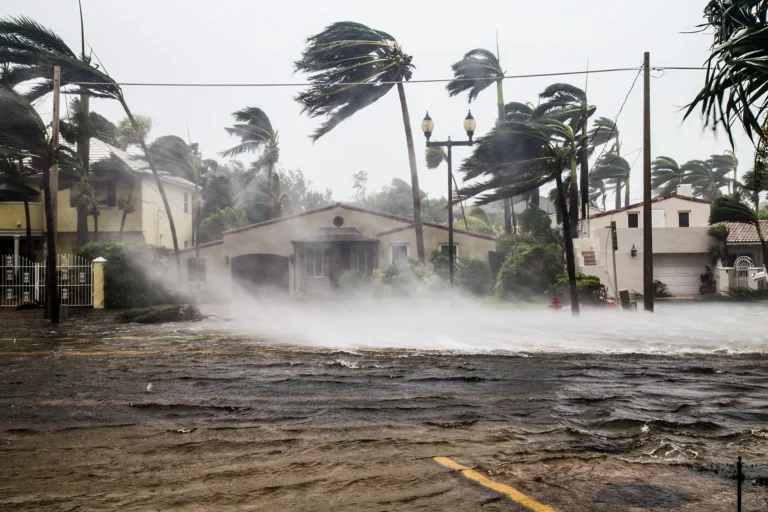
Discover how often it floods in San Antonio, with 7.46 annual events and a 99.7 FEMA risk score, plus what it means for commercial property owners.

Learn how to win a metal roofing hail claim by distinguishing cosmetic vs. functional damage and overcoming denials with forensic evidence.

Compare commercial storm or fire damage records and estimate versions with a practical worksheet for scope differences, evidence and unresolved questions.
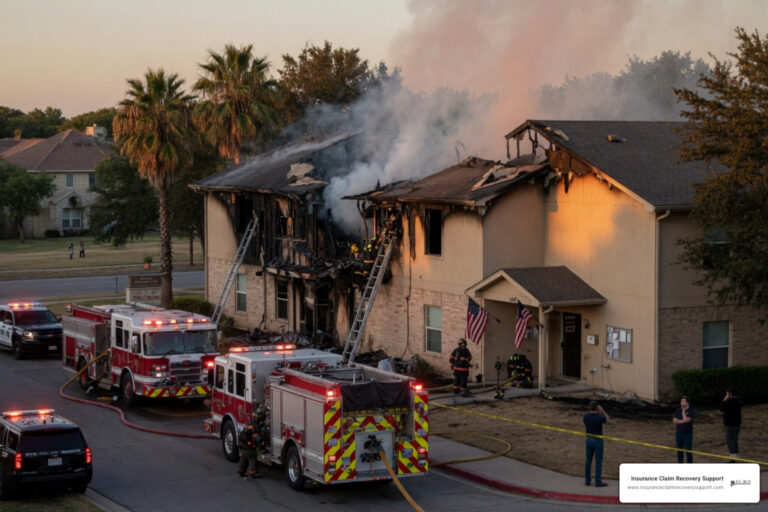
Keep HOA storm or fire claim records organized through board and manager changes with a practical checklist for documents, estimates and open questions.
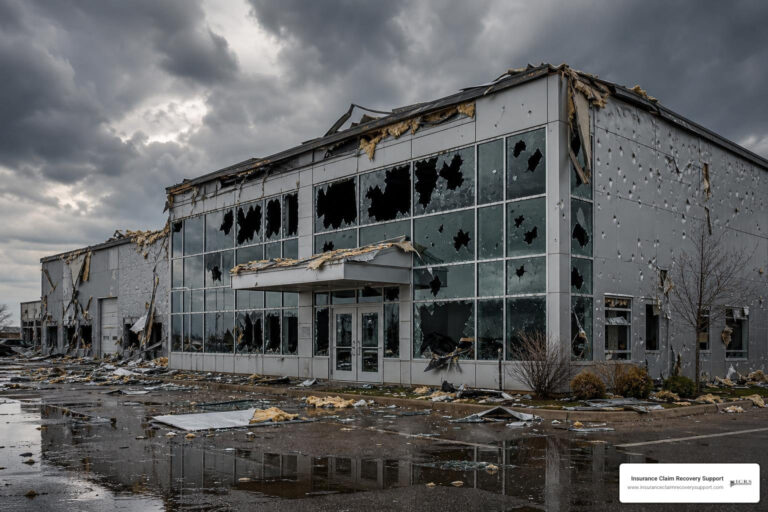
Organize commercial storm claim records by building, damage location, estimate version and open question with a practical evidence-register worksheet.

Protect commercial properties from hidden lightning damage—learn how to spot it, document it, and maximize your insurance claim recovery.

Discover HOA water damage liability, master policies vs. HO-6, slab leaks & claim tactics in condos. Get expert guidance now!

FREE ICRS COMMERCIAL CLAIM RESOURCES
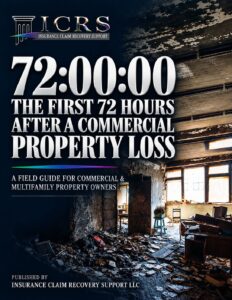
Seven practical PDF guides for commercial and multifamily property owners: the full Resource Kit, the First 72 Hours field guide, four companion checklists, and the 52-jurisdiction source index.
Enter your details below for immediate access to the downloads.
Educational resources only. Requesting the guides does not create a public adjuster engagement or guarantee a claim result. We handle your information under our Privacy Policy.

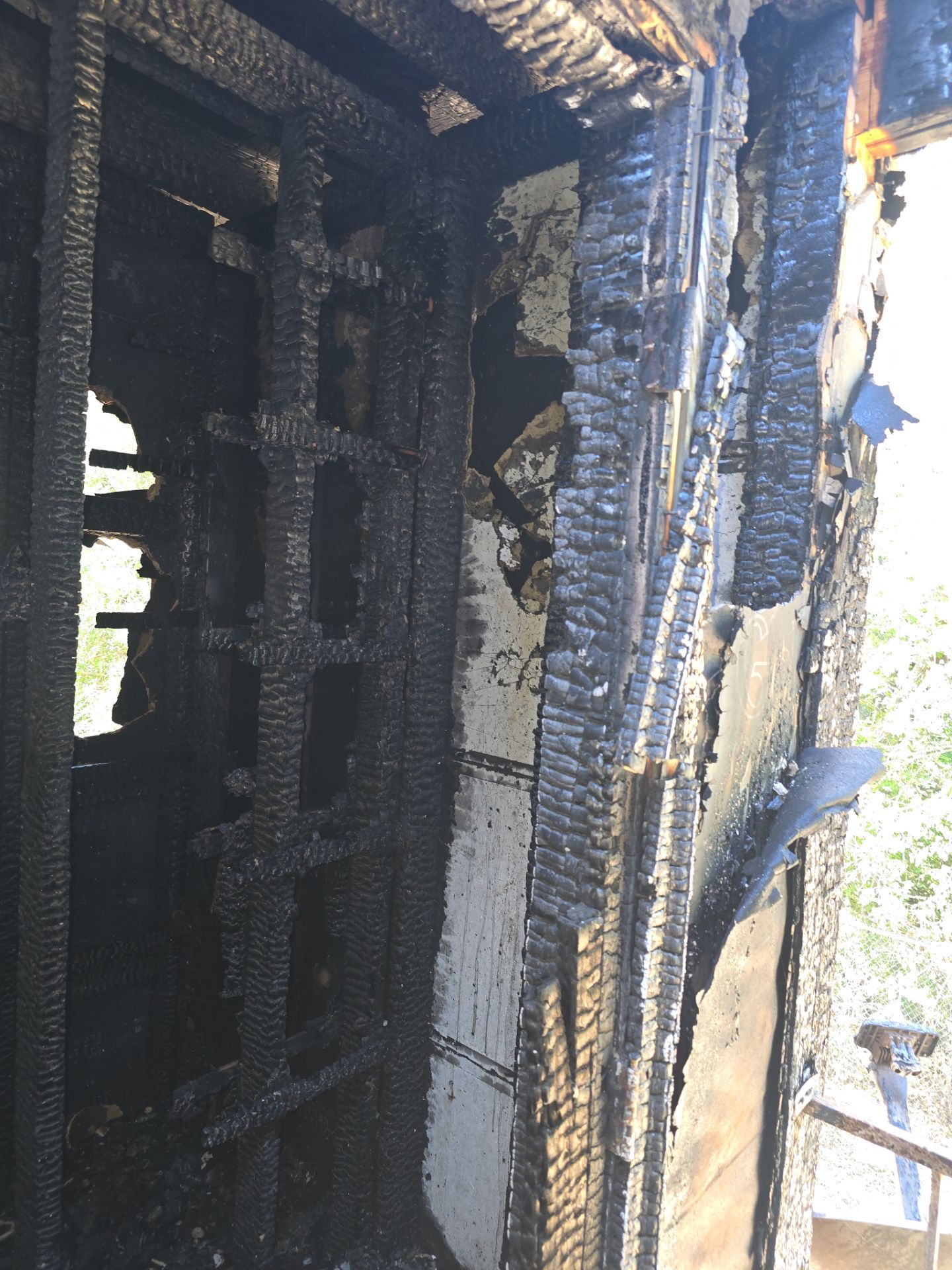
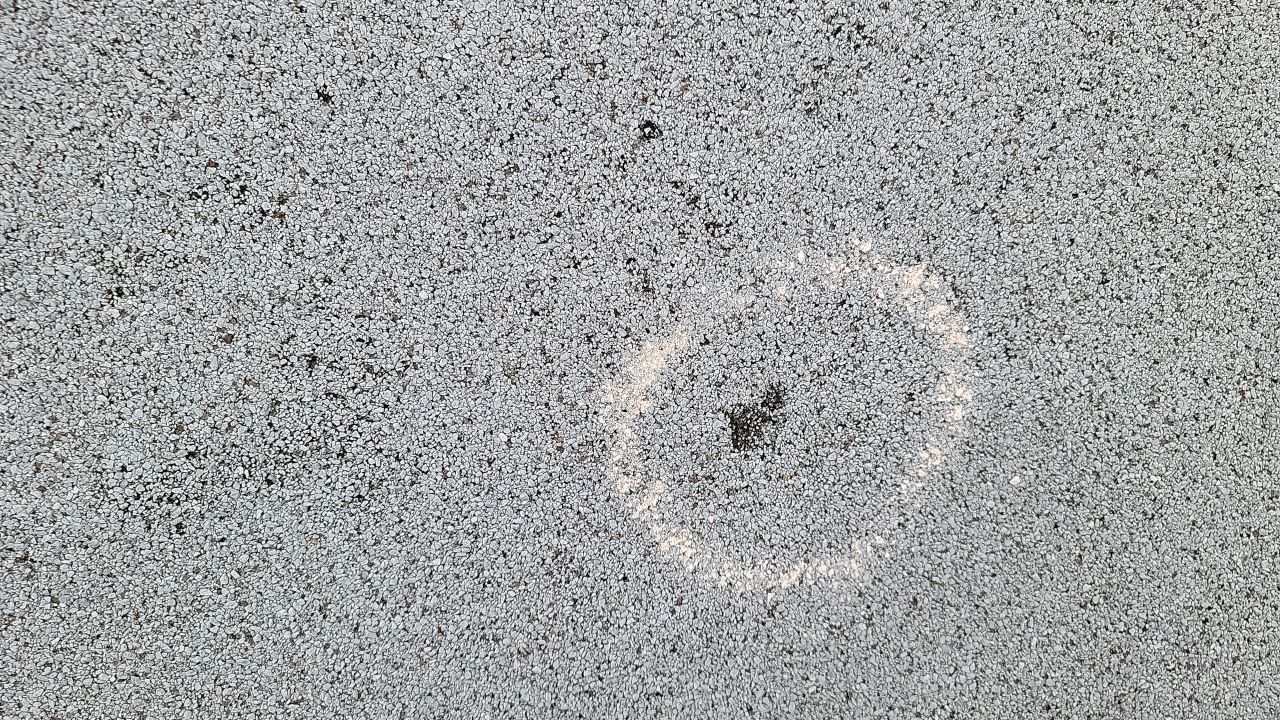

Your property. Your investment. Your recovery. Get a practical guide to documenting damage, understanding your claim and asking better questions after a fire, storm or other major loss.
Enter your first name and email. No account or password required.
Insurance Claim Recovery Support represents policyholders, never insurance companies. Requesting this report does not create an adjuster-client relationship or guarantee coverage or recovery.
Join our mailing list to get the latest updates, news and special offers delivered directly to your inbox.
Enter your email to receive this free ICRS guide, practical claim checklists, and ongoing ICRS educational emails, typically weekly. You can unsubscribe at any time.
Looking for help with a specific loss? Explore the free Fire Claim Guide or Water Claim Guide.
Request a Free Large-Loss Claim Review ($250,000+ after deductible).
Filing a large-loss insurance claim can be a daunting process, but understanding the essential steps can significantly ease the burden. Start by documenting all damages thoroughly, including photographs and written descriptions. This evidence will be crucial in establishing the extent of your losses and ensuring a smoother claims process.
Next, it's vital to notify your insurance company as soon as possible. They will provide you with specific instructions on how to proceed, including any necessary forms and deadlines. Engaging a public adjuster early in this process can also be beneficial, as they will advocate for your interests and help you navigate the complexities of your claim.
It's crucial for policyholders to understand the coverage limitations inherent in their property insurance policies. Many policies have specific exclusions or caps on certain types of damage, which can lead to unexpected out-of-pocket expenses during a claim. Familiarizing yourself with these limitations can prevent unpleasant surprises when filing a claim.
For example, while many policies cover fire and water damage, they may exclude certain natural disasters or limit payouts for specific types of property. Reviewing your policy with a public adjuster can provide clarity and ensure you are adequately prepared to address any potential gaps in your coverage.
Timely damage assessment is a critical factor in successfully navigating the insurance claims process. Delays in assessing damage can lead to complications, including reduced compensation or even denial of the claim. Promptly engaging a public adjuster can facilitate a thorough assessment and help ensure that all damages are documented accurately.
Additionally, timely assessments allow for quicker repairs and recovery, minimizing the impact of the damage on your property. Public adjusters can expedite this process by coordinating with contractors and insurance companies, ensuring that your claim progresses smoothly and efficiently.
Filing an insurance claim can be a complex process, and several common mistakes can hinder your chances of receiving fair compensation. One of the most frequent errors is failing to document damages adequately. Without sufficient evidence, insurers may dispute your claim or offer a lower settlement than you deserve.
Another mistake is not understanding your policy's terms and conditions, which can lead to unmet expectations during the claims process. Engaging a public adjuster can help you avoid these pitfalls, as they are trained to navigate the intricacies of insurance policies and ensure that you present a strong case for your claim.