Who works for the policyholder after hail damage?
A public adjuster for hail damage represents the policyholder. They document damage, develop a repair scope and estimate, and present the claim to the insurer. The insurance company’s adjuster evaluates the loss for the insurer. Neither inspection alone settles a disagreement about whether hail caused damage or what repairs are needed. Instead, the two inspections create a record that can be compared line by line, so the owner can see exactly where coverage, causation, and pricing conclusions diverge.
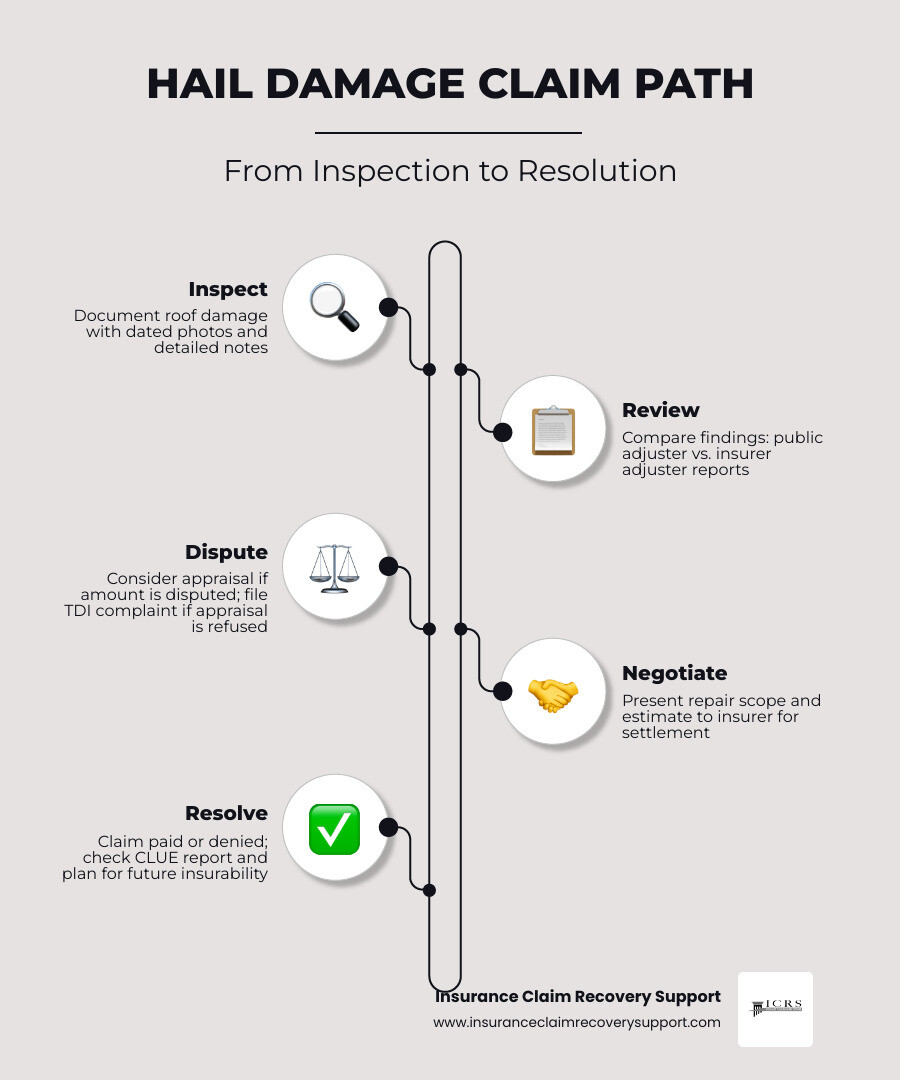
Clear roof inspections, dated photos, and repair estimates can help identify where the findings differ. If the dispute concerns the amount of a covered loss, the policy’s appraisal provision may offer a path forward; in Texas, a policyholder can also file a complaint with the Texas Department of Insurance if the insurer refuses appraisal. Organizing photos, reports, and correspondence by building and date makes that comparison faster and gives any reviewer a complete picture of the loss.
Public adjuster hail damage glossary:
Public adjuster for hail damage: who represents the policyholder?
A public adjuster works for the property owner, not the carrier. On large-loss claims involving commercial roofs or apartment communities, that representation can matter because the scope, cost, and policy questions are complicated. A dedicated hail damage public adjuster looks at the loss from the policyholder’s side. The differences between the two roles are explained further in this comparison of public versus company adjusters for roof damage claims. That review matters most when one roof covers several buildings or when interior and income losses must be documented alongside repairs.
What does a public adjuster for hail damage do?
A public adjuster typically:
- Reviews the policy for coverage, deductibles, and conditions
- Performs an independent inspection of the roof and building envelope
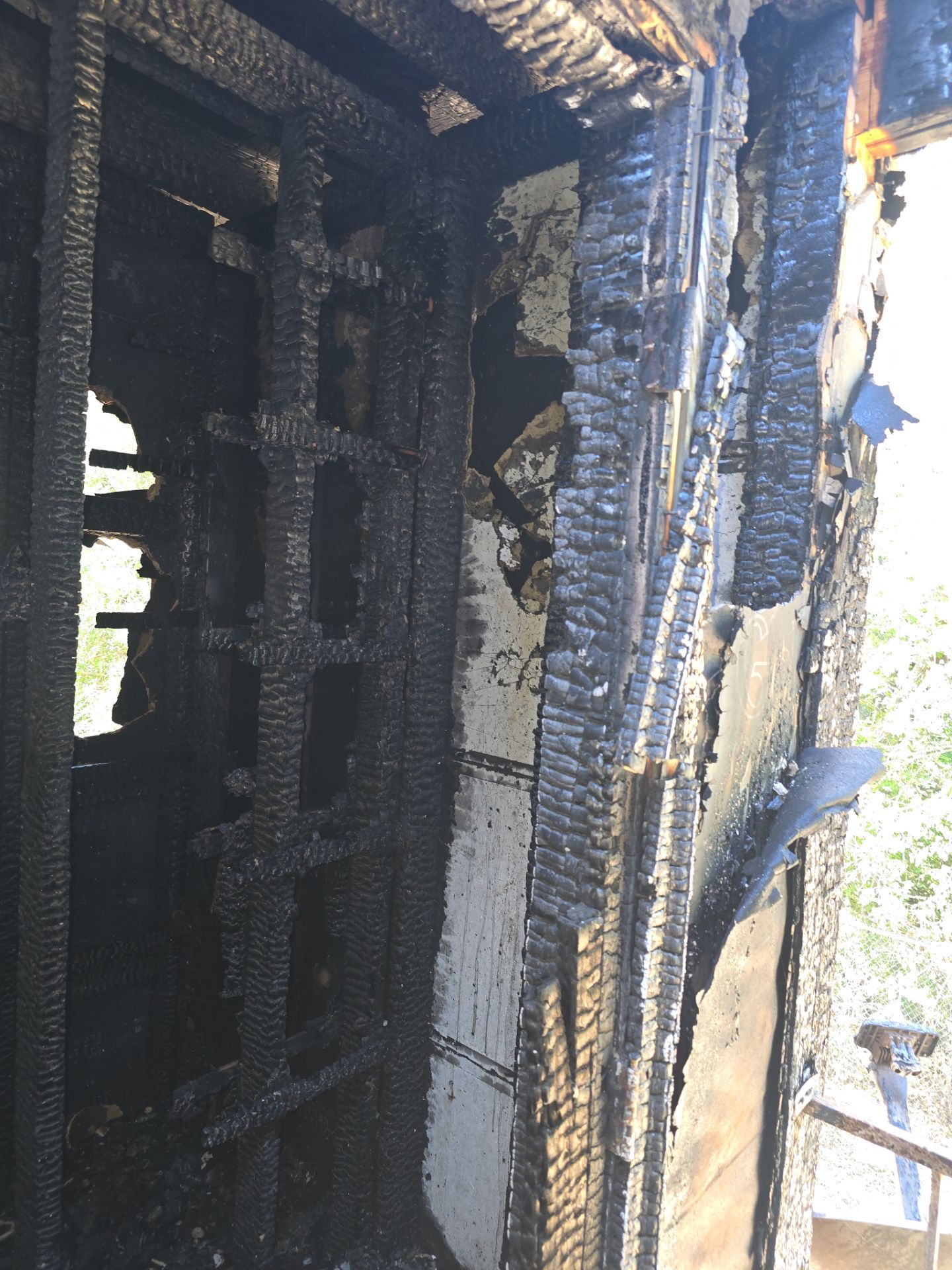
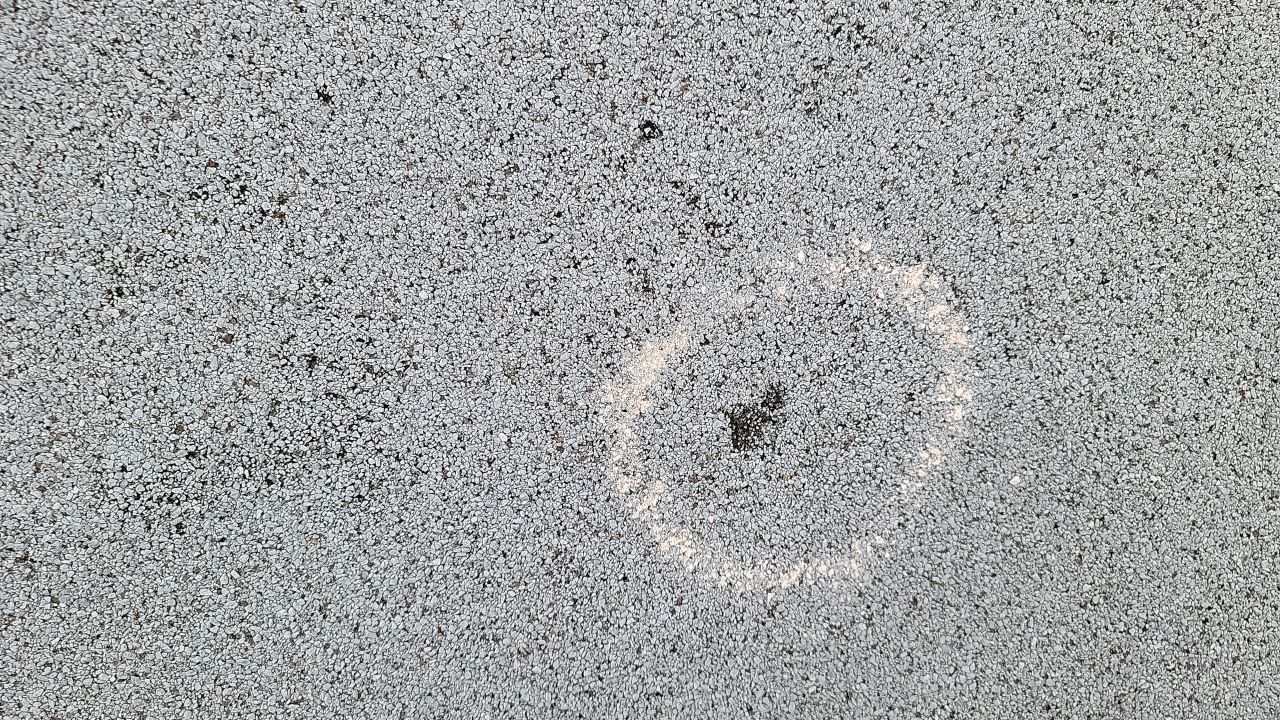
- Documents damage with dated photos and notes
- Builds a repair scope and estimate
- Prepares and submits the claim
- Negotiates with the insurer toward settlement
Each step creates a record the insurer can review and gives the owner a basis for questioning a narrower scope or lower pricing.
The steps are laid out in the public adjuster claim process. Fees in Texas are commonly a percentage of the claim payment, often cited in the 10% to 20% range, and the contract should state the terms clearly. Owners should confirm in writing what services are included, how the fee is calculated, and what happens if the claim is denied or paid in part, so there are no surprises later in the process.
How does the insurance company’s adjuster differ?
The insurer’s adjuster represents the insurer. That adjuster inspects the property, decides what the policy covers, and separates hail damage from conditions such as age-related wear. Wear and tear is a condition rather than a covered peril, so normal aging alone does not trigger a roof replacement. The insurer’s findings are still not automatically final, and a policyholder’s inspection is not automatically correct either. Both reports are evidence, and the policy language and physical facts decide the outcome. When inspections disagree, compare them directly and gather evidence that addresses the specific materials and areas in dispute.
When might a public adjuster for hail damage be useful?
Help is often considered when:
- A claim is underpaid, denied, or delayed
- The roof system is complex or the property has several buildings
- Rental income or business interruption losses may be involved
- The insurer’s and owner’s inspections reach different conclusions
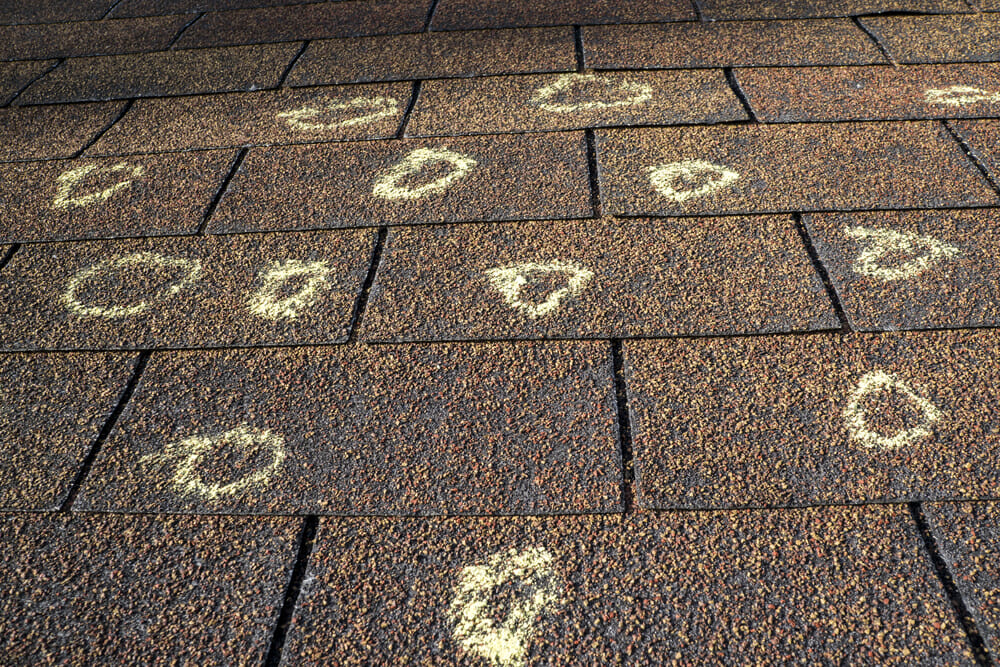
Illustrative scenario: a denied roof claim after a neighborhood hailstorm
Consider a hypothetical scenario. A hailstorm crosses a Texas commercial and multifamily area, and several neighboring properties receive insurance-paid roof replacements. One multifamily owner’s claim is denied because the insurer’s adjuster finds no hail damage and attributes the condition to wear and tear. The owner hires a public adjuster, who submits photos and a report concluding hail caused damage. The insurer keeps its denial without new reasoning. The question is whether the evidence for this property supports a different conclusion and whether the available dispute options fit the policy and the documented damage.
That fee level raises a fair question about whether the net would cover the roof. The first step is understanding the denial. This guide on a denied storm damage insurance claim covers common next steps. Reading the denial closely and checking its exact reason against the policy and inspection evidence should come first.
Why didn’t neighboring roof approvals prove this roof was damaged?
Neighbors’ approvals show a storm occurred, but they do not prove identical damage elsewhere. Roof age, material, slope, condition, and exposure to hail size can differ from building to building. Neighborhood repairs are useful context, not proof for each property. The same variation can occur between buildings on one commercial or multifamily site.
What evidence could challenge a wear-and-tear explanation?
Stronger evidence can include:
- Dated photos of the roof before and after the storm
- A hail report for the date and location, as discussed in this Texas hail storm resource
- A professional inspection report
- Maintenance records showing roof condition before the loss
- The insurer’s adjuster report and repair estimates
Together, they let a reviewer test the wear-and-tear explanation against the roof’s condition before and after the storm.
Documenting damage and choosing a dispute path
Strong documentation covers the roof, the building envelope, and any interior damage, with dates, storm records, maintenance history, estimates, and all claim correspondence. For multi-building properties, records should be organized by building. The hail damage insurance claim process explains how these items fit together. Keeping documents labeled by building, date, and source helps everyone follow the same timeline.

How should a commercial or multifamily owner document hail damage?
- Photograph damage safely, without risky roof access
- Record inspection dates and who attended
- Keep every report and estimate
- Document temporary repairs and receipts
- Note each affected building and unit
- Do not treat a storm report or a neighbor’s claim as proof of damage to the property
For large properties, tying each photo to a building and date prevents confusion across several roofs.
When can appraisal help resolve a hail dispute?
Appraisal is meant to resolve disagreements over the amount of a covered loss. Under the policy’s appraisal clause, each side typically selects an appraiser, and an umpire resolves differences. It is less suited to disputes about whether coverage applies or what caused the damage. Practically, a zero-payment denial can complicate appraisal even when the underlying dispute is about extent of damage. See this overview of Texas insurance appraisal. Appraisal generally assumes coverage is not in dispute and focuses on scope and price, so confirm the policy definition first.
What can a property owner do if the insurer refuses appraisal?
- Review the policy and the written denial.
- Request the insurer’s reason in writing.
- Organize inspection evidence.
- File a complaint through the Texas Department of Insurance complaint process, asking the insurer to explain why the loss does not qualify.
- Keep the policy, inspection evidence, and the insurer’s written position together for any next-step review.
Before choosing a dispute path, compare the policy language, the documented damage, the potential cost, and the expected time involved. That comparison helps an owner decide whether appraisal or a complaint is the more practical next step.
CLUE reports and future insurability after a hail claim
Insurers use claim history when underwriting, and a denied or zero-payment claim can still appear in that history. Renewal and roof inspection decisions depend on the insurer and the property, so no outcome is guaranteed. For more, see whether an insurer will drop you or raise your premium after a property damage claim. Knowing what is recorded helps an owner weigh whether to pursue a marginal claim or document clear damage properly.
What is a CLUE report, and what claim information may it show?
CLUE stands for Comprehensive Loss Underwriting Exchange. It generally tracks claims tied to a property or owner, including claim type and date. Property owners can request their own report through LexisNexis. Reviewing it before renewal can show whether a prior or denied claim is listed.
Do insurers see a public adjuster’s photos and full report through CLUE?
Insurers generally report statistical claim information to CLUE and to TDI, such as the number and type of claims. Based on expert experience, they do not exchange actual claim files with photos and adjuster reports. Because practices can vary, owners should review what appears in their own report rather than assume every insurer can see inspection photos. That distinction is why requesting your own report is more reliable than guessing.
Could leaving a denied claim unresolved affect future coverage?
If a marginal claim is closed with no payment, the record may show the insurer found no damage, which some experts view as less problematic than leaving disputed damage unresolved. Still, underwriters have discretion, and a later insurer may inspect the roof and judge its condition independently. Dropping a claim does not guarantee insurability. If damage is clear, appraisal and a TDI complaint may be better first steps. Maintaining the roof and keeping maintenance records can matter to a future underwriter as well.
Conclusion
The best decision is evidence-first. Compare policy terms, inspection findings, fees, and dispute options before choosing a path. Insurance Claim Recovery Support provides large-loss representation for qualifying claims of $250,000 or more after deductible, and paid Claim Navigator guidance for claims below that threshold, with full representation where appropriate. Results depend on the policy, the damage, and the evidence. To discuss a claim, request claim help. A clear, organized file gives the owner the strongest basis for appraisal, a complaint, or any other next step.