Why Understanding Your Roof Damage Insurance Adjuster Matters for Commercial Properties
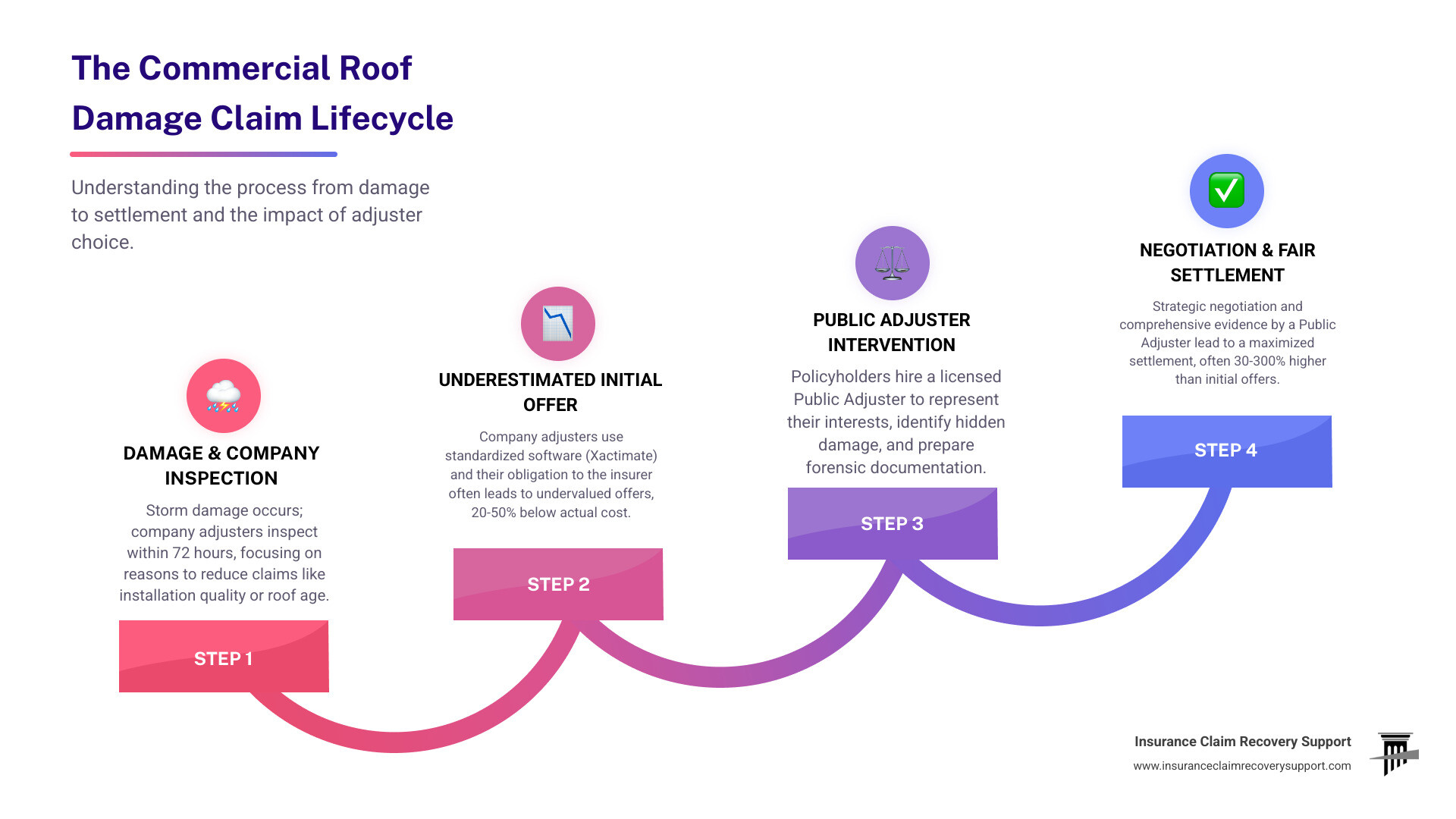
When storm damage strikes your commercial or multifamily property, a roof damage insurance adjuster becomes the key figure between you and your settlement. But here’s what most property owners don’t realize: not all adjusters work for you.
Quick Answer: What You Need to Know About Roof Damage Insurance Adjusters
- Company Adjusters are hired by your insurance carrier to evaluate damage and minimize payout
- Public Adjusters are licensed professionals you hire to represent your interests and maximize your settlement
- The average company adjuster handles multiple claims simultaneously and uses standardized pricing software (Xactimate) that often undervalues commercial repairs
- Most commercial roof claims settle for 20-50% less than their actual value without independent representation
- You have the legal right to hire your own adjuster at any point in the claims process
The Real Cost of Misunderstanding the Process
According to industry data, field adjusters typically contact policyholders within 72 hours to schedule an inspection, then use Xactimate software to document damage. While this sounds efficient, the adjuster’s primary obligation is to their employer—the insurance company—not to you. They assess installation quality, maintenance history, and roof age to identify reasons to reduce your claim. For commercial and multifamily properties facing major business disruption, tenant pressure, or revenue loss, this conflict of interest can cost hundreds of thousands of dollars.
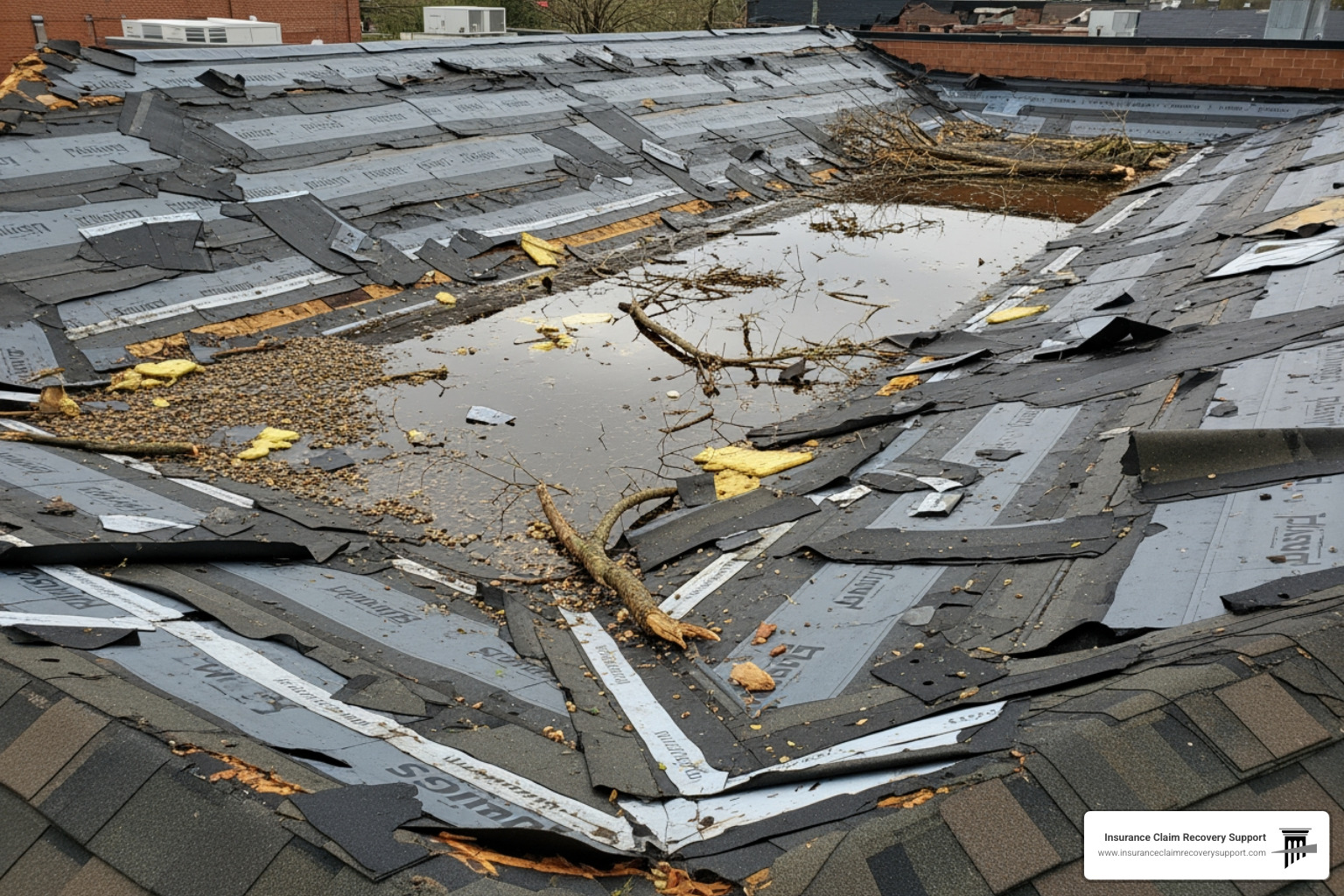
The inspection focuses on three critical areas: quality of installation (looking for contractor errors that shift liability), extent of visible damage (often missing hidden issues like compromised underlayment or water intrusion), and the roof’s age and condition (to apply maximum depreciation). Many serious problems are invisible from street-level views, and overlooked damage directly reduces your compensation—potentially leaving you with significant out-of-pocket repair costs.
I’m Scott Friedson, a Multi-State Licensed Public Adjuster and CEO of Insurance Claim Recovery Support, and over 15 years I’ve helped commercial property owners recover hundreds of millions in underpaid claims by countering the tactics roof damage insurance adjusters use to minimize settlements. My firm specializes in overturning wrongfully denied claims and avoiding unnecessary litigation through strategic negotiation and forensic documentation.
Learn more about roof damage insurance adjuster:
The Role of a Roof Damage Insurance Adjuster in Commercial Claims
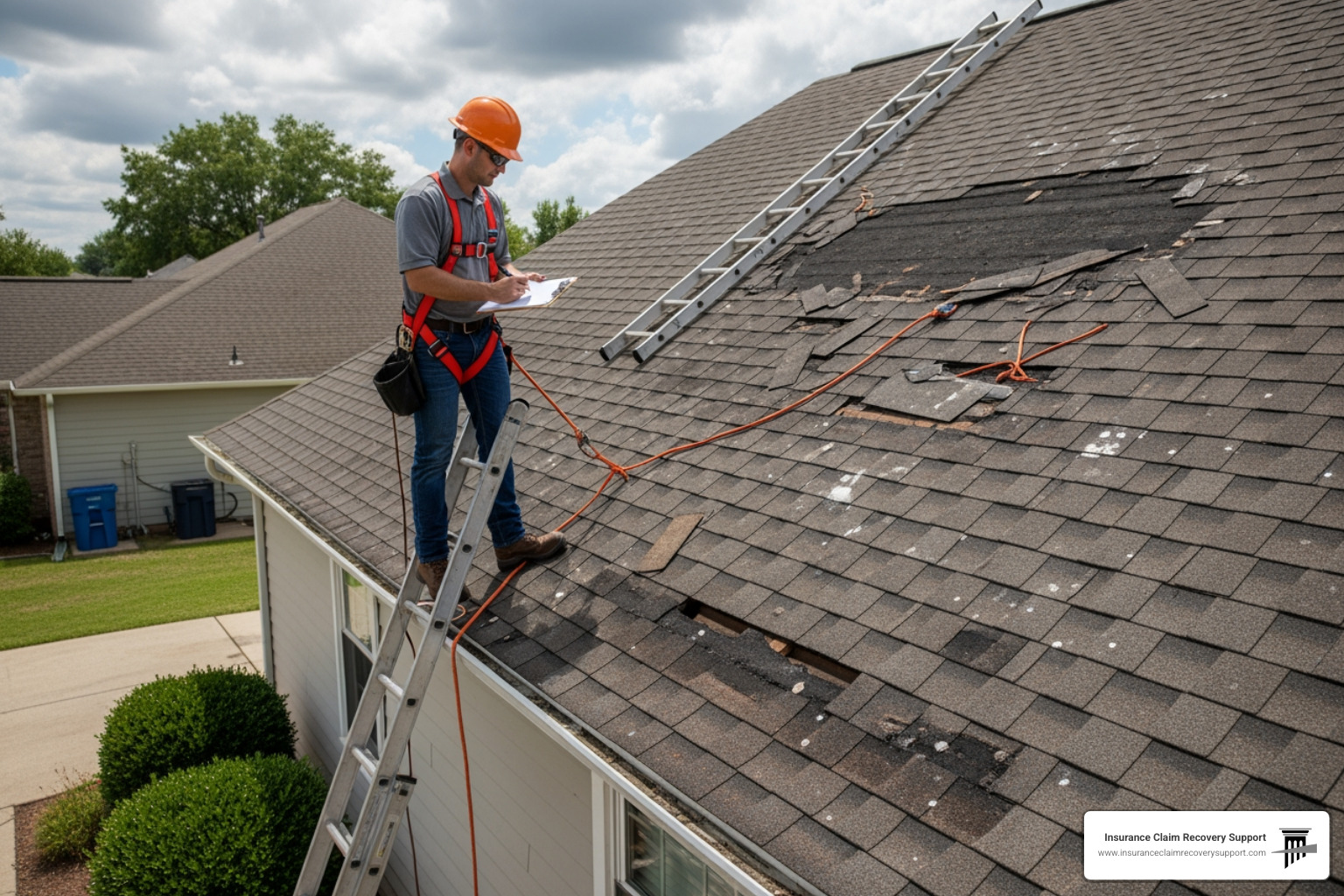
In large-loss commercial claims—whether it’s a sprawling apartment complex in Houston or a retail center in Austin—the term “adjuster” is often thrown around loosely. However, the specific type of roof damage insurance adjuster assigned to your file dictates the trajectory of your recovery.
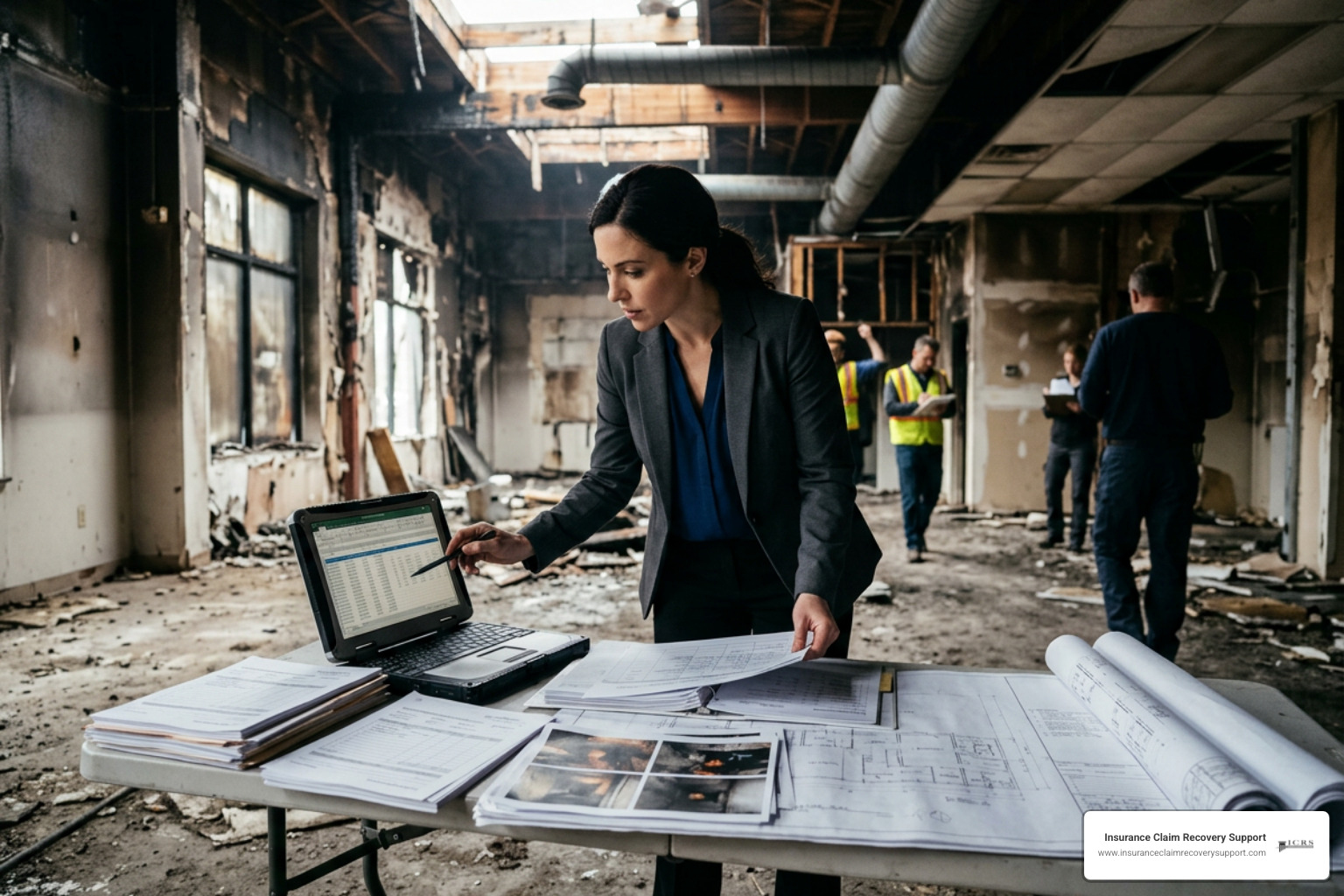
Typically, the carrier assigns a Field Adjuster to walk the roof. This person is the “eyes and ears” of the insurance company. They take the photos, measure the “squares,” and input data into Xactimate software. Then, there is the Desk Adjuster, who sits in a remote office and makes the final decision on the “Scope of Loss.” The problem? The person making the financial decisions often never sets foot on your property.
| Feature | Company/Staff Adjuster | Public Adjuster (ICRS) |
|---|---|---|
| Who pays them? | The Insurance Carrier | The Policyholder (You) |
| Primary Goal | Minimize liability and payout | Maximize settlement per policy |
| Software Used | Xactimate (Standardized) | Xactimate (Customized to Local Costs) |
| Duty of Care | To the Insurance Company | To the Policyholder |
| Outcome | Often 20-50% underpaid | Full indemnification |
What a Company Roof Damage Insurance Adjuster Looks For
When a carrier’s roof damage insurance adjuster arrives at your property in San Antonio or Fort Worth, they aren’t just looking for holes in the roof. They are looking for reasons to limit the carrier’s exposure.
- Installation Quality: If the roof wasn’t installed to code or manufacturer specs, the carrier may argue the damage was inevitable, not accidental.
- Maintenance History: They look for “wear and tear” or “gradual deterioration.” If they find clogged gutters or rusted flashing, they may blame the leak on poor upkeep rather than the storm.
- Shingle Bruising vs. Manufacturing Defects: In Hail Damage Insurance Claims, adjusters often argue that circular marks are “blistering” (a manufacturing issue) rather than “bruising” (hail impact).
- Pre-existing Wear: They will search for any evidence of damage that predates the current policy period.
For those managing Commercial Property Damage: What You Need to Know, it is vital to have your own documentation ready to counter these “maintenance” excuses.
Why Your Roof Damage Insurance Adjuster Might Undervalue the Claim
It is a common industry secret: insurance companies often use standardized pricing that doesn’t reflect the reality of commercial construction in Texas.
- Depreciation and ACV: If your policy is Actual Cash Value (ACV), the adjuster will subtract years of “life” from your roof, leaving you with a check that won’t even cover the materials. Even with Replacement Cost Value (RCV), you often have to fight to recover that depreciation.
- Labor Rates: Xactimate’s default labor rates for a Texas Public Adjuster are often significantly lower than what a qualified commercial roofing crew actually charges in cities like Dallas or Houston.
- Missed Evidence: Adjusters are often rushed. They might miss the subtle signs of an Underpaid Hurricane Damage Insurance Claim, such as lifted shingles that haven’t fully creased yet but have lost their seal.
- Material Costs: Standardized software may not account for the high-grade TPO, EPDM, or metal roofing systems common in commercial real estate.
Resolving Disputes: Public Adjusters vs. Litigation
When the carrier’s offer comes in too low, property managers and owners feel backed into a corner. You have three main paths: accept the low offer, sue the insurance company, or hire a Public Adjuster.
At Insurance Claim Recovery Support (ICRS), we believe in a “settlement-first” approach. While a Property Damage Claim Attorney is sometimes necessary for bad faith, litigation is slow, expensive, and can take years to resolve. A Public Adjuster Roof Damage expert can often resolve the dispute in a fraction of the time by speaking the adjuster’s language and providing the forensic proof they can’t ignore.
Fact vs. Myth: Common Policyholder Fears
Myth: My premiums will go up if I hire a Public Adjuster. Fact: Premiums are generally based on regional risk (like being in a hail-prone area of Lubbock or San Angelo), not on whether you hired a professional to ensure your claim was paid fairly.
Myth: The insurance company will drop me for disputing the claim. Fact: Most states have protections against retaliatory cancellation for filing a legitimate claim.
Myth: I have to use the contractor the insurance company recommends. Fact: You have the right to choose your own contractor. In fact, using the “preferred” contractor often means using someone who has agreed to work for the carrier’s lower rates.
If you are struggling with a Tornado Insurance Claim Denial, don’t assume the first word is the last word. You can always seek Help With Denied Claim assistance.
The Timeline from Inspection to Settlement
Navigating the roadmap of a claim requires patience, but also a firm hand. In Texas, the law is relatively strict regarding timelines.
- The 72-Hour Window: Usually, a field adjuster will contact you within 72 hours of the claim being filed.
- The Inspection: This should happen within the first week.
- The Decision: Expect an approval or denial within 7 to 10 days after the inspection.
- The Payment: Most state laws, including those in Texas, require reimbursement checks to be received within 30 days of a settlement agreement.
- The Full Recovery: A typical commercial claim can take 30 to 60 days to reach a full settlement check if managed correctly.
To move things along, you need to know How to Expedite Property Damage Insurance Claim Settlement through proactive communication and organized record-keeping.
Leveraging Technology in Large-Loss Inspections
The days of an adjuster just “eyeballing” a roof are over—or at least they should be. For large-loss commercial properties, we use high-tech tools to ensure no damage is left behind.
- Drones: These provide high-resolution aerial views of areas that are too steep or dangerous to walk, capturing “thermal” signatures of moisture.
- Thermal Imaging: This is a game-changer. According to Scientific research on thermal imaging for building envelopes, infrared cameras can detect temperature differences that indicate trapped moisture under the roof membrane—damage a standard roof damage insurance adjuster would never see.
- Moisture Meters: Used to confirm that water has indeed penetrated the decking or insulation.
- Forensic Inspections: NRCIA-certified inspections provide a “Forensic ROOF®” report that stands up in court or appraisal.
Maximizing Commercial Settlements Without Lawsuits
Our goal at Insurance Claim Recovery Support is simple: get you the money you need to fix your property without the headache of a lawsuit. We represent commercial building owners and multifamily investors across Texas—from the high-rises of Houston to the apartment complexes of Round Rock and Georgetown.
We focus on Large Loss Insurance Claim handling, ensuring that every detail—from code upgrades to business interruption—is included. Our Public Adjuster Fees are contingency-based, meaning we only get paid if we increase your settlement.
With a 90% settlement success rate, we help our clients avoid the “appraisal trap” and the “litigation loop.” If you’re looking for Public Adjusting Firms that specialize in commercial assets, you’ve found the right partner.
Summary Checklist for Property Owners:
- [ ] Document Everything: Take photos before the roof damage insurance adjuster arrives.
- [ ] Mitigate Damage: Tarp holes immediately to prevent Water Damage Insurance Claims.
- [ ] Review Your Policy: Know your deductible and if you have RCV or ACV coverage.
- [ ] Hire an Advocate: Don’t face the carrier’s experts alone.
Whether you’re dealing with a Texas Tornado or the aftermath of a Texas Freeze, the insurance company’s adjuster is just the beginning of the conversation—not the end.
Ready to see the difference a professional advocate makes? Contact us today for a free claim consultation.