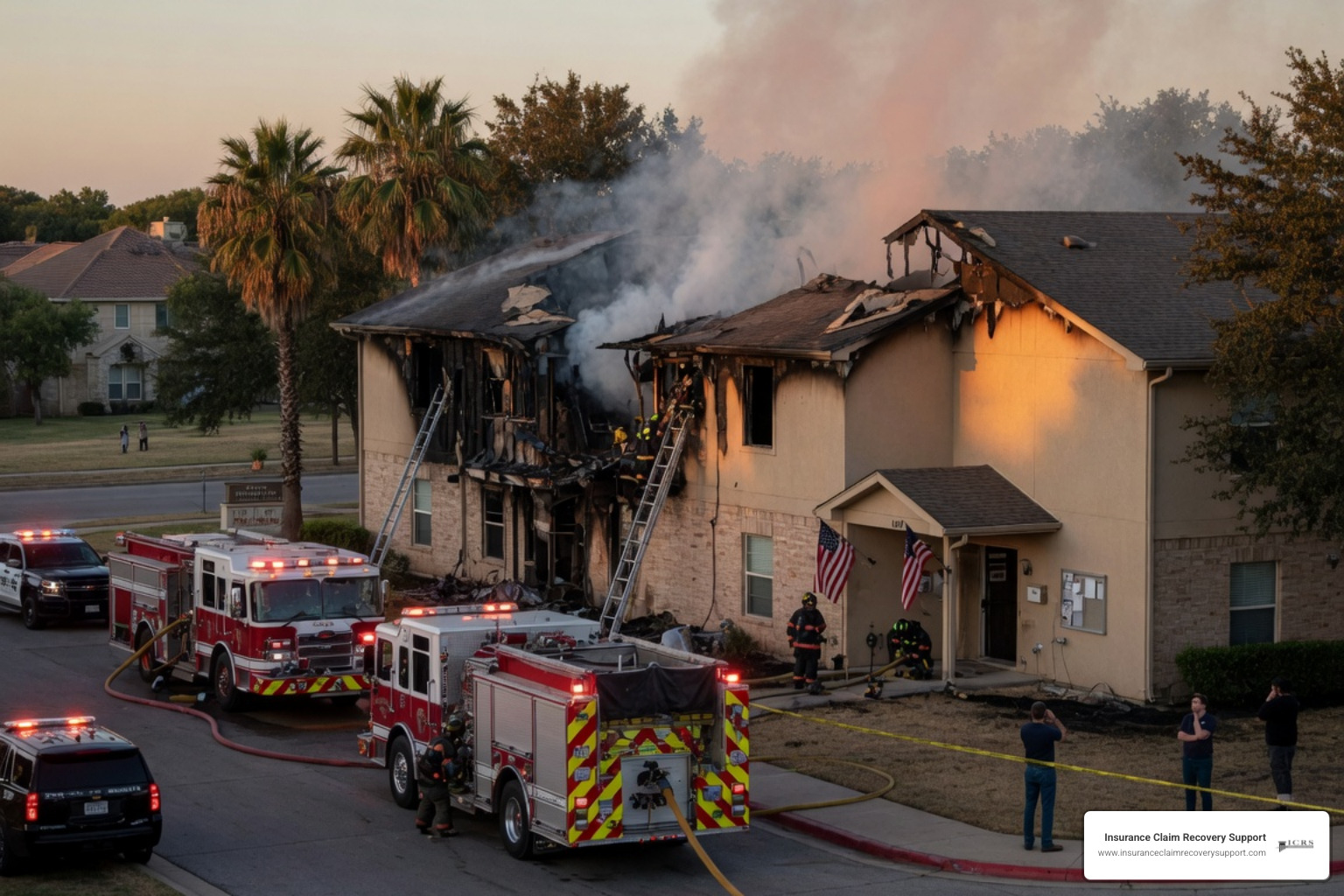
A major property loss can involve building repairs, equipment, contents, specialty systems and interrupted operations. The claim needs a clear connection between what was damaged, what must be done and the evidence supporting the requested payment.
ICRS represents policyholders in complex property damage claims. We help organize the scope, estimates and documentation needed to present the loss clearly.
Request a Large-Loss Claim Review
Build a complete picture of the loss
Begin with the property and the evidence. Organize damage by building, area or system so the claim can be reviewed against the available photos, inspections, plans and professional reports.
Separate confirmed damage from issues that still require investigation. Identify who will evaluate each open issue and what information is needed to resolve it.
Compare scope before comparing totals
Two estimates can differ because they include different work. Compare the repair methods, quantities, materials and affected systems before deciding whether a price difference explains the gap.
A useful claim review identifies:
- Work included in one estimate but omitted from another.
- Quantities or specifications that need verification.
- Specialty systems requiring a qualified evaluation.
- Repair costs supported by contractor or vendor information.
- Payments already made and amounts still being requested.
Organize the supporting documents
Useful records may include the policy, insurer estimates, payment history, photographs, building plans, contractor proposals, invoices and relevant professional findings.
For commercial properties, keep records supporting business interruption and extra expenses where those issues are part of the claim.
Our large-loss documentation resource can help organize the file.
Documentation priorities by property type
The same event can create different claim needs across a property portfolio. Organize the file around the buildings, systems and operations actually affected.
- Commercial properties: separate building repairs, equipment, inventory and interruption-related records.
- Apartments and associations: identify affected units and common areas, and distinguish association responsibilities from individual owner or tenant property.
- Schools and churches: document classrooms, assembly spaces, contents and specialty systems, along with records of temporary operating arrangements.
- High-value custom homes: retain plans, finish schedules and specialist evaluations for custom assemblies, controls and mechanical systems.
Keep a record of unresolved scope
For each open item, record the location, observed damage, supporting photo or report, proposed evaluation and responsible professional. Mark uncertain causes or quantities as unresolved rather than presenting assumptions as established facts.
Track new findings separately from previously submitted information so the insurer can see what changed and which payment request each document supports.
How ICRS helps
We review the claim information, document supported scope differences and communicate the policyholder’s position to the insurer. When a question requires specialized expertise, the appropriate professional findings should support the claim.
The next step depends on the property, loss, available evidence and current claim status. A claim review helps determine whether representation is appropriate.
Start the review
Tell us what happened, where the property is located and what the insurer has provided. Include available estimates, reports and payment information.
Request a Large-Loss Claim Review
For additional information, see our commercial property claim services, review selected large-loss claim results (results vary), or find regional assistance through our Texas large-property claim services and Salt Lake City large-loss public adjuster page.