How to Deal with an Insurance Adjuster After a House Fire Inspection
After a fire, property owners and managers should deal with the insurance adjuster by preparing for the inspection before debating the claim. Confirm safe access, identify every attendee and role, gather photos and property records, walk the site with a room-by-room or building-by-building agenda, separate observed conditions from suspected causes, and send a factual follow-up with document references and assigned next steps.
House-fire searches often lead to advice written for single-family homes, personal-property claims, and simpler inspections. Commercial and multifamily losses can involve multiple units or spaces, tenants, building systems, maintenance records, prior repairs, code questions, and several professionals walking the site. A prepared inspection agenda helps you document what was observed, who attended, which records were discussed and what still needs professional review.
The aim is to help you stay organized, factual, and responsive while preserving a clear record of what was observed, who attended, which documents were discussed, and what still needs professional review.
Key Takeaway: Do emergency mitigation first when it is needed for safety or to prevent further damage. Then preserve the best record you reasonably can, including photos, contractor notes, invoices, reports, and a written inspection agenda.
For fire-damage claim support, ICRS provides policyholder-side assistance for commercial and multifamily property losses: commercial fire property damage claim help.
Related ICRS resources:
- Fire property damage claim assistance
- Fire claim adjuster guidance
- Public adjuster definition
- Texas Department of Insurance fire claim guidance
1. Confirm Safe Access with Qualified Responders
Before scheduling a detailed insurance inspection, confirm who has cleared the property for access and what limitations still apply. A fire-damaged commercial building may have unstable areas, electrical hazards, water-damaged surfaces, air-quality concerns, or restricted spaces that should not be entered casually.
Start with the records and directions you already have from the fire department, fire marshal, emergency mitigation contractor, property manager, engineer, hygienist, utility provider, or other qualified responders. If access is limited, note the exact areas that are restricted and the reason given. Do not move into unsafe areas simply to take better photos or to accompany an adjuster.
Practical preparation steps include:
- Keep copies of fire department incident information, access notices, utility shutoff records, and emergency mitigation invoices.
- Ask the adjuster in advance who needs to attend if parts of the property remain restricted.
- Confirm whether tenants, maintenance staff, security, restoration contractors, or building representatives need escort instructions.
- Separate immediate safety and mitigation decisions from later claim-scope discussions.
Older apartment buildings, historic properties, churches, schools, and large commercial sites may raise fire-separation, electrical, roofing, structural, or environmental questions. Those issues should be documented for qualified reviewers; they should not become a do-it-yourself inspection by the owner or property manager.
2. Identify Attendees and Their Roles When You Deal with Insurance Adjuster After a House Fire

A commercial fire inspection often involves more than one insurance representative. The person on site may be a field adjuster, independent adjuster, building consultant, engineer, cause-and-origin investigator, contents specialist, mitigation vendor, or other consultant. Property-side attendees may include ownership, a property manager, maintenance leadership, a restoration contractor, a public adjuster, tenant representatives, or an independent insurance broker helping the business client stay organized.
Create a simple attendee log before the walkthrough begins. Capture names, companies, phone numbers, email addresses, roles, arrival times, and the areas each person inspected. If someone offers an opinion about scope, cause, code issues, environmental concerns, or next steps, note who said it and whether a written report will follow.
This helps avoid confusion later, especially when one person observed the property but another person later sends the estimate, requests documents, or makes coverage-related decisions from a desk file.
Hypothetical Inspection-Agenda Table
| Area or Building | Known Records to Bring | Questions for Qualified Review | Follow-Up Owner |
|---|---|---|---|
| Building A, second-floor corridor | Pre-loss maintenance photos, tenant work orders, fire department notes | Which areas were directly affected by fire, smoke, water, or access work? | Property manager |
| Electrical room | Utility shutoff record, electrician invoice, prior service records | What testing or professional report is needed before re-energizing? | Electrical contractor |
| Older apartment fire-separation walls | Renovation history, permits, prior inspection notes if available | Are there visible openings, penetrations, or damaged assemblies that require qualified evaluation? | Owner representative |
| Roof and attic access | Emergency tarp invoice, roof photos, moisture notes | Which areas are safe to access, and what requires contractor or engineer review? | Restoration contractor |
| Common HVAC or mechanical spaces | Service logs, filter records, mitigation notes | What professional assessment is needed for affected equipment or duct areas? | Mechanical contractor |
3. Prepare Photos, Property Records, Maintenance History, and Reports
The most useful inspection file is not the largest pile of documents. It is the cleanest set of records that helps connect the property’s pre-loss condition, the fire event, emergency response, observed damage, and open questions.
Before the inspection, gather records such as:
- Pre-loss photos, leasing photos, capital-improvement records, and recent maintenance documentation.
- Fire department, fire marshal, utility, security, or incident reports that are already available.
- Emergency mitigation invoices, drying logs, board-up invoices, tarp invoices, demolition records, and debris-removal notes.
- Contractor, electrician, roofer, engineer, hygienist, environmental, mold, asbestos, or contents reports received so far.
- Building plans, prior renovation records, warranty information, permits, equipment service logs, and tenant work orders.
- A running document list showing what has been sent to the carrier and when.
Do not delay urgent mitigation in order to create a perfect photo record. If windows need to be boarded, water needs to be extracted, utilities need to be secured, or a roof opening needs temporary protection, document what you reasonably can and keep the related invoices, photos, and written notes.
For apartments and commercial properties, records often matter because damage may be spread across multiple units, building systems, tenant spaces, common areas, and exterior assemblies. A clear file gives each reviewer a better chance to understand what was present before the fire and what changed afterward.
4. Create a Room-by-Room or Building-by-Building Inspection Agenda
Do not rely on memory during the walkthrough. Build an agenda that moves logically through the property and keeps the inspection focused on observable conditions, records, and open professional questions.
For a multifamily property, that agenda might be organized by building, floor, unit stack, common area, roof, attic, mechanical room, exterior elevation, and site access point. For a commercial property, it might be organized by tenant suite, warehouse bay, office area, electrical room, production area, storage space, loading dock, roof area, and exterior envelope.
A useful agenda should include:
- The area to inspect.
- Known damage or changed conditions already observed.
- Photos, invoices, or reports tied to that area.
- Safety or access limitations.
- Questions that need an engineer, hygienist, electrician, roofer, mitigation contractor, or other qualified reviewer.
- The person responsible for sending follow-up documents.
If the adjuster skips an area, note it respectfully and ask whether they want to inspect it during the same visit or address it through photos, reports, or a later inspection. Staying organized is not adversarial; it helps keep the claim file accurate.
5. Record Observed Conditions Separately from Suspected Causes and Professional Questions
During the inspection, keep your notes factual. Write down what people saw, where they saw it, and what documents or photos relate to that area. Avoid guessing about cause, code interpretation, structural movement, contamination, or repair methods unless a qualified professional has already put that opinion in writing.
A helpful note might say: “Unit 204 living room ceiling shows staining after suppression water; photo set 204-A reviewed during inspection; restoration contractor to provide moisture notes.” A less helpful note would say: “Fire ruined the whole ceiling system and the carrier has to replace it.”
Use three separate buckets:
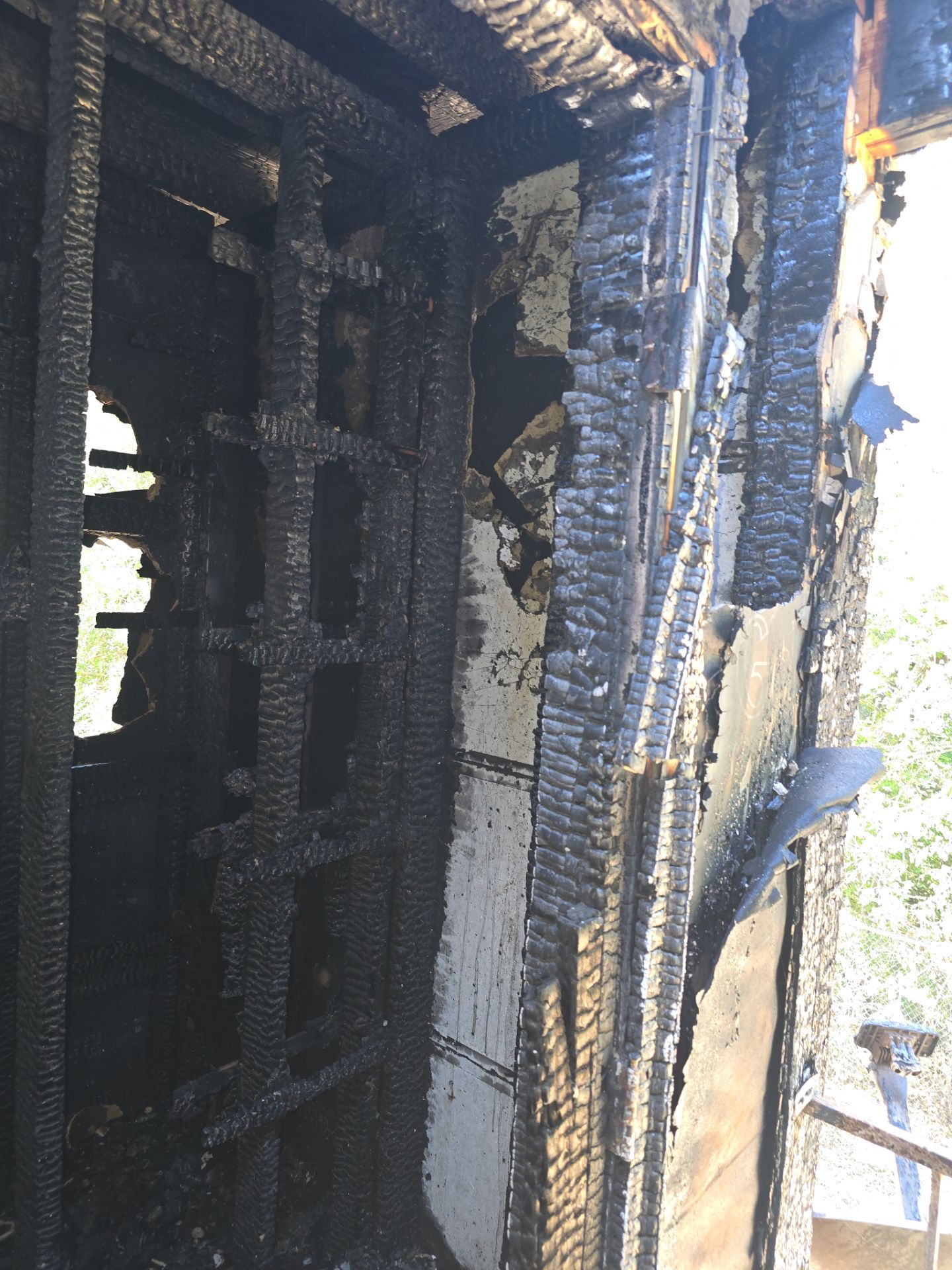
- Observed conditions: visible charring, staining, odor, debris, opened walls, damaged doors, water lines, roof openings, affected equipment, or restricted access.
- Known records: photos, invoices, reports, service logs, prior repairs, tenant notices, mitigation notes, and professional recommendations already received.
- Questions for professionals: what needs engineer review, environmental testing, electrical evaluation, roofing assessment, code review, or contractor pricing.
This separation protects the credibility of the file. It also helps property management companies coordinating multiple assets and independent insurance brokers supporting business clients after a difficult claim keep conversations clear without promising a particular claim outcome.
6. Send a Factual Follow-Up with Document References and Assigned Next Steps
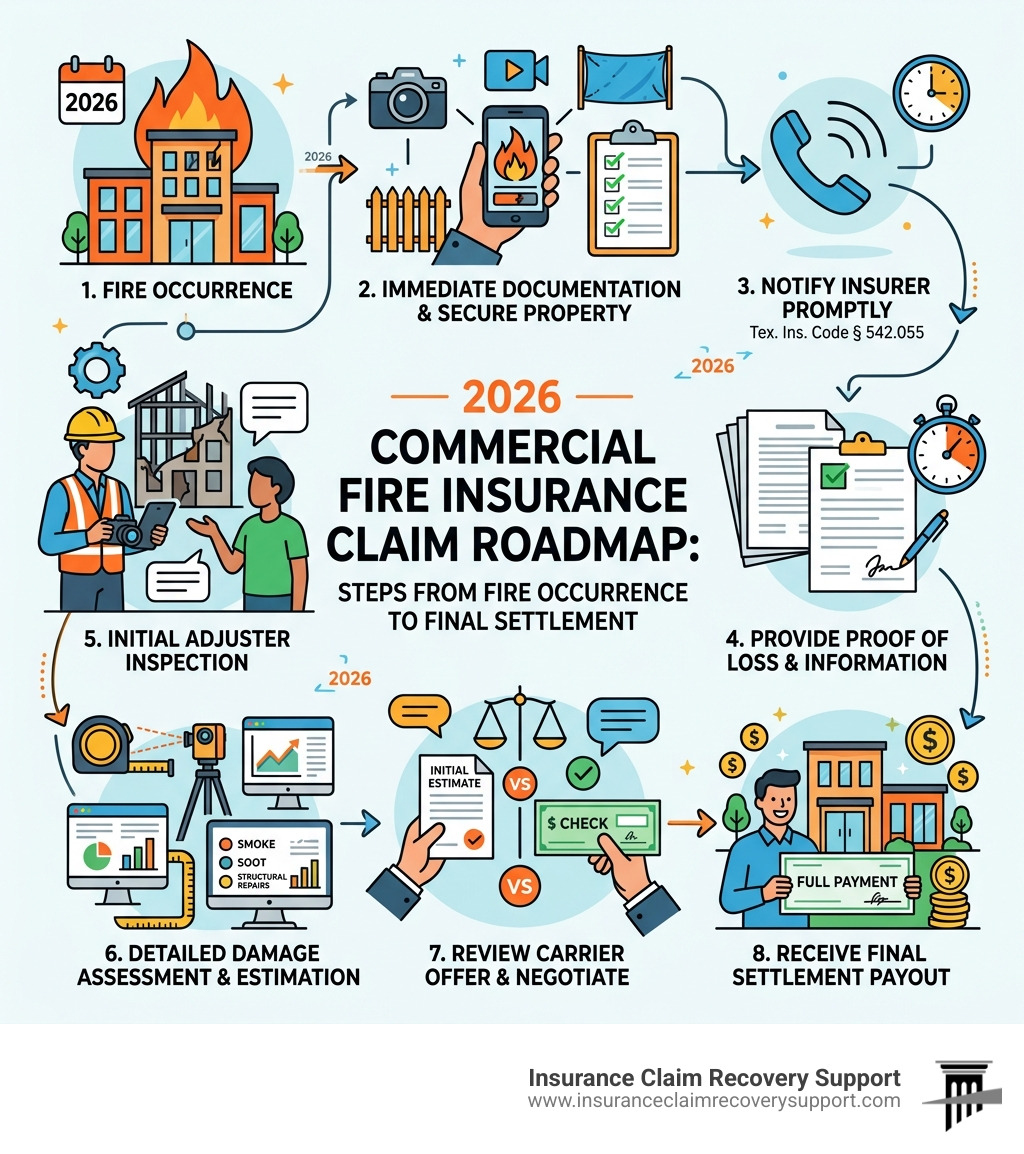
After the inspection, send a concise follow-up email while the walkthrough is still fresh. The message should not argue every claim issue or speculate about coverage. It should confirm who attended, what areas were inspected, what documents were provided, what reports are pending, and who is responsible for each next step.
A strong follow-up can include:
- Date, time, property address, and attendees.
- Areas inspected and any areas not accessed.
- Document names or photo sets provided during or after the visit.
- Reports that are pending from contractors, engineers, hygienists, electricians, roofers, or other qualified reviewers.
- Questions the adjuster asked you to answer.
- Documents the carrier said it would provide, such as an estimate breakdown or consultant report.
- Target dates for each person’s next step, when known.
Keep the tone professional. You can be cooperative without surrendering the record. If additional claim assistance is needed after the inspection, property owners and managers can request help through the ICRS intake page: request claim help.
Recent wildfire-claim reporting also shows why documented inspection records matter when large loss events are under review. Relevant background sources include the State Farm $15.6M settlement report, the New York Times California State Farm article, the California enforcement action document, The Guardian’s wildfire insurance coverage, and CNN’s report on State Farm home insurance after the Los Angeles fires. These links are included as current context, not as a promise that any specific claim will have the same facts or outcome.
Preparing for a fire claim inspection is about controlling the record, not controlling the adjuster. Confirm safe access, know who is attending, organize the documents you already have, walk the property with a practical agenda, separate observations from opinions, and follow up in writing.
For commercial and multifamily fire losses, that structure can make the difference between a scattered inspection and a claim file that accurately reflects the property, the records, and the professional questions still outstanding.