Why Texas Leads the Nation in Hail Damage Claims
For commercial property owners and multifamily operators in Texas, hail damage is a recurring, multi-billion-dollar problem. If your property has been hit, here’s what you need to know.
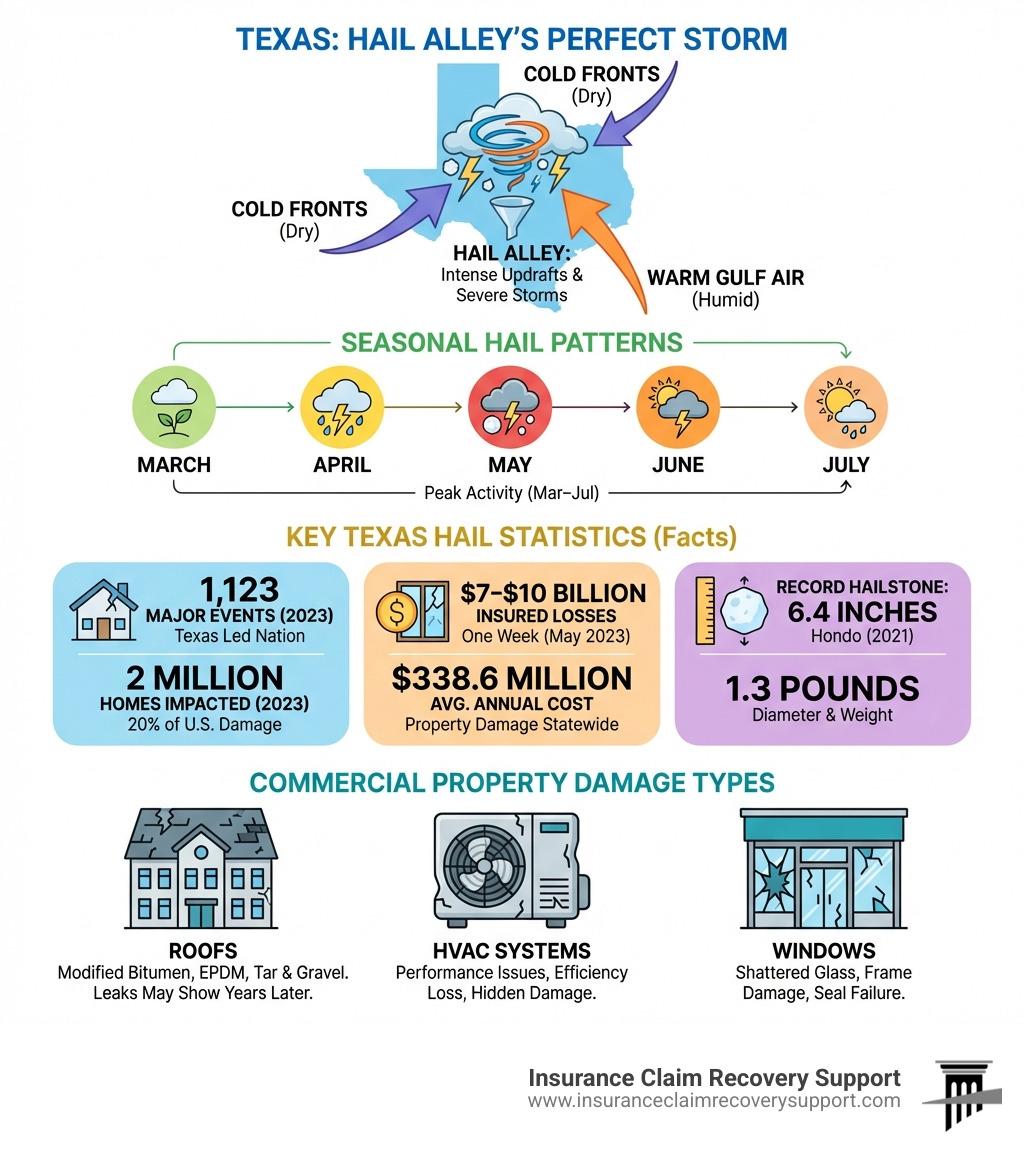
Quick Facts About Texas Hail Damage:
- Texas leads the nation in severe hail events.
- Millions of Texas properties are impacted by hail each year.
- Billions of dollars in insured losses can occur from a single storm system.
- Average annual cost: Over $338 million in property damage statewide.
- Record hailstone: 6.4 inches in diameter, weighing 1.3 pounds (Hondo, 2021).
To understand the broader science of hail formation and its impacts, resources like the National Weather Service hail overview and the Wikipedia article on hail provide helpful context on how these storms develop.
Myth vs. Fact: Understanding Your Hail Damage Claim
Myth: Filing a hail damage claim is straightforward, and the insurance company will pay what’s fair.
Fact: A large commercial or multifamily hail claim is a complex financial negotiation. Large commercial and multifamily hail claims are frequently underpaid, delayed, or denied. Insurance carriers often use tactics like cosmetic damage exclusions, ACV depreciation, or scope disputes to reduce payouts.
Myth: You need to hire a lawyer and sue your insurance company to get a fair settlement.
Fact: A licensed public adjuster can often resolve your claim without a lawsuit. A public adjuster advocates on your behalf, documents hidden damage using specialized tools (like core sampling and thermal imaging), and negotiates directly with the carrier—often avoiding the cost, delay, and uncertainty of litigation entirely. Litigation is sometimes necessary in true bad-faith or complex legal disputes, but for most property owners, starting with a public adjuster is a more efficient and cost-effective path.
Myth: Hail damage is easy to spot right after a storm.
Fact: Hail damage to commercial roofs—especially Modified Bitumen, EPDM, or Tar and Gravel systems—can take two to three years to manifest as leaks, making early professional assessment critical. Subtle bruising, membrane fractures, and damage to rooftop mechanical equipment may not be obvious to the naked eye but can shorten the service life of your building envelope and systems.
Why does Texas experience so much hail? The state sits in “Hail Alley,” where warm, humid air from the Gulf of Mexico collides with cold, dry fronts from the West and North. This creates the perfect conditions for severe thunderstorms with intense updrafts that produce large, damaging hailstones. The NOAA Storm Events Database tracks many of these billion-dollar disasters across Texas each year.
For commercial and multifamily property owners, the stakes are high. A single hailstorm can destroy roofs, damage HVAC systems, shatter windows, and trigger costly business interruption. Worse, many claims are underpaid or denied due to carrier tactics like cosmetic damage exclusions or disputed scopes of loss. Without expert advocacy, property owners risk leaving significant recovery dollars on the table—or facing a lengthy, expensive lawsuit.
I’m Scott Friedson, CEO of Insurance Claim Recovery Support LLC, and over the past 15+ years, I’ve successfully settled hundreds of millions of dollars in Texas hail damage claims for commercial and multifamily property owners, often increasing recoveries by 30% to over 3,800%. My firm specializes in navigating the complexities of large-loss claims, ensuring policyholders receive maximum settlements without unnecessary litigation.
Learn more about texas hail damage:
Your Playbook for a Texas Hail Damage Claim
Texas is the hailstorm capital of the United States, with its unique geography creating perfect conditions for severe weather. For property owners, this means hail damage is a constant threat, making preparation and a clear action plan essential.
Understanding the Scope of Damage & How to Prepare
Hail can cause extensive and often hidden damage to commercial and multifamily properties.
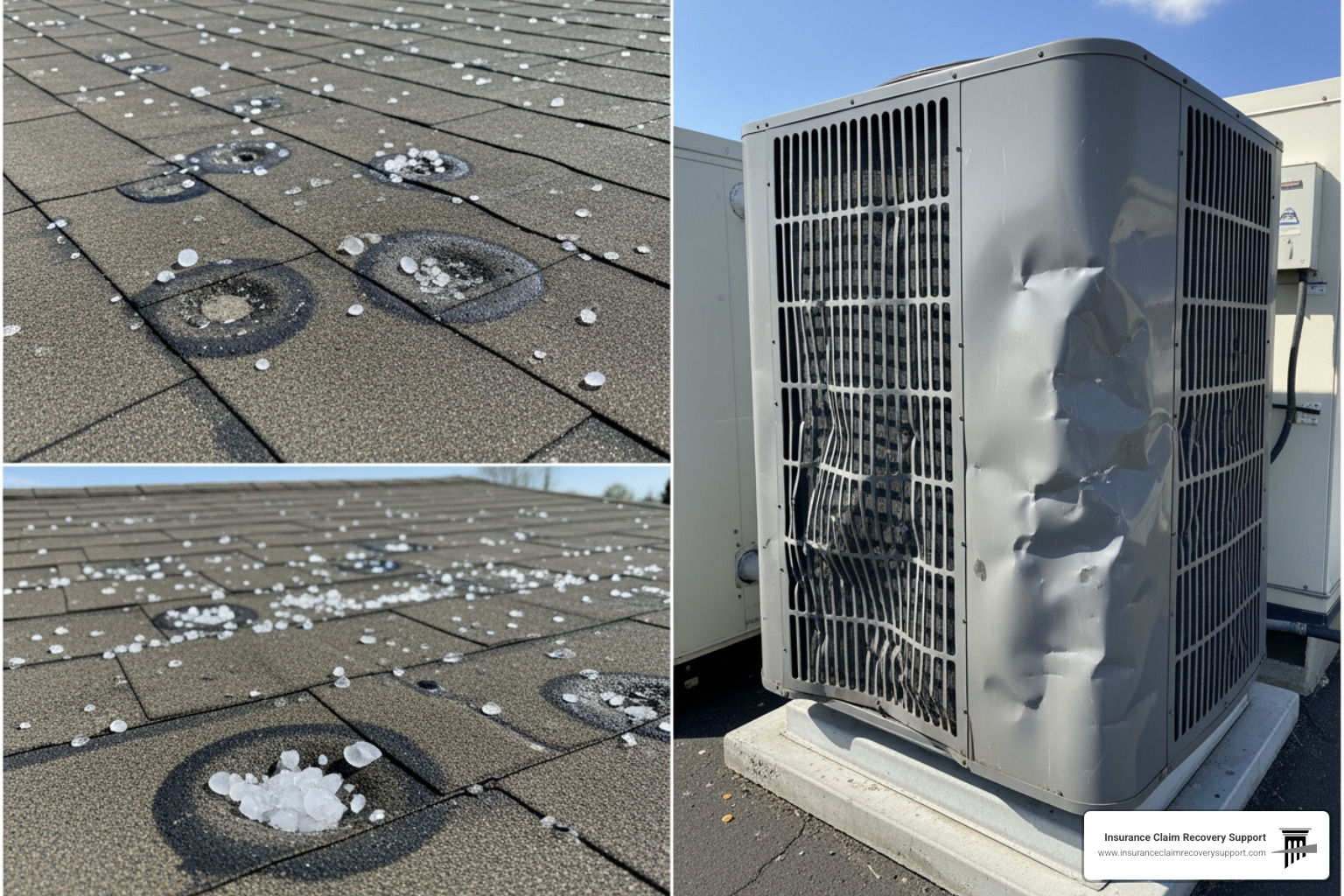
Common Types of Property Damage:
- Roof Systems: Most vulnerable area. Damage varies from cracked tiles to punctures in TPO, EPDM, or Modified Bitumen. See Hail Damage Roof Replacement.
- Siding: Metal or vinyl can be dented, cracked, or punctured.
- Windows: Can crack or shatter.
- HVAC Units: Rooftop units suffer damage to coils and fins.
- Exterior Features: Awnings and signage at risk.
Insurers may argue dents are “cosmetic,” but they can compromise material integrity. Since damage may not cause leaks for years, professional inspection is critical. Details at Texas Hail.
How to Prepare:
- Regular Inspections: Check roof and exterior routinely.
- Impact-Resistant Materials: Consider Class 4 rated materials.
- Protect Equipment: Use hail guards for HVAC units.
- Secure Items: Store loose items before storms.
The Post-Storm Action Plan
Immediate actions after a storm significantly impact your claim.
1. Safety First: Check for hazards like broken glass or downed power lines.
2. Mitigate Damage: Your policy requires preventing further damage. Cover broken windows, tarp roof holes, remove standing water.
3. Document Everything:
- Take extensive photos/videos
- Create detailed damage inventory
- Keep all receipts
- Log every insurance company conversation
4. Notify Your Carrier: Report promptly. See Hail Damage.
Key Steps for Your Texas Hail Damage Claim
1. Filing & Adjuster Visit: Contact your carrier immediately with storm date, damage type, and policy info. When the adjuster visits, be present to point out all damage, including subtle issues.
2. Avoiding Contractor Scams: Post-storm “storm chasers” often engage in fraud:
- Illegal Deductible Waivers: Texas law prohibits waiving deductibles. Red flag for fraud.
- Get Multiple Bids: Obtain 2-3 estimates from reputable local contractors.
- Check Credentials: Verify licenses, insurance, BBB ratings.
- Don’t Pay Upfront: Never pay full amount before work begins.
- Review Contracts: Read thoroughly, never sign blanks.
3. Texas Department of Insurance Role: TDI protects consumers and ensures fair practices. Call 800-252-3439 for guidance on contractor vetting and property insurance policyholder rights.
Repair costs must exceed your deductible for claim processing. See Hail Storm Damage Insurance Claim.
The Crossroads: Public Adjuster vs. Litigation
After significant Texas hail damage, especially on commercial/multifamily properties, insurance offers often fall short. Your options: appraisal, litigation, or public adjuster.

Common Disputes:
- Underpayment: Insurers overlook hidden damage or use outdated pricing
- Delays: Claims drag out, worsening business interruption
- Denial: Various reasons including cosmetic damage exclusions
Appraisal Process: Policy “appraisal clause” allows independent assessment. Determines dollar amount only, not coverage. Can be lengthy and costly without expert guidance.
Litigation Challenges:
- Costly: Legal fees, expert witnesses, court expenses
- Time-Consuming: Can take years
- Uncertain: No guarantee of favorable outcome
- Relationship Damage: Permanently harms carrier relationship
Public Adjuster Alternative: ICRS works exclusively for policyholders. We document full damage extent using specialized tools (core sampling, thermal imaging), prepare detailed estimates often exceeding initial offers, and steer complex insurance documents. Our goal: maximize recovery without costly litigation. 90% settlement success rate demonstrates expert advocacy achieves superior outcomes.
| Feature | Public Adjuster (ICRS) | Appraisal | Litigation |
|---|---|---|---|
| Role | Your exclusive advocate | Neutral third party | Legal representation |
| Goal | Maximum settlement without litigation | Win lawsuit | |
| Cost | Percentage of recovery, no recovery no fee | Split costs plus appraiser fee | Attorney fees plus costs regardless of outcome |
| Timeline | Faster than litigation | Adds months | Can take years |
| Outcome | Negotiated expert settlement | Binding amount only | Court judgment after lengthy process |
| Best For | Large/complex losses, preserving insurer relationship | Dollar amount disputes only | Bad faith or when all else fails |
| Recommendation | First and best step | Limited option | Last resort |