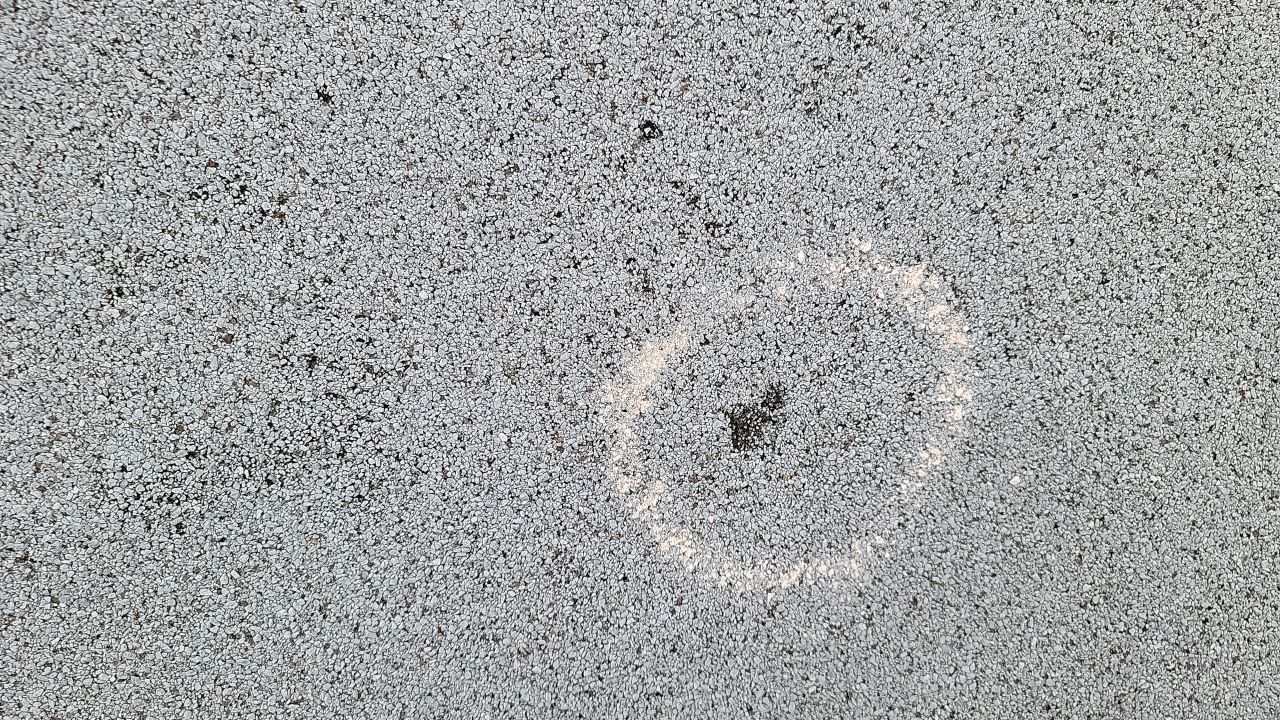
How to Recognize Shingle Hail Bruise Damage
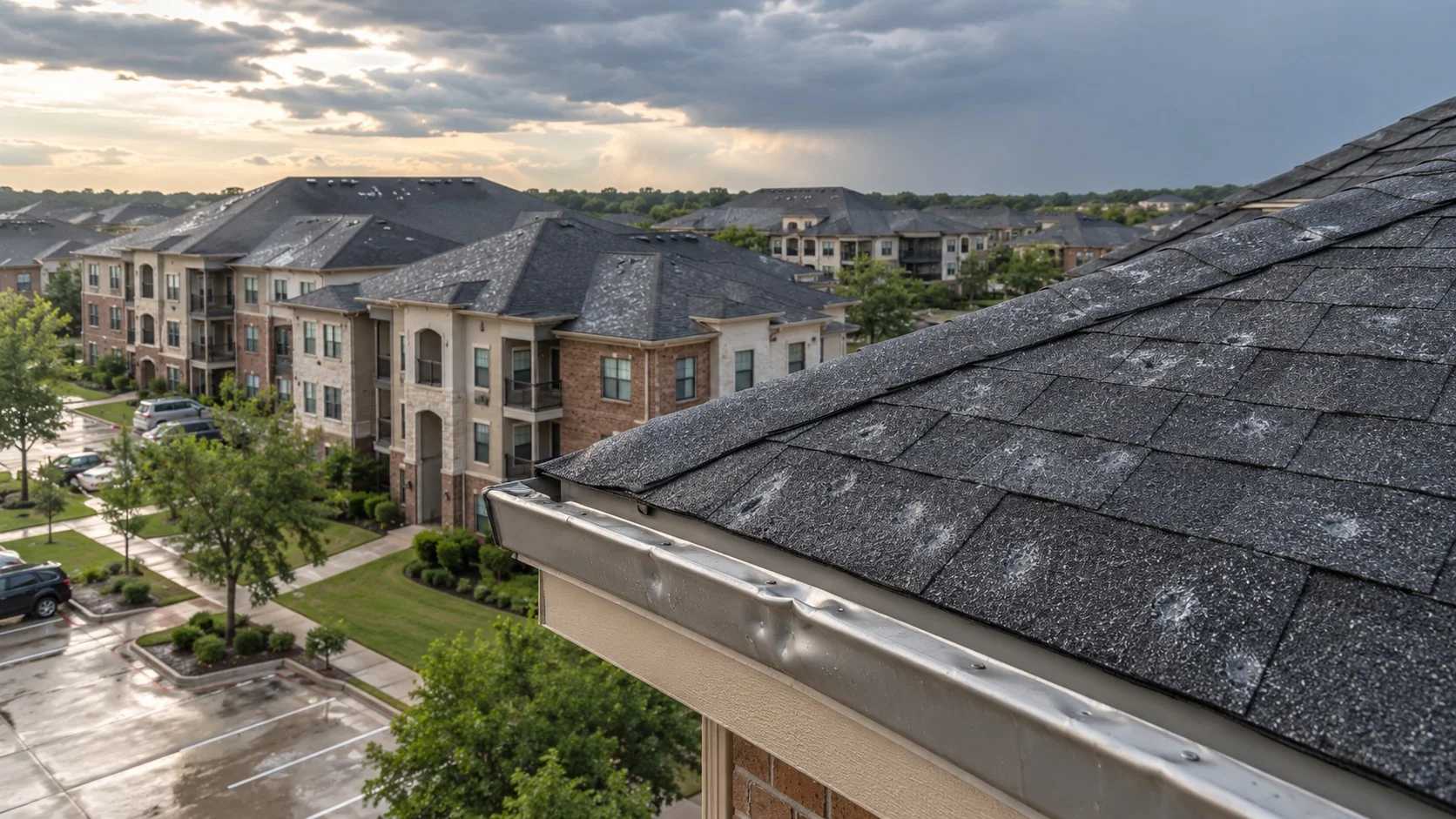
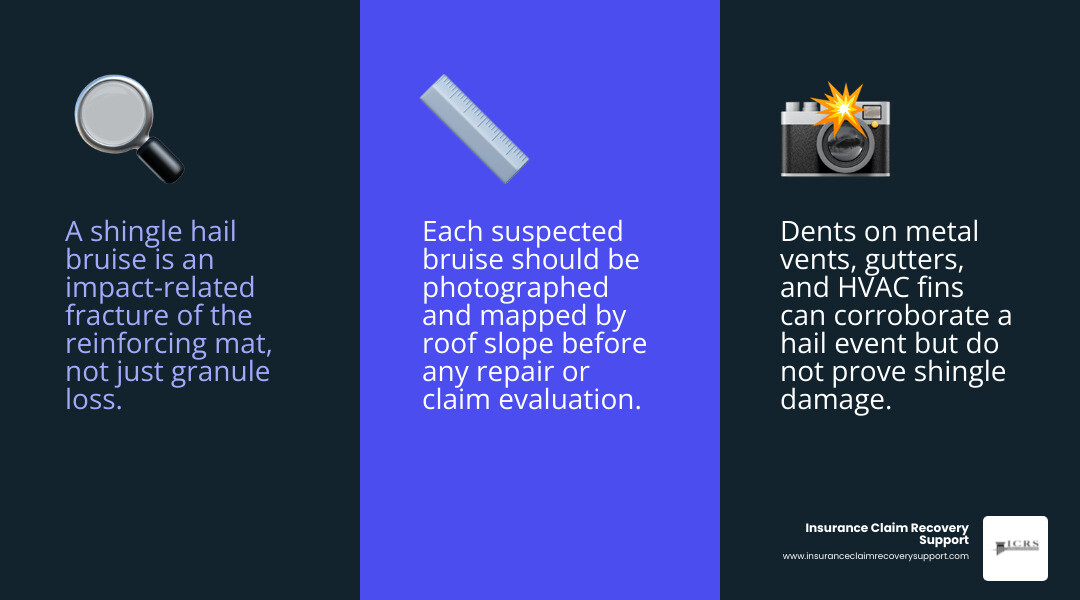
Shingle hail bruise damage is an impact-related fracture or weakening of an asphalt shingle’s reinforcing mat, not simply a spot where granules are missing. To identify a suspected bruise, look for a randomly placed, roughly circular impact mark, then have a qualified roof inspector check whether it feels locally soft or shows a fracture. A mark can be significant even when the fracture is difficult to see from above.
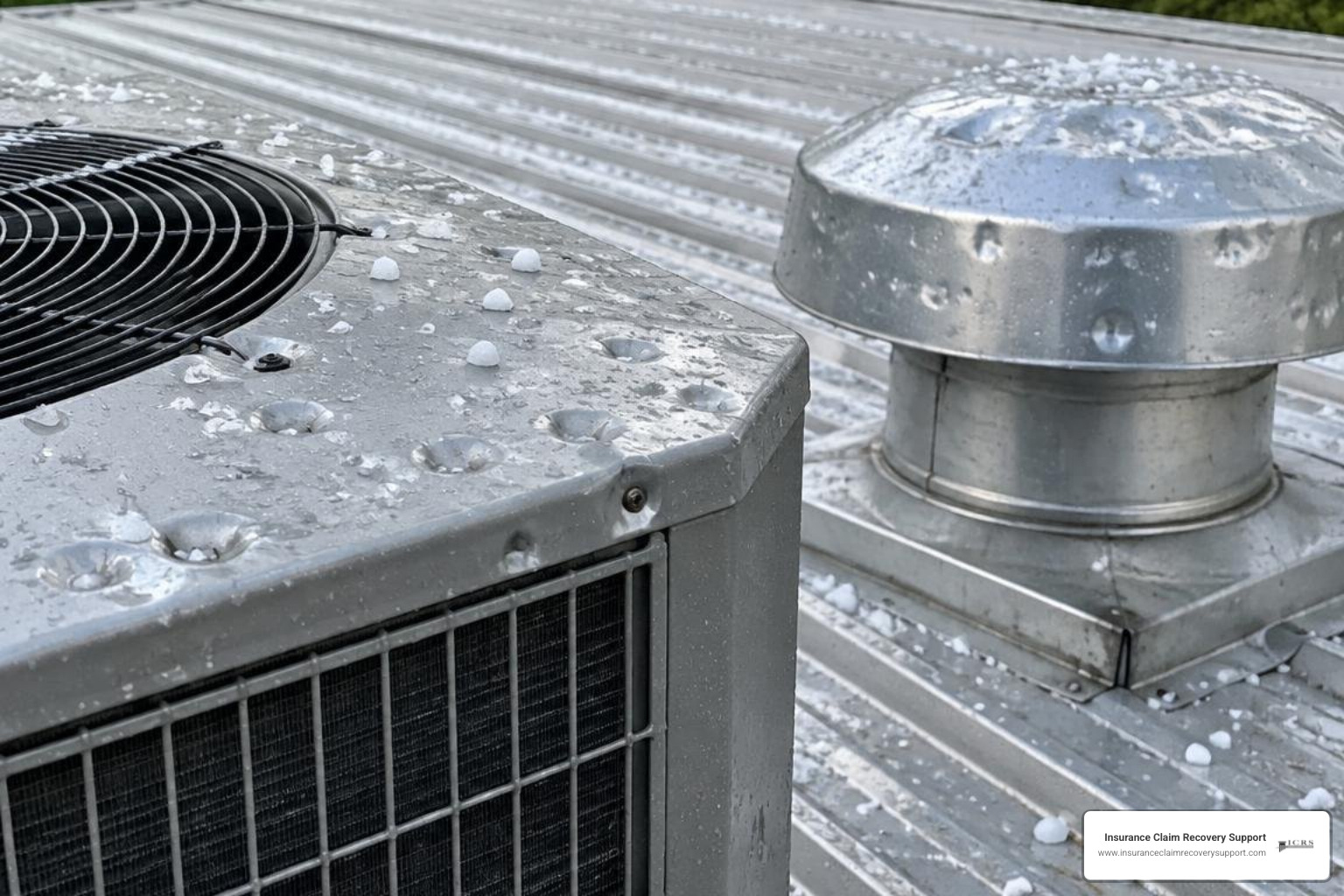
On a commercial building, apartment complex, HOA, or condominium association property, each suspected bruise should be photographed and mapped by roof slope. Dents on vents, gutters, and HVAC equipment can help corroborate a hail event, but they do not establish that a particular shingle is damaged. A documented inspection helps separate hail impacts from blisters, foot scuffs, and ordinary wear before a repair scope or insurance claim is evaluated.
Common shingle hail bruise damage resources:
- Recognizing roof hail damage
- Managing a roof hail insurance claim
- Evaluating hail damage on a flat roof
Identifying Shingle Hail Bruise Damage and Mat Fractures
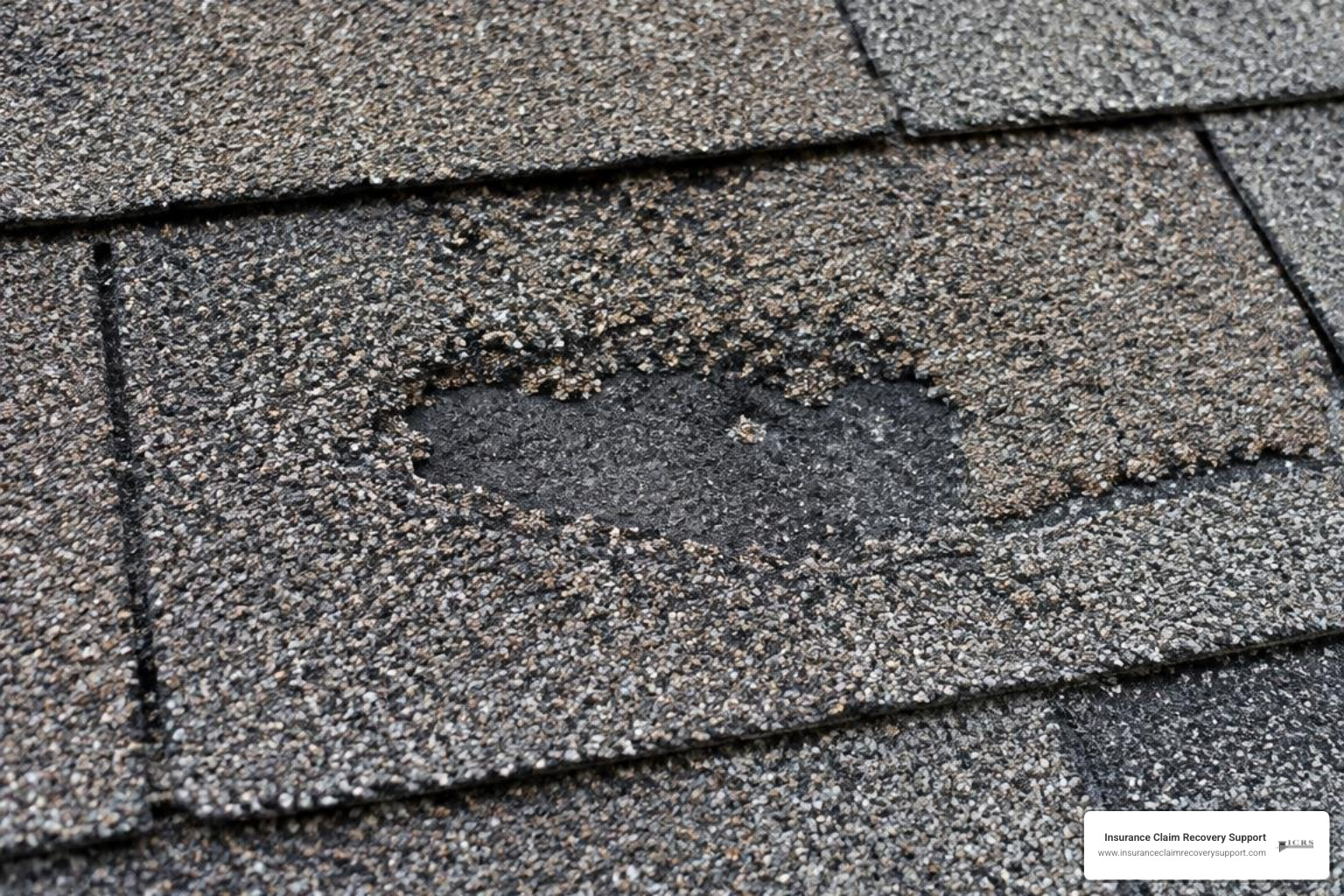
A true hail bruise occurs when a falling ice stone strikes a composition shingle with enough force to compromise its internal core. Unlike cosmetic scuffs, genuine bruising involves functional damage that affects the structural matrix of the building envelope.
Engineering research, such as the Haag Engineering white paper on hail damage to composition shingles, clarifies that a bruise represents a fracture within the shingle reinforcement. While top-surface granule displacement is often visible, the decisive indicator is a localized soft depression that yields under finger pressure, frequently compared to the feel of a bruised apple. In forensic laboratory settings, technicians perform desaturation testing by stripping the asphalt coating with chemical solvents to expose the underlying fiberglass or organic mat, confirming physical tears caused by impact energy.
Physical Mechanics of Shingle Hail Bruise Damage
The kinetic energy of falling hail transfers directly to the roofing substrate upon impact. When a stone strikes a shingle, tensile stress concentrates on the bottom side of the sheet. If this stress exceeds the material’s elastic limit, a bottom-side fracture forms.
Over time, moisture, temperature cycling, and wind vibration cause these bottom-side fractures to propagate upward. This micro-fissuring degrades the underlayment and compromises long-term water-shedding performance. Property managers facing extensive envelope impacts can learn more about comprehensive roof hail damage evaluations across commercial facilities.
Granule Loss vs. True Mat Bruising
Ceramic-coated mineral granules provide vital ultraviolet (UV) protection and fire resistance, accounting for roughly one-third of an asphalt shingle’s total weight. However, superficial granule loss alone does not necessarily constitute functional failure.
Long-term empirical research into granule loss on composition shingles shows that removing up to 70% of granules did not immediately destroy water-shedding capacity over a ten-year exposure period, provided the underlying reinforcing mat remained structurally sound and covered. However, when hail dislodges granules and fractures the mat, latent deterioration accelerates rapidly under UV exposure. Distinguishing between functional fractures and surface shedding is critical, especially when evaluating policies with a strict cosmetic exclusion clause.
Differentiating Hail Damage from Manufacturing and Wear Anomalies
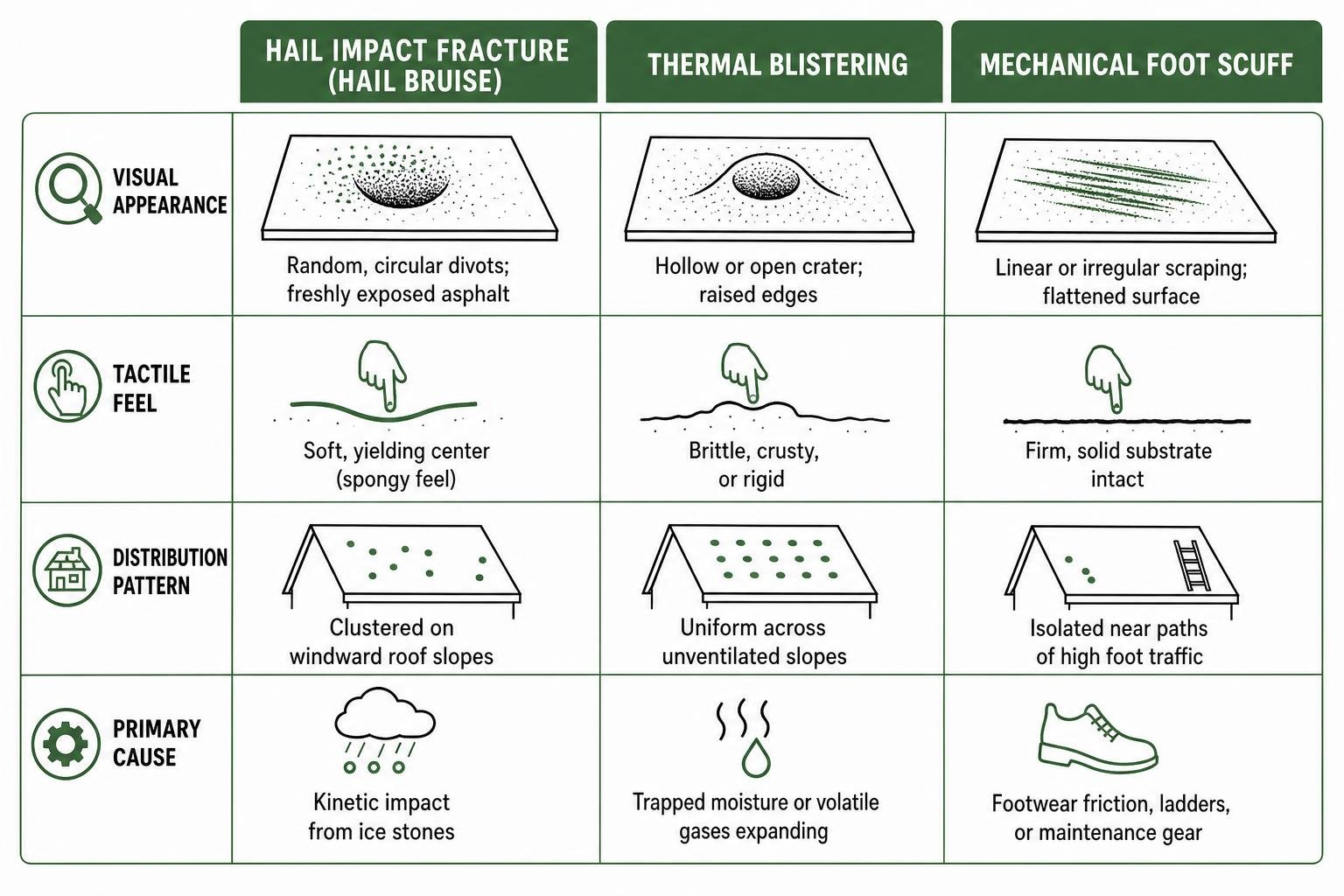
Roofing systems exhibit various surface anomalies that can easily be confused with hail strikes. Careful forensic analysis distinguishes between true storm impacts, factory imperfections, and normal weathering.
| Anomaly Type | Visual Appearance | Tactile Feel | Distribution Pattern | Primary Cause |
|---|---|---|---|---|
| Hail Bruise | Random, circular divots; freshly exposed asphalt | Soft, yielding center (spongy feel) | Clustered on windward roof slopes | Kinetic impact from ice stones |
| Thermal Blister | Hollow or open crater; raised edges | Brittle, crusty, or rigid | Uniform across unventilated slopes | Trapped moisture or volatile gases expanding |
| Mechanical Scuff | Linear or irregular scraping; flattened surface | Firm, solid substrate intact | Isolated near paths of high foot traffic | Footwear friction, ladders, or maintenance gear |
| Intentional Mark | Uniform, sharp indentation; powdered granules | Hard depression without natural spatter | Clustered near access points or ridges | Hand tools, hammers, or foreign objects |
Accurate documentation of these differences prevents disputed scopes during a commercial storm damage insurance claim.
Distinguishing Shingle Hail Bruise Damage from Blisters and Anomalies
Thermal blistering occurs when volatile gases or trapped moisture expand inside the shingle during hot weather. As noted in technical literature on hail damage to asphalt roof shingles, blisters feature raised asphalt rims and hollow centers. In contrast, hail strikes create concave indentations that compress granules inward.
Inspectors use high-magnification optical rings to examine broken ceramic coatings and crushed mineral particles at impact points. Manufacturing defects, such as missing mineral coverage from factory roller voids, display weathered, uniform edges rather than fractured borders.
Ageing Evidence: Recent Hail Strikes vs. Pre-Existing Deterioration
Determining the timeline of roof damage is essential when evaluating whether a storm is covered by current policy terms. Fresh hail strikes expose dark, oily, unoxidized bitumen that appears black or slightly shiny.
Over months of solar radiation, exposed asphalt oxidizes to a dull, weathered gray. Comparing freshly exposed bitumen against aged shingle areas—and correlating these findings with oxidized spatter marks on adjacent metals—helps confirm whether hail damage falls under active coverage.
Hailstone Thresholds and Collateral Property Indicators
The physical size, mass, and velocity of hail dictate the extent of functional damage. Property adjusters cross-reference meteorological radar records with on-site physical indicators to corroborate storm severity.
Guidance from academic research, including resources on how to call an insurance adjuster to determine hail damage, notes that hail must achieve specific kinetic thresholds before bruising occurs across diverse shingle assemblies.
Hailstone Size Thresholds Across Shingle Compositions
Different shingle formulations have distinct physical resistance thresholds:
- Lightweight 3-Tab Shingles: Susceptible to functional bruising from hailstones starting at 1 inch in diameter (quarter-sized).
- Aged Organic-Mat Shingles: Frequently suffer structural damage from 1-inch stones due to brittle, dried core fibers.
- Fiberglass-Mat Shingles: Typically require hail measuring at least 1.25 inches in diameter (half-dollar sized) to fracture the internal mat.
- Heavy Laminated (Architectural) Shingles: Generally resist fracturing until struck by stones of 1.5 inches or larger.
- Class 4 Impact-Resistant Shingles: Engineered with rubberized SBS polymers to withstand severe impacts without core rupture.
Haag’s inspection protocols detailed in their analysis on assessing hail damage confirm these thresholds through extensive laboratory ice-ball cannon testing.
Surrounding Property Analysis and Collateral Validation
Hail does not strike a roof in isolation. A thorough property assessment examines ground-level collateral evidence to confirm impact energy and direction:
- Soft Metals: Dents on aluminum gutters, downspouts, ridge vents, and metal chimney caps show the size of impacting stones.
- HVAC Units: Hail impact patterns on condenser coil fins establish directional wind vectors.
- Exterior Paint and Siding: Chipped paint, cracked vinyl, and wood fence spatter marks (where hail removes algae or oxidation) confirm storm angles.
Gathering this evidence builds a cohesive record for complex hail storm roof damage insurance claims involving large commercial structures or multi-building portfolios.
Forensic Roof Assessment Protocol and Repair vs. Replacement Economics
To establish an objective damage evaluation, inspectors use standard test squares measuring 10 feet by 10 feet (100 square feet) on each directional roof slope. The number of verified bruises inside each test square is counted and extrapolated across the total roof surface area. If an insurer attempts to undercount verified impacts, policyholders may need to resolve the matter through a formal hail damage claim dispute.
The Mathematical Threshold for Shingle Replacement vs. Repair
Replacing individual damaged shingles becomes impractical once damage passes specific percentage thresholds across a roof plane.
When hail damages 10% of the shingles on a slope, the process of unsealing, lifting, and re-nailing adjacent shingles means that more than 40% of the total roof shingles must be physically manipulated. At 12% direct hail damage, the required manipulation rate exceeds 50%.
Because aged shingles are often brittle, lifting adjacent tabs to access fasteners causes creasing and secondary mat tears. Cost modeling demonstrates that when direct hail damage reaches 21% of shingles, the cumulative labor and material expense of individual repairs reaches 100% of the cost of complete roof replacement. In such scenarios, full slope or total property replacement becomes the only sound engineering solution for storm-damage roofing claims.
Navigating Large-Loss Commercial and Multifamily Claims
Managing property damage across commercial facilities and multifamily apartment communities involves detailed financial and operational considerations. Underscoped insurance estimates can leave owners with significant uncovered losses.
For institutional owners, thorough roof-slope counts, collateral documentation, interior leak records, and code-related items help support an evidence-based claim file.
When building envelopes are compromised, secondary interior water intrusion, business interruption, and tenant displacement must be thoroughly documented. Knowing the right protocols for denied or underpaid insurance claims helps policyholders protect their investments. For losses involving interior leaks, consulting a practical water damage documentation guide ensures every consequential loss is recorded.
Frequently Asked Questions About Roof Hail Bruising
Does granule loss alone qualify as covered hail damage on asphalt shingles?
Granule loss qualifies as functional damage when it exposes the underlying asphalt matrix or is accompanied by a fractured reinforcing mat. Superficial granule loss that leaves the core intact may be classified as cosmetic depending on specific policy endorsements and exclusions.
What does a bruised shingle feel like during physical inspection?
A bruised shingle feels soft, spongy, or yielding under thumb pressure, similar to pressing on a bruised apple. This softness indicates that the internal structural fiberglass or organic mat has fractured beneath the asphalt layer.
At what damage percentage is full roof replacement required after a hailstorm?
When direct hail damage affects 10% to 12% of shingles on a roof slope, repairing individual units requires manipulating over 50% of the surrounding shingles. At 21% direct damage, repair costs equal complete replacement costs, making total replacement the standard engineering recommendation.
Conclusion
Accurately identifying and proving shingle hail bruise damage requires systematic forensic inspection, objective test-square sampling, and comprehensive collateral documentation. For complex commercial buildings and multifamily housing portfolios facing substantial storm damage, Insurance Claim Recovery Support LLC provides documented claim reviews, detailed scopes of loss, and professional claim preparation for qualifying losses of $250,000 or greater after deductible. For dedicated guidance on managing substantial losses, request an expert claim review and assistance. Call anytime—our trained insurance claim AI assistant is available 24/7 to answer claim questions, share helpful resources, and collect information for our team. A team member will follow up during business hours.