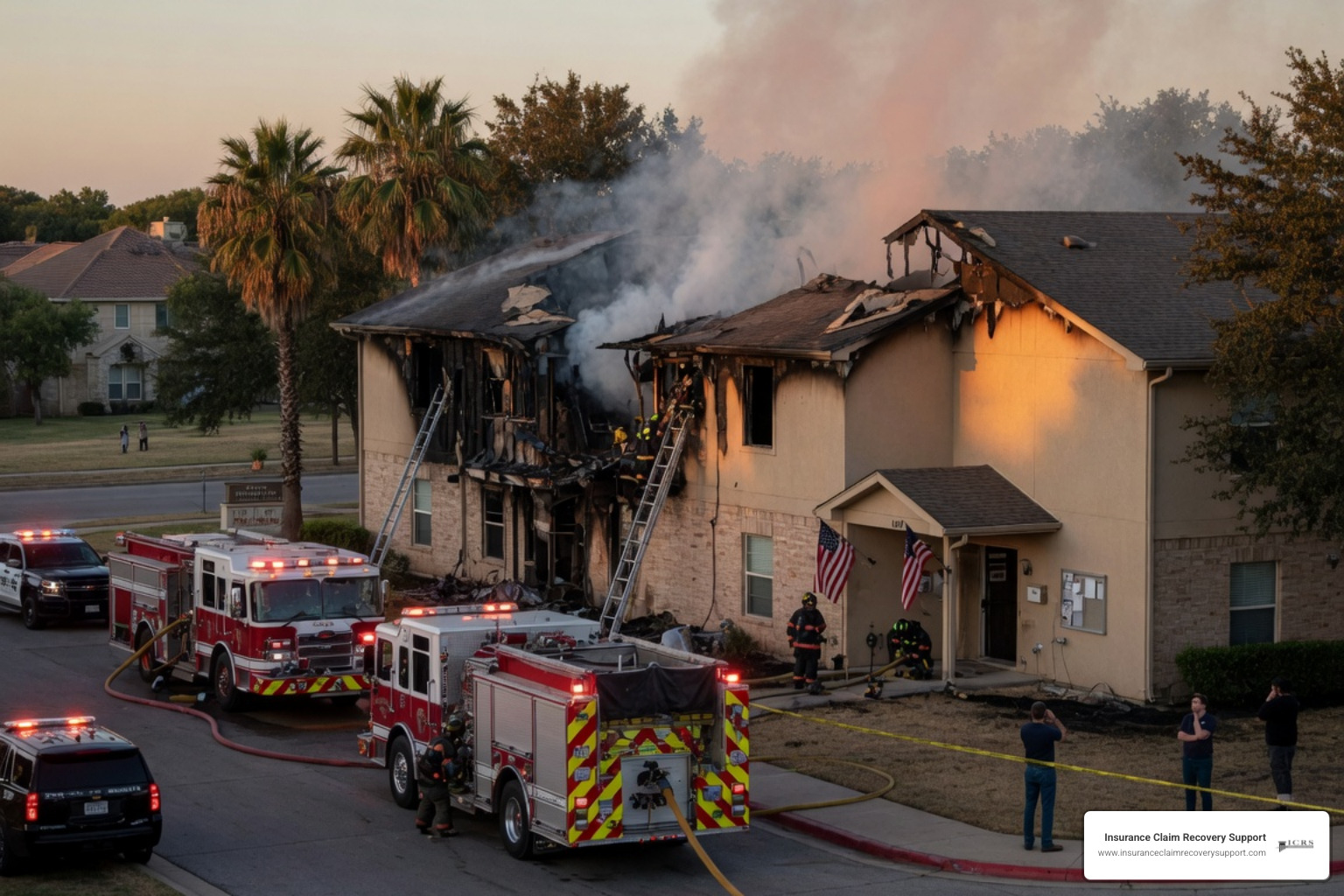

HOA Storm or Fire Claims: A Documentation Checklist for Board and Manager Handoffs
A storm or fire claim can outlast a board term, a property manager assignment, or a vendor relationship. The most useful HOA resource in that situation is not a directory of contacts; it is a reliable claim record that the next decision-maker can understand quickly.
For HOA boards and property managers, the goal is simple: preserve who is responsible for the claim, what property is involved, what evidence has been collected, what the insurer has requested, which estimate version is current, and which responsibility questions still need legal, management, insurance, or vendor review.
The Real Problem: Claim records often become scattered across board emails, management portals, contractor folders, adjuster correspondence, meeting packets, and personal notes. When a board member resigns or a management company changes, the association can lose the context needed to respond to insurer questions, compare estimates, or explain decisions to owners.
What Real Accountability Should Look Like: The association should maintain a documented claim file with a named point of contact, a document custodian, organized property records, a building-by-building evidence register, insurer request tracking, estimate version control, and a transition package for any board or manager handoff.
Key Takeaway: Responsibilities and coverage depend on the association’s actual governing documents, management contract, vendor agreements, and insurance policy. This checklist is an organization framework, not a universal legal deadline or coverage opinion.
Insurance Claim Recovery Support helps association boards and property managers organize and support large commercial, multifamily, and HOA property claims. For claim-specific help, start with HOA insurance claim support or request a review through the ICRS claim-help intake.
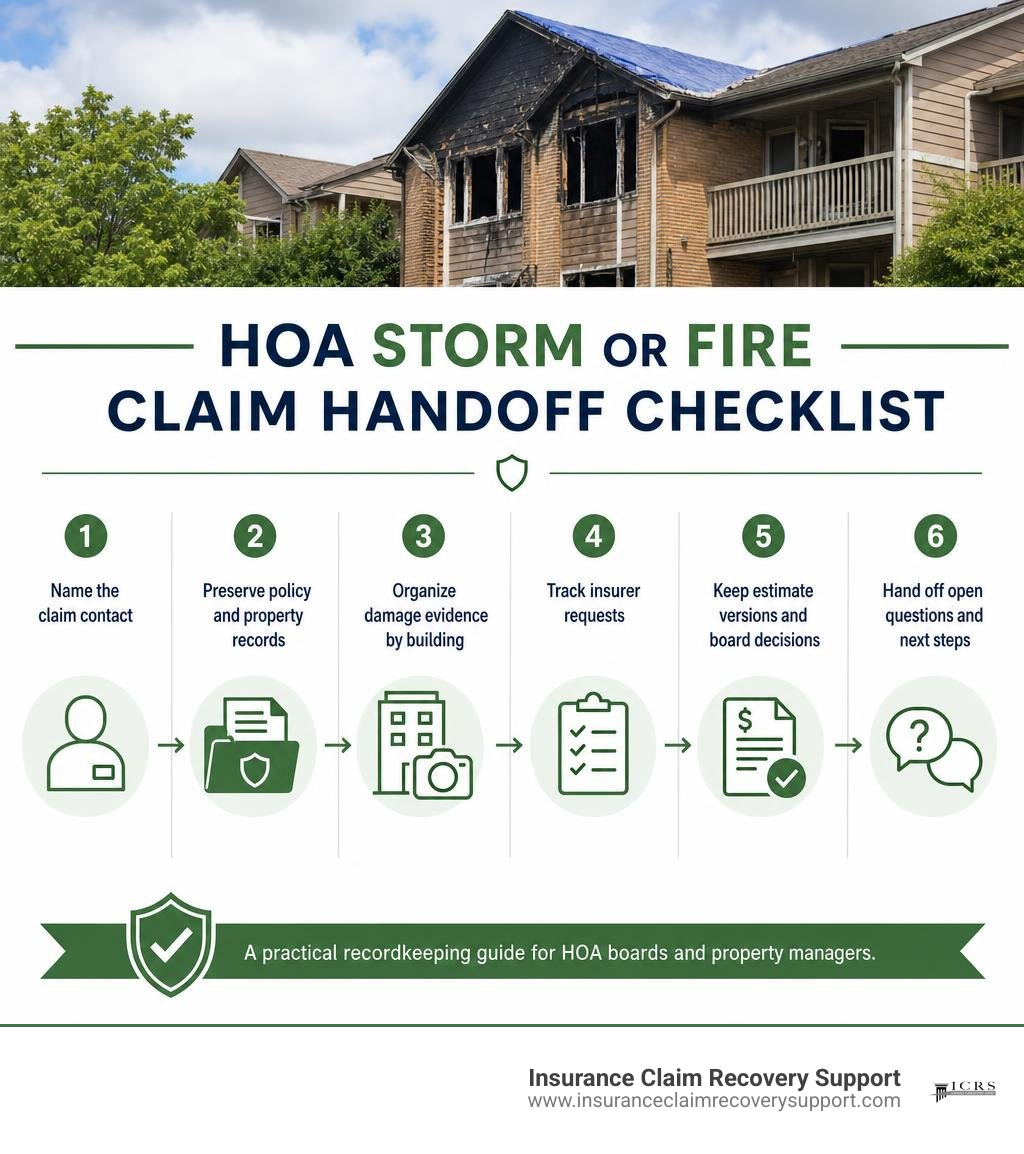
Quick claim-file priorities:
- Name the claim contact and document custodian.
- Save the applicable policy, declarations, endorsements, governing documents, and property records.
- Track damage evidence by building, unit stack, roof area, amenity, fence line, mechanical system, or common area.
- Preserve insurer requests, estimate versions, board decisions, and unresolved responsibility questions.
Assign the Claim Contact and Document Custodian

The first handoff risk is unclear ownership. A board may assume the management company is tracking the claim. A manager may assume the board treasurer has the latest insurer correspondence. A contractor may be communicating with one person while the policyholder’s formal notices go somewhere else.
Before the claim file grows, identify two roles in writing:
- Claim contact: The person authorized to coordinate communications, schedule inspections, collect questions, and keep the board or manager informed.
- Document custodian: The person responsible for maintaining the complete claim file, naming files consistently, and preserving final and superseded versions.
These roles can be held by board officers, a community manager, an association representative, or another authorized person depending on the association’s governing documents and management agreement. The important point is that the role is named, documented, and updated whenever responsibility changes.
Fact vs. Myth: Claim File Ownership
- Myth: The insurer, contractor, or management company will automatically keep every record the association may later need.
- Fact: The association should preserve its own file of policies, photos, estimates, invoices, board decisions, correspondence, and open questions.
- Translation: A claim file should be organized for the next board member or manager, not only for the person handling the claim today.
Core Handoff Roles for an HOA Property Claim
| Role | What to Record | Why It Matters During a Handoff |
|---|---|---|
| Board claim liaison | Name, title, email, phone, term status, and authority limits. | Helps the next board confirm who was speaking for the association. |
| Management company contact | Manager name, company, portfolio assignment, backup contact, and escalation contact. | Prevents claim knowledge from leaving with one manager assignment. |
| Document custodian | Folder location, naming rules, index owner, and update cadence. | Keeps evidence, estimates, and insurer correspondence from becoming scattered. |
| Vendor or consultant contacts | Contractor, engineer, hygienist, mitigation vendor, public adjuster, attorney, or broker information as applicable. | Shows who inspected what, when, and under which scope of work. |
| Board decision recorder | Meeting date, motion, vote result, authorized next step, and supporting document. | Connects claim actions to documented association decisions. |
Build the Policy, Property, and Evidence Register
The claim file should connect the insurance question to the actual property involved. For an HOA, that may include clubhouse interiors, roofs, exterior walls, fencing, gates, pool equipment, irrigation systems, detached structures, signs, landscaping, or other common elements. For multifamily or condominium-style assets, responsibility may vary by unit boundary, common element definition, policy wording, and governing documents.
Start with a base file that includes:
- Applicable insurance records: Declarations, policy forms, endorsements, deductibles, limits, exclusions, correspondence from the broker or carrier, and any reservation of rights or coverage-position letters.
- Association property records: Governing documents, plats, maintenance responsibility charts, reserve study excerpts, prior repair records, warranties, capital project files, and vendor contracts related to the damaged property.
- Loss evidence: Date-of-loss notes, photos, videos, moisture readings, emergency mitigation records, fire department reports if applicable, inspection logs, invoices, proposals, engineering observations, and owner reports affecting common or shared assets.
- Estimate and scope records: Carrier estimates, contractor estimates, public adjuster estimates, engineer scopes, supplement requests, depreciation notes, and change orders.
Practical Hypothetical: Storm Damage Across Shared Assets
Assume a hailstorm affects a community with a clubhouse, pool building, perimeter fencing, monument signage, and several association-maintained roofs. The board receives owner reports, the manager schedules inspections, and multiple vendors submit partial scopes. A useful evidence register might separate the file this way:
- Clubhouse roof and interiors: Photos, inspection notes, leak reports, repair proposals, mitigation invoices, and board authorization for temporary work.
- Pool building and equipment: Equipment photos, electrical or mechanical inspection notes, vendor recommendations, and any safety-related closure records.
- Perimeter fencing and signage: Location map, linear-foot measurements, photos by run or section, repair proposals, and prior maintenance records.
- Association-maintained roofs: Building list, roof type, photo folders by building, unit-owner reports tied to each building, and estimate line items by structure.
- Open responsibility questions: Items requiring policy review, governing-document review, broker input, legal advice, or board vote before action.
Damage and Evidence Register Template
| Area or Asset | Evidence to Save | Current Status | Open Question |
|---|---|---|---|
| Clubhouse roof | Photos, inspection report, estimate line items, temporary repair invoice. | Inspection completed; estimate version 2 under review. | Are interior repairs included in the same scope? |
| Pool equipment room | Photos, technician report, electrical notes, replacement proposal. | Awaiting vendor documentation. | Is equipment damage storm-related or maintenance-related? |
| Perimeter fencing | Location map, photos by section, measurement notes, repair proposal. | Board approved temporary stabilization. | Which sections are association responsibility? |
| Shared roofs | Building list, photo folders, owner reports, estimate comparison. | Supplemental documentation being prepared. | Which roof areas fall under the master policy? |
Track Insurer Requests, Estimate Versions, and Board Decisions
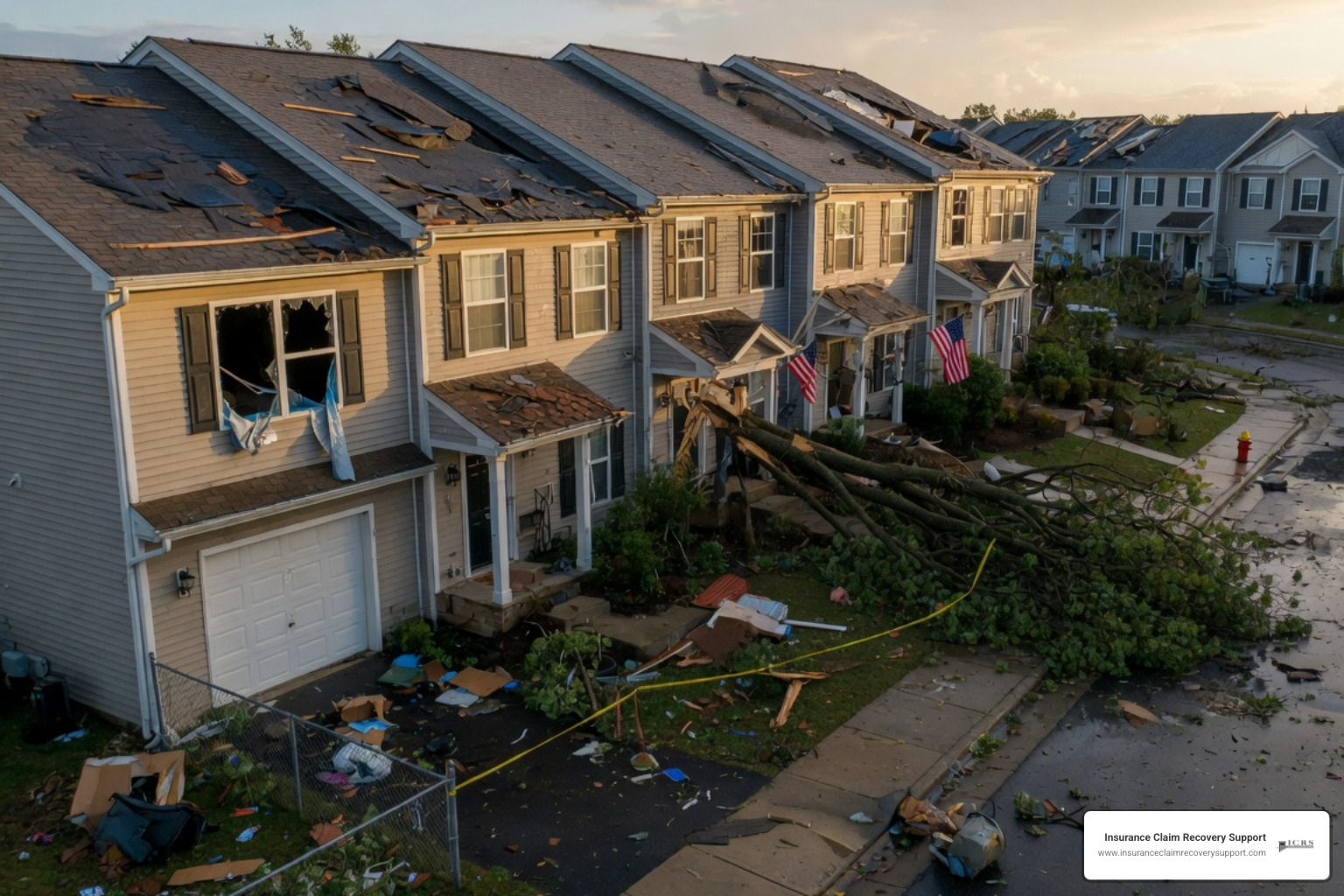
A claim handoff becomes difficult when the file does not show what the insurer requested, what the association provided, and which estimate version everyone is using. This is especially important for larger HOA losses involving storm or fire damage, multiple structures, emergency mitigation, engineering review, or supplemental estimate activity.
Use a simple running log for claim communications:
- Insurer request: Date received, sender, requested item, deadline if one was specifically provided, and person assigned to respond.
- Association response: Date sent, document name, delivery method, and any items still outstanding.
- Estimate version: Source of estimate, version date, total amount, major scope changes, and whether it replaced or supplemented an earlier version.
- Board decision: Meeting date, motion or authorization, vote result, approved vendor or consultant, budget limit if any, and document supporting the decision.
- Unresolved issue: Coverage question, responsibility question, missing documentation, estimate discrepancy, or owner-impact item requiring follow-up.
Avoid relying on memory or informal summaries. A clean version history helps the board compare carrier estimates, contractor proposals, public adjuster scopes, and repair invoices without losing track of what changed.
Estimate Version and Decision Handoff Table
| Date | Item | Version or Status | Owner | Next Step |
|---|---|---|---|---|
| March 14 | Carrier roof estimate | Version 1 received. | Claim contact | Compare to contractor inspection notes. |
| March 18 | Clubhouse mitigation invoice | Final invoice uploaded. | Document custodian | Confirm it is included in claim package. |
| March 22 | Contractor repair scope | Version 2 with added interior items. | Manager | Send to board packet for review. |
| March 26 | Board authorization | Temporary roof protection approved. | Board secretary | Save motion and vendor invoice. |
| April 2 | Open coverage question | Interior water damage under review. | Claim contact | Gather photos, dry logs, and policy language for review. |
Keep Allegations and Outcomes Out of the File Summary
The claim file should distinguish documented facts from opinions, assumptions, and desired outcomes. It is appropriate to preserve insurer letters, estimate comparisons, inspection reports, and notes about disputed items. It is not useful to add unsupported accusations, guaranteed settlement statements, or invented statistics into the association’s working summary.
For larger claims, an experienced public adjuster can help organize evidence, evaluate estimate gaps, and communicate documented loss information on behalf of the policyholder. ICRS generally recommends public adjuster involvement for substantial commercial, multifamily, and HOA property losses, especially when the claim involves multiple buildings, complex scope questions, or disputed repair costs.
Frequently Asked Questions About HOA Claim Handoffs
What should be in the first claim handoff package?
A practical first package should include the claim number, policy records, date-of-loss summary, contact list, property schedule, photos and videos, emergency mitigation records, insurer correspondence, estimate versions, vendor proposals, board decisions, and a list of unresolved questions. It should also identify where the full claim file is stored and who is responsible for updating it.
Who should maintain the claim file: the board or the property manager?
That depends on the governing documents, management agreement, board delegation, and the association’s internal procedures. Many communities rely on the manager for day-to-day organization while the board retains decision-making responsibility. The safest practical approach is to name both a claim contact and a document custodian so the file does not depend on one person’s inbox.
How should unresolved responsibility questions be handled?
Create a separate open-questions log. Examples include whether damage falls under the master policy, whether a component is a common element or owner responsibility, whether a vendor’s scope matches the policy-covered damage, and whether legal, broker, consultant, or board review is needed. Do not resolve these questions with a universal rule; tie each issue to the actual policy, governing documents, property records, and professional advice where appropriate.
What changes when a board member or manager leaves mid-claim?
The handoff package should be updated before the transition date. Include the current claim status, pending insurer requests, next inspection or meeting date, estimate version history, decision log, vendor contact list, folder location, and unresolved issues. If possible, schedule a short transition meeting and save the meeting notes in the claim file.
Conclusion
A storm or fire claim can become harder to manage when association leadership changes, a community manager is reassigned, or the documentation lives in too many places. A well-built claim file protects continuity by showing who handled the claim, what property was involved, what evidence exists, what the insurer requested, which estimate is current, and what questions remain unresolved.
For HOA boards and property managers, the best handoff package is practical: a current contact list, policy and property records, evidence organized by building or common area, insurer request logs, estimate version history, board decision records, and a clearly labeled open-questions list.
Responsibilities and coverage depend on the association’s actual governing documents, management agreement, vendor contracts, property records, and insurance policy. Before making claim decisions, boards should review the controlling documents and seek appropriate professional guidance for the specific loss.
Insurance Claim Recovery Support represents policyholders in commercial, multifamily, and HOA property damage claims. If your association is dealing with a storm or fire loss, disputed scope, delayed response, or a complicated handoff between board and management teams, start with HOA insurance claim support or request a claim review through ICRS.