When the Wind Scale Runs Out of Room: What a Category 5 Hurricane Really Means
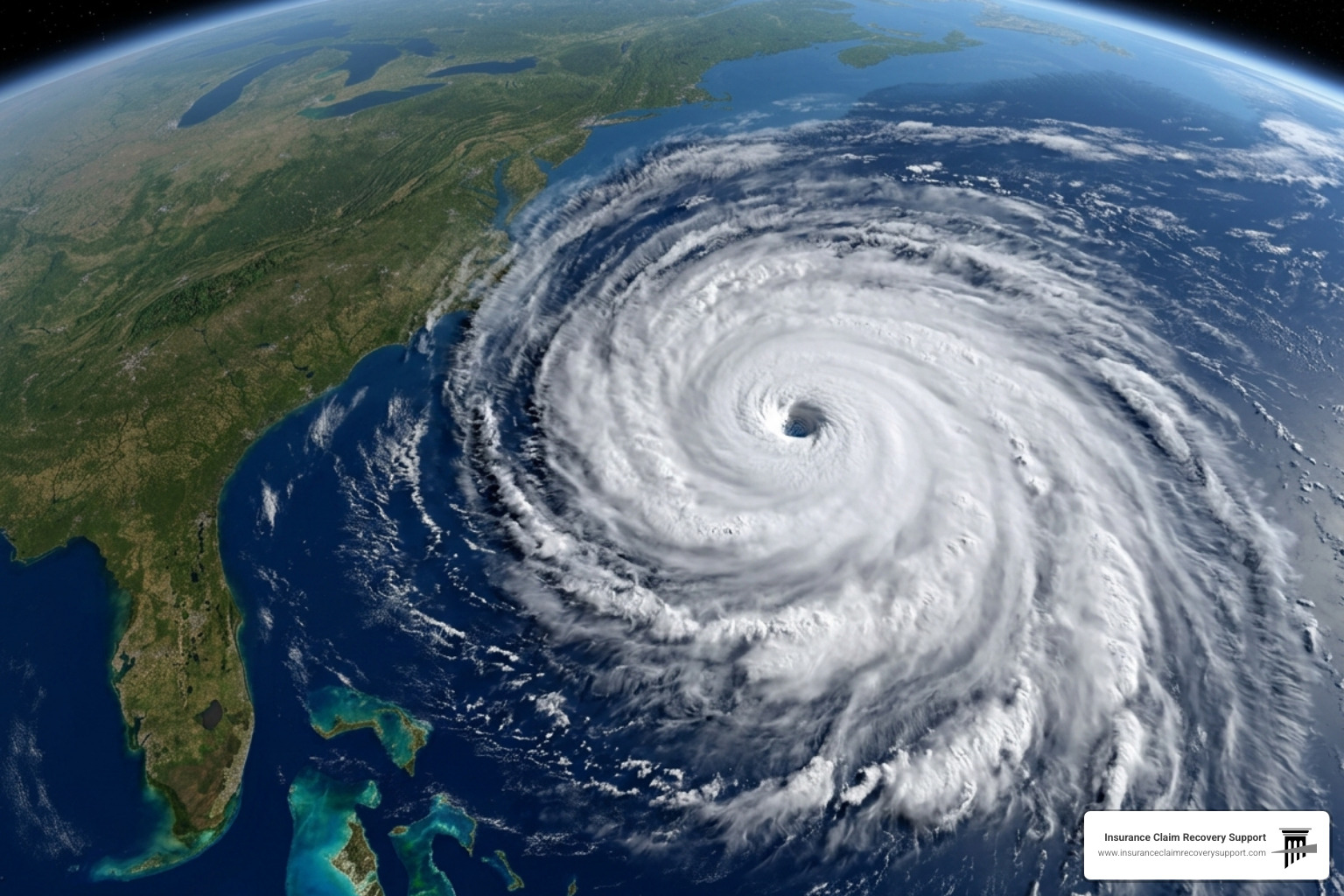
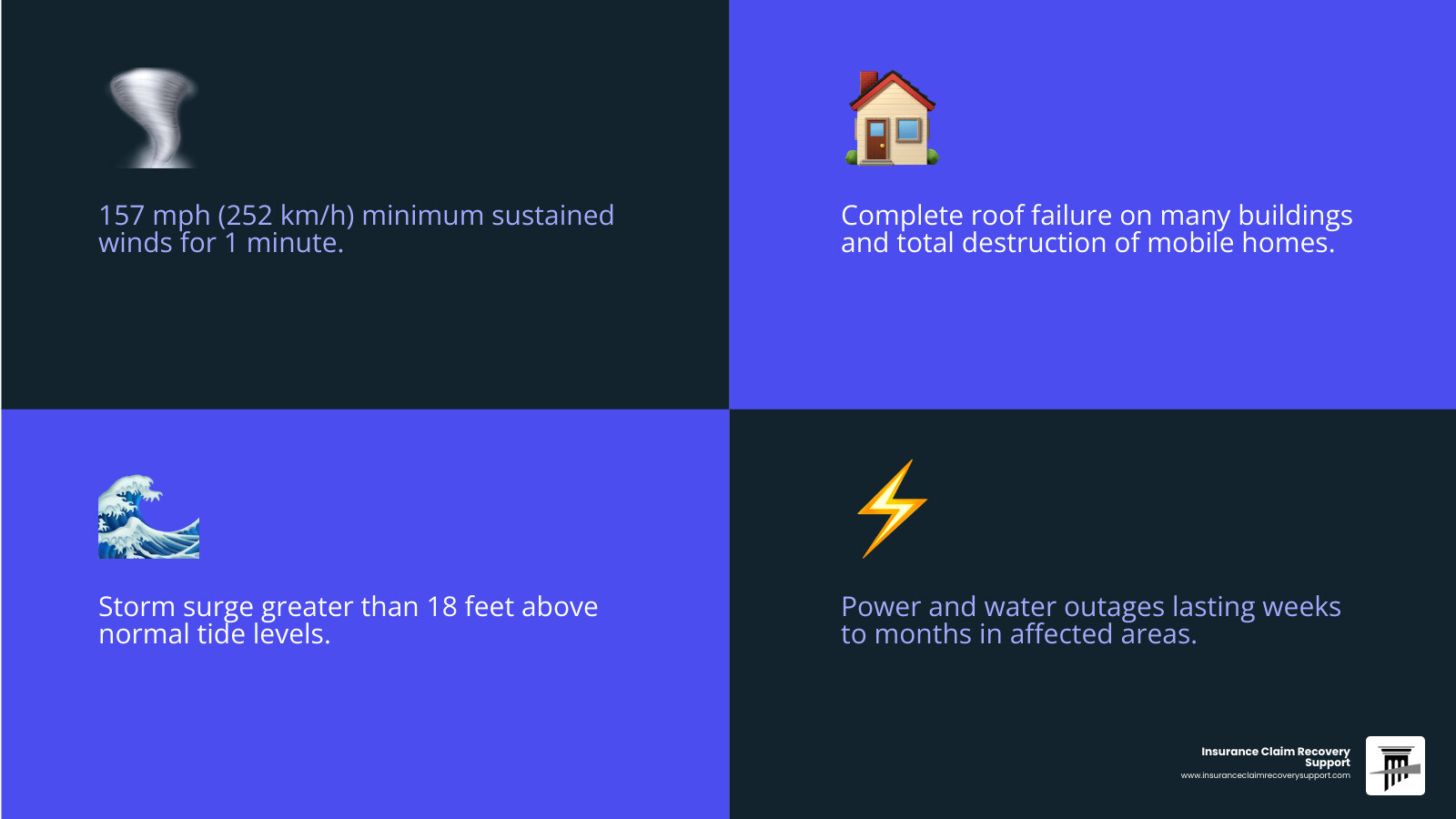
What is a Category 5 hurricane? It is the most powerful classification on the Saffir-Simpson Hurricane Wind Scale — a storm with 1-minute sustained winds of at least 157 mph (137 knots / 252 km/h) capable of causing catastrophic, potentially irreversible damage to buildings, infrastructure, and entire communities.
For a companion claim-documentation resource, see the ICRS Hurricane Claim Guide. Coverage and next steps depend on the facts and policy terms.
Quick Answer:
| Feature | Category 5 Hurricane |
|---|---|
| Minimum wind speed | 157 mph (137 kt / 252 km/h) |
| Storm surge | Greater than 18 feet above normal tide |
| Structural damage | Complete roof failure, wall collapse, total destruction of many buildings |
| Power/water outages | Weeks to months |
| Habitability | Areas can be uninhabitable for weeks or months |
| Scale | Highest rating on the Saffir-Simpson Hurricane Wind Scale |
Category 5 is not just the top of the scale — it is the point where the scale essentially runs out of words for “worse.” Entire neighborhoods can be flattened. Commercial rooftops don’t just leak; they disappear. For owners and managers of multifamily complexes, office buildings, and hospitality properties along the Gulf Coast or Atlantic seaboard, a Category 5 landfall isn’t a weather event — it’s a financial crisis measured in millions.
Since 1960, 34 Atlantic hurricanes have reached Category 5 intensity. The 2005 season alone produced four of them. And yet, many property owners are still caught off guard — not by the storm itself, but by what comes after: the insurance claim process.
I’m Scott Friedson, a multi-state licensed public adjuster and CEO of Insurance Claim Recovery Support (ICRS), and throughout my career I’ve helped commercial and multifamily property owners recover hundreds of millions in hurricane damage claims — including navigating the complex, high-stakes aftermath of exactly the kind of storms we’re talking about when we ask what is a Category 5 hurricane. In the sections ahead, we’ll break down what these storms actually do to structures like yours, and what it takes to recover every dollar you’re owed.
What is a category 5 hurricane terms to learn:
- Hurricane Categories
- saffir simpson scale
- what is storm surge
What is a Category 5 Hurricane? Understanding the Saffir-Simpson Scale
When we discuss what is a category 5 hurricane, we are referring to the absolute ceiling of the Saffir-Simpson Hurricane Wind Scale. Developed in 1971 by engineer Herbert Saffir and meteorologist Robert Simpson, this scale provides a 1 to 5 rating based on a hurricane’s sustained wind speed. This estimate is crucial because it helps us predict the level of property damage and flooding we can expect upon landfall.
In the Atlantic basin, which includes the Gulf of Mexico and the Caribbean, hurricane season officially runs from June 1 to November 30. During this window, warm ocean waters provide the fuel necessary for a tropical disturbance to organize into a depression, then a storm, and eventually a hurricane.
The Escalation of Power: Categories 1 through 5
To truly grasp the severity of a Category 5, we have to look at how it dwarfs its predecessors. The damage doesn’t just increase linearly; it escalates exponentially.
| Category | Sustained Winds | Expected Damage |
|---|---|---|
| Category 1 | 74–95 mph | Very dangerous winds will produce some damage (roof shingles, gutters). |
| Category 2 | 96–110 mph | Extremely dangerous winds will cause extensive damage (shallow trees snapped). |
| Category 3 | 111–129 mph | Devastating damage will occur (major hurricanes). |
| Category 4 | 130–156 mph | Catastrophic damage will occur (well-built homes lose roofs). |
| Category 5 | 157 mph or higher | Catastrophic damage; high percentage of framed homes destroyed. |
As a “Major Hurricane” (Category 3 and above), a Category 5 is a beast of a different color. According to the Official Saffir-Simpson Hurricane Wind Scale, once a storm hits that 157 mph mark, the destruction is categorized as “catastrophic.” For commercial property owners in cities like Houston, Miami, or New Orleans, this means your building’s structural integrity is under extreme duress.
The Science of Wind Speed: What is a Category 5 Hurricane Threshold?
The technical definition of what is a category 5 hurricane relies on “1-minute sustained winds.” This measurement is taken at a height of 10 meters (about 33 feet) above the ground. It is important to note that the United States uses this 1-minute average, whereas many other parts of the world use a 10-minute average. This often makes Atlantic hurricanes appear roughly 14% more intense than storms in other basins, even if the physical wind is the same.
In 2010, the National Hurricane Center (NHC) revised the scale to focus exclusively on wind. Previously, the scale included central pressure and storm surge ranges. However, storms like Hurricane Katrina (2005) proved that a Category 3 wind-speed storm could produce a Category 5 level storm surge. By decoupling these factors, meteorologists can provide more accurate warnings. To understand the mechanics behind these giants, you can explore How Do Hurricanes Form.
Historical Records and the Impact of a Category 5 Hurricane
History is littered with reminders of the power behind a Category 5. While they are relatively rare, their impact is unforgettable.
- Hurricane Wilma (2005): Holds the record for the lowest central pressure in the Atlantic at 882 hPa. Lower pressure generally correlates with higher wind speeds.
- The 2005 Season: A record-breaking year with four Category 5 storms: Emily, Katrina, Rita, and Wilma.
- Hurricane Melissa (2025): A recent and terrifying example that tied the record for highest sustained winds at 190 mph, a record previously held by Hurricane Allen (1980).
- The 1935 Labor Day Hurricane: One of the most intense landfalls in U.S. history, striking the Florida Keys with 185 mph winds.
The 2000s remain the most active decade for these monsters, seeing eight Category 5 hurricanes. For property managers, these aren’t just stats; they represent billions in Hurricane Ian Property Damage Insurance Claims and other catastrophic events that have reshaped how we build and insure property.
Protecting Commercial Assets and Navigating Catastrophic Claims
If you own an apartment complex in San Antonio, a retail center in Houston, or an office plaza in Dallas, the threat of a Category 5 might feel distant until the cone of uncertainty starts heading your way. When a storm of this magnitude hits, the “standard” damage assessment goes out the window.
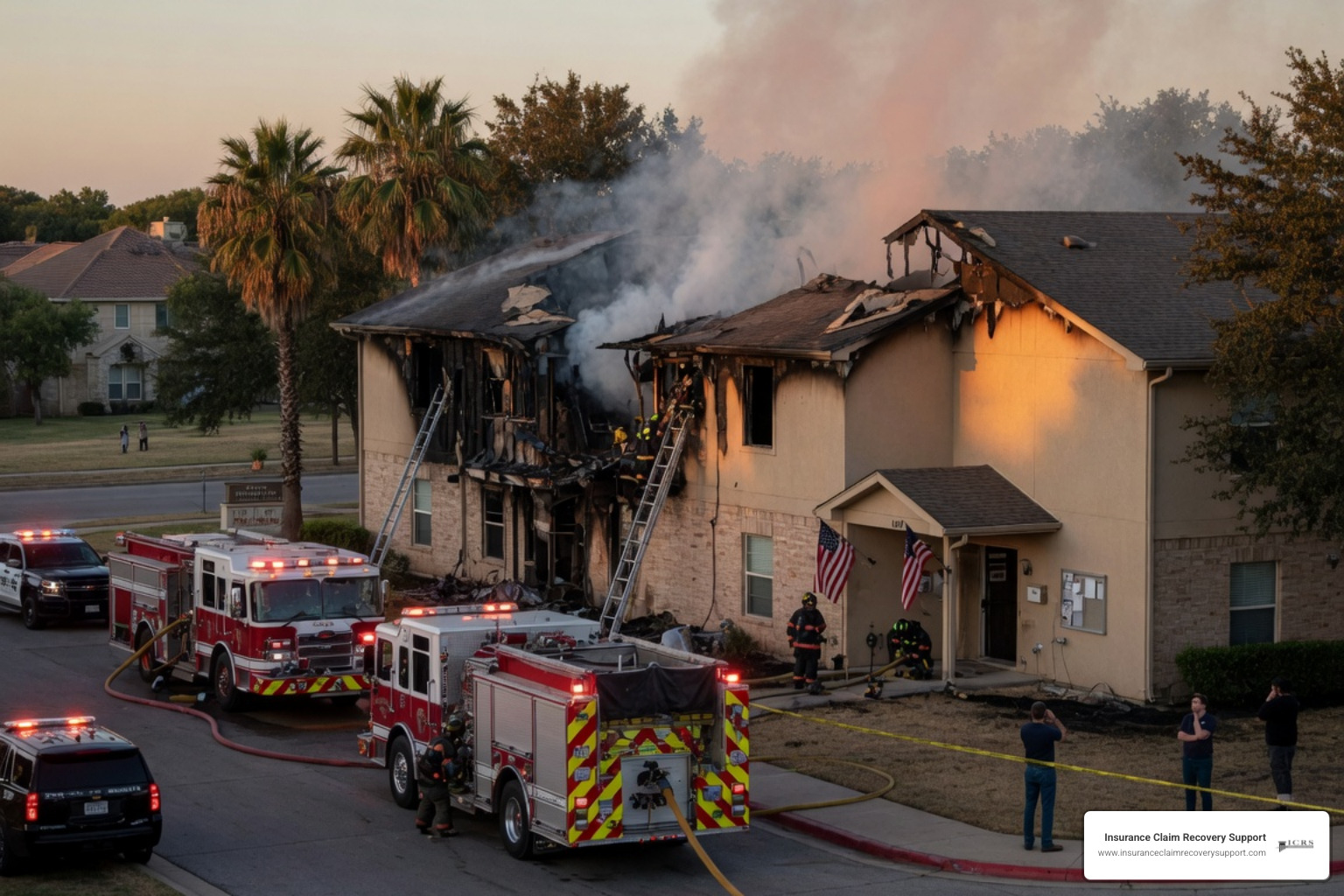
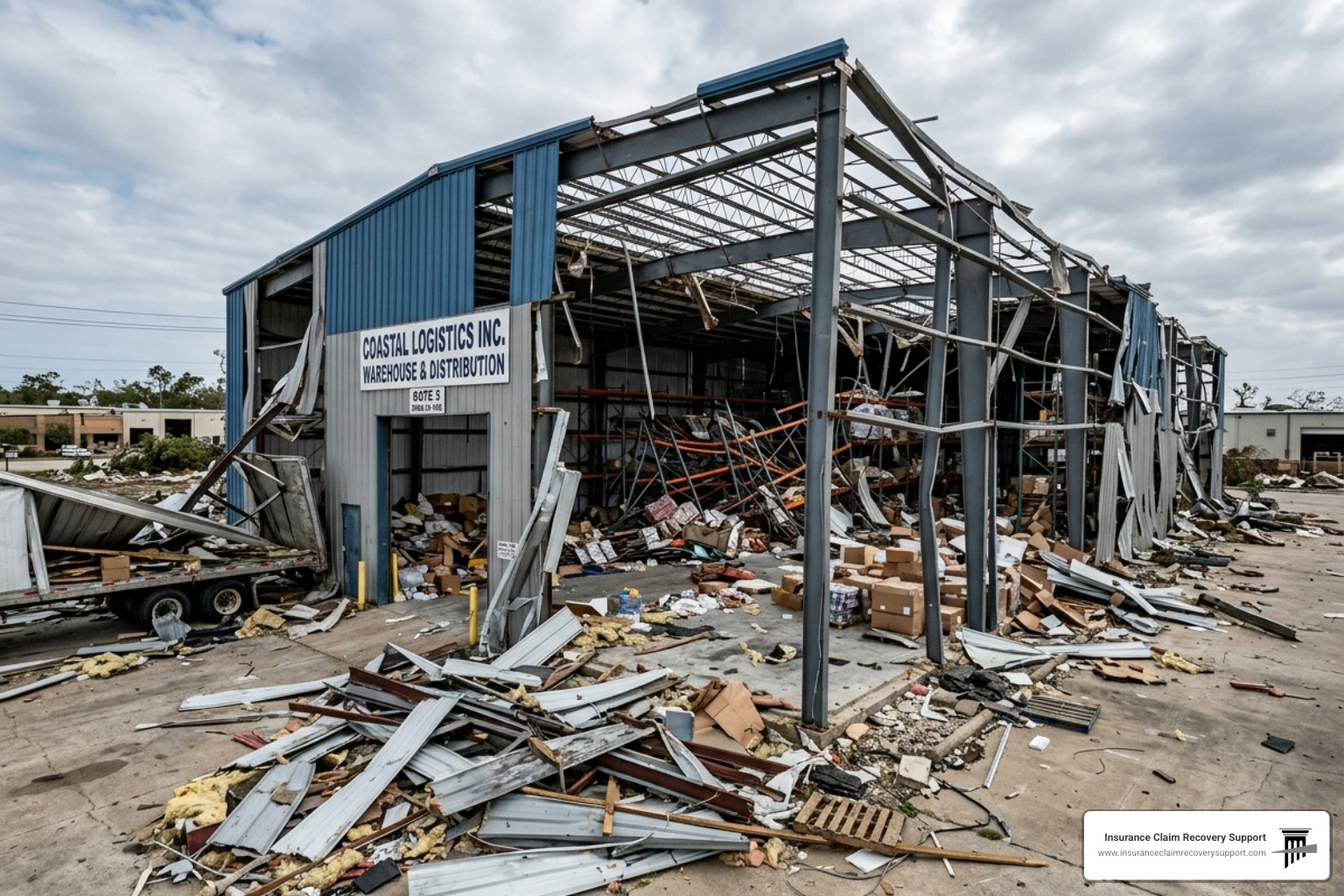
Commercial assets are particularly vulnerable because of their size and complexity. A Category 5 hurricane doesn’t just peel off a few shingles; it can cause a “complete building failure.” This includes the collapse of exterior walls and the total failure of the roof system, leading to massive interior water damage and mold growth.
Catastrophic Damage to Commercial and Multifamily Structures
What does “catastrophic” actually look like for a professional property manager?
- Roof Failure: Even “hurricane-rated” commercial roofs can fail. Once the envelope is breached, the wind pressure from inside can literally lift the roof off the structure.
- Wall Collapse: Wood-framed multifamily buildings often see total wall failure. Even reinforced masonry can crumble under sustained 160+ mph winds.
- High-Rise Vulnerability: In urban centers like Austin or Houston, high-rise windows are susceptible to flying debris. Once a window breaks, the internal pressure can cause “blow-out” failures on other floors.
- Long-term Utility Loss: Power and water may be out for months, not days. This triggers massive Business Interruption claims.
Before you can even talk to an insurance adjuster, you need a clear picture of the loss. We recommend Assessing Damage To Your Property After A Hurricane as soon as it is safe to return to the site.
Named Storm Deductibles and Insurance Realities
One of the rudest awakenings for property owners after a storm is the “Named Storm Deductible.” Unlike a standard $5,000 or $10,000 deductible, these are often calculated as a percentage of the property’s total insured value.
If your commercial building is insured for $10 million and you have a 5% named storm deductible, you are responsible for the first $500,000 of the loss out of your own pocket. These deductibles became common after the massive losses of Hurricane Andrew (1992) and Katrina (2005). Understanding the nuances of Hurricane Damage Claims is essential to ensuring you don’t leave money on the table that is rightfully yours under the policy.
Fact vs. Myth: Hurricane Insurance Claims for Property Managers
Navigating the aftermath of a Category 5 is a chess match against a multi-billion dollar insurance industry. Here are some realities every owner should know:
- Myth: The insurance company’s adjuster is there to help me get the maximum settlement.
- Fact: The carrier’s adjuster works for the carrier. Their goal is to settle the claim for the lowest amount that is legally defensible.
- Myth: I have to sue the insurance company to get a fair payout.
- Fact: Litigation is slow and expensive. A licensed public adjuster can often resolve a claim through the “Appraisal” process or direct negotiation, achieving a fair settlement without the need for a years-long lawsuit.
- Myth: If I wait, the damage won’t get worse.
- Fact: In the humidity of the Gulf Coast, mold starts growing within 24–48 hours of water intrusion. Delays in remediation are a leading cause of claim denials.
We’ve seen the “carrier roadmap” many times. They may offer a quick, low-ball check hoping you’ll sign a release. Don’t fall for it. Looking back at Hurricane Laura The Aftermath, we saw many property owners who initially accepted small payouts only to find hundreds of thousands of dollars in “hidden” structural damage later.
Conclusion: Maximizing Recovery with Expert Advocacy
What is a category 5 hurricane? It is a life-altering event that tests the limits of both architecture and insurance policies. When the wind stops blowing, the real work begins. For commercial and multifamily property owners in Texas, Florida, and across the South, the path to recovery shouldn’t be walked alone.
At Insurance Claim Recovery Support (ICRS), we represent you—the policyholder—never the insurance company. We specialize in large-loss commercial claims, from hospitality and retail to industrial facilities and HOAs. Our mission is to maximize your settlement while reducing delays and avoiding the headache of unnecessary litigation.
Whether you are in Austin, Dallas, Houston, San Antonio, or any of our other service areas, we provide the expert advocacy needed to stand up to “greedy” insurance tactics. We boast a 90% settlement success rate, ensuring our clients get back to business faster and more whole.
Don’t let a “named storm” deductible or a complex policy stand in the way of your property’s future. If you’ve suffered damage, learn How To Choose A Public Adjuster For Hurricane Damage and take the first step toward a full recovery.
Ready to secure your settlement? Schedule a free consultation for hurricane damage recovery with our team of expert public adjusters today. We’re here to make sure your insurance company keeps its promise.