Documenting a substantial property loss in Lubbock
After hail, wind, fire or water damage, property owners need a clear record of what happened, what was damaged and what repairs are supported. A claim file may include several estimates, partial payments, mitigation invoices and unanswered scope questions. Organizing those records helps make differences easier to evaluate.
Insurance Claim Recovery Support (ICRS) represents policyholders. For service information and a review of your property loss, visit our Lubbock public adjuster page.
Start with the building and its use
Commercial buildings, apartment communities, condominium and homeowner associations, schools, churches and high-value custom homes have different documentation needs. Identify each affected structure, roof section, room and shared system consistently across photographs, estimates and professional reports.
- Commercial and apartment properties: separate building repairs, tenant improvements and operating records.
- Associations: identify affected common areas and obtain the documents that explain maintenance and ownership responsibilities.
- Schools and churches: document classrooms, gathering spaces, equipment, finishes and interruptions to use.
- Custom homes: retain plans, finish schedules and specifications for mechanical, electrical and integrated control systems.
Build a useful damage record
Hail and wind
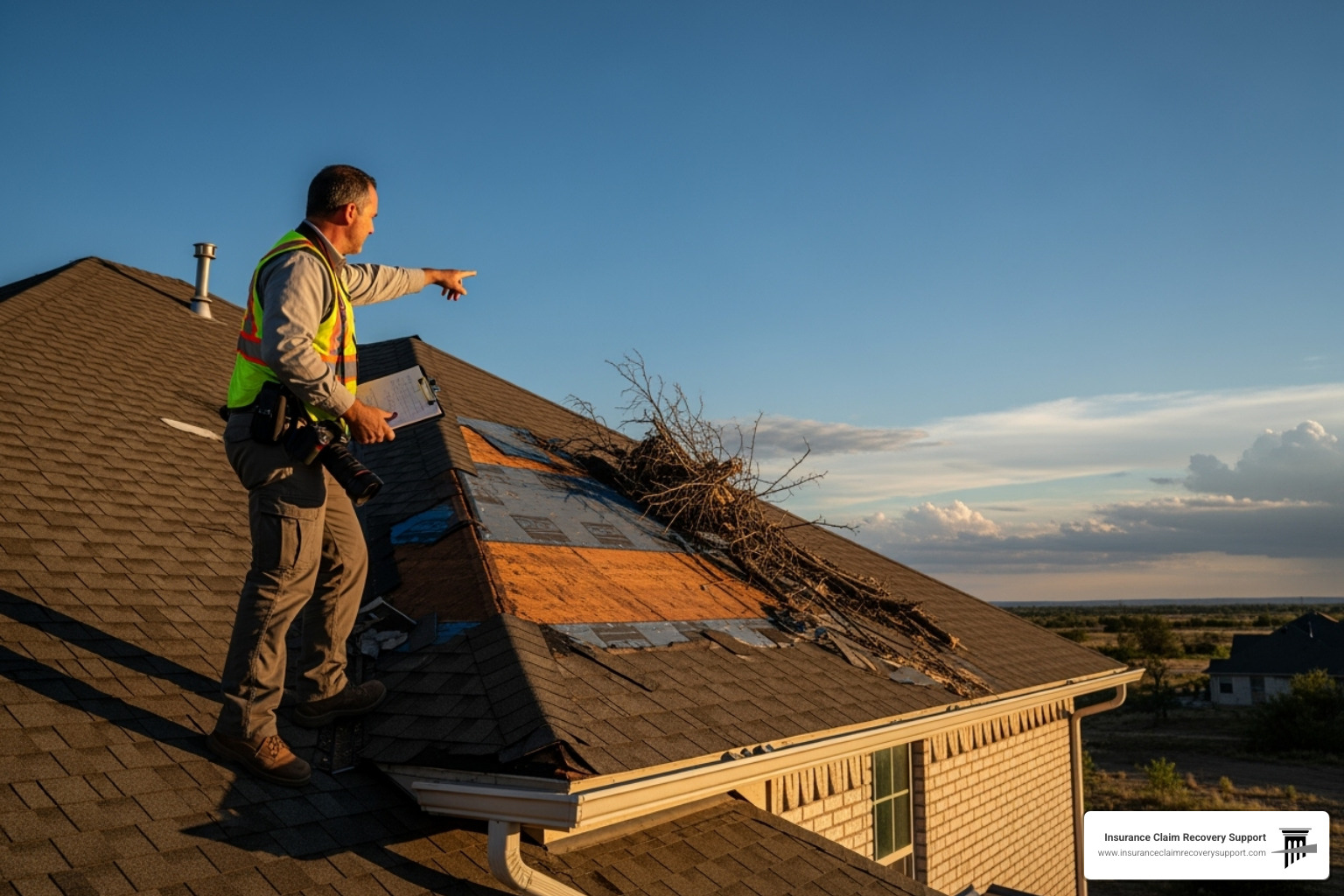
Keep dated photographs, roof measurements, material information, maintenance history and inspection findings together. Identify observed damage and distinguish it from wear, prior repairs and questions requiring additional evaluation. Read our hail claim resources.
Fire and smoke
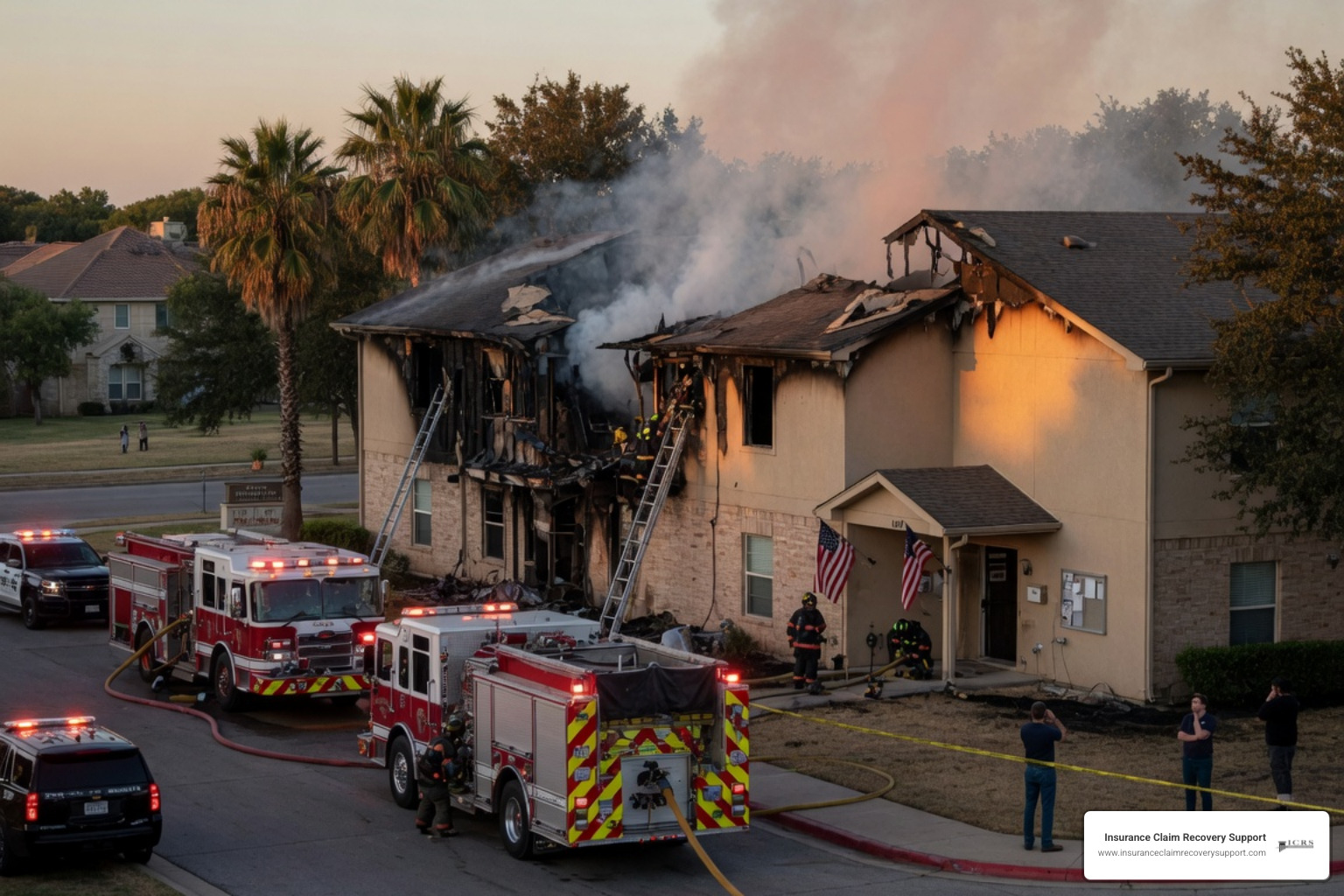
Organize findings by room, material and system. Preserve qualified professional reports and keep the proposed scope tied to documented conditions. Visible burning, smoke effects and firefighting water may require different investigations. Our fire claim resources explain the documentation process.
Water and freeze
Retain source-of-loss information, moisture records, mitigation documentation, invoices and repair proposals. Keep the sequence of events clear and distinguish completed work from proposed repairs. See our water damage claim resources.
Compare estimates by scope, not just the total
Use the same building and room labels when comparing an insurer estimate with a contractor proposal or another repair estimate. Record differences in quantities, materials, repair methods and supporting documentation. A larger estimate does not by itself establish the amount owed; the policy, evidence and applicable requirements need to be considered.
Maintain a separate payment ledger. Identify payments received, the associated coverage and any open questions rather than treating every estimate difference as an unpaid amount.
What a public adjuster can help organize
A public adjuster engaged by the policyholder can help document property damage, prepare and present the claim, and communicate with the insurer about supported scope and valuation questions. Representation does not guarantee coverage, a particular settlement increase or a completion date. The proposed services and compensation should be explained in the written engagement.
Where a dispute raises legal questions or deadlines, obtain advice from a qualified attorney. Claim documentation and negotiation do not replace legal advice.
Prepare for a claim review
- Property address, date of loss and damage summary.
- Policy, declarations and available endorsements.
- Insurer estimates, payment statements and correspondence.
- Photographs, plans, contractor proposals and professional reports.
- Unresolved questions and known upcoming deadlines.
Use the large-loss documentation checklist, then request a Lubbock property claim review. ICRS will review the information to determine whether the assignment is a fit.