Introduction: Protecting Your Business When Disaster Strikes
How much does business interruption insurance cost for your commercial property? Here’s the quick answer:
Average Business Interruption Insurance Cost:
- Small businesses: $500–$3,000 per year (as part of a Business Owner’s Policy)
- Standalone cost: Typically $100–$1,500+ per year when added to commercial property insurance
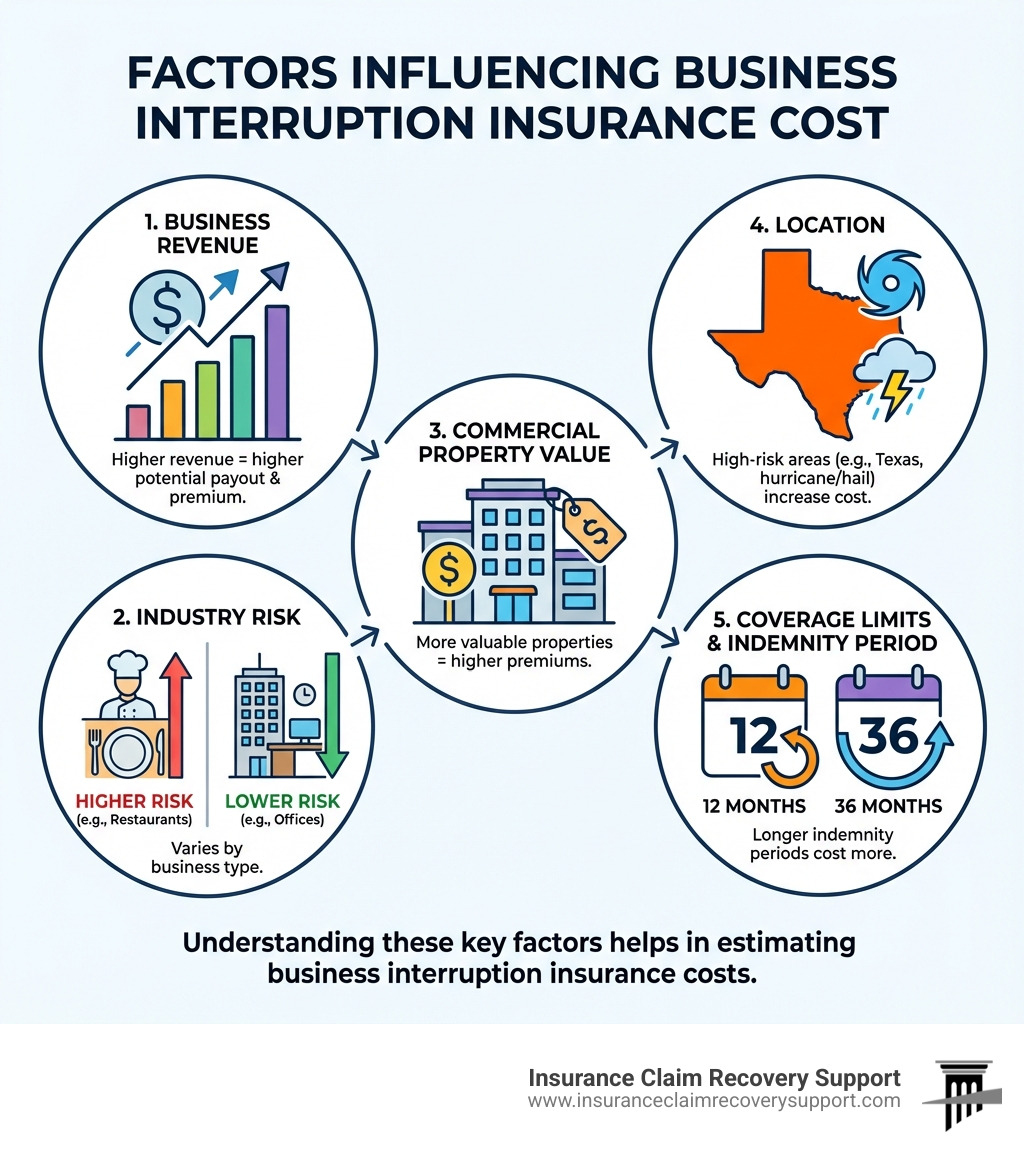
- Cost factors: Your business revenue, industry risk, property value, location, and coverage limits
Key Cost Drivers:
- Business Revenue – Higher revenue = higher premiums (but also higher payouts)
- Industry Risk – Restaurants pay more than office buildings
- Property Value – Valuable commercial property increases premiums
- Location – Texas businesses face higher costs due to hurricane/hail risk
- Coverage Limits & Indemnity Period – 12 vs. 36 months dramatically affects cost
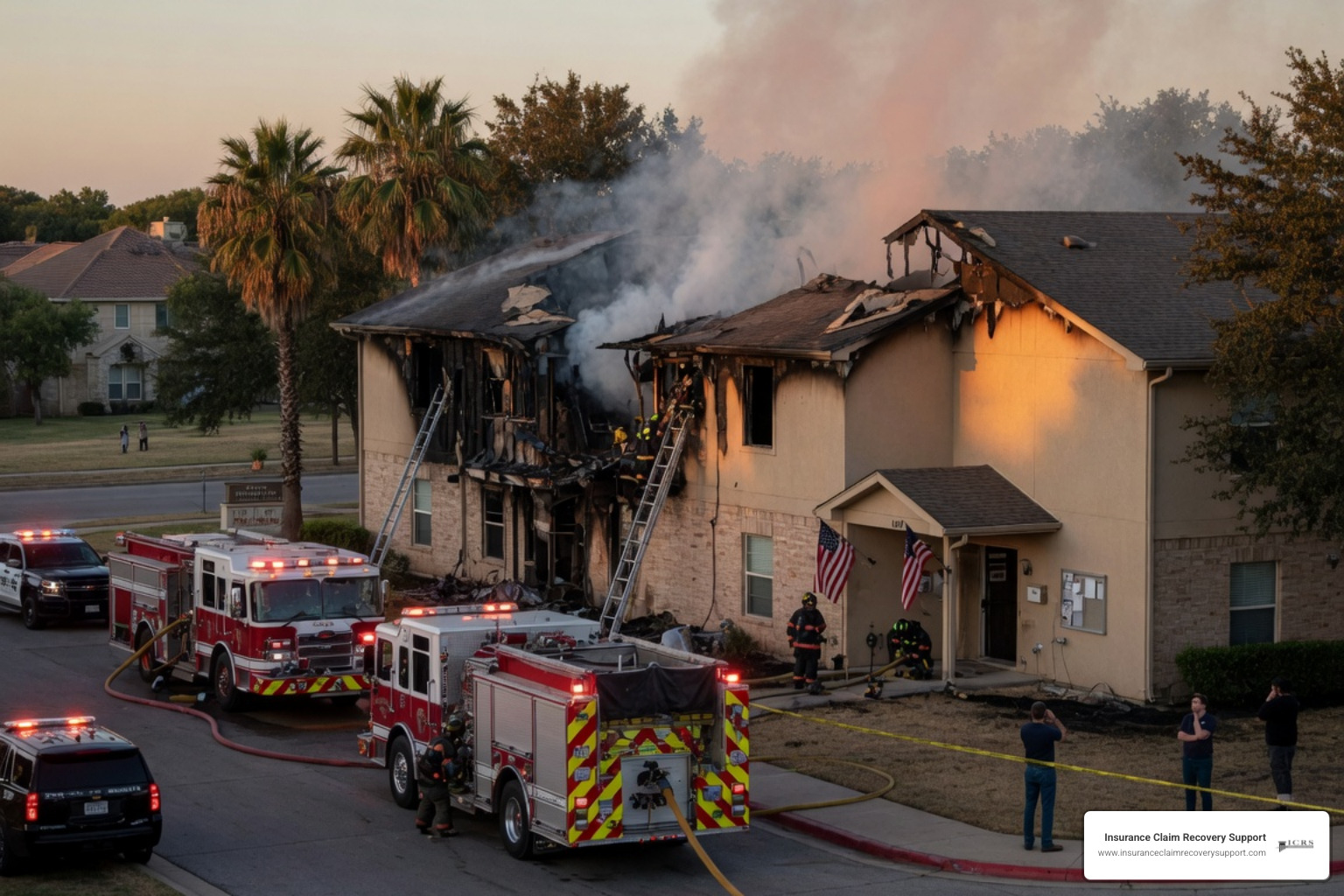
When a disaster like a fire or hurricane shuts down your business, the property damage is only the beginning. The resulting business interruption can be catastrophic. While commercial property insurance handles physical repairs, business interruption insurance is the financial lifeline that replaces lost income and covers ongoing expenses like payroll and rent. It can be the difference between recovery and bankruptcy.
But understanding how much does business interruption insurance cost is only half the battle. Many business owners find too late that their policy has exclusions or coverage gaps, leaving them underinsured and fighting their insurer for every dollar.
As Scott Friedson, CEO of Insurance Claim Recovery Support, I’ve spent over 15 years helping policyholders recover from large-loss claims across Texas. I know that understanding your business interruption policy is key to protecting your financial future. This guide will break down the costs, premium factors, and strategies to ensure you get the maximum settlement when disaster strikes.
How Much Does Business Interruption Insurance Cost?
Business interruption insurance isn’t a standalone policy. It’s typically added to a commercial property policy or included in a package like a Business Owner’s Policy (BOP) or Commercial Package Policy (CPP).
The cost varies widely. As part of a BOP, a small business might pay $500 to $3,000 annually for the whole package. As an add-on, the business interruption portion could range from $100 to over $1,500 per year, or $50 to $125 per month. Businesses with higher revenue and risk will pay more. The cost of inadequate coverage during a disaster is far greater than the premium.

What Factors Determine How Much Business Interruption Insurance Costs
Insurers evaluate several key factors to determine your premium:
-
Industry Risk: A restaurant with open flames faces higher risks and premiums than an office building. Insurers view industries like manufacturing or hospitality as having a greater potential for large financial losses from an interruption.
-
Business Revenue: Higher revenue means a larger potential claim for lost income, which directly increases your premium. Insurers use your gross revenue to calculate the necessary coverage limits.
-
Commercial Property Value: This coverage is tied to your commercial property policy. A more valuable building costs more to insure, which in turn raises the premium for your business interruption endorsement.
-
Location (Texas Hurricane/Hail Risk): Your location is a major factor. Businesses in Texas coastal areas like Houston face hurricane risks, while cities like Dallas and Fort Worth see severe hail and tornadoes. This higher risk of natural disasters leads to higher premiums. For more on protecting your property, see our guide on More info about commercial property damage.
-
Claims History: A history of frequent property or business interruption claims signals higher risk to insurers, which can lead to increased premiums.
-
Number of Employees: A larger workforce means a higher payroll, which is a key “continuing expense” covered by the policy. This increases the insurer’s potential payout and your premium.
How Policy Choices Affect How Much Business Interruption Insurance Costs
Your policy choices also have a substantial impact on your premium:
-
Policy Limits: This is the maximum payout for a claim. Higher limits mean higher premiums, but it’s crucial to set a limit that accurately reflects your potential lost income and expenses.
-
Deductibles (Waiting Period): Most policies have a waiting period (e.g., 72 hours) before coverage starts. This acts as a time-based deductible. Choosing a longer waiting period can lower your premium, but you’ll absorb the initial losses.
-
Indemnity Period (12 vs. 36 months): This is how long the policy will pay out. A standard 12-month period may not be enough for a complex rebuild. Extending it to 24 or 36 months provides more security but increases the cost.
-
Extra Expense Coverage: This optional coverage pays for costs to speed up recovery, like renting a temporary location or equipment. It adds to the premium but can be a vital investment in business continuity.
-
Bundling Policies: Combining business interruption with general liability and commercial property insurance in a Business Owner’s Policy (BOP) is often more cost-effective than buying them separately. For a deeper dive, see A complete guide to business interruption.
Hidden Costs: Common Exclusions That Can Leave You Exposed
Understanding what your policy doesn’t cover is as important as knowing the cost. Common exclusions include:
-
Pandemics (COVID-19): Standard policies require “direct physical loss or damage” to property, so losses from viruses or pandemics are typically not covered. Many policies now have specific virus exclusions. This has led to widespread claim denials and legal battles, as seen in Businesses are battling insurers over the coronavirus.
-
Government Mandates: Shutdown orders from a civil authority are usually not covered unless they result from physical damage to a nearby property, and even then, coverage is often very limited.
-
Undocumented Income: Insurers will only cover lost income that can be verified through financial records. Cash-based or undocumented revenue cannot be claimed.
-
Utility Failures: A power or water outage is often excluded unless it’s caused by a covered peril on your property and you have a specific “off-premises utility services” endorsement.
-
Flood & Earthquake (Requires Endorsement): Standard policies exclude flood and earthquake damage. If the physical damage isn’t covered, the resulting business interruption isn’t either. You must purchase separate coverage or endorsements for these perils.
From Premium to Payout: Getting the Full Value of Your Policy
Paying the premium is easy; getting a fair payout is the hard part. The true value of your policy is tested when you file a claim. Insurers often delay, underpay, or deny valid claims, leaving businesses struggling. Our goal at Insurance Claim Recovery Support is to ensure you receive the full and fair settlement you’re owed, turning your policy into the financial lifeline it was meant to be.
Calculating Your Loss: How Payouts Are Determined
The payout calculation, or “Actual Loss Sustained” (ALS), is complex and a common source of disputes. It aims to replace the income your business would have earned if not for the interruption.
The calculation includes:
- Lost Net Income: Based on historical financial performance and projections, this estimates the profit you lost during the shutdown.
- Continuing Expenses: These are costs that don’t stop when you close, such as:
- Payroll for key employees
- Rent or mortgage payments
- Loan payments
- Taxes
- Proving the Loss: You must provide extensive documentation, including P&L statements, sales records, payroll, tax filings, and receipts for all ongoing expenses. The burden of proof is on you, which is why expert help is critical. For more details, Learn about business interruption claims.
Smart Ways to Lower Your Premiums
You can lower your premiums without sacrificing essential coverage through proactive measures:
- Risk Management: Insurers reward businesses that reduce risk. Implement fire suppression and security systems, perform regular property maintenance, and develop a formal business continuity plan. For help, you can Develop a business continuity plan with FEMA’s resources.
- Higher Deductibles: Choosing a higher deductible or a longer waiting period (e.g., 72 hours vs. 48) can lower your premium, but ensure you can afford the initial out-of-pocket loss.
- Annual Payments: Paying your premium in one lump sum instead of monthly installments often comes with a discount.
Maximizing Your Settlement: The Public Adjuster Advantage
When you file a claim, you’re entering a negotiation where the insurer’s goal is to minimize their payout. They may dispute your calculations, argue for a shorter recovery period, or use policy exclusions against you. This is where a public adjuster becomes your most valuable asset.
-
Avoiding Litigation: Many business owners think their only options are to accept a low offer or file a lawsuit. Litigation is expensive, slow, and uncertain. At ICRS, our specialty is resolving large, complex claims without going to court. We have a 90% success rate in settling claims through expert negotiation, saving you time and legal fees.
-
Expert Documentation and Negotiation: As your advocate, a public adjuster carefully documents your loss, from lost income to extra expenses, building an undeniable claim. We manage all communication with the insurer, leveraging our deep policy knowledge to negotiate the maximum settlement. This frees you to focus on your business recovery.
-
ICRS Expertise in Texas: Our team at ICRS advocates exclusively for policyholders in Texas and other states, specializing in large commercial property claims from fire, hurricanes, hail, and floods. We serve property owners and managers in Austin, Dallas, Houston, San Antonio, and across the state. We understand the tactics insurers use and how to counter them to get you the results you deserve.
Having an expert on your side can be the difference between a frustrating denial and a full recovery. To learn more, see Why you need a public adjuster for your commercial claim and Get help with your business income insurance claim.