McCarran-Ferguson Act and Insurance Claim Recovery Support LLC
To understand the Insurance Antitrust Exemption, we have to look back at a time when the legal status of insurance was in total flux. For nearly 75 years, the Supreme Court held in Paul v. Virginia (1868) that insurance was not “commerce,” meaning it wasn’t subject to federal oversight. This left regulation entirely to the states. However, that changed overnight in 1944 with the landmark case United States v. South-Eastern Underwriters Ass’n.
In that case, the Department of Justice (DOJ) indicted nearly 200 private fire insurance companies for Sherman Act violations, including fixing premium rates and monopolizing trade. The Supreme Court ruled that insurance conducted across state lines is interstate commerce, making it subject to federal antitrust laws. This sent shockwaves through the industry.
In response, Congress passed the McCarran-Ferguson Act in 1945. According to the Legal Principles Defining the Scope of the Federal Antitrust Exemption for Insurance, the Act was designed to restore state primacy. It provided a limited federal exemption to ensure that state-regulated insurance activities could continue without the constant threat of federal antitrust litigation under the Sherman Act, Clayton Act, or FTC Act. While it gave the industry a three-year grace period to adjust, by 1951, every state had enacted laws to regulate property-casualty rates. Today, agencies like the Texas Dept of Insurance serve as the primary watchdogs for these activities.
Historical Precedents and the 1944 Reversal
The DOJ’s 1944 indictment wasn’t just about paperwork; it was about massive rate-fixing schemes in the fire insurance market. Before the Act, insurers argued that pooling data was necessary for solvency—if they didn’t share loss data, they couldn’t price risks accurately, leading to bankruptcies. Congress agreed that some collaboration was healthy but wanted to prevent the “private government” of insurance that the South-Eastern Underwriters case exposed.
The Three Prerequisites for Federal Immunity
For an insurer to successfully claim the Insurance Antitrust Exemption, the activity must meet three strict criteria:
- It must be part of the “business of insurance.”
- It must be “regulated by State law.”
- It must not involve “boycott, coercion, or intimidation.”
If any of these pillars fail, the insurer is exposed to federal antitrust prosecution. This is a critical distinction when evaluating a Public Adjuster vs. Insurance Company for Property Damage Claim. If a group of insurers agrees to “blacklist” certain contractors or public adjusters to suppress claim costs, that qualifies as a boycott and is not exempt.
Defining the ‘Business of Insurance’: The Three-Factor Test and Judicial Narrowing

Not everything an insurance company does is considered the “business of insurance.” Over the last 60 years, the Supreme Court has significantly narrowed this definition through what we call the “Pireno criteria” (from Union Labor Life Insurance Co. v. Pireno).
To qualify, an activity must generally meet these three factors:
- Risk Spreading: Does the practice transfer or spread a policyholder’s risk?
- Policy Relationship: Is the practice an integral part of the policy relationship between the insurer and the insured?
- Industry Entities: Is the practice limited to entities within the insurance industry?
As noted in the research paper Sharing Is Not Always Caring: Reevaluating the Insurance Industry’s Antitrust Exemption, modern technology like machine learning is beginning to undermine the traditional “data sharing” excuse for these exemptions. If an Insurance Adjuster uses collaborative data to systematically underpay a claim, they may be stepping outside the protected bounds of the Act.
Activities Qualifying for the Exemption
Commonly exempt activities include joint ratemaking, the development of prospective “loss costs” (the portion of a rate used to pay claims), and the creation of standardized policy forms used in Commercial Property Claims. These are seen as pro-competitive because they allow smaller insurers to compete with giants by accessing shared historical data.
Non-Exempt Activities and Third-Party Dealings
Courts have been very clear: the exemption does not apply to an insurer’s dealings with third parties. For example, agreements between insurers and auto glass shops or peer-review committees to fix the price of repairs are not exempt. When looking at Insurance Claim Damage Appraisal, Breach of Contract, and Bad Faith: Is There a Connection?, it’s important to remember that administrative or cost-cutting arrangements with vendors often fall under standard federal antitrust scrutiny.
Why Lawmakers are Scrutinizing Property Insurance Claims Practices in 2026

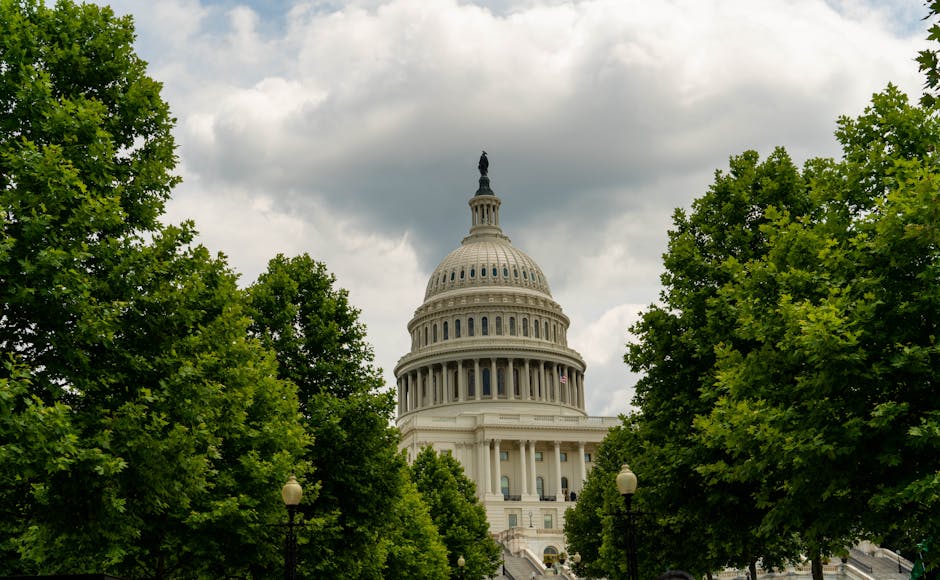
As of April 2026, the Insurance Antitrust Exemption is under more fire than it has been in decades. A May 2025 Senate hearing brought executives from carriers like State Farm under the microscope, questioning whether collaborative “market conduct” has crossed the line into anticompetitive behavior.
In early 2026, President Trump publicly criticized the “outdated protections” that allow insurers to potentially coordinate on rate hikes while exiting high-risk markets like Texas and Florida. This scrutiny is fueled by reports of systemic undervaluation in commercial claims. Lawmakers are asking: is the exemption being used as a shield for Commercial Insurance Claims Help to be denied or delayed? The debate remains: is the Federal insurance antitrust exemption: Insurer, consumer friend or foe?
Systemic Insurer Scrutiny and Market Conduct
Investigations in California and Illinois have highlighted how “claim delays” and “preferred vendor networks” might be suppressing competition. When insurers use the same software—often with the same “localized” pricing that lags behind actual market rates—it raises red flags.
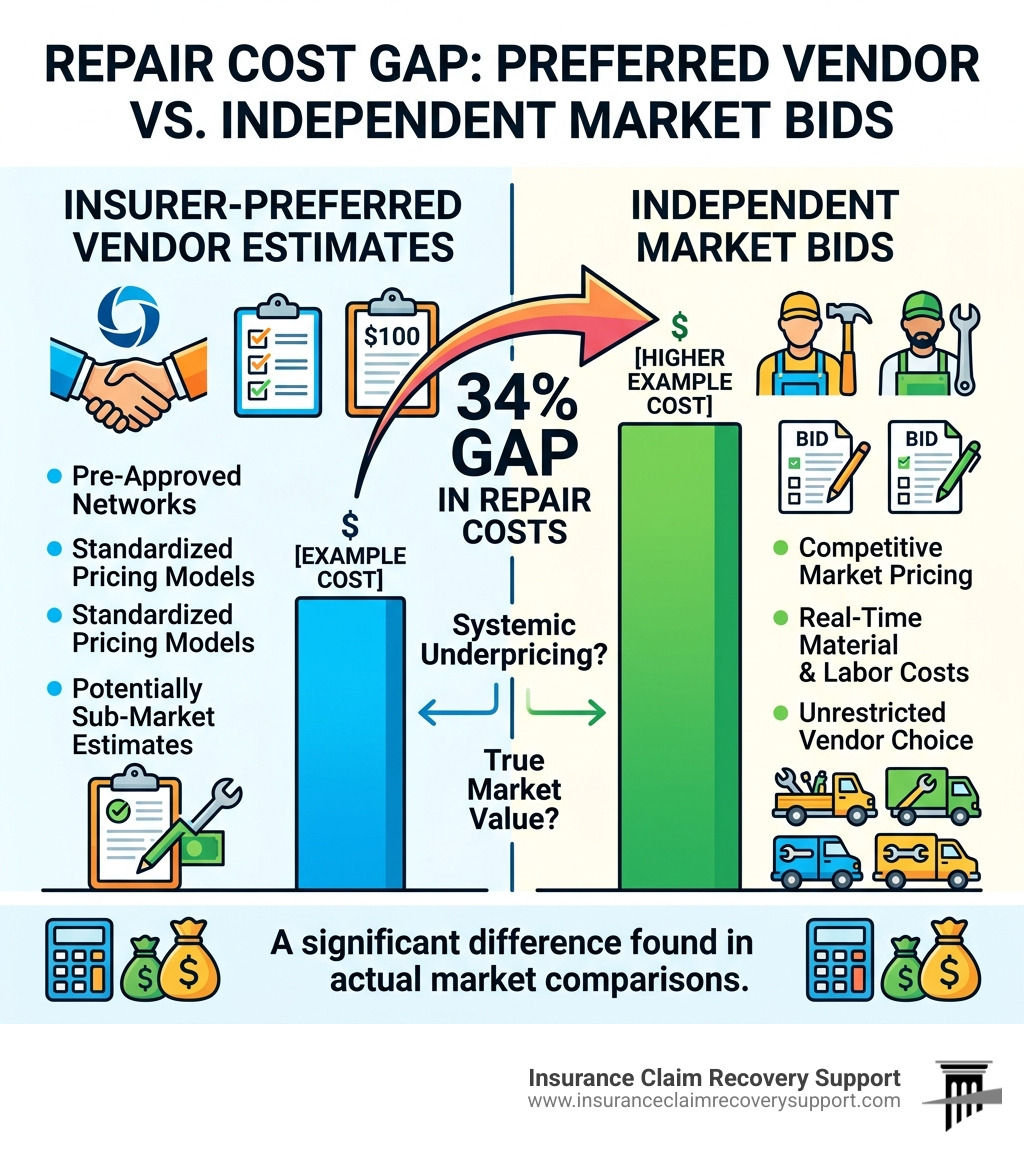
When a Claims Dispute arises, we often find that “preferred” vendors provide estimates significantly lower than independent contractors. If this is the result of industry-wide coordination, it may bypass the antitrust exemption’s protections.
Adjuster Licensing Gaps and Large-Loss Advocacy
One of the biggest issues in 2026 is the “caseload crisis.” Staff adjusters are often juggling 125 to 150 open claims at once, leading to a 23% decline in accuracy. This is why we emphasize Why You Need a Public Adjuster for Commercial Claims. For claims exceeding $250,000, professional representation is no longer optional; it is a necessity to ensure that the insurer’s “standardized” (and often underpriced) process doesn’t steamroll your recovery.
State Regulation vs. Federal Oversight: The Role of Texas and Florida Statutes
Because the McCarran-Ferguson Act defers to state law, the strength of your “protection” depends on where your property sits. In Texas, we rely on the Texas Insurance Code, specifically Chapters 541 (Unfair Methods of Competition) and 542 (Prompt Payment of Claims).
Texas law provides teeth that federal law often lacks. For instance, under Section 542.060, if an insurer fails to comply with prompt payment deadlines, they may be liable for the claim amount plus 18% interest per year and attorney’s fees. If a carrier refuses to pay a fair amount, we often invoke the Appraisal (Loss Type) clause to bypass their internal delays.
Texas Appraisal Awards and Bad Faith Protections
In cities like Austin, Dallas, Houston, and San Antonio, the appraisal process has become a vital tool. Our Public Adjuster Services focus on using these state-level protections to counter the “take it or leave it” offers that often stem from collaborative industry pricing models.
The Impact of CHIRA and Future Regulatory Reform
The 2021 Competitive Health Insurance Reform Act (CHIRA) already repealed the antitrust exemption for health insurers. Now, lawmakers are looking at the property and casualty sector. While some fear that a total repeal would hurt small insurers, others point to the Prison Bound Insurance Regulator cases as proof that the current system lacks sufficient federal oversight. Any future reform will likely include “safe harbors” for data sharing while stripping away immunity for claims-handling practices.
Fact vs. Myth: Navigating the Insurance Antitrust Exemption in Large-Loss Claims
| Myth | Fact |
|---|---|
| The exemption allows insurers to fix prices. | Myth. Insurers can share data, but agreeing on final consumer premiums is illegal. |
| Claims handling is exempt from antitrust. | Myth. State consumer protection and bad faith laws still apply to how claims are paid. |
| Only big insurers benefit from the Act. | Myth. Small insurers use pooled data to compete with larger companies. |
| Boycotts are protected if the state regulates them. | Myth. The McCarran-Ferguson Act explicitly excludes boycotts and coercion from immunity. |
Myth: The Insurance Antitrust Exemption Allows Total Price Fixing
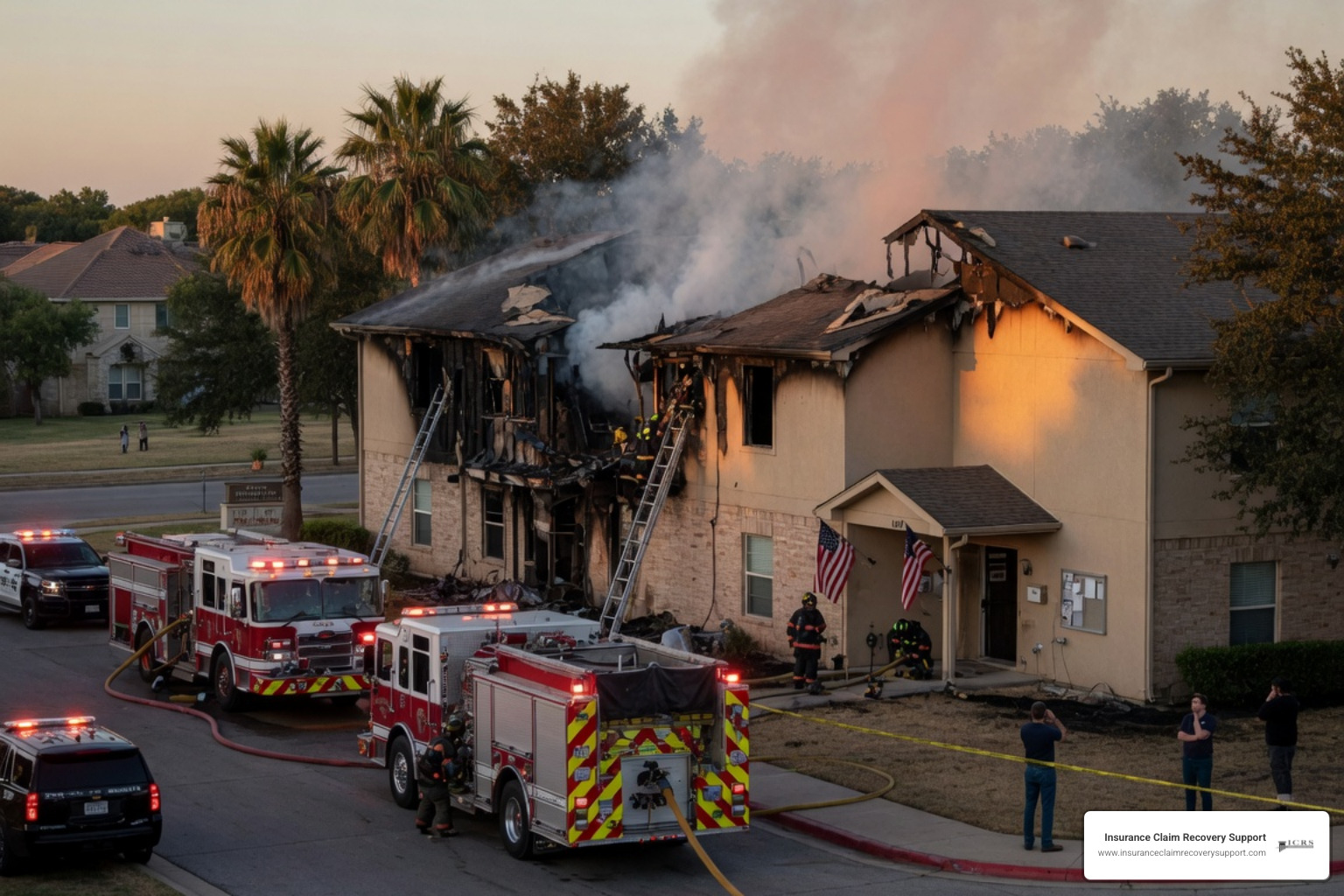
Translation: Don’t confuse “sharing historical loss data” with “price fixing.” Insurers are allowed to look at the same data to understand how often roofs fail in North Carolina or how many fires occur in Houston. However, if they agree to all charge the exact same premium for a multifamily complex, they have crossed into a Denied Insurance Claim Ultimate Guide territory where federal law can intervene.
Fact: Boycotts and Coercion Void the Insurance Antitrust Exemption
Translation: If an insurer tells a policyholder they must use a specific vendor or they won’t pay the claim, or if multiple insurers agree not to work with a specific public adjusting firm, that is coercion. Our Public Adjusting Services are designed to protect you from these “strong-arm” tactics that the federal government still has the power to prosecute.
Frequently Asked Questions about Insurance Antitrust
What is the McCarran-Ferguson Act?
It is the 1945 federal law (15 U.S.C. §§ 1011–1015) that ensures state regulation of insurance takes precedence over federal law, providing a limited Insurance Antitrust Exemption for the “business of insurance.”
Does the antitrust exemption apply to claims handling?
Generally, no. Claims handling is governed by state-specific statutes like the Texas Insurance Code. If an insurer acts in bad faith, they cannot hide behind federal antitrust immunity.
How does the ‘Hail Focus Initiative’ affect commercial claims?
Launched by the Oklahoma Attorney General, this initiative (and similar ones in other states) examines whether insurers are using “market conduct” to unfairly deny hail damage claims. It is a prime example of how state authorities are stepping in where federal oversight is limited.
Conclusion: Protecting Your Assets in a Complex Legal Landscape
The Insurance Antitrust Exemption was never meant to be a “get out of jail free” card for insurers to underpay claims. As lawmakers in 2026 continue to peel back the layers of this 80-year-old law, commercial property owners must remain vigilant.
At Insurance Claim Recovery Support (ICRS), we don’t just watch the news—we use this knowledge to advocate for you. Whether you are dealing with fire damage in Dallas, a hurricane claim in Florida, or a complex business interruption in Pennsylvania, we specialize in maximizing settlements and reducing delays. We represent your interests, not the carrier’s.
If you are facing a large-loss claim over $250,000 and feel like you’re being “standardized” out of a fair settlement, it’s time for professional representation. Don’t let an “exempt” process leave your business in the red. Contact a Public Adjuster for Insurance Claims at ICRS today to ensure your recovery is handled with the scrutiny and expertise it deserves.