Why Hire a Public Adjuster for Your Claim: Insurance Claim Recovery Support LLC
A casualty claim adjuster is an insurance professional who investigates, evaluates, and settles claims involving third-party liability, bodily injury, and property damage — determining how much, if anything, an insurance company will pay out on a claim.
Here’s a quick breakdown of what you need to know:
| What they do | Investigate claims, determine coverage, assess liability, and negotiate settlements |
| Who they work for | Typically the insurance carrier — not you, the policyholder |
| Types of claims handled | General liability, bodily injury, commercial property damage, business interruption |
| Who represents YOU | A public adjuster — an independent professional who advocates exclusively for the policyholder |
| Why it matters | The adjuster assigned by your insurer has a financial incentive to minimize your payout |
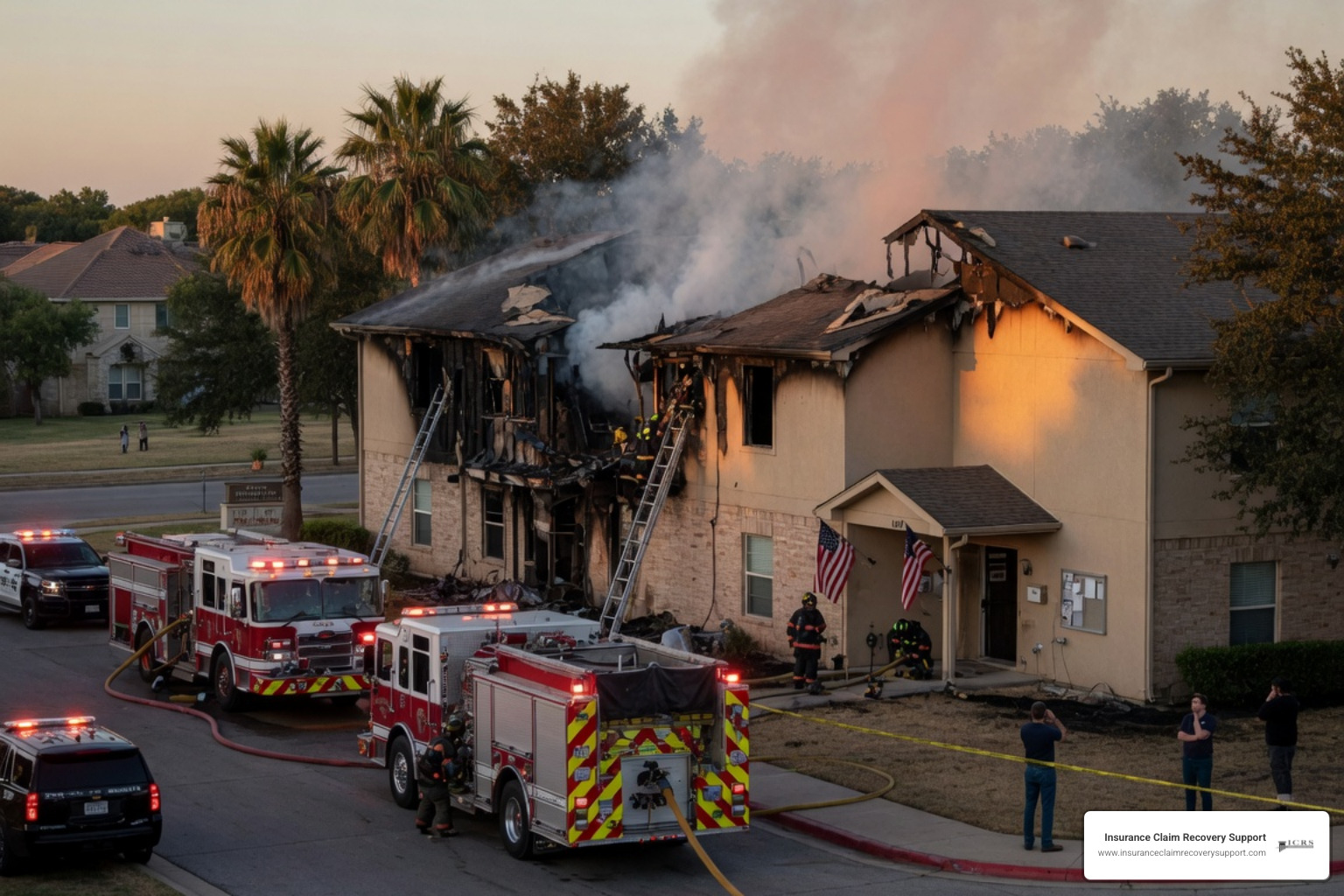
When a fire tears through an apartment complex, a storm batters a commercial warehouse, or a liability incident disrupts your hotel operation, the insurance company doesn’t send someone to help you — they send someone to protect their bottom line. Understanding the difference between that adjuster and a professional working on your behalf can mean the difference between a fair settlement and a devastating shortfall.
For commercial property owners, multifamily operators, and institutional property managers, the stakes are especially high. A single large-loss claim can trigger tenant disputes, lender pressure, and months of lost revenue. How that claim is handled from day one shapes everything that follows.
I’m Scott Friedson, a multi-state licensed public adjuster and CEO of Insurance Claim Recovery Support (ICRS), and with over 15 years of experience and more than $250 million in settled claims, I’ve seen what happens when policyholders face a casualty claim adjuster without their own expert advocate in their corner — and how the right representation changes the outcome entirely.
Simple casualty claim adjuster word guide:
- catastrophe inside property adjuster
- property claims adjuster
- what is an inside property claims adjuster
The Role and Responsibilities of a Casualty Claim Adjuster
When we talk about a casualty claim adjuster, we are looking at a role that is part detective, part legal analyst, and part negotiator. Their primary job is to protect the insurance company’s interests by ensuring that only valid claims are paid and that those payments are kept as low as the policy language allows.
Liability Determination and Fact-Gathering
The core of the adjuster’s role is determining who is at fault. In casualty insurance—which often involves “third-party” claims where someone else is suing your business for damages—the adjuster must decide if you are actually liable. They spend hours gathering facts, reviewing police reports, and looking for any reason to deny the claim or shift the blame elsewhere.
Coverage Analysis
Just because an event happened doesn’t mean it’s covered. A casualty claim adjuster must meticulously analyze the policy. They look for exclusions, limitations, and specific conditions that might disqualify the claim. For a commercial property owner in Houston or Dallas, this could involve complex “anti-concurrent causation” clauses or specific windstorm exclusions that can gut a claim if not challenged by an expert.
Settlement Authority
The adjuster is the gatekeeper of the money. They have specific “authority limits”—a dollar amount they are allowed to pay out without asking their boss. Their goal is often to settle the claim quickly and for an amount well below their maximum authority. According to Bureau of Labor Statistics research, the median annual wage for claims adjusters was $76,790 as of May 2024, reflecting the high level of responsibility (and financial impact) these professionals hold within the insurance ecosystem.
Essential Duties of a Casualty Claim Adjuster
The day-to-day life of an adjuster is a whirlwind of activity. To understand the Claim Adjuster Meaning, you have to look at the boots-on-the-ground work they perform.
- The Investigation Process: This starts the moment a claim is filed. The adjuster will interview the claimant, any witnesses, and the policyholder. They aren’t just looking for what happened; they are looking for inconsistencies that could be used to challenge the claim’s validity.
- Evidence Gathering: This involves collecting photos, videos, maintenance records, and medical reports. In large-loss commercial claims, they may hire “independent” engineers or forensic accountants. We often find that these “independent” experts have long-standing financial ties to the insurance company.
- Damage Assessment: For property damage, the adjuster will conduct a field inspection. They look at the physical structures—roofs, HVAC systems, and foundations—to estimate repair costs.
Key Skills for a Successful Casualty Claim Adjuster
A successful casualty claim adjuster needs more than just a clipboard. They are trained in specific disciplines to manage the high-stress environment of insurance claims.
- Negotiation Tactics: They are professional negotiators. They know how to make a “lowball” offer sound like a generous gift.
- Empathy (Used Strategically): Many carriers train adjusters to use empathy to build rapport with policyholders. The goal? To make you trust them so you don’t feel the need to hire your own advocate.
- Technical Proficiency: They must understand construction costs, medical terminology, and complex legal statutes like the Texas Tort Claims Act. Many attend specialized Claims Adjuster Training Schools to hone these skills.
- Conflict Resolution: They deal with angry people every day. Staying calm while saying “no” is a core part of the job.
Handling Large-Loss Commercial and Multifamily Claims
When a claim moves from a minor incident to a multi-million dollar commercial loss, the complexity explodes. This is where a casualty claim adjuster faces their biggest challenges—and where policyholders face the greatest risks.
- Business Interruption: This is one of the most disputed areas of casualty claims. Calculating lost profits, ongoing expenses, and “extra expenses” requires deep financial analysis. Carriers often try to minimize these payouts by challenging the business’s historical performance.
- Large-Loss Fire: Fire claims involve more than just charred wood. There is smoke damage, water damage from firefighting efforts, and structural integrity issues. Specialized advocacy, such as using a Public Insurance Claims Adjuster for Fire Damage, is often necessary to ensure the full scope of damage is recognized.
- Hurricane and Storm Damage: In cities like San Antonio or Austin, hail and wind can cause massive roof damage. A Water Damage Adjuster hired by the carrier might claim the leak was due to “wear and tear” rather than the storm.
- Industrial and Retail Centers: These properties have unique needs. A manufacturing facility in Fort Worth can’t just “patch a roof”—they have sensitive machinery that must be protected. The adjuster must account for these complexities, though they often need a nudge (or a shove) from a public adjuster to do so.
Navigating the Claims Process: Carrier Adjusters vs. Public Adjusters
There is a fundamental misunderstanding in the insurance world: many policyholders believe the adjuster sent by the insurance company is there to help them. In reality, there is a massive difference between a carrier adjuster and a public adjuster.
| Feature | Carrier/Company Adjuster | Public Adjuster (ICRS) |
|---|---|---|
| Who pays them? | The Insurance Company | The Policyholder (You) |
| Primary Goal | Minimize the payout to protect carrier profits | Maximize the settlement to restore the property |
| Loyalty | To the Insurance Carrier | To the Policyholder |
| Documentation | Often uses “standard” (low) pricing software | Uses detailed, actual-cost forensic documentation |
| Advocacy | None—they are an investigator for the insurer | Total—they are your exclusive representative |
How to Negotiate a Settlement with an Insurance Claims Adjuster
Negotiating with a casualty claim adjuster is like playing a high-stakes game of poker where the other side knows your cards. Here are some tips on How to Negotiate a Settlement with an Insurance Claims Adjuster:
- Fact vs. Myth:
- Myth: The adjuster is your friend.
- Fact: The adjuster is a trained professional whose performance is often judged by how much money they save the company.
- Neutral Communication: Keep your interactions professional and brief. Don’t offer “theories” about how the damage happened. Stick to the facts. Anything you say can and will be used to reduce your payout.
- Evidence Presentation: Don’t just show them the damage; prove the cost of repair. Use detailed photos, videos, and quotes from reputable commercial contractors.
- Bad Faith Awareness: In Texas, insurance companies have a “duty of good faith and fair dealing.” If an adjuster ignores evidence, delays the claim without reason, or offers a settlement that is demonstrably too low, they may be acting in bad faith.
Avoiding Litigation through Professional Advocacy
Many commercial property owners think their only options are to accept a low offer or sue the insurance company. But litigation is expensive, slow, and stressful. There is a better way.
The Public Adjuster Claim Process is designed to resolve claims through expert documentation and aggressive negotiation before a lawsuit becomes necessary. At ICRS, we maintain a 90% settlement success rate without the need for litigation.
By hiring a public adjuster, you bring an expert to the table who understands the Independent Adjuster Meaning and knows how to counter the carrier’s tactics. We don’t just ask for more money; we provide the forensic evidence that makes it impossible for the carrier to say no. This reduces delays and gets your business back on its feet months faster than a court case would.
Licensing and Education Requirements for Adjusters
The world of insurance adjusting is strictly regulated, especially in Texas. Understanding these requirements helps you vet the professionals working on your claim.
- State Licensing: Every casualty claim adjuster must be licensed by the state. In Texas, this is overseen by the Texas Department of Insurance (TDI).
- Public Adjuster Licensing: To represent policyholders, an adjuster must hold a specific Public Adjuster Licensing credential. This is separate from the license held by company adjusters.
- Continuing Education: The industry changes fast. Adjusters must complete regular Claims Adjuster Certification Texas courses to stay updated on new laws and building codes.
- The ICRS Advantage: As a Property Claim Adjuster firm, Insurance Claim Recovery Support LLC (ICRS) only represents you. We are licensed in Texas, Florida, and over a dozen other states, ensuring that no matter where your portfolio is located—from Austin to Lubbock or San Angelo—you have the highest level of expertise on your side.
Frequently Asked Questions (FAQ)
Q: Can I handle a casualty claim on my own? A: You can, but for large-loss commercial or multifamily claims, it’s like performing surgery on yourself. The insurance company has a team of experts; you should too.
Q: Does hiring a public adjuster make the insurance company angry? A: It makes them take you seriously. They know that when a firm like ICRS is involved, they can’t use “delay and deny” tactics.
Q: What if the adjuster already gave me a check? A: You can still seek more money! Unless you signed a final release (which you should never do without professional advice), we can often reopen the claim and secure the additional funds needed for a proper repair.
Q: How much does a public adjuster cost? A: Most work on a contingency fee basis, meaning we only get paid if we recover more money for you. It’s a win-win for the policyholder.
Conclusion
Navigating a claim with a casualty claim adjuster doesn’t have to be a battle you fight alone. Whether you are dealing with fire damage in Dallas, a hurricane in Houston, or a complex liability issue at a San Antonio apartment complex, the key is professional advocacy.
Don’t let the insurance company’s adjuster dictate the future of your property. If you’re facing a large-loss commercial or multifamily claim, reach out to us at Insurance Claim Recovery Support. We’ll help you investigate the damage, challenge the “bad” offers, and ensure you get the “good” settlement you deserve.