
How to Handle Building Fire Damage Without Getting Burned
What Every Commercial Property Owner Must Know About Building Fire Damage
Building fire damage is one of the most financially and operationally devastating events a commercial or multifamily property owner can face — and the fire itself is often just the beginning of the problem.
Here is a quick overview of what you are dealing with and what to do first:
| Priority | Action |
|---|---|
| 1 | Ensure all occupants are safe and accounted for |
| 2 | Do not re-enter the building until a licensed inspector clears it |
| 3 | Shut off utilities (power, gas, water) if safe to do so |
| 4 | Secure the property with board-ups and roof tarps |
| 5 | Document all visible damage with photos and video |
| 6 | Contact your insurance carrier to open a claim |
| 7 | Engage a public adjuster before accepting any insurer estimates |
The fire may be out, but your exposure is far from over. Secondary hazards — toxic soot, mold that can begin growing within 24 hours, compromised structural integrity, and HVAC contamination — continue to threaten your property, your tenants, and your bottom line. And that is before you factor in an insurance claim process that can stall, underpay, or push you toward unnecessary litigation.
The average structure fire cost property owners $25,545 in 2019, and that figure climbs sharply for large commercial and multifamily losses. The gap between what insurers initially offer and what a full, fair recovery actually requires can be enormous — sometimes in the millions.
I’m Scott Friedson, CEO of Insurance Claim Recovery Support (ICRS) and a multi-state licensed public adjuster with over 15 years of experience resolving building fire damage claims for commercial property owners, multifamily operators, hotels, and institutional facilities across the country. Over 500+ large-loss claims, I have seen how quickly a mishandled claim can compound an already serious loss — and how the right advocacy changes that outcome entirely.
This guide walks you through everything you need to know, from understanding the full scope of fire damage to navigating your insurance claim without leaving money on the table.

Building fire damage glossary:
Understanding the Scope of Building Fire Damage
When we talk about Building fire damage, it is easy to focus only on the charred remains of walls or furniture. However, fire is a complex chemical reaction that leaves behind a trail of destruction far beyond the reach of the actual flames. To effectively navigate recovery, we must categorize damage into three levels: minor (smoke and soot only), medium (moderate heat damage requiring significant repair), and major (structural compromise requiring extensive restoration or demolition).
Fires in commercial and multifamily structures typically burn at temperatures ranging from 1000° to 2000° F. At these extreme temperatures, materials don’t just burn; they undergo thermal degradation. This means the molecular structure of your building is changing. Even if a wall looks “fine” on the outside, the intense heat may have rendered it brittle or unstable.
Scientific research into the structural behavior of buildings during a fire shows that the duration of the burn is just as critical as the temperature. A “cool” fire that smolders for hours can do more structural damage than a flash fire that is extinguished quickly. Furthermore, the type of fuel—whether it’s office paper, industrial chemicals, or the synthetic materials found in modern apartment furnishings—determines the toxicity of the smoke and the corrosiveness of the soot left behind.
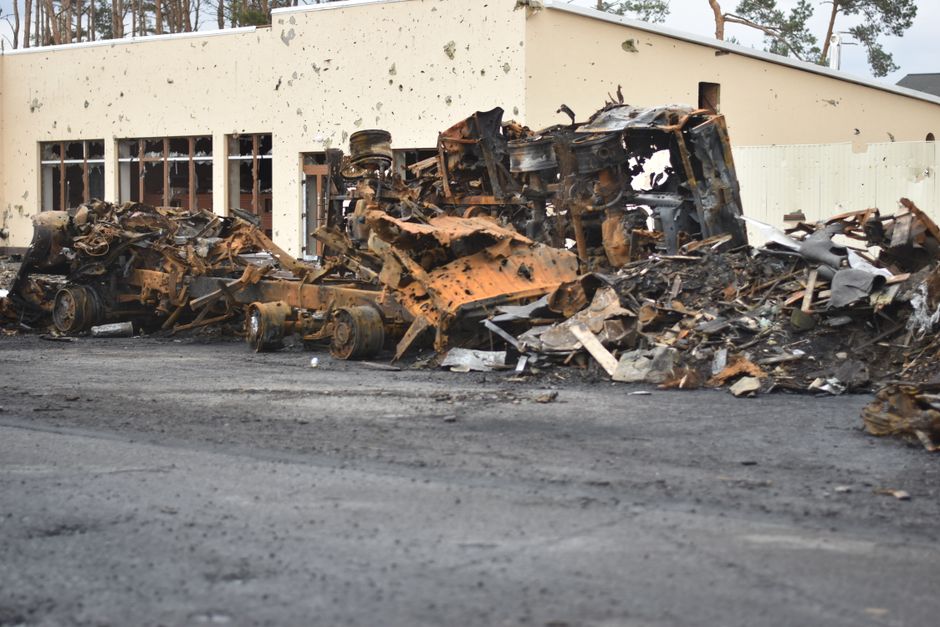
How Building Fire Damage Affects Structural Components
Every material in your building reacts differently to the stress of a fire. Understanding these reactions is vital for any fire-damage-claim-help strategy.
Steel Weakening
While steel is non-combustible, it is certainly not fireproof. At temperatures common in a multifamily-fire, steel begins to lose its yield strength. It can expand, soften, sag, or deform. Once steel has been “cooked” at high temperatures, it may no longer be able to support the designed load, even after it cools down.
Concrete Spalling
Concrete is often touted as a fire-resistant material, but it has a hidden weakness: water vapor. Concrete contains microscopic amounts of moisture. When subjected to rapid, intense heat, this moisture turns to steam. If the steam cannot escape fast enough, it creates internal pressure that causes the concrete to “spall”—essentially exploding in small chunks. This exposes the internal rebar to the fire, which can lead to a total structural failure.
Wood Charring and Dehydration
In older apartment buildings, especially those with “balloon construction” (where wall studs extend from the basement to the roof without fire stops), fire can travel vertically in seconds. While heavy timber may char on the outside—creating a protective layer for the internal wood—most modern commercial wood framing becomes brittle and loses its integrity.
Masonry and Brick
Brick and stone are resilient, but the mortar holding them together is susceptible to dehydration. Additionally, the water used by firefighters can cause mineral staining on stone and brick, which requires specialized micro-abrasion or sponge-jet cleaning to restore without further damaging the substrate.
Hidden Hazards and Secondary Building Fire Damage
The fire department has left, the embers are cold, and you think the worst is over. Unfortunately, the “secondary” damage phase is often where the most expensive and dangerous issues arise.
Toxic Soot and Benzene Exposure
Smoke is not just “ash.” It is a cocktail of toxic chemicals. When plastics, foam insulation, and electronic components burn, they release corrosive and carcinogenic particles. Benzene, a known carcinogen, is frequently found in the soot of an apartment-fire. These particles infiltrate air ducts, wall cavities, and even porous surfaces like concrete and wood, creating long-term health risks for occupants. Scientific research on the health risks of fire-related smoke inhalation confirms that these residues can cause respiratory issues long after the air smells “clean.”
The 24-Hour Mold Window
Here is a statistic that surprises many property managers: Mold can grow in as little as 24 hours after the flames have been extinguished. Firefighting efforts require massive amounts of water—thousands of gallons that saturate drywall, insulation, and carpets. In the humid environments of cities like Houston, San Antonio, or Austin, this creates a perfect breeding ground for mold. If you don’t have a professional team extracting water and dehumidifying the space immediately, you’ll be fighting a mold claim alongside your fire claim.
HVAC Contamination
Your HVAC system acts like a giant lung for the building. During a fire, it sucks in smoke and soot, distributing these contaminants to every floor. Simply changing the filters isn’t enough; the entire ductwork system often requires professional remediation to prevent the “ghosting” of soot on walls and the persistent smell of smoke.
Navigating the Insurance Claim: Public Adjuster vs. Litigation
When you file a claim for Building fire damage, you are entering a high-stakes negotiation. The insurance company’s “preferred” vendors and adjusters are tasked with minimizing the carrier’s liability. This often leads to a “patch and paint” philosophy that ignores underlying structural issues or deep-seated odors.
Many policyholders believe their only options are to accept the low-ball offer or sue the insurance company. However, there is a middle ground that is often more effective: hiring a public adjuster.
| Feature | Public Adjuster (ICRS) | Insurance Litigation (Lawyers) |
|---|---|---|
| Primary Goal | Maximize settlement through expert documentation | Win a legal judgment or settlement |
| Speed | Focuses on reducing delays and avoiding court | Can take years to resolve in the court system |
| Process | Uses building science and policy expertise | Uses legal discovery and depositions |
| Cost | Percentage of the settlement (no upfront cost) | Hourly fees or high contingency + court costs |
| Relationship | Collaborative but firm advocacy | Adversarial and litigious |
| Outcome | 90% settlement success rate without lawsuits | Often ends in a settlement after heavy legal fees |
At Insurance Claim Recovery Support, we focus on resolving loss-types/fire-property-damage by proving the full extent of the loss with data, not just legal arguments. This approach helps our clients avoid the “Appraisal” process or expensive litigation while still securing the funds needed for a proper restoration.
Immediate Steps for Commercial Property Managers
If you are managing a property in Dallas, Fort Worth, or Houston and a fire occurs, your actions in the first 48 hours will dictate the success of your insurance claim.
- Safety First: Never enter a fire-damaged building until a licensed structural engineer or fire marshal has cleared it. Building fire damage makes structures unstable and prone to collapse.
- Utility Management: Shut down power, gas, and water. Melted wires can cause re-ignition, and damaged pipes can lead to further water damage.
- Secure the Perimeter: You have a “duty to mitigate” under your insurance policy. This means you must prevent further damage. Use professional board-up services for windows and doors and install roof tarps immediately.
- Due Diligence: Before hiring a restoration company, use a fire-mitigation-companies-due-diligence-checklist-for-policyholders to ensure they aren’t just “preferred vendors” for the insurance company who might cut corners.
- Document Everything: In an apartment-building-fire, the damage to tenant property and common areas is extensive. Take hundreds of photos before anything is moved or cleaned.
Fact vs. Myth: Recovering Restoration Costs
The insurance company’s roadmap for your recovery is often paved with shortcuts. Let’s debunk some common myths we see in fire-damage-claims-houston and other Texas markets.
Myth: If the wall looks clean, the smoke is gone. Fact: Smoke particles are microscopic and penetrate deep into substrates. We often see insurers propose a “thin drywall overlay” (installing 1/4 inch drywall over existing damaged walls) to save money. This is a temporary fix that traps odors and toxins behind the new wall. Proper restoration requires removing the damaged material or using specialized abrasive blasting to clean the substrate.
Myth: My “Actual Cash Value” (ACV) policy won’t cover a full rebuild. Fact: While ACV policies factor in depreciation, many commercial policies have “Replacement Cost Value” (RCV) provisions or “Law and Ordinance” coverage. This latter coverage is crucial because it pays for the extra costs of bringing an older building up to modern fire codes during the rebuild.
Myth: The insurance company’s estimate is the final word. Fact: Their estimate is a starting point. It is based on national averages that often ignore local labor rates in booming markets like Austin or Dallas. We routinely find that insurer estimates are 30% to 50% lower than the actual cost of professional restoration in Texas.
Why Professional Advocacy is Essential for Large Losses
Large-loss claims—those involving 20-story high-rises, sprawling industrial complexes, or multi-building apartment communities—require a level of expertise that goes beyond a standard adjuster’s scope.
When we represent a policyholder, we don’t just “guess” at the damage. We bring in:
- Industrial Hygienists: To test for toxic residues and mold, ensuring the building is truly safe for occupancy.
- Structural Engineers: To assess the integrity of steel and concrete components.
- Local Labor Experts: To provide a “per-diem analysis” that proves to the insurer why local Texas labor rates (which are higher than the national average) must be used in the claim.
Whether you are in Lubbock, San Angelo, Waco, Round Rock, or Georgetown, the local economic conditions affect your recovery cost. A public adjuster ensures these local factors are baked into your settlement. For example, a fire in a Lakeway luxury condo requires a different level of finish and specialized labor than a warehouse in Amarillo. We understand these nuances and hold the insurance companies accountable to the specific language of your policy.
Conclusion: Securing Your Financial Recovery
Recovering from Building fire damage is a marathon, not a sprint. The physical restoration of the building is only half the battle; the other half is the financial restoration of your investment.
Insurance companies are massive corporations with teams of experts working to protect their interests. You deserve the same level of professional advocacy. At Insurance Claim Recovery Support (ICRS), we represent policyholders only—never insurance companies. Our goal is to maximize your settlement, reduce the stress of the process, and get your tenants back in their homes or your business back in operation as quickly as possible.
With a 90% settlement success rate and a commitment to avoiding unnecessary litigation, we provide the expert guidance you need to handle fire damage without getting “burned” by your insurance carrier. From the initial board-up to the final walkthrough of your restored facility, we are your partners in recovery.
If you are facing a commercial or multifamily fire loss in Austin, Dallas, Houston, San Antonio, or anywhere across the great state of Texas, don’t wait for the insurance company to tell you what your claim is worth.
