The Hidden Toll: Why Understanding Tornado Impacts Matters
What effects do tornadoes have on humans extend far beyond the immediate destruction you see on the news. Understanding these impacts is critical for property owners, managers, and community leaders who must prepare for, respond to, and recover from these violent storms.
For a practical companion resource on documenting this kind of loss, see the ICRS Hail & Wind Claim Guide. Coverage and next steps depend on the facts and policy terms.
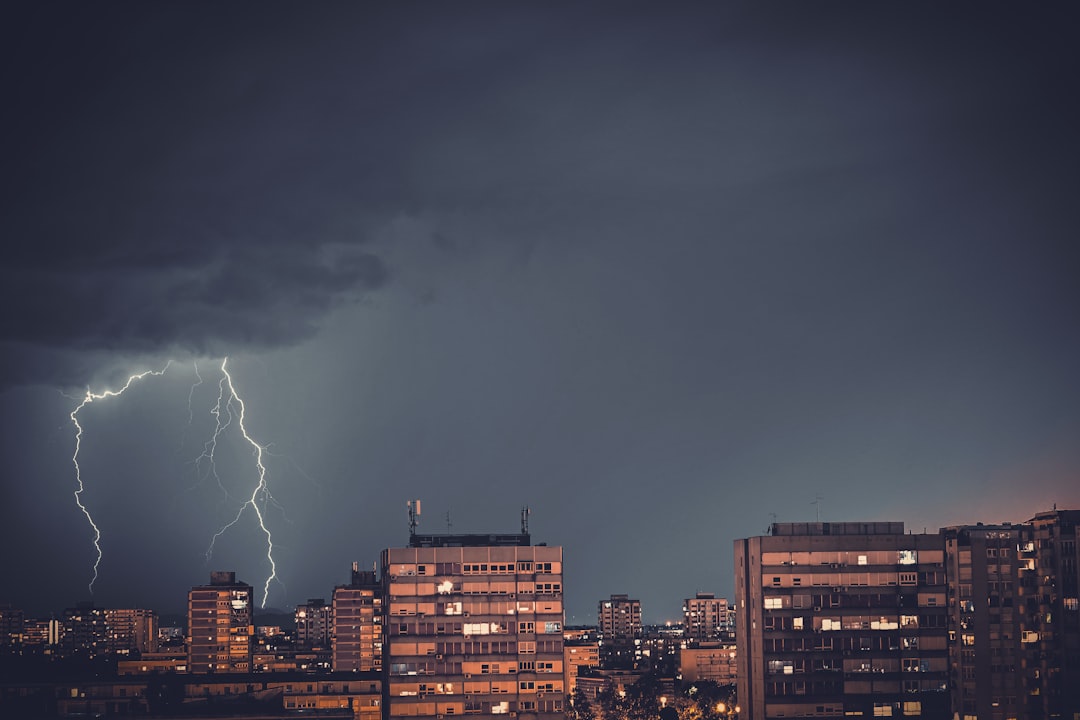
Tornadoes are among the most violent weather events on Earth. In an average year in the United States, roughly 1,000 tornadoes are reported, causing around 80 deaths and over 1,500 injuries. The National Weather Service and the National Oceanic and Atmospheric Administration (NOAA) track these storms and their aftermath, documenting just how destructive they can be to both people and property.
Quick Answer: Primary Effects of Tornadoes on Humans
Physical Injuries:
- Soft tissue injuries (lacerations, punctures, contusions) – over 50% of all tornado injuries
- Fractures and orthopedic injuries – approximately 30% of cases
- Head injuries and traumatic brain injuries – 7% of injuries, leading cause of tornado-related deaths
- Blunt chest and abdominal trauma – 7% of casualties
Mental Health Impacts:
- Post-Traumatic Stress Disorder (PTSD) – reported in 2% to 59% of survivors
- Depression and anxiety disorders
- Alcohol and substance abuse
- Suicidal ideation – affecting approximately 5% of adolescent survivors
Economic & Property Devastation:
- Average of 80 deaths and over 1,500 injuries annually in the U.S.
- Violent tornadoes (EF4-EF5) account for 70% of tornado deaths despite being only 2% of all tornadoes
- Billions in property damage – 2023 season exceeded $8 billion in total damage
- Displacement from homes and businesses, often for many months
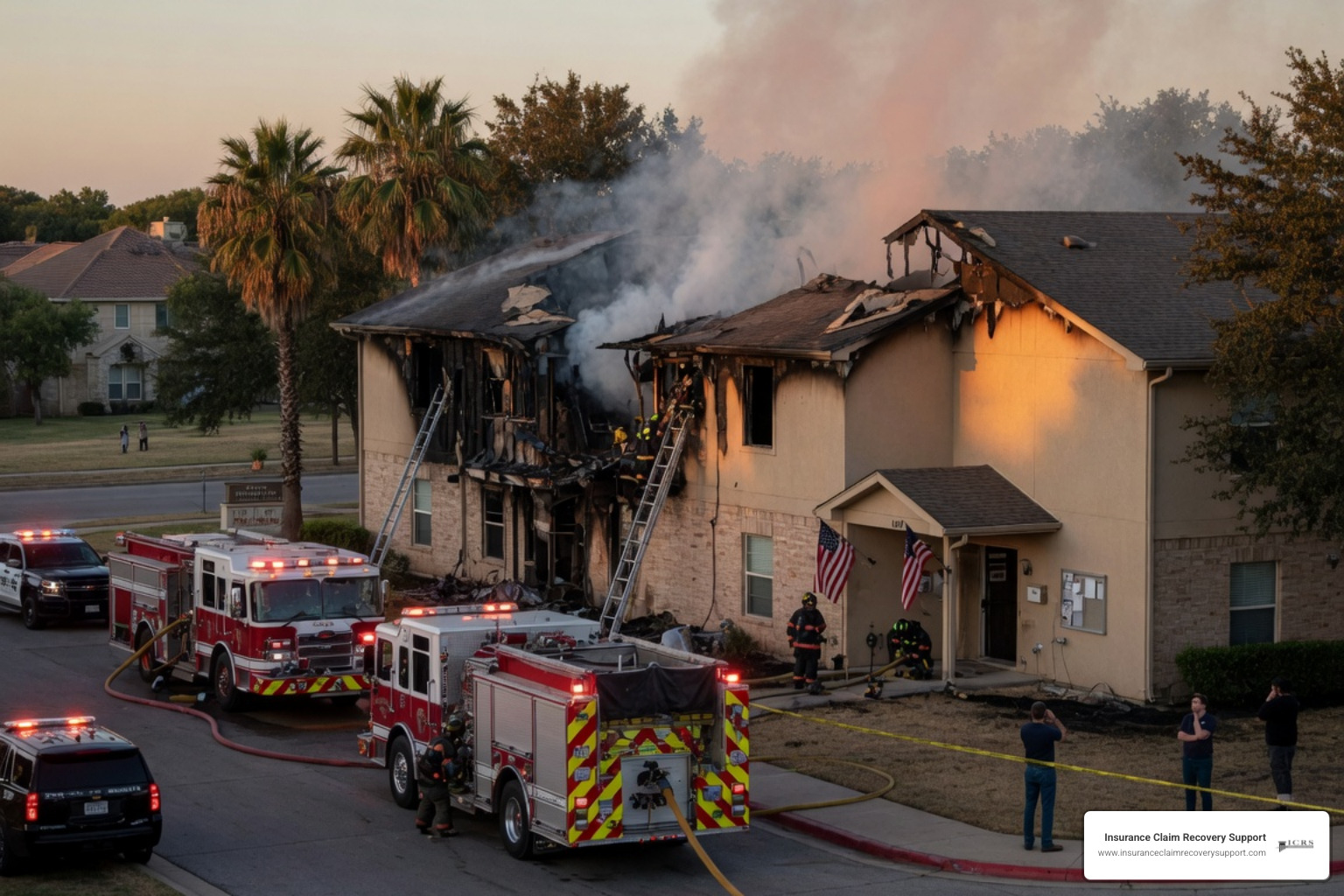
These statistics only scratch the surface. The true impact of tornadoes extends into contaminated wounds, families displaced for months, and psychological trauma that persists for years. For commercial property owners, multifamily operators, and facility managers, tornadoes represent one of the most challenging disasters—both for immediate safety and the complex insurance recovery process that follows.
The biggest threat to humans is from flying debris, with winds reaching 300 mph. Even weaker tornadoes can turn everyday objects into lethal missiles, strip pavement, and make cars airborne.
I’m Scott Friedson, CEO of Insurance Claim Recovery Support, and over 15 years I’ve helped commercial and multifamily property owners steer the aftermath of what effects do tornadoes have on humans and their properties, successfully settling hundreds of millions of dollars in tornado damage claims. Understanding both the human impact and the insurance recovery process is essential for protecting your investment and your community.
Simple guide to what effects do tornadoes have on humans terms:
What Effects Do Tornadoes Have on Humans and Property?
Tornadoes leave a profound mark on human life and the built environment. From immediate physical trauma to long-lasting psychological scars and extensive economic disruption, their effects are multifaceted.
The Immediate Physical and Health Impacts
When a tornado strikes, the primary concern is physical safety. The most common injuries are a direct result of violent winds and flying debris.
Most Common Injuries:
Research shows that around 50% of casualties will have multiple types of injuries. The most common include:
- Soft Tissue Injuries: Over 50% of total injuries, including lacerations, punctures, and contusions from debris.
- Fractures and Orthopedic Injuries: About 30% of injuries, with many being open fractures requiring significant medical intervention.
- Head Injuries (TBI): Accounting for 7% of injuries, head trauma is the leading cause of death.
- Blunt Chest and/or Abdominal Trauma: Another 7% of casualties, often from crushing forces.
Fatality Causes:
The immediate cause of death is overwhelmingly from being struck by debris, thrown by the wind, or structural collapse. Violent tornadoes (EF4-EF5), though only 2% of all tornadoes, are responsible for 70% of tornado deaths.
Clinical Wound Care Considerations:
Tornado wounds present unique challenges for healthcare professionals as they are often deep and highly contaminated with soil and debris. This leads to a high risk of infection, with some reports showing a 30% infection rate for wounds closed in the emergency room. Current medical best practices often recommend delayed closure to allow for thorough cleaning and to reduce infection risk. For more detailed information, medical professionals can refer to clinical guidelines for treating tornado-related injuries from the CDC or consumer overviews such as WebMD: Understanding Tornado Injuries.
Long-Term Mental and Societal Well-being
The trauma of experiencing a tornado can linger for years, deeply impacting mental health.
Mental Health Effects:
Survivors of all ages may experience:
- Post-Traumatic Stress Disorder (PTSD): Rates reported from 2% to 59%.
- Anxiety and Depression: Common reactions to loss and displacement.
- Substance Abuse: Used as a coping mechanism by some.
- Suicidal Thoughts: Reported in about 5% of adolescent survivors of major outbreaks.
Several factors influence mental health outcomes. Vulnerability is higher for women, children, those with prior trauma, and those with limited resources. Conversely, protective factors like optimism, strong social support, and access to resources promote resilience. School-based programs and web-based tools have been developed to help children and adolescents cope.
Beyond direct harm, tornadoes cause significant societal disruption. Displacement can lead to housing instability, while the destruction of businesses cripples local economies, eroding the social fabric of a community.
Economic Devastation and Property Damage
The economic impact of tornadoes is staggering, often reaching billions of dollars.
Property Destruction:
Tornadoes with winds over 300 mph can:
- Obliterate buildings, from tearing off roofs to leveling entire structures.
- Uproot trees, causing further damage.
- Hurl debris, turning objects into missiles that penetrate walls.
For example, the 2023 tornado season exceeded $8 billion in total damage. This level of destruction disproportionately affects commercial building owners and multifamily operators. The economic fallout includes business interruption, displacement costs, and infrastructure repair, creating a complex financial burden for property owners navigating insurance claims. You can find More info about Florida Tornado Damage and the challenges property owners face.
Tornado Intensity and Damage:
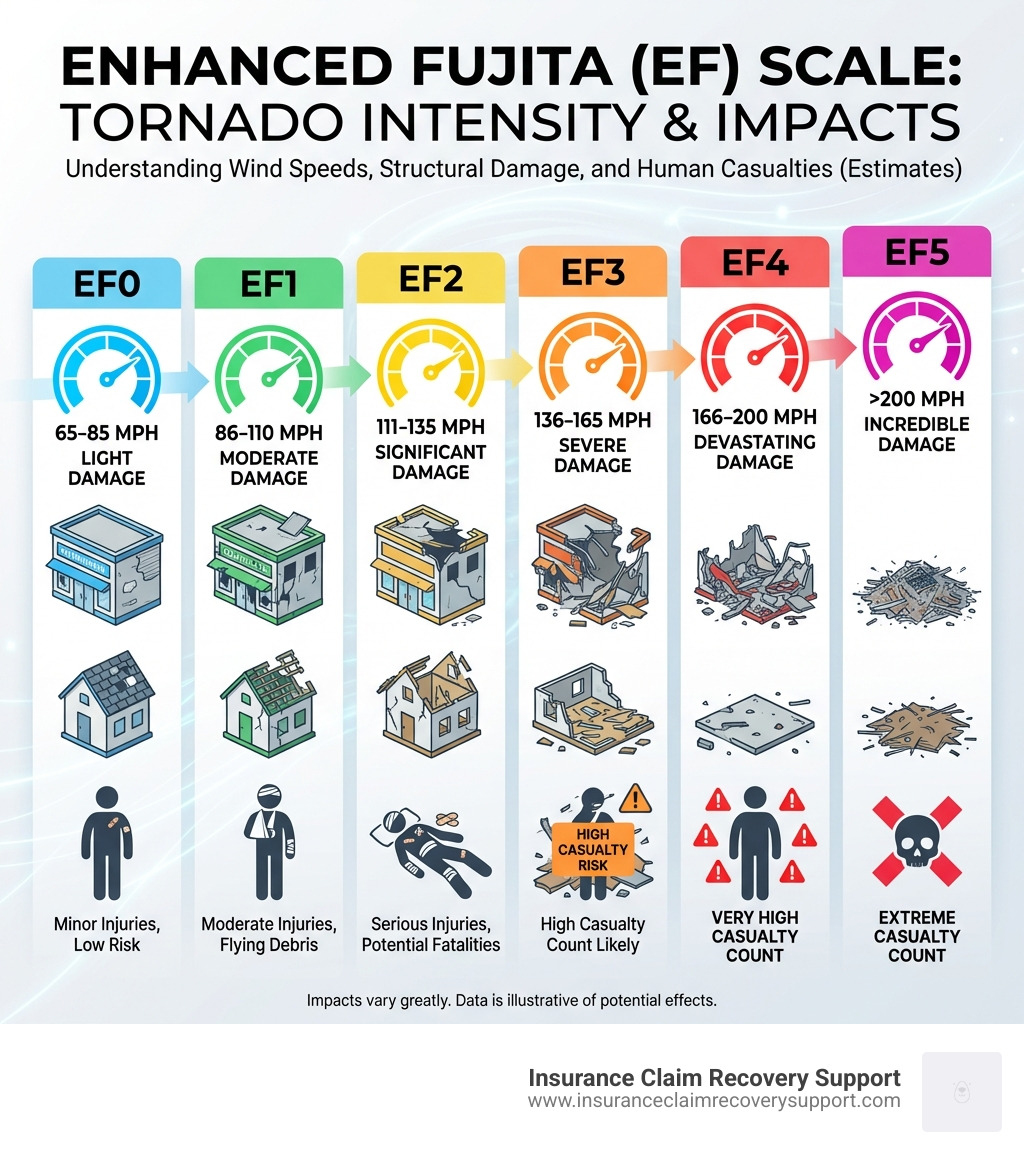
The Improved Fujita (EF) Scale rates tornadoes from EF0 to EF5 based on the damage they cause. For a broader explanation of the scale, you can review the Enhanced Fujita Scale overview alongside the commercial-focused summary below.
| EF Scale Rating | Wind Speed (mph) | Typical Commercial Property Damage |
|---|---|---|
| EF0 | 65-85 | Light damage; gutters, shingles, branches, minor roof damage. |
| EF1 | 86-110 | Moderate damage; carports, garages, minor roof uplift, broken windows, mobile homes overturned. |
| EF2 | 111-135 | Considerable damage; roofs torn off, mobile homes destroyed, large trees snapped, cars lifted. |
| EF3 | 136-165 | Severe damage; entire stories of well-built houses destroyed, trains overturned, large commercial buildings collapsed. |
| EF4 | 166-200 | Devastating damage; well-constructed houses leveled, cars thrown, structures with weak foundations blown away. |
| EF5 | >200 | Incredible damage; strong frame houses swept clean, steel-reinforced concrete structures severely damaged, cars and trucks thrown long distances. |
Even an EF1 tornado can cause significant damage to commercial properties, leading to substantial repair costs and business interruption.
Understanding Vulnerability and Preparedness
While tornadoes are a force of nature, preparedness can significantly reduce their impact.
Vulnerable Populations:
Certain groups are more vulnerable, including residents of mobile homes, the elderly, children, individuals with disabilities, and lower-income communities.
Evolving Tornado Activity:
Tornado activity has seen an eastward shift from the traditional “Tornado Alley” toward “Dixie Alley” (Mississippi, Alabama, Tennessee). This means more communities, some less prepared, now face increased risks.
Recommended Safety Precautions:
Effective preparedness is the best defense.
-
Before a Tornado:
- Have a plan. Know where to shelter and practice drills.
- Prepare an emergency kit with water, food, a first-aid kit, and a NOAA Weather Radio.
- For commercial properties, have clear safety plans and designated shelter areas for employees and customers.
-
During a Tornado:
- Seek shelter immediately when a warning is issued.
- Go to the lowest floor, an interior room, or a designated shelter. Crouch low and cover your head. Avoid windows.
- If outdoors or in a vehicle, lie flat in a ditch or culvert. Do not hide under bridges.
- Myth: Do not open windows to “equalize pressure.” It wastes time and is ineffective.
-
After a Tornado:
- Listen to local authorities for instructions.
- Stay clear of fallen power lines and damaged structures.
- Wear protective gear during cleanup.
Role of Technology in Prediction:
Technology like Doppler radar has revolutionized tornado warnings. It can detect a tornado’s winds and debris, improving mean warning times to over 30 minutes. Understanding the difference between a “tornado watch” (conditions are favorable) and a “tornado warning” (a tornado is imminent or occurring) is vital.
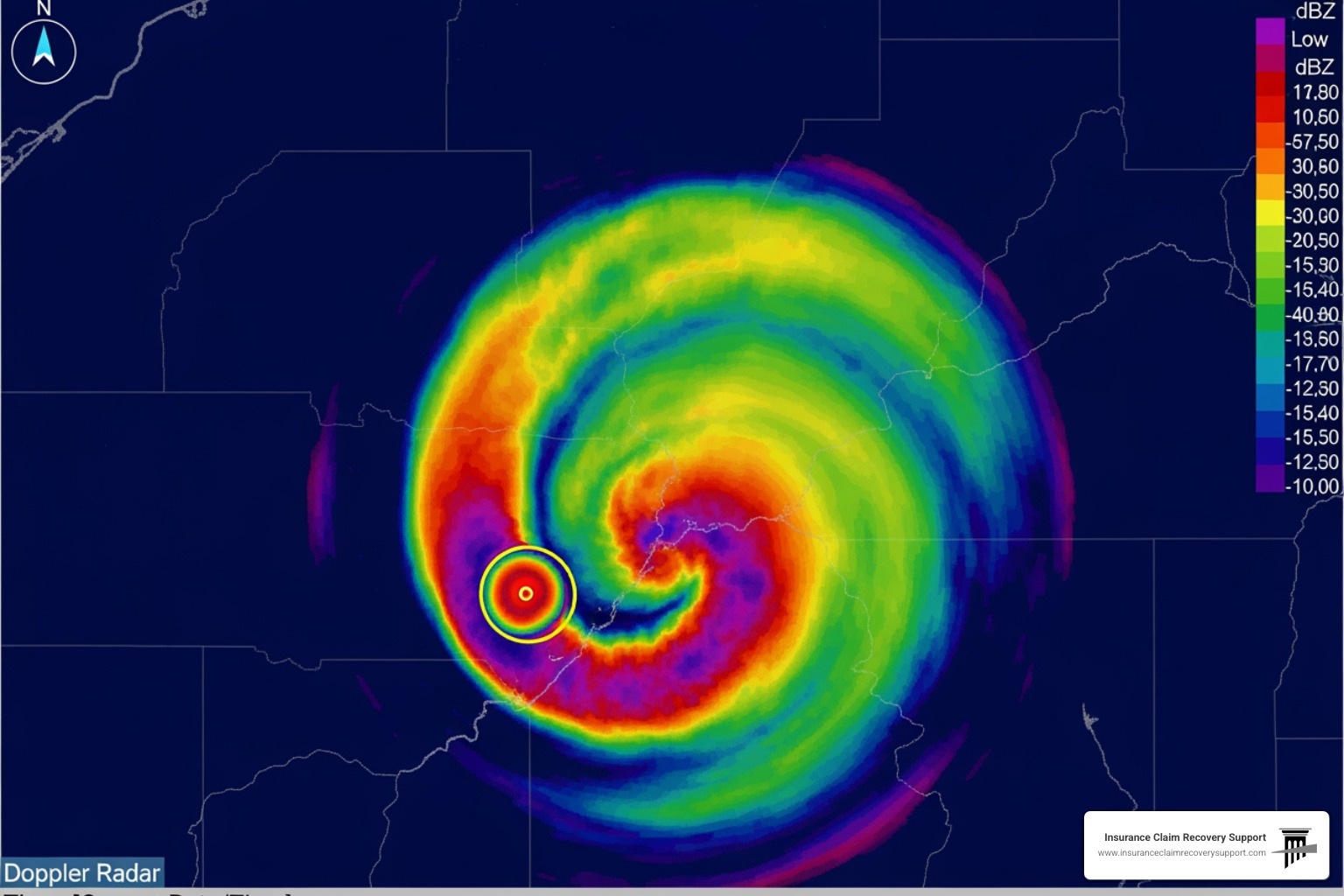
The distinction between a “tornado watch” (conditions are favorable for tornadoes) and a “tornado warning” (a tornado has been spotted or indicated by radar) is vital. Understanding these alerts and having a plan in place can be the difference between life and death.
Navigating the Aftermath: Recovery and Resilience
The danger from a tornado passes quickly, but the recovery journey is often long. For commercial and multifamily property owners, this phase involves physical rebuilding and navigating complex financial challenges.
Community Support and Financial Recovery
In a tornado’s wake, community support is vital. Relief organizations like the Red Cross provide immediate aid. While the Small Business Administration (SBA) may offer loans, the primary path to financial recovery for large-loss commercial or multifamily properties is through their insurance policy. At Insurance Claim Recovery Support, we help property owners in Texas, Oklahoma, Florida, and other states steer these complex claims to maximize their recovery. For insights into related property damage claims, you can explore More info about Underpaid Hurricane Damage Insurance Claim.

The Path to Rebuilding: Insurance Claims After a Tornado
The ultimate financial recovery for property owners depends on their insurance claim. This process involves property damage, business interruption, and other expenses.
Filing a Property Damage Claim:
After a tornado, immediately report the damage to your insurance carrier. As the policyholder, you must also:
- Document All Damage: Take extensive photos and videos before any cleanup.
- Save Receipts: Keep all receipts for storm-related expenses, like temporary repairs and debris removal.
- Mitigate Further Damage: Protect your property from more harm (e.g., tarping a roof). Failure to do so can lead to a denial of coverage for subsequent damage.
A common challenge is proving that water damage resulted from wind damage to the building’s exterior, not from ground flooding, which may have different coverage limits or exclusions.
Fact vs. Myth: Tornado Insurance Claims
Myth: “If the insurance company is slow or underpays, my only option is a lawsuit.”
Fact: For most large commercial and multifamily tornado claims, working with a licensed public adjuster is a faster, more cost-effective way to resolve disputes without going straight into litigation.
Myth: “Hiring a public adjuster will make my carrier hostile and delay my claim.”
Fact: A qualified public adjuster organizes, documents, and presents your claim in the format insurers expect, which typically reduces delays and miscommunications. Carriers work with policyholder representatives every day.
Myth: “Lawyers and lawsuits always get me more money.”
Fact: Lawsuits can take years, involve significant legal fees, and introduce uncertainty. Many disputes can be resolved through professional negotiation and documentation by a public adjuster—often leading to a fair settlement without the time and expense of court.
Lawsuit vs. Public Adjuster: What Property Owners Should Know
For owners and managers of commercial and multifamily properties, it helps to understand the different paths you can take after a tornado loss.
Typical Lawsuit Path:
- You retain an attorney and often pay a substantial contingency fee.
- Findy, depositions, and expert reports can take many months or years.
- Litigation costs (experts, court fees, staff time) erode your net recovery.
- There is no guarantee of a better outcome; the case may settle late or be decided by a judge or jury unfamiliar with complex building systems.
Typical Public Adjuster Path (ICRS Approach):
- You hire a public adjuster to represent you in measuring and presenting the loss.
- Detailed damage assessments, estimates, and business interruption calculations are prepared upfront.
- The claim is negotiated directly with the carrier within the policy framework.
- Most disputes are resolved through claim negotiations, not court, preserving your ability to litigate later only if truly necessary.
At Insurance Claim Recovery Support, our focus is maximizing settlements, reducing delays, and avoiding unnecessary litigation or appraisal. Our track record includes a 90% settlement success rate without resorting to lawsuits, allowing you to concentrate on getting tenants back in place, reopening facilities, and stabilizing cash flow.
For more on this process, see our guide on Filing a Tornado Insurance Claim. When the effects do tornadoes have on humans impact your property, we are here to ensure your recovery is complete. Contact us for help with your Tornado Damage Insurance Claim today.