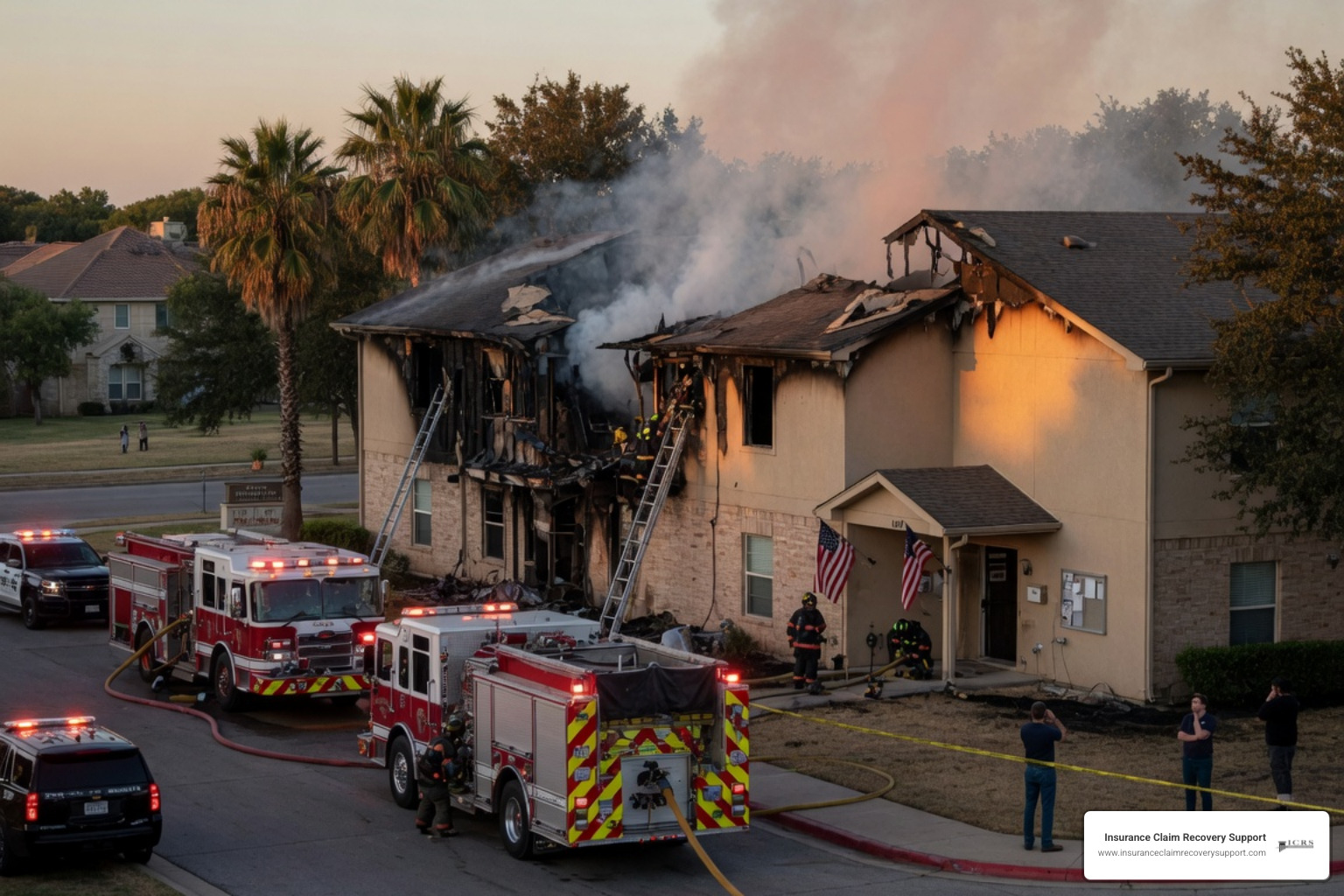
Your Guide to Navigating Texas Property Claims
Texas property insurance adjusters are licensed professionals who handle property damage claims, but not all adjusters work for you. When disaster strikes your property, understanding who represents your interests can mean the difference between a fair settlement and getting shortchanged by thousands of dollars.
Quick Answer: Types of Texas Property Insurance Adjusters
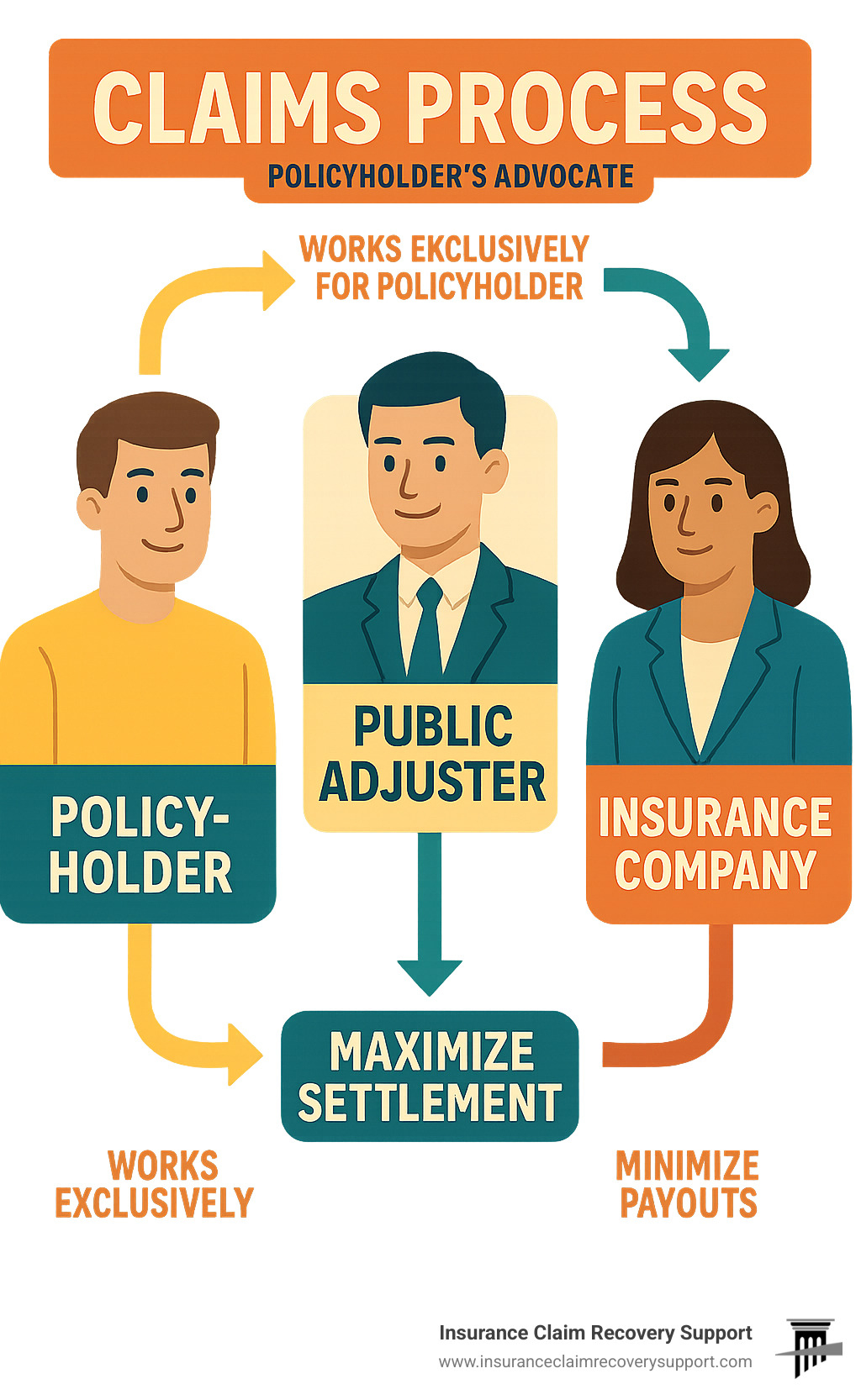
- Company Adjusters: Work for insurance companies, aim to minimize payouts
- Independent Adjusters: Contract workers hired by insurance companies
- Public Adjusters: Work exclusively for policyholders, maximize your settlement
Key Facts:
- Public adjusters are regulated by the Texas Department of Insurance
- Fees are capped at 10% of settlement amount in Texas
- You have 72 hours to cancel a public adjuster contract
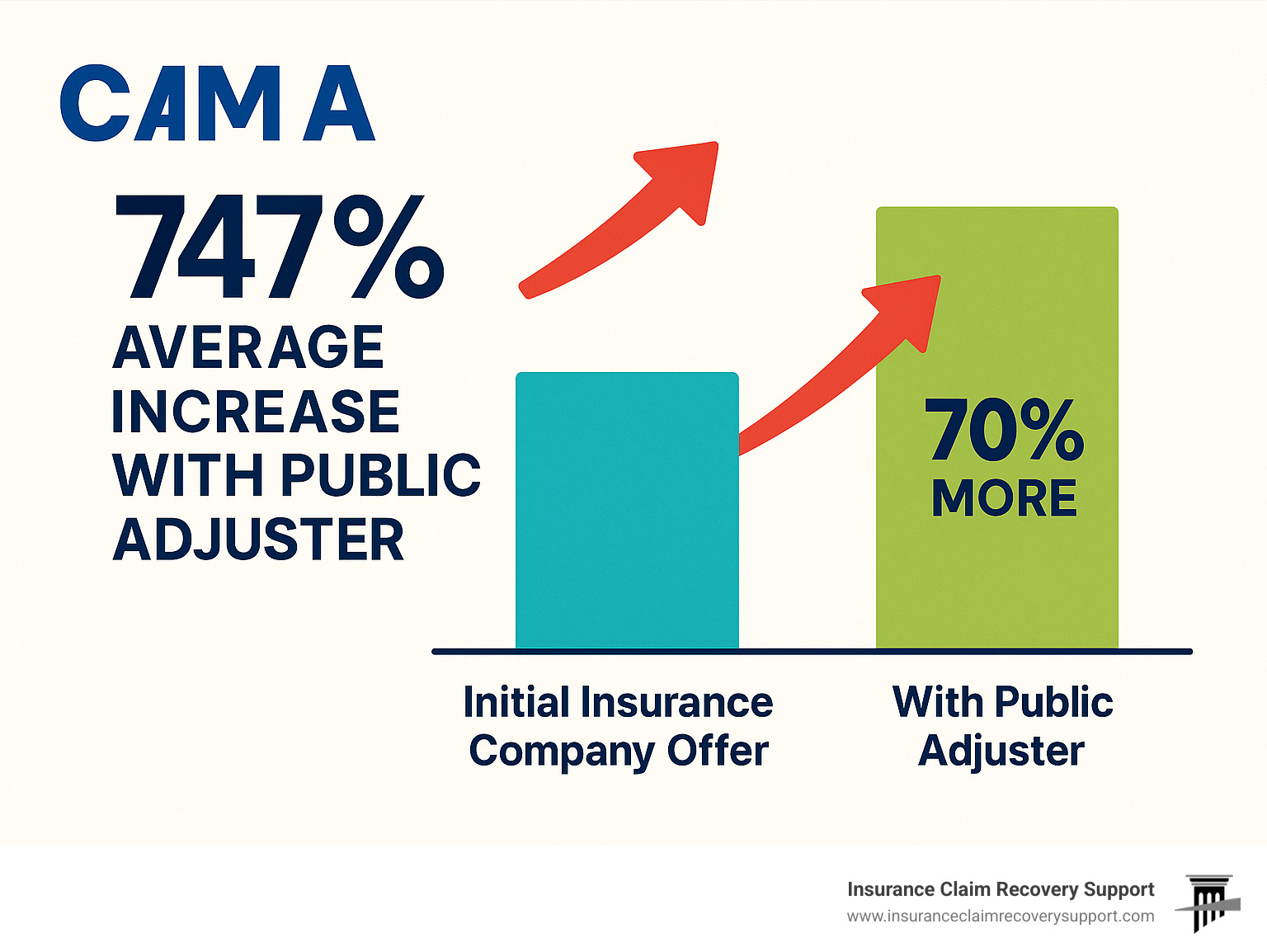
- Using a public adjuster raises claim payouts by 747% on average
The reality is stark: your insurance company’s adjuster is not on your side. As one industry expert noted, “Insurance companies are for-profit businesses” that use their own adjusters to minimize payouts. Meanwhile, public adjusters work solely for you, fighting to secure every dollar you’re entitled to under your policy.
Whether you’re dealing with fire damage, hurricane destruction, or freeze-related losses, the adjuster you choose can dramatically impact your recovery. This guide will show you exactly how to find, verify, and work with the right Texas property insurance adjusters for your situation.
As Scott Friedson, CEO of Insurance Claim Recovery Support and a multi-state licensed public adjuster based in Austin, I’ve settled over $250 million in claims and helped countless Texas property owners recover from disasters. My experience working with Texas property insurance adjusters has shown me how the right representation can turn a denied claim into a substantial recovery.
Find more about Texas property insurance adjusters:
Understanding Adjusters: Who’s On Your Side?
When property damage hits your Texas home or business, you’ll quickly find that not all adjusters are created equal. In fact, the type of adjuster handling your claim can make the difference between getting a fair settlement and leaving thousands of dollars on the table.
Here’s the reality that many property owners don’t realize: most adjusters don’t work for you. They work for insurance companies, and their job is to save their employer money—not to maximize your settlement.
Public Adjusters: Your Policyholder Advocate
Let’s break down exactly who’s on your side when it comes to Texas property insurance adjusters:
| Aspect | Public Adjuster | Company Adjuster | Independent Adjuster |
|---|---|---|---|
| Who they work for | You (the policyholder) | Insurance company | Insurance company (as contractor) |
| Who pays them | You (from settlement) | Insurance company | Insurance company |
| Primary objective | Maximize your settlement | Minimize company payouts | Minimize company payouts |
| Conflict of interest | None – aligned with you | Yes – serves company interests | Yes – serves company interests |
Public adjusters are the only licensed professionals who work exclusively for policyholders. We’re regulated by the Texas Department of Insurance and must follow strict professional conduct standards. Unlike company adjusters who stop writing once they hit basic policy limits, public adjusters keep digging for additional endorsements and coverage opportunities you might not even know exist.
The Texas Association of Public Insurance Adjusters puts it simply: public adjusters “represent you—the policyholder—to prepare, present, and settle a home or business property insurance claim.” This isn’t just a job description—it’s a fundamental difference in whose interests we serve.
The bottom line? Public adjusters have no financial incentive to minimize your claim. When you win, we win. When you get shortchanged, we get shortchanged too.
Why the Right Representation Matters for Your Settlement
The adjuster handling your claim directly impacts how much money you receive. It’s not just about paperwork—it’s about having someone who understands policy interpretation and has real negotiation power with insurance companies.
Research consistently shows that claims handled by public adjusters result in settlements that are as much as 70% more than what the insurance company initially offered. This dramatic difference isn’t luck—it’s the result of professional advocacy working in your favor.
Company adjusters face an inherent conflict of interest that’s impossible to ignore. They’re evaluated and promoted based on how much money they save their employer, not how fairly they treat you. As one industry professional bluntly noted, company adjusters “aim to minimize the insurer’s loss rather than maximize your settlement.”
Public adjusters level the playing field by bringing expertise that serves your interests. We interpret complex policy language in your favor, identify all applicable coverages and endorsements you might have missed, and negotiate from a position of experience and knowledge.
When you’re dealing with fire damage in Austin, freeze damage in Dallas, or hurricane destruction in Houston, having the right representation means the difference between a quick settlement that leaves you underpaid and a thorough recovery that gets you back on your feet properly.
Your insurance company has experienced professionals working for them. Shouldn’t you have the same advantage working for you?
The Case for Hiring a Public Adjuster in Texas
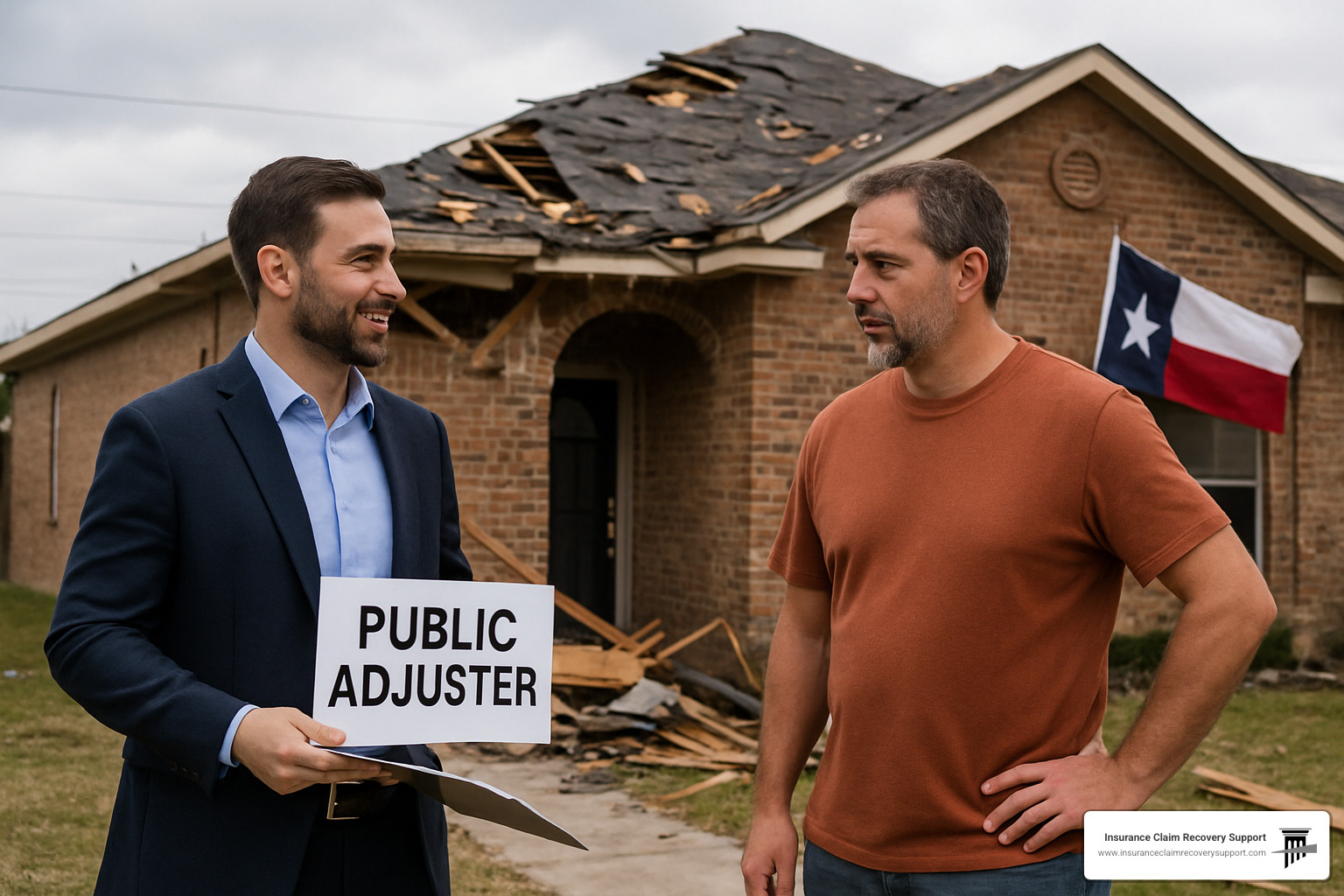
If you’re a Texas property owner dealing with an insurance claim, you’re probably wondering whether hiring a public adjuster is worth it. The short answer? The numbers speak for themselves, and they’re pretty compelling.
Texas throws everything at our properties—from hurricanes pounding Houston to freeze damage in Austin and Dallas. Our state’s wild weather creates complex claim scenarios that can easily overwhelm even the most prepared homeowner. That’s where the right Texas property insurance adjusters make all the difference.
Maximizing Your Claim: The Financial Benefits
Here’s a statistic that might surprise you: according to a government study, using a public adjuster typically raises insurance claim payouts by 747% on average. Before you think that sounds too good to be true, let me explain why this happens.
Insurance companies often make initial offers that are significantly lower than what you’re actually entitled to. They’re hoping you’ll accept the first check and move on. But a thorough damage assessment and proper policy interpretation reveal the true scope of your loss.
Take an Austin fire damage case we handled recently. The homeowner received an initial offer of $45,000 for what seemed like straightforward fire damage. After our comprehensive assessment, we finded extensive smoke damage the company adjuster had missed, plus additional living expenses the family was entitled to. The final settlement was $180,000.
In Houston, after Hurricane Harvey, we worked with a family whose insurance company offered $25,000 for roof damage. Our detailed inspection revealed structural issues and water intrusion that went far beyond surface repairs. That claim settled for $150,000.
Sometimes the difference is even more dramatic. Following the 2021 winter storm, a Dallas business owner was completely denied coverage for freeze-related pipe damage. The insurance company claimed it was “gradual damage” not covered by the policy. We successfully reopened that claim and secured $75,000 for repairs and business interruption.
When Should You Hire a Public Adjuster?
Not every claim needs a public adjuster, but certain red flags should make you pick up the phone immediately. If your claim involves severe damage from fire, hurricane, or widespread freeze damage, you’re dealing with complexity that requires expertise.
You should also call if you suspect your claim has been unfairly denied or underpaid. Trust your instincts—if the settlement offer seems too low for the damage you can see, it probably is.
Time is another crucial factor. If you lack the time or expertise to manage the claims process yourself while juggling property restoration, family, and work, a public adjuster handles everything for you. We’ve seen too many good people get overwhelmed and accept lowball offers just to make the stress stop.
Complex policy language is another major reason to seek help. Insurance policies are deliberately written in ways that favor the company. When coverage seems ambiguous or confusing, professional interpretation can mean thousands of dollars in additional settlement.
Business interruption claims require detailed financial documentation and calculations that most business owners aren’t equipped to handle. Similarly, when multiple types of damage occur simultaneously—like wind, water, and fire—determining what’s covered requires careful cause-and-effect analysis.
In Round Rock, Georgetown, and Lakeway, we regularly help homeowners steer freeze damage claims that initially seem straightforward but involve tricky coverage issues around gradual versus sudden damage.
Types of Claims We Handle
Our team has experience with virtually every type of property damage claim you’ll encounter in Texas. Weather-related damage is our specialty, including hurricane and tropical storm damage that regularly impacts Houston and coastal areas, plus tornado damage that can strike anywhere in the state.
Freeze damage from winter storms has become increasingly common, especially in Austin, Dallas, and San Antonio. We also handle flood damage cases that require careful distinction between covered wind-driven rain and excluded flooding.
Fire and smoke damage claims often involve more than meets the eye. Smoke damage can extend far beyond the fire’s origin, and additional living expenses during repairs add up quickly. We ensure every dollar is accounted for.
Water damage cases require expertise in distinguishing between covered and excluded damage. Whether it’s roof leaks, structural water intrusion, or plumbing failures, the coverage details matter enormously.
For commercial claims, we handle business interruption losses, equipment and inventory damage, and complex loss of income calculations that require both insurance expertise and business knowledge.
The bottom line is simple: when disaster strikes your property, having the right advocate can mean the difference between financial recovery and financial hardship. The statistics don’t lie—professional representation pays for itself many times over.
Navigating the Rules: How to Find and Verify Licensed Texas Property Insurance Adjusters
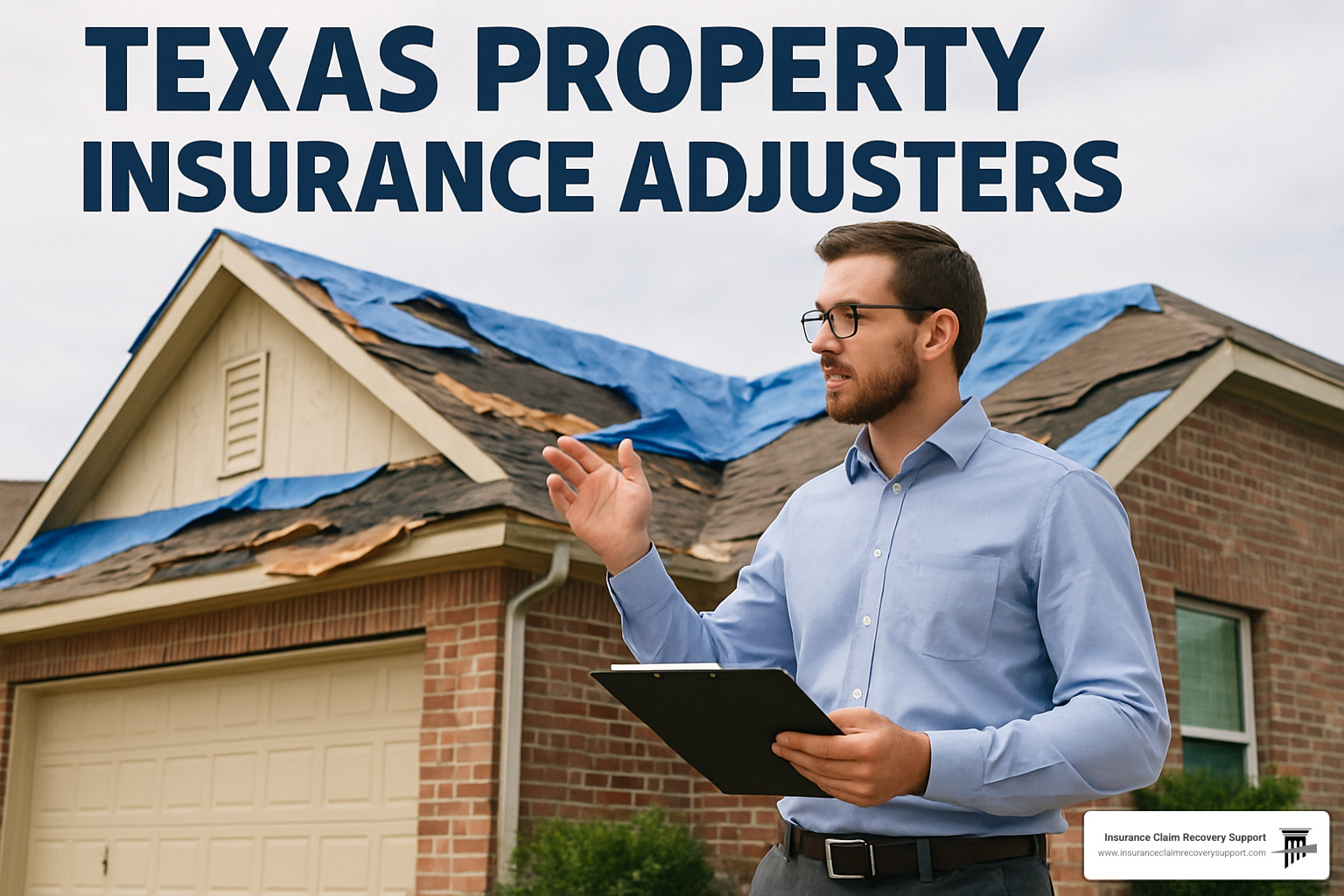
Finding the right Texas property insurance adjusters isn’t just about picking a name from a Google search. It’s about understanding who’s actually qualified to handle your claim and who you can trust with what might be the largest financial transaction of your life.
The good news? Texas has clear rules about who can legally adjust property claims, and the state makes it easy to verify credentials. Let me walk you through exactly what you need to know.
The Licensing and Regulation Landscape in Texas
Texas doesn’t mess around when it comes to insurance adjuster licensing. The Texas Department of Insurance (TDI) maintains strict oversight to protect property owners from unqualified or unscrupulous adjusters.
Here’s what every legitimate public adjuster must complete: a 40-hour pre-licensing course that covers insurance law, policy interpretation, and ethical standards. They can’t just take a weekend seminar and call themselves experts. After the coursework, they must pass a comprehensive state examination or complete an approved course that waives the exam requirement.
The process doesn’t stop there. Every adjuster pays a $50 application fee and undergoes background checks and fingerprinting. Once licensed, they must complete 24 hours of continuing education every two years to stay current with changing laws and industry practices. Their licenses require biennial renewal on the last day of their birthday month.
Public adjusters need a specific “public insurance adjuster” license—not just any adjuster license. This specialized credential ensures they understand their unique legal obligations to policyholders rather than insurance companies.
Want to verify an adjuster’s credentials? The official TDI license lookup system shows you exactly what you need to know. This should be your first stop when evaluating any potential representation.
What to Look for in Reputable Texas Property Insurance Adjusters
Beyond licensing, certain qualities separate truly effective public adjusters from the rest. Experience with your specific damage type matters enormously. A public adjuster who’s handled dozens of freeze damage claims understands the subtle differences between gradual deterioration and sudden pipe bursts. Similarly, hurricane specialists know how to separate wind damage from flood damage—a distinction that can mean thousands of dollars in coverage.
Local knowledge gives adjusters a significant advantage. An adjuster familiar with Round Rock’s building codes, Georgetown’s weather patterns, or Lakeway’s construction standards brings valuable context to your claim. They understand local contractors, permit requirements, and regional building practices that affect repair costs.
Professional conduct reveals itself in how adjusters communicate. Quality public adjusters explain the claims process clearly without overwhelming you with insurance jargon. They provide regular updates on your claim’s progress and maintain appropriate boundaries—meaning they’re not trying to sell you contractor services on the side.
Clear communication becomes especially important during stressful claim situations. Your adjuster should be accessible when you have questions and proactive about keeping you informed of developments.
Watch out for conflicts of interest. Texas law prohibits contractors from negotiating insurance claims, but some try to work around this by offering to “handle your claim for free.” This arrangement creates dangerous conflicts where the contractor’s profit motive may not align with your best settlement.
The Financials: Understanding Fees for Texas Property Insurance Adjusters
Texas law caps public adjuster fees at 10% of the total settlement amount. This isn’t just a suggestion—it’s a hard legal limit that protects you from excessive fees. The fee structure works on a contingency basis, meaning “no recovery, no fee.” If we don’t improve your settlement, you pay nothing.
Every engagement requires a written contract that clearly outlines the fee arrangement and scope of services. Texas law gives you a 72-hour rescission right, allowing you to cancel the contract without penalty if you change your mind. This cooling-off period protects you from high-pressure sales tactics.
Fees are typically paid from the settlement proceeds, not out of your pocket upfront. For particularly large claims, fees may be negotiated below the 10% cap, though this depends on the complexity and size of your specific situation.
The contingency structure aligns our interests perfectly with yours. We only succeed when you receive a fair settlement, which means we’re motivated to maximize your recovery rather than settle quickly for less than you deserve.
The Public Adjuster’s Playbook: A Step-by-Step Claims Process
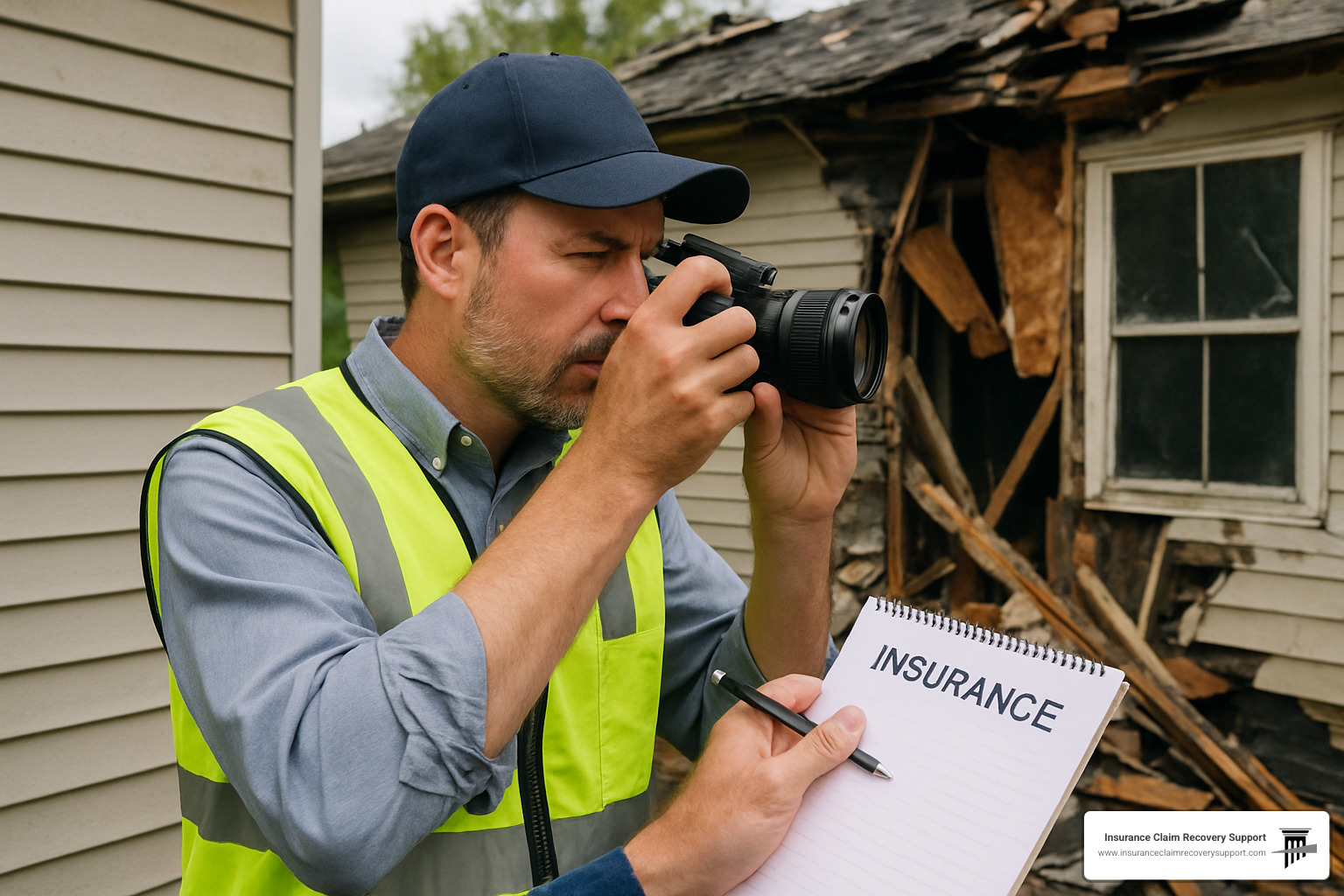
Ever wondered what actually happens when you hire a public adjuster? The process isn’t mysterious—it’s methodical, thorough, and designed to get you every dollar you deserve. Let me walk you through exactly how experienced Texas property insurance adjusters handle your claim from start to finish.
Step 1: Initial Consultation and Policy Review
Think of this first step as detective work. We dig into your insurance policy like we’re solving a puzzle, because frankly, that’s exactly what we’re doing. Most homeowners have no idea what their policy actually covers—and insurance companies prefer it that way.
During our free claim review, we sit down with you and go through every detail of your loss. We’re looking for the full scope of damage, but we’re also hunting for coverage you might not even know you have. That Additional Living Expense (ALE) coverage? It could pay for your hotel, restaurant meals, and temporary housing while repairs happen. Many policyholders never claim these benefits because nobody told them they existed.
We perform an in-depth policy analysis that typically reveals coverage opportunities the insurance company’s adjuster conveniently overlooked. Your policy isn’t just a document—it’s a contract, and we know how to read the fine print in your favor.
The timeline and complexity assessment helps us set realistic expectations. A straightforward roof repair claim moves faster than a complex fire loss with smoke damage throughout the house. We’ll tell you upfront what to expect and how long the process typically takes.
Step 2: Damage Assessment and Documentation
Here’s where the real work begins. While the insurance company’s adjuster might spend an hour or two at your property, we conduct a thorough property inspection that can take half a day or more. We’re not just looking at obvious damage—we’re finding hidden problems that could cost you thousands if left unfinded.
Our detailed loss inventory goes room by room, documenting everything from structural damage to personal property losses. We take professional photos and videos that tell the complete story of your loss. This isn’t iPhone photography—we use proper equipment and techniques that create compelling evidence for your claim.
When necessary, we bring in expert consultations with engineers, contractors, and specialists. If there’s any question about structural integrity, electrical systems, or complex damage patterns, we get professional opinions that carry weight with insurance companies.
We use Xactimate software—the same estimating program insurance companies use—so our damage assessments speak their language. This eliminates disputes over pricing and methodology, focusing negotiations on coverage and scope instead.
The difference in speed is remarkable. While the average insurance company adjuster completes a claim estimate every 1-3 months, our team completes comprehensive estimates in 1-2 weeks. This efficiency comes from doing this work every single day, not as an occasional task.
Step 3: Claim Submission and Negotiation
Now comes the part where our experience really pays off. We prepare and submit the proof of loss with meticulous attention to detail. These aren’t simple forms—they’re comprehensive reports that can range from 20 pages for smaller losses to over 200 pages for complex claims.
Every piece of documentation gets properly formatted and supported with evidence. We know exactly what the insurance company needs to see, and we present it in a way that’s impossible to ignore or dismiss.
Communicating with the insurance company becomes our job, not yours. We speak their language and understand their tactics. When they try to lowball your claim, we counter with detailed justifications for higher settlements. We know the difference between a legitimate coverage limitation and a company trying to save money at your expense.
The negotiation phase is where our expertise shines brightest. We understand insurance law, policy interpretation, and industry standards. More importantly, we know the specific tactics insurance companies use to minimize settlements—and exactly how to counter them.
Step 4: Settlement and Claim Resolution
Getting to “yes” on a settlement number is just the beginning of the end. We work to finalize settlement agreements that protect your interests and ensure you’re not signing away future rights you might need.
Ensuring timely payment means understanding Texas prompt payment laws and holding insurance companies accountable to legal deadlines. We know when payments should arrive and what to do if they don’t.
Our post-settlement guidance helps you steer the restoration process. We’re not contractors, so we have no financial interest in who you hire for repairs. We can provide objective advice on contractor selection and project management based on our experience with hundreds of similar projects.
Even after your settlement check arrives, we remain available to answer questions and provide guidance. Sometimes issues arise during reconstruction that require additional insurance communication, and we’re here to help steer those situations.
The entire process typically takes 60-90 days for straightforward claims, though complex losses can take longer. What matters most is that you end up with a fair settlement that fully covers your loss—something that rarely happens when policyholders go it alone against experienced insurance company adjusters.
Conclusion: Take Control of Your Property Claim Recovery
Dealing with property damage is stressful enough without having to fight your insurance company for a fair settlement. The good news? You don’t have to steer this complex process alone or accept whatever your insurance company’s adjuster offers.
Texas property insurance adjusters who work as public adjusters are your strongest allies in this fight. They understand that behind every claim is a family trying to rebuild their home or a business owner working to get back on their feet. That’s why they work exclusively for you—not the insurance company.
The numbers don’t lie: public adjusters increase claim payouts by an average of 747%, with settlements often 70% higher than initial insurance company offers. This isn’t about exploiting loopholes or gaming the system. It’s about ensuring you receive every dollar you’ve already paid for through your insurance premiums.
Think of it this way: you wouldn’t represent yourself in court against a team of lawyers, so why would you handle a complex insurance claim against a team of company adjusters and attorneys? The playing field becomes level when you have professional representation that understands policy language, damage assessment, and negotiation tactics.
Here’s what you need to remember when disaster strikes your Texas property:
Verify licensing through the Texas Department of Insurance website before hiring any adjuster. Understand fee structures—public adjusters work on contingency with fees capped at 10% in Texas. Act quickly to document damage and preserve evidence, but don’t rush into agreements since you have 72 hours to reconsider any contract. Document everything with photos, videos, and detailed notes. Most importantly, choose representation that works exclusively for your interests, not the insurance company’s bottom line.
Your Advocate in Texas
At Insurance Claim Recovery Support, we’ve seen too many Texas families and businesses get shortchanged by insurance companies. That’s why we built our firm on one unshakeable principle: we work exclusively for policyholders, period.
Our team has settled over $250 million in claims across Texas, helping families in Austin recover from house fires, businesses in Dallas bounce back from tornado damage, and homeowners in Houston rebuild after hurricane destruction. We understand the unique challenges Texas property owners face, from freeze damage in San Antonio to flood issues in Fort Worth.
Whether you’re in Round Rock dealing with storm damage, Georgetown facing fire recovery, or Lakeway handling water damage, we know the local conditions, building codes, and weather patterns that affect your claim. We’ve worked in Lubbock, San Angelo, Waco, and communities across the state, building relationships and understanding local needs.
When disaster strikes your property, you deserve more than just any adjuster—you deserve an advocate who understands Texas property insurance law and isn’t afraid to fight for your rights. You deserve someone who will dig deeper than the insurance company’s adjuster, who will find coverage you didn’t know existed, and who will negotiate tirelessly until you receive a fair settlement.
Don’t let your insurance company shortchange you. Take control of your claim recovery by working with experienced public adjusters who understand that your recovery is their success. Every family and business deserves to rebuild properly, not just patch things up with whatever the insurance company initially offers.
For expert assistance with your Texas property insurance claim, get help from expert public adjusters who are committed to maximizing your settlement and helping you rebuild stronger than before.