Why Lawmakers Are Investigating Insurance Claims — And What Policyholders Need to Know Before Settling
The Insurance Claim Process Is Under Scrutiny. Here’s What That Means for Your Settlement
From Senate hearings to state investigations, public officials are raising concerns about delays, denials, and underpaid claims. If your claim feels stuck, you’re not alone.
This is no longer just policyholders complaining.
Across the country:
- U.S. Senators are holding hearings on insurance claim practicesState investigations have been launched.
- Attorneys General are alleging coordinated underpayment strategies.
- Policyholders are reporting the same patterns nationwide.
The system is being questioned.
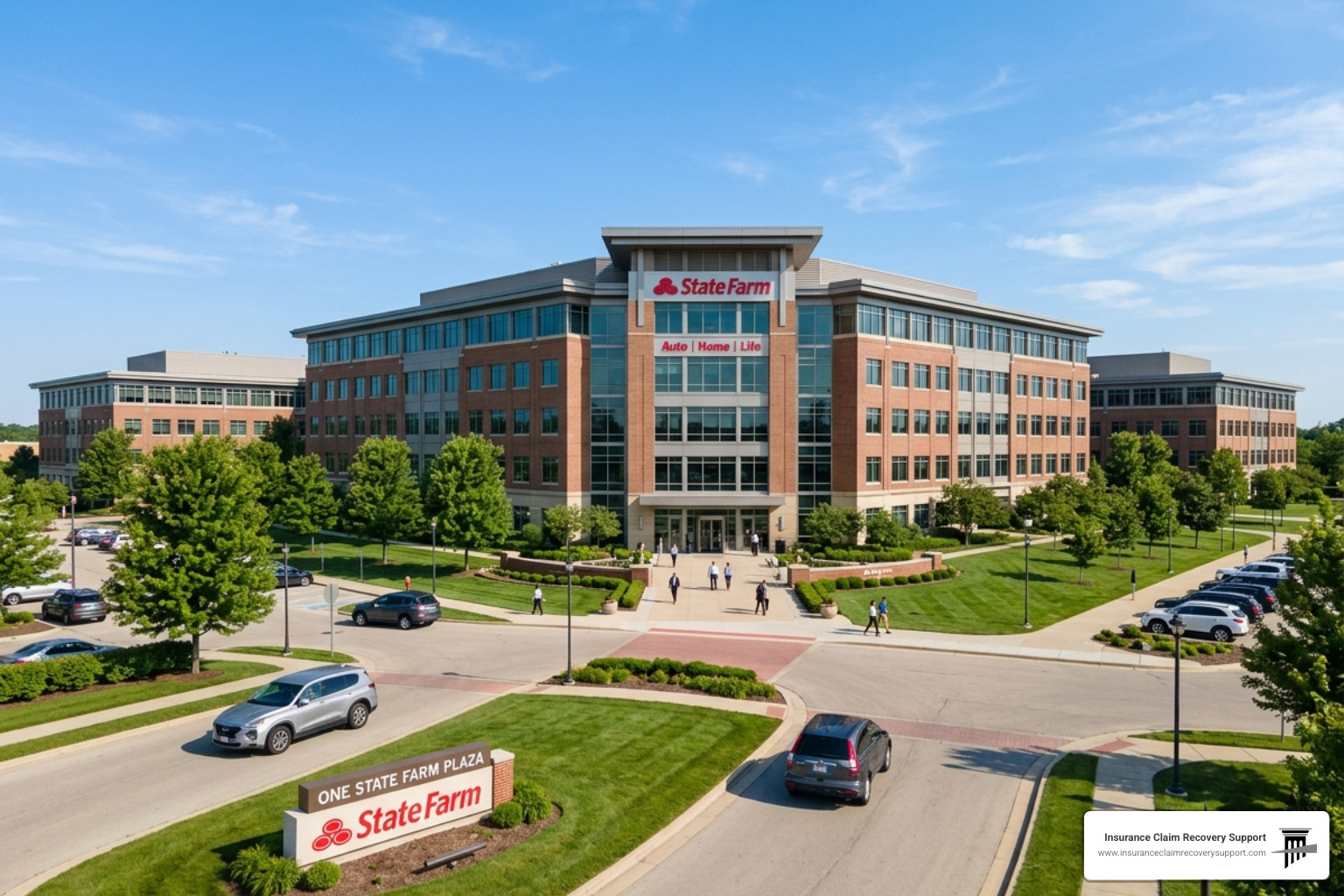
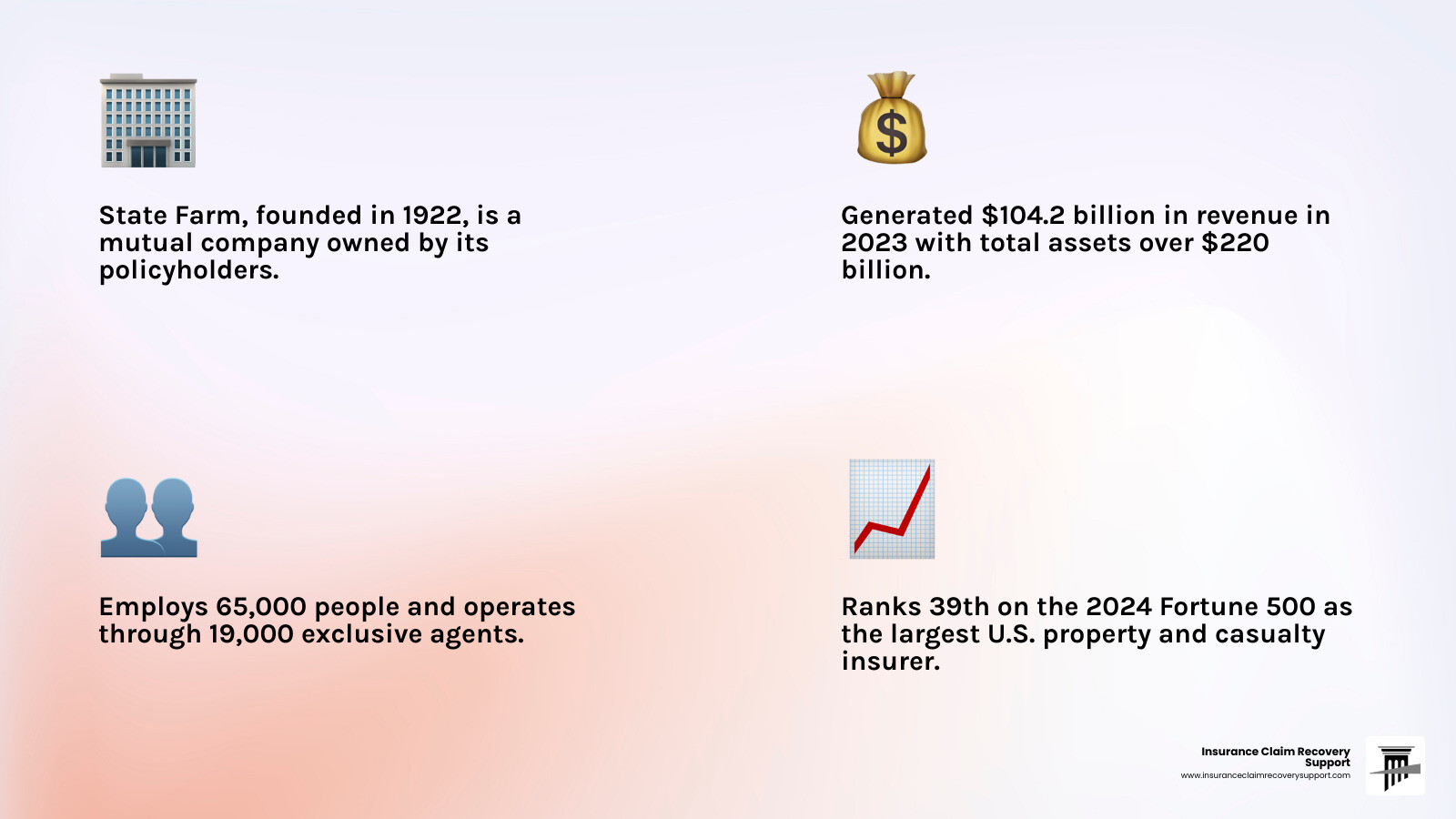
STATE FARM is the largest property, casualty, and auto insurance provider in the United States — a mutual company founded in 1922, now managing over 96 million policies, generating $104.2 billion in revenue, and ranked 39th on the Fortune 500. Here’s what that means at a glance:
| Key Fact | Detail |
|---|---|
| Founded | June 7, 1922 |
| Company Type | Mutual (policyholder-owned) |
| Revenue (2023) | $104.2 billion |
| Total Assets (2023) | $220.788 billion |
| Net Income (2023) | -$6.3 billion (loss) |
| Employees | 65,000 |
| Agents | 19,000 exclusive/captive agents |
| Policies Managed | 96 million+ |
| Fortune 500 Rank | 39th (2024) |
| Largest U.S. Insurer | ✅ Property, casualty, and auto |
For most home, commercial property owners, apartment operators, and multifamily investors, State Farm is not just a household name — it’s likely the carrier on your policy. And that matters more than ever right now.
Because what’s happening with State Farm in 2025 and 2026 goes well beyond jingles and Jake in khakis.
Across California, Oklahoma, Illinois, Texas, and Florida, state regulators, attorneys general, and U.S. senators are raising serious questions about how State Farm handles large-loss property claims — particularly for custom homes, commercial and multifamily properties hit by wildfires, hail, and wind events. The concerns range from delayed payments and disputed damage assessments to allegations of coordinated strategies to reduce claim payouts. At the federal level, President Trump publicly criticized State Farm’s wildfire claim handling in 2026. A U.S. Senate hearing in May 2025 featured sworn testimony describing patterns of delay, denial, and underpayment that one senator called “institutionalized fraud.”
This guide breaks all of it down — clearly, factually, and without the insurance industry jargon.
I’m Scott Friedson, CEO of Insurance Claim Recovery Support (ICRS) and a multi-state licensed public adjuster who has spent more than 15 years settling hundreds of millions of dollars in large-loss commercial and multifamily property claims directly against carriers like STATE FARM. The patterns I’ve seen on the ground — delayed adjuster assignments, low-ball initial offers, fragmented decision-making — are exactly what regulators and lawmakers are now putting on the record.
State Farm 101: History, Financials, and the Exclusive Agent Model
To understand how STATE FARM operates today, we have to look back to its founding in 1922 by George J. Mecherle, a retired farmer and insurance agent. Mecherle’s original vision was a mutual insurance company—meaning it is technically owned by its policyholders rather than outside stockholders. This structure was intended to keep costs low and focus on the needs of the members.
Over the last century, STATE FARM has grown into a financial titan. As of April 2026, it remains a dominant force in the market, ranking 39th on the 2024 Fortune 500 list. While the company reported a staggering $104.2 billion in revenue for 2023, it also saw a net loss of $6.3 billion, largely driven by catastrophic weather events and rising construction costs. Despite this, its total assets exceed $220 billion, supported by a massive workforce of 65,000 employees and 19,000 agents.
A defining characteristic of the company is its “exclusive” or “captive” agent model. Unlike independent agents who can shop multiple carriers for you, STATE FARM agents sell only STATE FARM products.
- The Advantage: You get a dedicated local representative who knows the company’s specific Commercial Multi-Peril (CMP) policies inside and out.
- The Criticism: Because these agents are contracted exclusively with the carrier, their loyalty is often split between the policyholder and the corporation providing their livelihood. When a large-loss commercial property claim arises, this can create a conflict of interest, as the agent has little power to challenge the company’s internal claims decisions.
For a deeper dive into their corporate evolution, you can view the State Farm company profile and history.
Systemic Scrutiny: Lawmakers Sound the Alarm on State Farm Practices
In recent years, the “Good Neighbor” image has faced significant legislative and regulatory pressure. The focus has shifted from marketing jingles to serious allegations regarding the handling of complex commercial and multifamily claims.

The May 2025 Senate Hearing
The most high-profile confrontation occurred in May 2025. Senator Josh Hawley chaired a Senate hearing that put STATE FARM and other major insurers under the microscope. The testimony was explosive. Whistleblowers and policyholders alleged a systemic “Delay, Deny, Underpay” pattern. Senator Hawley went so far as to describe the industry’s tactics as “institutionalized fraud,” referencing sworn statements that adjusters were pressured to lower damage estimates on legitimate claims.
Presidential and Federal Criticism
The scrutiny didn’t stop in the Senate. In 2026, President Trump publicly labeled STATE FARM‘s handling of wildfire claims as “absolutely horrible.” This federal attention is particularly relevant for commercial property owners in wildfire-prone areas who have seen their claims for smoke damage, business interruption, and structural loss languish for months without resolution.
When a carrier of this size faces such high-level criticism, it often signals that the internal claims “roadmap” has become intentionally difficult for policyholders to navigate. For those managing large assets, understanding these insurance adjustment services is critical to ensuring a fair recovery.
The Oklahoma Hail Focus Initiative and Predetermined Outcomes for State Farm
One of the most specific and damaging allegations against STATE FARM came from Oklahoma Attorney General Gentner Drummond. In late 2025, his office moved to intervene in litigation, highlighting what was called the “Hail Focus Initiative.”
The Attorney General alleged that STATE FARM operated a coordinated program designed to reduce payouts on wind and hail claims through:
- Predetermined Outcomes: Claims were allegedly decided before a physical inspection even took place.
- Corporate Savings Targets: Payouts were reportedly limited to meet internal financial goals rather than the actual cost of repairs.
- Restrictive Internal Standards: The company allegedly used damage assessment criteria that were not found in the actual insurance policies issued to commercial and multifamily owners.
This initiative is a primary concern for owners of retail centers and apartment complexes in the “Hail Alley” regions of Texas and Oklahoma, where a single storm can cause millions in roof and facade damage.
Regulatory Battles in California and Illinois with State Farm
The regulatory environment has become increasingly adversarial in other key states as well:
- California: After the devastating 2025 Los Angeles fires, STATE FARM requested a massive 22% rate hike (with some rental property lines seeing requests up to 38%). This came after the company had already stopped issuing new homeowners and certain commercial policies in the state, citing wildfire risk and reinsurance volatility. The California Department of Insurance has launched investigations into claim delays that have left commercial properties in ruins long after the embers cooled.
- Illinois: In its home state, the company has faced criticism over “deductible shifts” and a lack of transparency. Regulators have expressed concern that the company is moving catastrophe costs onto policyholders by increasing commercial deductibles while simultaneously reducing the scope of coverage for large-loss events.
The Reality of Large-Loss Claims
When STATE FARM issues a low-ball offer on a custom home, apartment building, or commercial property claim, policyholders often feel they have only two choices: accept the loss or sue. However, the data shows a more complex reality.
In Texas, commercial policyholders are protected by Texas Insurance Code 541 (Unfair Settlement Practices) and 542 (Prompt Payment of Claims Act). These statutes are designed to hold carriers accountable for dragging their feet or acting in bad faith.
The Cost of Litigation
In Florida, the disparity is even more stark. Litigation is a slow and expensive “nuclear option.”
| Metric | Non-Litigated Claim | Litigated Claim |
|---|---|---|
| Average Cost to Resolve | ~$1,500 | $10,000+ |
| Resolution Timeline | Months | Years |
| Adversarial Nature | Moderate | High |
Translation: The Hidden Cost of Forced Escalation
Translation: Commercial policyholders are frequently forced to challenge initial decisions because the carrier’s first offer is often a fraction of the actual repair cost. Translation: Once a claim for an office building in Austin or an industrial warehouse in Houston escalates into a legal battle, the recovery process becomes slower, more expensive, and highly adversarial.
Owners in Dallas, San Antonio, and Fort Worth often find that the carrier counts on them being too busy or too cash-strapped to fight back.
Navigating the Claims Roadmap: Adjuster Gaps and Fragmented Decisions
One reason commercial claims (> $250,000) become so difficult is the “fragmented decision-making” process. When you file a claim with STATE FARM, you might meet a local “field adjuster.” However, that person rarely has the final say.
- Desk Reviewers: Your claim is often sent to a “desk adjuster” in a different state who has never seen your property.
- Non-Licensed Personnel: Testimony from the 2025 Senate hearing suggested that non-licensed corporate employees often influence the final payout numbers, overriding the findings of the field professionals.
- Licensing Gaps: There is no national standard for adjuster licensing, leading to a “revolving door” of catastrophe adjusters who may lack the expertise required for complex commercial HVAC, roofing, or structural systems.
Fact vs. Myth: Property Claims
Myth: The carrier’s adjuster is the final authority on damage for large-loss residential or commercial claims.
Fact: The carrier’s adjuster is an employee or contractor for the insurance company. Their job is to find reasons to limit the company’s liability.
Myth: Litigation is the only way to resolve a low-ball offer for commercial property damage.
Fact: Professional public adjuster advocacy can resolve large-loss commercial claims without unnecessary expensive lawsuits or years of litigation.
Frequently Asked Questions about State Farm
Why did State Farm stop issuing new commercial property policies in California?
The decision was driven by a “perfect storm” of wildfire risk, surging construction costs (which rose 55% between 2019 and 2022), and a volatile reinsurance market. The 2025 LA fires alone resulted in over $1 billion in payouts for STATE FARM, prompting the company to limit its exposure to protect its remaining capital.
What is the “Hail Focus Initiative” mentioned by lawmakers?
This was a coordinated strategy alleged by the Oklahoma Attorney General where STATE FARM allegedly used “predetermined outcomes” to underpay wind and hail claims. The goal was reportedly to meet corporate savings targets by applying internal standards that were more restrictive than the language in the actual insurance policies.
How do Texas Statutes 541 and 542 protect commercial policyholders?
These are the most powerful tools for policyholders in Lubbock, Waco, and San Angelo.
- Section 541: Prohibits unfair methods of competition and deceptive acts, such as misrepresenting policy terms.
- Section 542: Also known as the Prompt Payment of Claims Act, it mandates strict timelines for acknowledging, investigating, and paying claims. If a carrier misses these deadlines, they may be liable for statutory interest (currently 18%) and the policyholder’s attorney fees.
At ICRS, we don’t just read about these issues—we deal with them in real claims:
- Claims wrongfully denied, then reversed after escalation
- Claims pushed into appraisal prematurely
- Appraisal denied, forcing litigation
- Litigation forcing appraisal, then resistance again
- Multi-state claim handling causing inconsistent decisions
We are currently handling a large fire loss in Utah being overseen by an out-of-state claims office.
What we are seeing:
- Delays in decision-making
- Inconsistent positions between adjusters
- Procedural obstacles instead of resolution.
These are the same patterns lawmakers are now questioning.
Lawmaker Probe: Settlement Guide Insurance Claim Recovery Support LLC
The systemic scrutiny surrounding STATE FARM in 2026 is a wake-up call for every commercial property owner. Whether you are managing an HOA in Georgetown, a retail plaza in Round Rock, or a multifamily portfolio in Lakeway, you cannot assume that “being in good hands” means you will be treated fairly after a disaster.
THE SECOND DISASTER
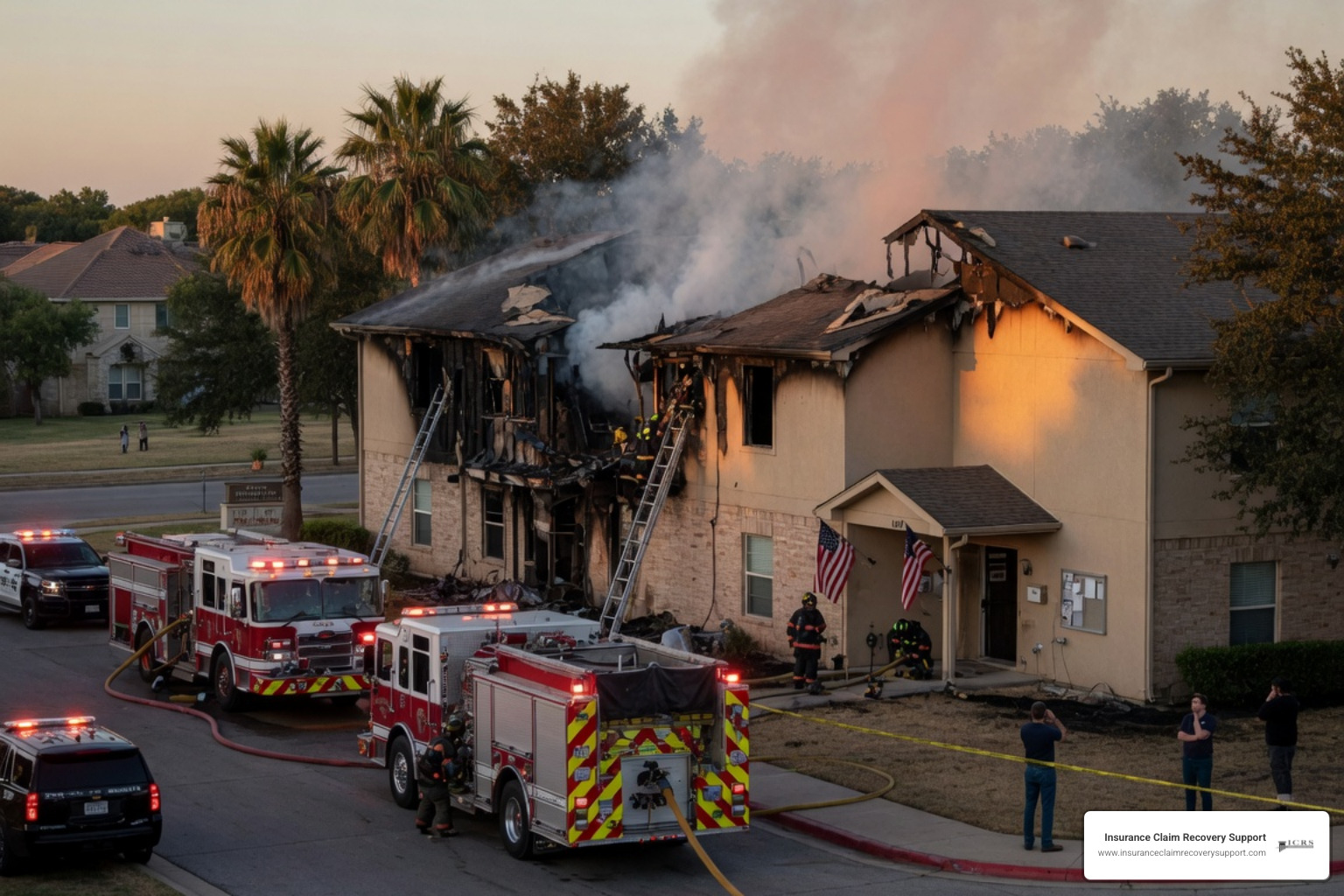
Most policyholders expect damage.
What they don’t expect is the process:
- Months of delays
- Multiple adjusters
- Shifting scopes
- Incomplete estimates
- Pressure to accept less
The claim process becomes the second disaster.
WHY CLAIMS ESCALATE
Most disputes don’t start with litigation.
They start with:
- Improper initial scoping
- Missing documentation
- Misaligned claim strategy
- Lack of policy interpretation
By the time escalation happens, the damage is already done.
At Insurance Claim Recovery Support (ICRS), we specialize in leveling the playing field. We represent policyholders exclusively—never insurance companies. Our expertise in large-loss commercial, multifamily, and specialty property claims (fire, hail, hurricane, tornado, and winter storms) allows us to navigate the carrier’s roadmap and secure the settlement you are legally owed.
With a 90% success rate in resolving claims without unnecessary lawsuits, we focus on maximizing your settlement and reducing the stress of the recovery process. If you are facing a complex claim, don’t go it alone.
Contact a licensed public adjuster for claim recovery support and ensure your property is restored to its pre-loss condition.
Insurance companies have experts working for them.You should too.™️
ICRS focuses on:
- Getting the claim strategy right from day one
- Proper documentation and valuationCarrier accountability
- Resolving claims without unnecessary litigation
Policyholders don’t expect perfection.But they do expect fairness, transparency, and timely payment.
And when it takes escalation, documentation battles, or legal pressure just to reach a fair outcome—that’s not a claims process.
That’s a system under scrutiny.
Before your claim escalates further, understand your position.
✔ $250M+ in Settled Claims✔ 500+ Large-Loss Claims✔ 15+ Years Experience✔ 90% Resolved Without Unnecessary Litigation
Licensed Public Adjuster | TX #1632488 | FL #W797805 | OH #1289475 | CO #411678 | GA #2874635 | IN #3891955 | KS #15827727 | KY # 1014264 | MD #2106190 | NC #15827727 | NE #15827727 | NV #3508775 | OK #100118599 | PA #1043874 | SC #893766 | UT #915234NPN #15827727 | TX Licensed Public Insurance Adjuster Agency: Insurance Claim Recovery Support LLC #1670060Haag Certified Commercial Roof Inspector #201408103 | IICRC WRT Certified #229373