Why School Fire Insurance Is Critical for Educational Continuity
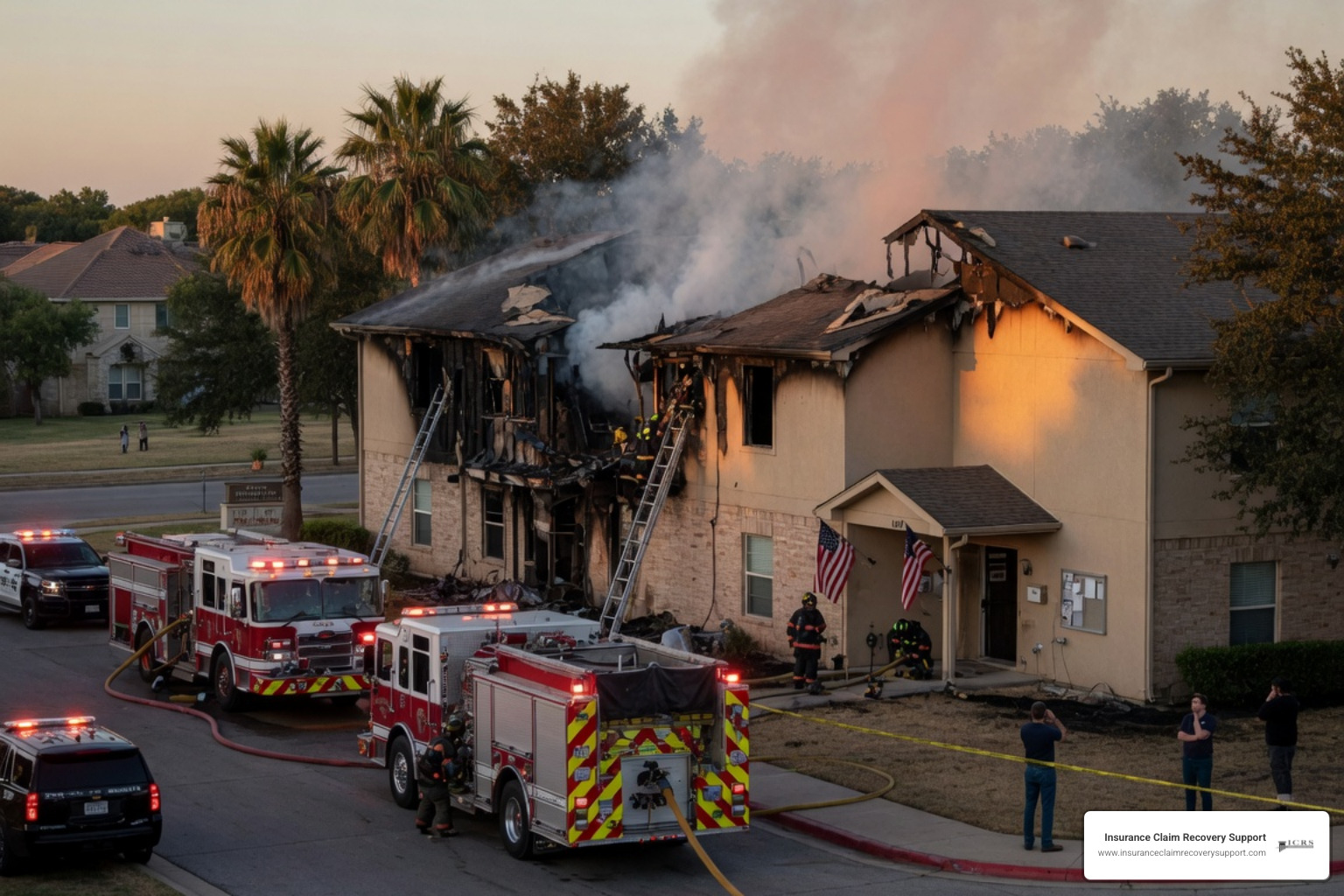
School fire insurance is specialized property coverage designed to protect educational institutions from the financial impact of fire damage and the operational disruption that follows. With nearly 3,230 structure fires reported in U.S. schools each year, according to the National Fire Protection Association (NFPA), administrators face the complex challenge of maintaining educational continuity while managing repairs, code upgrades, and temporary relocation.
Quick Answer: What Does School Fire Insurance Cover?
- Building Structure: Repair or replacement of damaged classrooms, administrative buildings, and facilities.
- Contents & Equipment: Textbooks, computers, laboratory equipment, and furniture.
- Related Perils: Fire, smoke, water damage from sprinklers, lightning, and explosions.
- Business Interruption: Lost income, faculty salaries, and temporary relocation costs.
- Code Upgrades: Increased costs to meet current building standards.
- Exclusions to Watch: Willful negligence, war, terrorism, pollution, and undocumented property.
Unlike standard commercial properties, schools face a unique mandate: education cannot stop. When fire strikes, administrators must simultaneously manage insurance claims, arrange temporary facilities, and maintain payroll, all while facing pressure from the community. The process is even more complex for older buildings requiring expensive code upgrades or when business interruption must cover lost revenue from special events.
I’m Scott Friedson, CEO of Insurance Claim Recovery Support. For over 15 years, I’ve helped educational institutions and other large-loss property owners recover hundreds of millions in school fire insurance claims that were initially underpaid or denied. My experience shows how critical proper coverage and expert claim advocacy are to getting schools back in operation quickly.
Understanding Your School Fire Insurance Policy
When a fire strikes, understanding your school fire insurance policy is the difference between a smooth recovery and a financial nightmare. Let’s break down the essentials so you know what protection your school has.
What’s Covered? From Structure to Special Perils
Think of your policy as a multi-layered shield. It protects the physical building structure (classrooms, offices, gyms) and the contents that make education possible: textbooks, computers, laboratory equipment, and furniture. Beyond direct fire damage, coverage typically extends to related perils like pervasive smoke damage, water damage from sprinklers, lightning strikes, and explosions from gas lines.
Knowing what your policy covers is the first step in a crisis. For a detailed guide on what to do immediately after a fire, see our resource on How to File an Insurance Claim for Fire Damage.
Common Exclusions and Gaps in Standard Policies
Even the best policies have limits. Standard exclusions include willful negligence, war and terrorism, and cleanup of pre-existing pollution. Another gap is consequential loss—the policy might repair a server but not cover the lost data. Claims for undocumented property also face an uphill battle, making detailed inventories essential.
Here are 3 commonly overlooked policy exclusions:
- Code Upgrade Costs: Your policy might pay to rebuild a 1970s-era wing, but not the extra cost to bring it up to modern building codes. This requires a specific “Increased Cost of Construction” or “Ordinance or Law” endorsement.
- Landscaping and Outdoor Structures: Athletic fields, scoreboards, and playgrounds often have minimal coverage or are excluded entirely without a specific add-on.
- Loss of Attraction: If a fire causes enrollment to decline due to perceived safety issues, the resulting income loss is not covered by standard policies.
Essential Add-Ons for Comprehensive School Fire Insurance
A basic policy is rarely enough. These add-ons provide comprehensive protection for a school’s unique needs:
- Business Interruption Insurance: This is the most critical add-on. It covers lost income (tuition, event revenue), faculty salaries, and temporary relocation costs (like portable classrooms), keeping your school financially stable during downtime.
- Increased Cost of Construction: Also called Ordinance or Law coverage, this pays the significant extra expense of rebuilding to meet today’s stringent safety, accessibility, and energy codes.
- Landscaping and Outdoor Structures: An endorsement can ensure your athletic fields, playgrounds, bleachers, and irrigation systems are properly protected.
- Special Equipment Coverage: General contents coverage may not be enough for high-value items like advanced robotics equipment or medical training simulators. Specific endorsements are needed to cover their full replacement cost.
Navigating the Claim and Maximizing Your Recovery
When fire strikes a school, a swift and thorough claim response is critical to restoring the learning environment. The process can be overwhelming, but understanding the steps and having an expert advocate can ensure you receive a full and fair settlement.
The Step-by-Step School Fire Insurance Claim Process
Protect your school’s interests by following these key steps:
- Immediate Reporting: Contact your insurance provider as soon as it’s safe. Delays can jeopardize your claim.
- Damage Mitigation: Take reasonable steps to prevent further harm, such as boarding up windows or tarping roofs. Document all actions and keep every receipt.
- Detailed Documentation: This is the foundation of your claim. Use photos and video to document all damage. Create a comprehensive inventory of every damaged item, including its age and replacement cost.
- Evidence Preservation: Do not throw anything away until the insurance company’s adjuster has inspected it. Discarding evidence can lead to denied claims for those items.
- Adjuster Inspection: The insurer’s adjuster will assess the damage. They work for the insurance company, not you. Having your own expert present is crucial.
- Proof of Loss Submission: This is a formal, sworn statement detailing your claim. Its accuracy is vital for negotiations. For a detailed walkthrough, visit our Fire Insurance Claim guide.
How to Ensure Adequate Coverage and Mitigate Future Risks
The best claim is one you never have to file. Proactive risk management strengthens your position with insurers and, more importantly, protects your students and staff.
- Review Your Policy Annually: Ensure your coverage limits reflect new construction, expensive equipment, and rising replacement costs in your area, especially in fast-growing Texas cities like Austin and Dallas.
- Conduct Regular Appraisals: Professional appraisals provide the hard data needed to set adequate coverage limits and avoid underinsurance penalties.
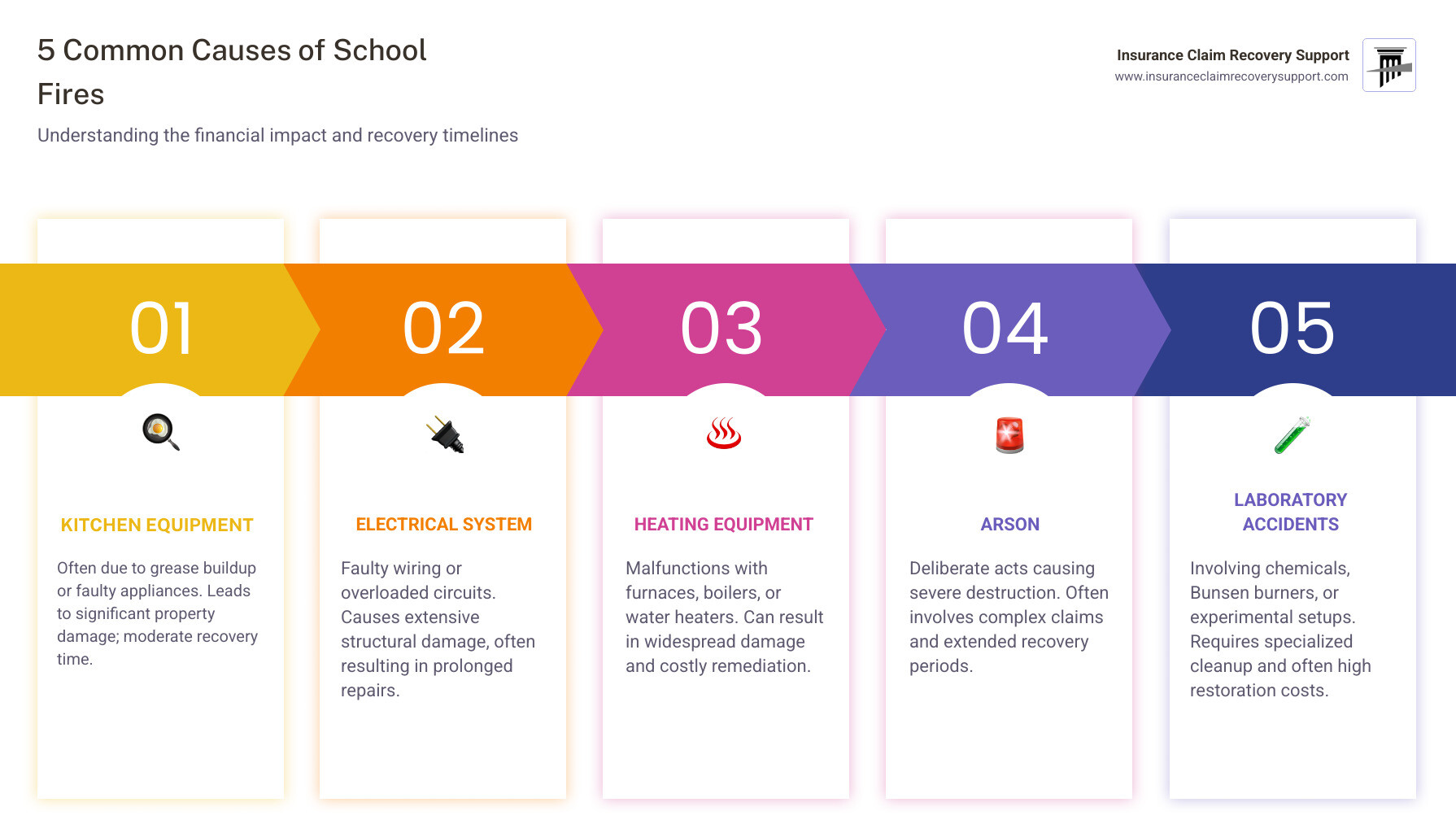
- Perform a Risk Assessment: Identify and address fire hazards in high-risk areas like science labs, kitchens, and buildings with aging electrical systems.
- Maintain Fire Safety Systems: Well-maintained sprinkler systems, accessible fire extinguishers, and regular fire drills not only save lives but can also lead to premium discounts.
For expert guidance on protecting your recovery, learn more about working with a Fire Insurance Public Adjuster.
Fact vs. Myth: School Fire Insurance Claims
Misconceptions can cost your school dearly. Here are the facts:
- Myth: Filing a claim will automatically cause my premiums to skyrocket.
Fact: While rates can be affected, the financial loss from not filing a legitimate claim far outweighs a potential premium increase. Insurers expect major claims for unavoidable events like fires.
Myth: The insurance company’s adjuster works for me.
Fact: The insurer’s adjuster represents their employer’s financial interests. A public adjuster is the only adjuster who works exclusively for you, the policyholder.
Myth: I have to accept the insurance company’s first offer.
- Fact: The first offer is a starting point for negotiation. You have the right to dispute it with your own documentation and expert valuations.
Why Partnering with a Public Adjuster is Crucial for Schools
When a fire damages your school, you’re managing a crisis on multiple fronts. Partnering with a public adjuster from Insurance Claim Recovery Support allows you to focus on educational continuity while we handle the complexities of your insurance claim.
We work exclusively for policyholders to document damage, interpret policy language, and negotiate for the maximum settlement you are owed. Our approach focuses on expert claim management to avoid the time, cost, and stress of litigation.
Claim Process: Public Adjuster vs. Insurance Claim Litigation
| Aspect | With a Public Adjuster (ICRS) | Insurance Claim Litigation |
|---|---|---|
| Timeline | 3-12 months average settlement | 18-36+ months in court |
| Cost | Contingency fee (no recovery, no fee) | Hourly legal fees & court costs |
| Your Involvement | Minimal; we manage the process | Extensive; depositions, appearances |
| Stress Level | Lower; expert handles negotiations | High; adversarial and uncertain |
| Outcome | 90% settlement success without litigation | Uncertain; depends on judge or jury |
If your claim has been denied or underpaid, don’t give up. We can help challenge the decision. See our guide on Denied Insurance Claim for Fire Damage to Commercial Property.
For schools in the Dallas-Fort Worth area, our local expertise makes a difference. Get help with your Tarrant County school damage claim from adjusters who understand Texas building codes and local costs. Let us handle the insurance claim so you can focus on what matters most—your students.
Introduction
Why School Fire Insurance Is Critical for Educational Continuity
School fire insurance protects your buildings, contents, and operations so learning can continue after a loss. With thousands of school fires reported annually, administrators must be ready to manage claims, code upgrades, and temporary relocation while keeping students and staff safe.
At a glance, coverage typically includes:
- Building Structure: Repair/replacement for classrooms, offices, gyms.
- Contents & Equipment: Textbooks, computers, lab gear, furniture.
- Related Perils: Fire, smoke, sprinkler discharge, lightning, explosions.
- Business Interruption: Lost income, salaries, and temporary facilities.
- Code Upgrades: Costs to meet current building standards.
- Common Exclusions: Willful negligence, war/terrorism, pollution, undocumented property.
Bottom line: education can’t stop. The right coverage and experienced claim advocacy help schools control timelines and costs, especially in older buildings that trigger expensive code upgrades or when events-based revenue is interrupted.
Understanding Your School Fire Insurance Policy
A school fire loss affects facilities, curriculum delivery, and operations. Knowing what your policy does (and doesn’t) cover helps you respond decisively.
What’s Covered? From Structure to Special Perils
Policies generally cover buildings and contents, plus related perils such as smoke, sprinkler discharge, lightning, and explosion. Move quickly and document thoroughly. For a step-by-step checklist, see How to File an Insurance Claim for Fire Damage.
Common Exclusions and Gaps in Standard Policies
Typical exclusions include willful negligence, war/terrorism, pollution, consequential loss without specific endorsements, and undocumented property. Three often-missed gaps:
- Code Upgrade Costs: Add “Increased Cost of Construction”/”Ordinance or Law” coverage.
- Landscaping/Outdoor Structures: Athletic fields, playgrounds, bleachers, and scoreboards may be limited without endorsements.
- Loss of Attraction: Enrollment-related income loss after a fire is usually not covered by default.
Essential Add-Ons for Comprehensive School Fire Insurance
- Business Interruption: Replaces lost income (tuition, events), funds salaries, temporary facilities, and extra expense.
- Increased Cost of Construction: Pays to meet current codes during rebuilds (critical for older schools).
- Landscaping and Outdoor Structures: Extends protection to fields, lights, fences, and irrigation.
- Special Equipment Coverage: Endorsements for high-value lab, robotics, AV, or medical training equipment.
These upgrades help align coverage with real-world exposures faced by schools and districts.
Navigating the Claim and Maximizing Your Recovery
When a school fire occurs, speed and documentation drive outcomes. Use this condensed playbook to protect your recovery while you focus on educational continuity.
The Step-by-Step School Fire Insurance Claim Process
- Immediate Reporting: Notify your insurer promptly; delays can impact coverage.
- Damage Mitigation: Secure, tarp, and stabilize. Photograph before/after and keep all receipts.
- Detailed Documentation: Photo/video all damage; build a room-by-room contents inventory with age and replacement cost.
- Preserve Evidence: Don’t discard items until the insurer’s adjuster has inspected.
- Adjuster Inspection: The insurer’s adjuster represents the carrier. Consider having your own expert on-site.
- Proof of Loss: Submit a complete, sworn statement of damages. For a deeper walkthrough, visit our Fire Insurance Claim guide.
How to Ensure Adequate Coverage and Mitigate Future Risks
- Annual Policy Reviews and Appraisals: Keep limits aligned with rising construction costs and new assets.
- Risk Assessments: Focus on labs, kitchens, aging electrical systems, and high-occupancy spaces.
- Fire Safety Systems & Training: Maintain sprinklers/extinguishers and run drills. Strong safety practices support claim credibility and may reduce premiums.
- For expert advocacy and risk-aligned strategies, see our Fire Insurance Public Adjuster.

Fact vs. Myth: School Fire Insurance Claims
- Myth: The insurer’s adjuster works for me.
- Fact: They work for the carrier. A public adjuster advocates exclusively for policyholders.
- Myth: I must accept the first offer.
- Fact: It’s a starting point. You can negotiate using independent estimates and documentation.
- Myth: Filing a claim always spikes premiums.
- Fact: Not necessarily. Major losses are expected; thorough documentation and risk improvements help.
Why Partnering with a Public Adjuster is Crucial for Schools
ICRS manages large-loss school claims end-to-end—documenting damage, interpreting policy language, and negotiating to maximize settlement without unnecessary litigation. If your claim was denied or underpaid, we can help you contest the decision. See: Denied Insurance Claim for Fire Damage to Commercial Property. In North Texas, we also support districts locally: Tarrant County school damage claims.
Claim Process: Public Adjuster vs. Insurance Claim Litigation
| Feature | With a Public Adjuster (ICRS) | With Insurance Claim Litigation |
|---|---|---|
| Timeline | 3-12 months average | 18-36+ months typical |
| Cost Structure | Contingency fee (only paid when you’re paid) | Hourly attorney fees + court costs (paid regardless of outcome) |
| Your Involvement | Minimal—we handle documentation, negotiation, communication | Extensive—depositions, document production, court appearances |
| Stress Level | Low—expert handles adversarial process | High—litigation is inherently stressful and uncertain |
| Settlement Rate | 90% of claims settled successfully | Varies widely; many settle before trial anyway |
| Disruption to Operations | Minimal—process runs parallel to rebuilding | Significant—litigation demands time and attention |
| Relationship with Insurer | Professional but firm advocacy | Adversarial—you’re literally suing them |
| Focus | Maximizing recovery under your existing policy | Proving bad faith or breach of contract |
| Outcome Control | You maintain control; approve settlement | Less control; judge or jury decides |
| Future Insurability | No negative impact | Potential complications with future coverage |
The upshot: a public adjuster helps schools resolve claims faster, with less disruption, and typically for more—all while avoiding the time and expense of litigation.