San Antonio Floods: What You Need to Know Right Now
San Antonio floods are among the deadliest flash flood events in the United States, and 2025 has proven that danger in devastating fashion. Here’s a fast snapshot of current conditions and key facts:
- 2025 death toll: 15 flood-related fatalities – the deadliest year since the 1998 “Great Flood”
- Deadliest single event: June 12, 2025 – 13 deaths, 11 along a 1.5-mile stretch of Beitel Creek near Loop 410
- Record rainfall: 3.98 inches fell in a single hour (3-4 a.m. on June 12) – the highest hourly rate since 1934
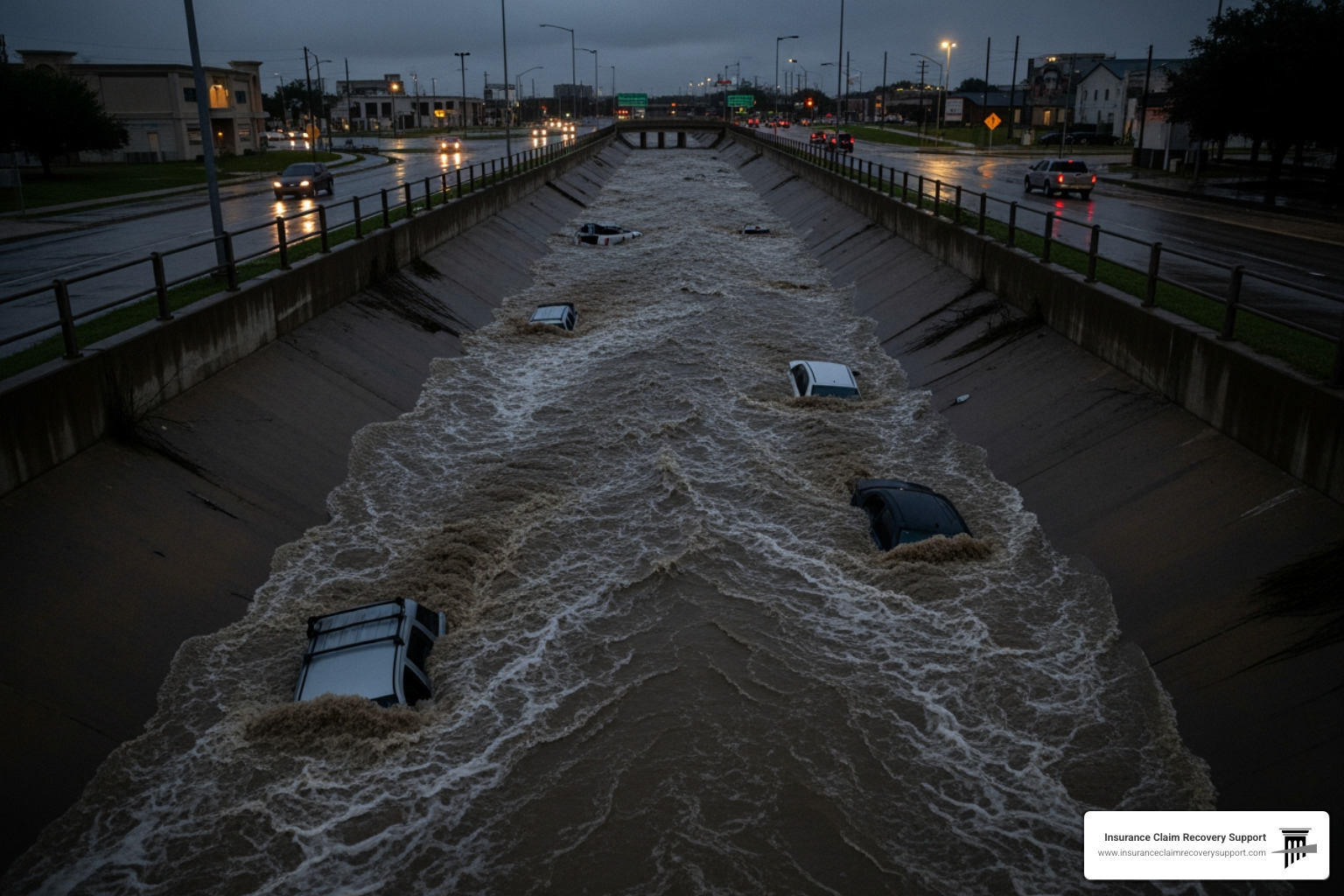
- Vehicles swept away: 15 cars pulled into Beitel Creek from the Loop 410 frontage road in one night
- August flooding: 2 additional deaths in Salado Creek flooding brought the 2025 total to 15
- Root cause: San Antonio sits in “Flash Flood Alley,” where shallow limestone bedrock prevents water absorption, turning heavy rain into instant, lethal runoff
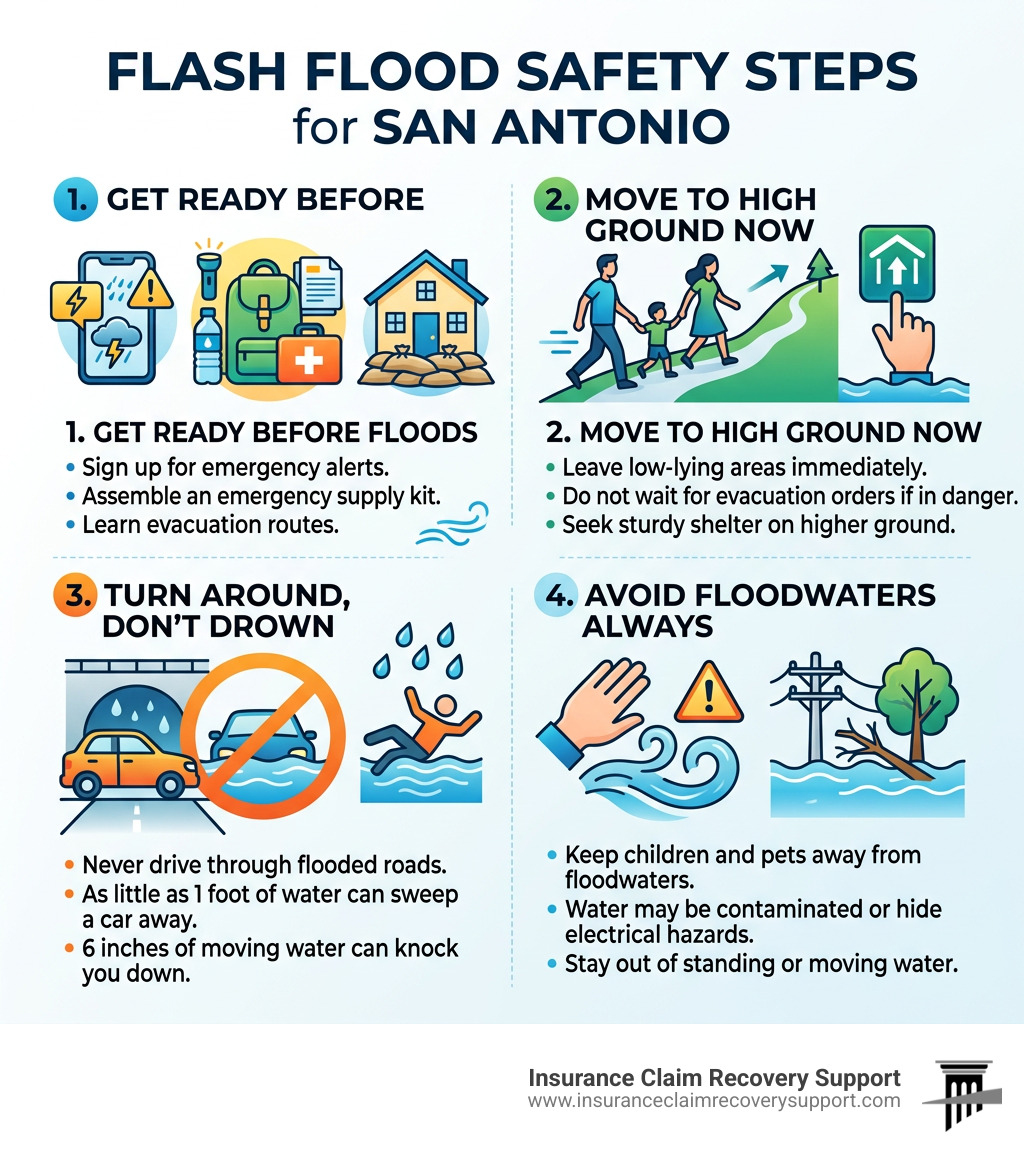
If you’re in San Antonio right now during a flood warning: Do not drive through standing water. Six inches of moving water can knock you down. One foot can sweep your vehicle away. Turn around, don’t drown.
These aren’t just weather statistics – they represent real losses for families, businesses, apartment communities, and property owners across Bexar County. The June 12 storm didn’t just claim lives; it tore through commercial corridors, damaged infrastructure, and left property owners scrambling to understand what their insurance policies actually cover.
I’m Scott Friedson, a multi-state licensed public adjuster and CEO of Insurance Claim Recovery Support (ICRS), with over 15 years of experience helping commercial and multifamily property owners navigate large-loss flood claims – including those triggered by San Antonio floods and other catastrophic Texas weather events. If your property sustained flood damage, what happens next in the claims process matters enormously, and I’m here to walk you through it.
Understanding the Risks of San Antonio Floods
To survive and recover from san antonio floods, we first have to understand why this city is so uniquely vulnerable. San Antonio isn’t just “rainy” on occasion; it is geographically predisposed to catastrophic water movement. The events of 2025 served as a grim reminder that even a city with a history of flood management can be overwhelmed by “exceptionally efficient rainfall.”
On June 12, 2025, the city witnessed a record-breaking hourly rainfall of 3.98 inches between 3 a.m. and 4 a.m. at San Antonio International Airport. This was the highest hourly rate since 1934. By the end of the day, 6.11 inches had fallen, making it the 10th wettest day on record since 1885. This intensity caused Beitel Creek to rise at a terrifying rate of one foot every ten minutes, catching early morning commuters and residents completely off guard.
Why San Antonio Floods Are Getting Deadlier
The 2025 flood year surpassed the 1998 “Great Flood” in terms of urban lethality. While the 1998 event was broader in scope, the san antonio floods of 2025 were more concentrated and lethal within the city limits. Several factors contribute to this increasing danger:
- Flash Flood Alley & The Balcones Escarpment: San Antonio sits in a region known as “Flash Flood Alley”. The Balcones Escarpment acts as a physical barrier that forces moist Gulf air upward, causing it to condense and dump massive amounts of rain in very short periods.
- Geology: The ground here consists of shallow soil over limestone bedrock. Unlike the loamy soils of the Midwest, our ground doesn’t act like a sponge. It acts like a slide, sending water immediately into creeks and drainage channels.
- Infrastructure Vulnerabilities: At the intersection of Loop 410 and Perrin Beitel Road, a “sag point” in the frontage road became a death trap. Engineering reports from firms like Kleinfelder noted that dense vegetation north of the road hampered accurate flood modeling and increased water velocity. In some areas, concrete channel walls actually collapsed under the sheer force of the water.
- Urban Runoff: As we continue to develop Texas Bexar County San Antonio, more concrete means less natural absorption, leading to “flashier” creeks that fill and overflow in minutes.
Critical Safety Measures During Flash Flooding
When the sky opens up, minutes matter. The National Weather Service and local authorities emphasize that public response is the most critical factor in preventing fatalities.
- Turn Around, Don’t Drown: This isn’t just a catchy slogan. 58% of Texas flood deaths involve vehicles. On June 12, 15 vehicles were swept away near Beitel Creek because drivers underestimated the depth or power of the water on the frontage road.
- Monitor Alerts: Always keep Wireless Emergency Alerts (WEA) enabled on your phone. If you see that the San Antonio Area Under Another Severe Thunderstorm Warning Thursday Night, stay off the roads.
- High-Water Detection: Local leaders are pushing for expanded use of HALT (High Water Alert Lifesaving Technology) systems. Until these are universal, watch for staff gauges at low-water crossings. If you can’t see the road, don’t cross it.
Recovering from Property Damage After a Flood
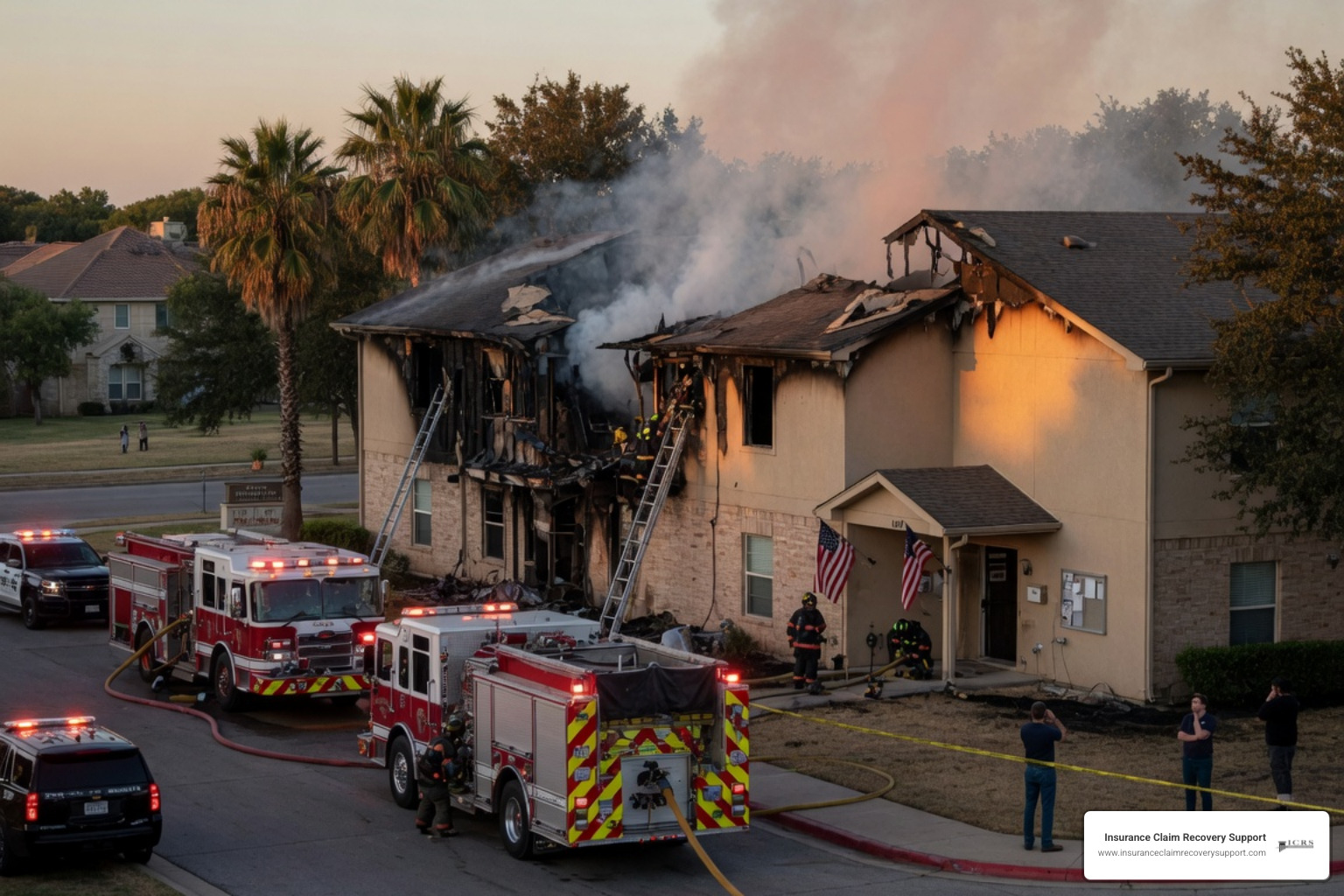
For commercial building owners and multifamily operators, the survival of the business begins after the water recedes. The 2025 san antonio floods inundated retail centers, apartment complexes, and industrial facilities.
Large-loss recovery is a complex marathon. When a property manager faces several inches (or feet) of silty, contaminated creek water inside a building, the clock starts ticking on mold growth and structural degradation. Immediate Flood Cleanup is required, but it must be documented meticulously for insurance purposes.
Navigating the Commercial Flood Insurance Claim Process
Most commercial property owners are surprised to learn that their standard “all-risk” property insurance policy specifically excludes flood damage. To be covered, you must have a policy through the National Flood Insurance Program (NFIP) or a private flood carrier.
The Flood Insurance Claim Process is significantly different from a fire or hail claim:
- The Proof of Loss: Under NFIP guidelines, you must submit a formal “Proof of Loss” statement within a strict timeframe (usually 60 days, though extensions are sometimes granted after major disasters). This document must detail the exact scope of loss and the cost to repair or replace the damaged property.
- Scope of Loss: This isn’t just about replacing carpet. It involves checking electrical systems, HVAC units, drywall wicking, and potential foundation shifts caused by hydrostatic pressure.
- Business Interruption: For many of our clients – including those managing hospitality or retail centers – the lost revenue during the restoration period is more damaging than the physical repairs. Ensuring this is accurately calculated is vital for the survival of the business.
Public Adjuster vs. Litigation for San Antonio Floods
When a major flood hits, insurance companies are often overwhelmed. They deploy “independent” adjusters who actually work for the carrier, not you. This often leads to lowball offers, missed damage, and frustrating delays.
Many policyholders think their only options are to accept a bad settlement or sue the insurance company. However, there is a third, often more effective path: hiring a public insurance adjuster.
At Insurance Claim Recovery Support (ICRS), we represent policyholders only. We specialize in large-loss commercial and multifamily claims. Here is how the paths compare:
- The Litigation Path: Lawsuits are expensive, adversarial, and can take years to resolve. During that time, your property sits in disrepair, and your business may fail.
- The Public Adjuster Path: We focus on the “adjustment” of the claim. We use our own engineers and experts to create a comprehensive scope of loss that forces the carrier to pay what is actually owed under the policy. Our goal is to maximize the settlement and resolve the claim quickly, avoiding the need for a lawsuit or the lengthy appraisal process.
We advocate for professional property managers, apartment investors, HOAs, and owners of industrial or retail facilities. Our USP is simple: we have a 90% settlement success rate without the need for unnecessary litigation.
For more information on how we assist with these specific losses, see our guide on Public Insurance Adjuster for Flood Damage.
Fact vs. Myth: Commercial Flood Recovery
There is a lot of misinformation circulating after san antonio floods. Let’s clear up some of the most common myths we hear from property owners:
- Myth: “My property isn’t in a ‘flood zone’ on the FEMA map, so I don’t need to worry about flood insurance.” Fact: Floods can happen anywhere. In 2025, many areas that flooded were outside of high-risk zones. If it rains hard enough, any low-lying area or property with poor drainage can flood.
- Myth: “The insurance company’s adjuster will find all the damage.” Fact: Insurance adjusters are often spread thin during catastrophes. They may miss “hidden” damage like mold in wall cavities or compromised electrical conduits.
- Myth: “Flood insurance covers everything, including my lost rent/income.” Fact: Standard NFIP policies for residential properties often exclude “additional living expenses.” Commercial policies vary wildly; you must review your specific endorsements to see if business interruption is covered.
- Myth: “I have to accept the first check the insurance company sends me.” Fact: You can accept a partial payment (often called an undisputed amount) while still negotiating for the full value of the claim. Never sign a “full and final release” until you are certain all damage has been accounted for.
For a deeper dive into Texas-specific flood recovery, visit https://insuranceclaimrecoverysupport.com/texas-flood/.
Final Thoughts on Future Prevention
As San Antonio grapples with a budget deficit and the high cost of infrastructure repairs – estimated at over $23 million for the 2025 events alone – property owners must take their own preventive measures. The city is working on the “NextGen Flood Warning System” and updating FEMA maps based on new NOAA precipitation data, but these projects take time.
Ongoing maintenance, such as the periodic draining of the San Antonio River Walk to remove sediment, is part of the solution, but individual property readiness is the best defense. Ensure your drainage easements are clear of vegetation, check your flood policy limits annually, and always have a plan for rapid evacuation.
If you are a commercial or multifamily property owner dealing with the aftermath of san antonio floods, don’t navigate the complex insurance landscape alone. We are Texas-based, with deep roots in San Antonio, Austin, Dallas, and Houston, and we are ready to ensure your claim is handled with the professional scrutiny it deserves.