Georgetown Storm Damage: What Commercial and Multifamily Property Owners Need to Know First
Georgetown storm damage has become an increasingly serious concern for commercial property owners, apartment operators, HOAs, and institutional building managers across Williamson County. Here’s a fast-reference summary of what’s happened and what you need to know:
For a companion claim-documentation resource, see the ICRS Hail & Wind Claim Guide. Coverage and next steps depend on the facts and policy terms.
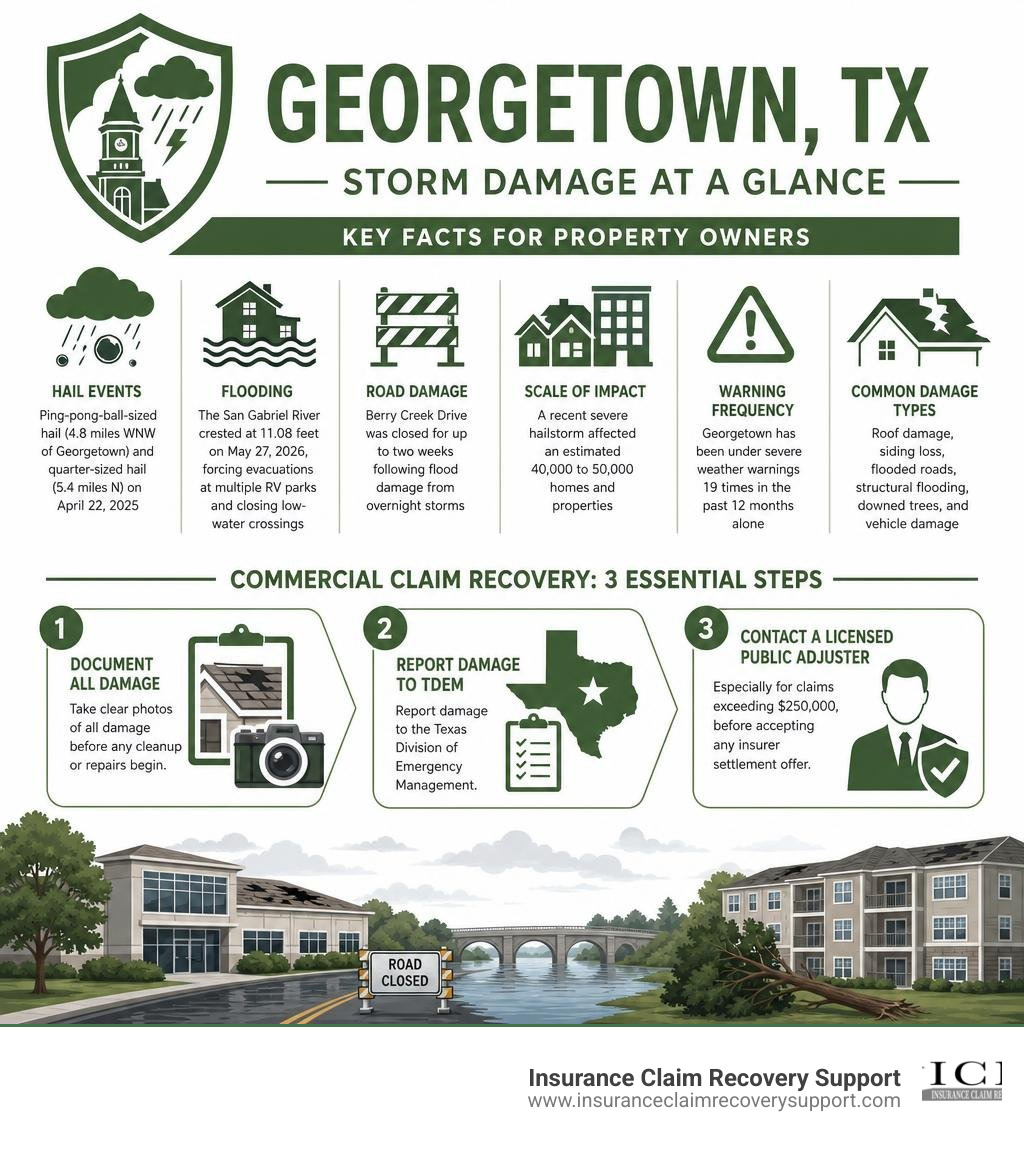
Quick Facts: Georgetown Storm Damage at a Glance
- 🌧️ Hail events: Trained spotters confirmed ping-pong-ball-sized hail (4.8 miles WNW of Georgetown) and quarter-sized hail (5.4 miles N) on April 22, 2025
- 🌊 Flooding: The San Gabriel River crested at 11.08 feet on May 27, 2026, forcing evacuations at multiple RV parks and closing low-water crossings
- 🚗 Road damage: Berry Creek Drive was closed for up to two weeks following flood damage from overnight storms
- 🏗️ Scale of impact: A recent severe hailstorm affected an estimated 40,000 to 50,000 commercial and multifamily properties in Georgetown and surrounding areas
- ⚠️ Warning frequency: Georgetown has been under severe weather warnings 19 times in the past 12 months alone
- 🏗️ Common damage types: Roof damage, siding loss, flooded roads, structural flooding, downed trees, and building envelope breaches
- 📋 Recovery step #1: Document all damage with photos before any cleanup or repairs begin
- 📋 Recovery step #2: Report damage to the Texas Division of Emergency Management (TDEM)
- 📋 Recovery step #3: Contact a licensed public adjuster — especially for claims exceeding $250,000 — before accepting any insurer settlement offer
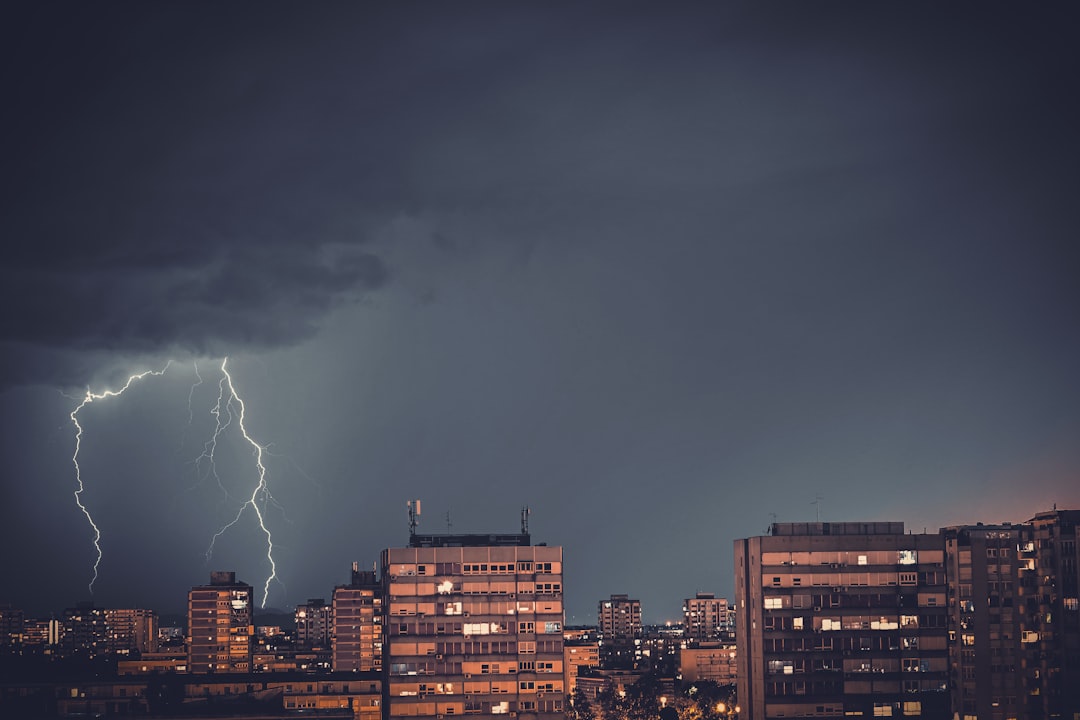
Georgetown sits at a volatile intersection of Hill Country updrafts and Gulf Coast moisture, making it one of Central Texas’s most storm-prone communities. In recent years, the city has experienced severe hailstorms that shattered windows and stripped roofs, flooding that overwhelmed the San Gabriel River and shut down key roadways, and straight-line winds exceeding 50 to 60 mph — all within a compressed storm season that leaves property owners little time to recover before the next system arrives.
For commercial property owners, apartment operators, and institutional managers, the stakes are especially high. A damaged roof on a multifamily complex or a flooded ground floor at a retail center isn’t just a repair problem — it’s a revenue disruption, a tenant relations crisis, and a complex insurance claim, often all at once.
I’m Scott Friedson, a multi-state licensed public adjuster and CEO of Insurance Claim Recovery Support (ICRS) LLC, with over 15 years of experience settling large-loss Georgetown storm damage claims and commercial property losses across Texas and nationally. Over 500+ claims valued at more than $250 million, I’ve seen how quickly insurers undervalue — or outright deny — legitimate storm damage claims on commercial and multifamily properties.
Simple guide to Georgetown storm damage terms:
Analyzing the Impact of Georgetown Storm Damage on Commercial Properties
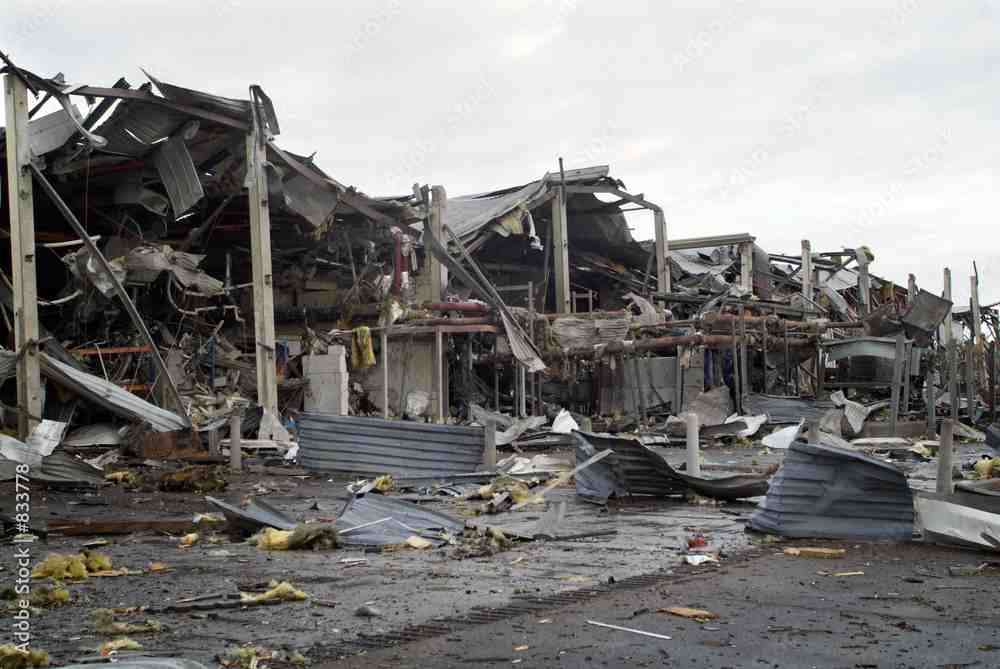
When a severe weather system strikes Central Texas, commercial and multifamily properties bear the brunt of the impact. The physical footprint of these properties—featuring sprawling flat roofs, extensive siding, large parking structures, and complex HVAC systems—makes them highly vulnerable to the volatile elements.
In recent years, commercial corridors like Saddlecreek and areas throughout south Georgetown have faced repeated, severe weather systems. The localized impact of these events is highly varied but uniformly destructive. For instance, while minor structures grapple with superficial issues, commercial and multifamily structures experience compromised roof membranes, punctured skylights, and shattered commercial-grade HVAC condensers.
The San Gabriel River and its tributaries pose an ongoing flood risk to low-lying commercial zones and local developments. When the river overflows, the resulting water intrusion can devastate ground-floor retail spaces, professional offices, and multifamily housing units. Furthermore, infrastructure failures, such as the multi-week road closure on Berry Creek Drive due to flood damage, can completely cut off access to commercial hubs, resulting in massive business interruption losses.
During these severe events, hail sizes in Georgetown have regularly ranged from quarter-sized to hen-egg-sized, accompanied by straight-line winds exceeding 50 to 60 mph. These winds act as force multipliers, driving hail horizontally into building envelopes, tearing away commercial roofing systems, and turning loose debris into destructive projectiles. For property owners facing this level of devastation, securing specialized Adjuster Claim Support in Georgetown TX is critical to obtaining a fair evaluation of the structural damage.
Historical Context of Georgetown Storm Damage Events
To understand the pattern of Georgetown storm damage, we must look at the historical data. Georgetown has been under severe weather warnings 19 times in the past 12 months alone, with trained spotters recording 36 on-the-ground hail reports.
- April 22, 2025: A series of severe thunderstorm warnings were issued for Williamson County. This system produced ping-pong-ball-sized hail (approximately 1.5 inches in diameter) just 4.8 miles west-northwest of Georgetown, alongside quarter-sized hail to the north.
- September 24, 2023: One of the most destructive convective storms in recent memory dropped hen-egg-sized hail (2 inches) and golf-ball-sized hail (1.75 inches) in a dense corridor 2.5 miles northwest and 2.2 miles south of the city center. This storm damaged thousands of commercial and multifamily roofs across the region.
- May 27, 2026: Torrential rainfall ranging from 2.5 to 4.5 inches across Burnet and Williamson counties caused the San Gabriel River to rise rapidly, cresting at 11.08 feet—well above its 9-foot flood stage. The resulting flash floods forced emergency evacuations at local commercial developments and multifamily assets, rendering low-water crossings impassable for days.
These events demonstrate that severe weather is not a rare anomaly in Georgetown but an ongoing operational risk for commercial assets. For properties that have also survived localized tornadic activity or microbursts, understanding the details of a Texas Tornado Damage Insurance Claim is essential for navigating the long-term recovery process.
Environmental Hazards and OSHA Protocols in Georgetown Storm Damage Recovery
Following water intrusion from heavy rainfall or flooding, commercial and multifamily property owners face a ticking clock. Within 24 to 48 hours of water exposure, mold spores begin to colonize building materials, posing severe health risks to tenants and employees. In older commercial structures and historical buildings in Georgetown, storm damage can also disturb asbestos-containing materials (ACMs) found in roofing felts, pipe insulation, and textured ceilings.
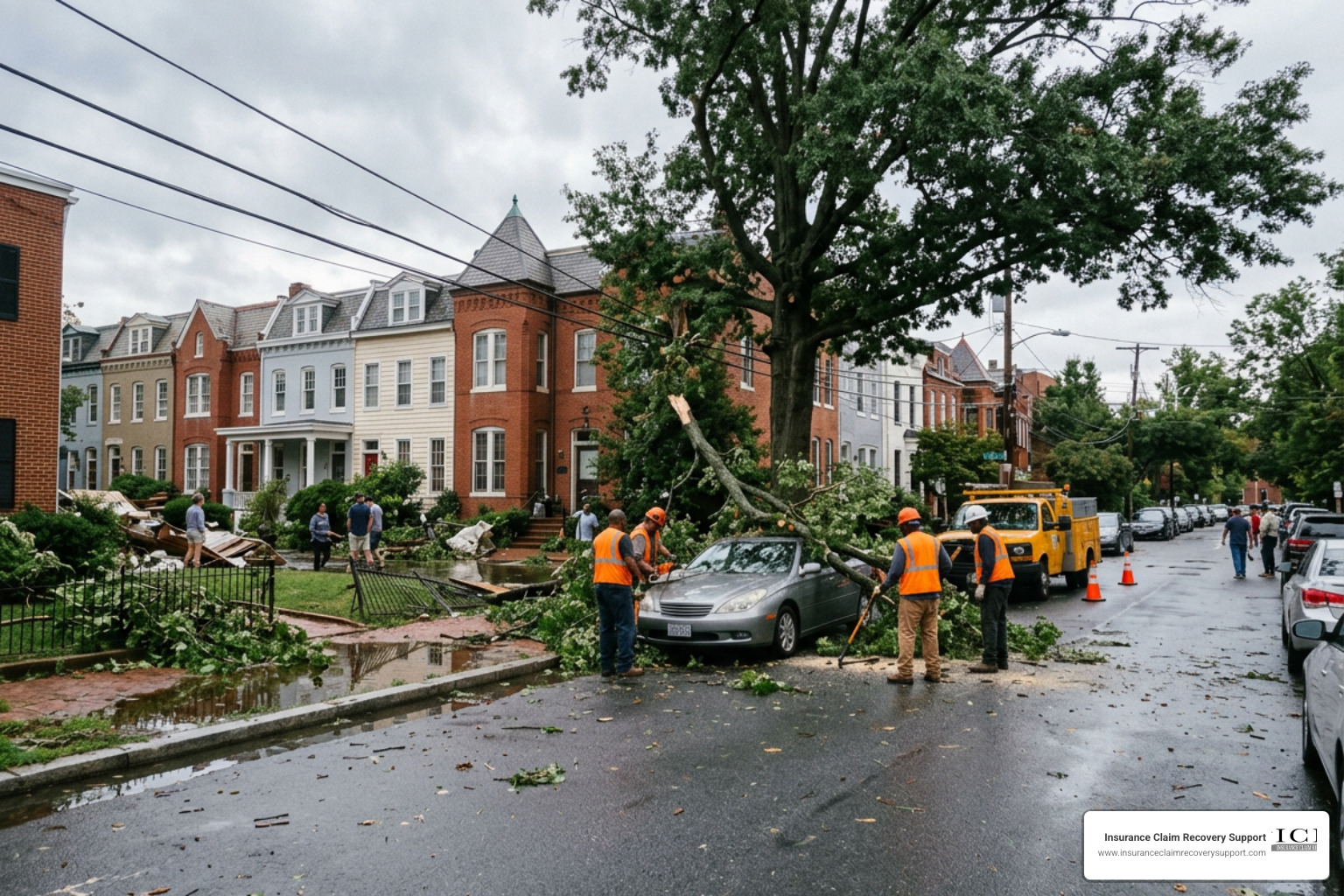
To protect building occupants and recovery crews, property owners must strictly adhere to OSHA guidelines and environmental protocols:
- Industrial Hygienists: Before starting tear-out or reconstruction, retain an independent industrial hygienist to perform asbestos testing and mold assessments. Their reports establish a clear, legally defensible scope of work for remediation.
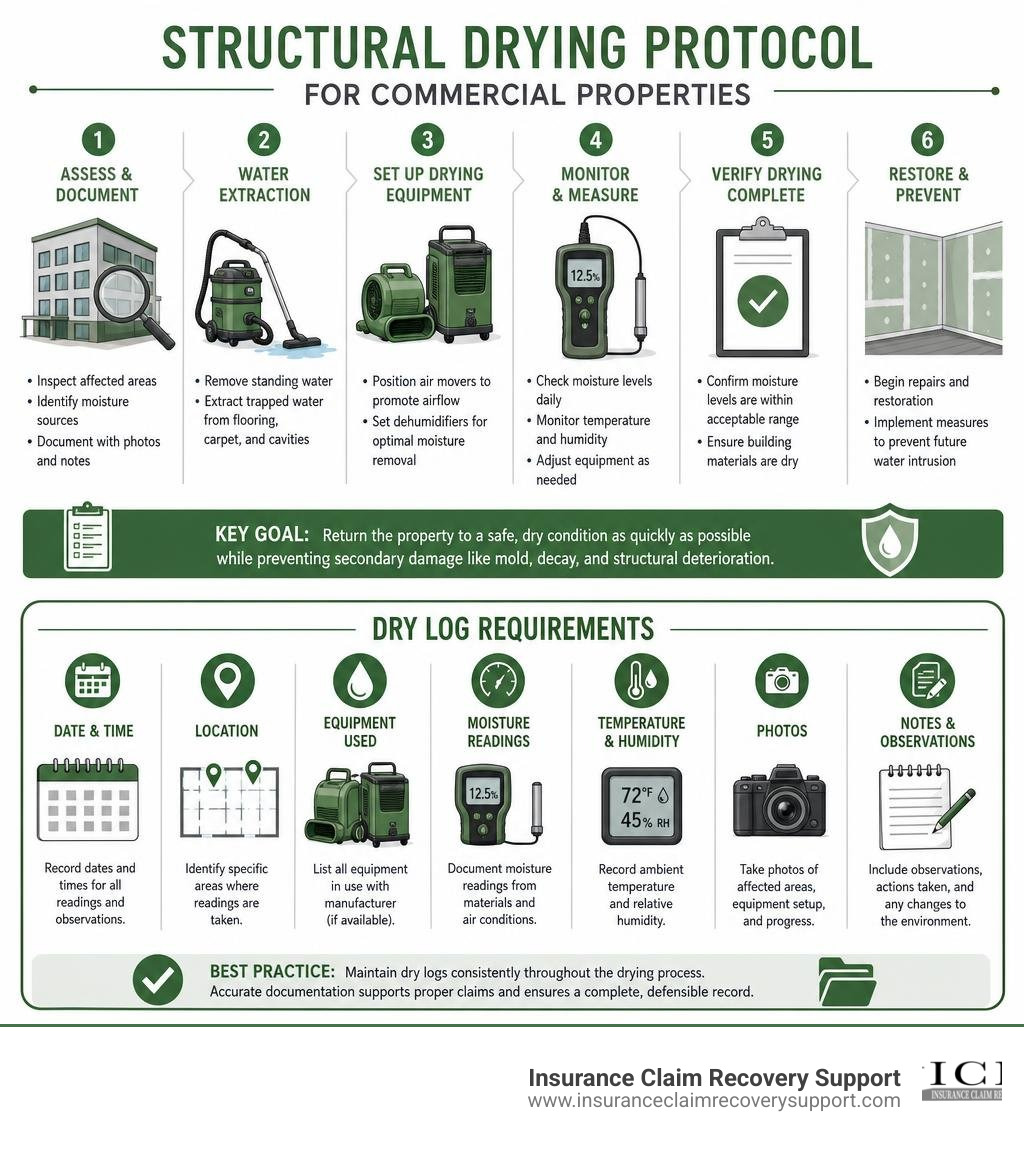
- Dry Log Records: Mitigation contractors must maintain comprehensive, daily dry logs. These records track relative humidity, temperature, and moisture content in structural wood and drywall using moisture meters and thermal imaging. Insurance carriers scrutinize these logs to verify that the drying process was necessary, continuous, and successful.
- OSHA Compliance: Ensure all recovery personnel wear appropriate personal protective equipment (PPE), including respirators (N95 or HEPA-filtered), protective suits, and heavy-duty gloves when handling contaminated water or mold-damaged materials.
Failing to document these environmental steps properly can lead to denied claims or future liability issues. For detailed guidance on navigating these complex roof and interior claims, refer to our resource on Roofing Insurance Claims for Storm Damage.
Systemic Insurer Scrutiny and the “Cost of Doing Business” Model
For commercial and multifamily policyholders, filing a large-loss storm claim is rarely a straightforward process. In today’s market, major insurance carriers increasingly employ a “cost of doing business” model. Under this approach, carriers systematically delay, underpay, or deny valid claims to preserve cash reserves and generate investment income on held funds.
Commercial and multifamily claims face intense scrutiny because of their high financial stakes. Adjusters hired by the insurance company are often instructed to interpret complex policy language in the light most favorable to the carrier. They may claim that structural damage was caused by “pre-existing wear and tear” or “manufacturing defects” rather than the recent storm.
In Texas, commercial policyholders are protected by robust statutory frameworks designed to curb these bad-faith tactics:
- Texas Insurance Code Chapter 541 (Unfair Claim Settlement Practices): Outlines what constitutes deceptive trade practices and bad faith, such as misrepresenting policy provisions or failing to attempt a fair settlement once liability has become reasonably clear.
- Texas Insurance Code Chapter 542 (Prompt Payment of Claims Act): Sets strict timelines for carriers to acknowledge a claim, investigate it, and accept or reject it. If a carrier violates these deadlines, they can be held liable for statutory interest penalties (currently 18% per annum for older policies, or 5% plus the prime rate for newer ones) and reasonable attorney fees.
The reality of systemic insurer underpayment is well-documented nationally. For example, a major State Farm $15.6M settlement highlighted the legal consequences carriers face when they fail to properly adjust and pay property damage claims. Similar patterns of aggressive claim denials and underpayments have drawn intense regulatory scrutiny in other major markets, as detailed in this NYT California article and the subsequent California Enforcement Action initiated by state regulators.
Regulatory Violations and National Trends in Property Insurance
The challenges faced by Georgetown commercial and multifamily property owners are part of a broader, national trend of insurance carrier restructuring. Across the United States, carriers are facing increased regulatory pressure due to their handling of major catastrophe claims. Public reports by The Guardian and investigative coverage by CNN have shed light on systemic violations, including altered engineering reports, delayed inspections, and lowball settlement offers.
In states like Florida, skyrocketing litigation costs have driven carriers to rewrite policies to restrict policyholder rights, introducing mandatory binding arbitration and removing the right to recover attorney fees. This makes it harder for commercial property owners to challenge unfair denials.
Furthermore, there is a significant “adjuster licensing gap” in the industry today. Following a widespread regional storm, carriers often flood the affected area with out-of-state, catastrophe-response adjusters. Many of these adjusters:
- Lack an active Texas adjuster license or operate under temporary emergency licenses.
- Are unfamiliar with local building codes, wind-uplift requirements, and construction practices.
- Lack the specialized training required to evaluate commercial roofing systems like TPO, modified bitumen, or standing-seam metal.
As a result, critical damage is often missed or mischaracterized, leaving the commercial property owner with an inadequate initial settlement offer.
Navigating the Commercial Hail and Flood Claim Process
Recovering from a major convective storm or flood event requires a structured, aggressive approach to document and present your loss. Commercial property managers and owners must treat the claim process as a detailed business transaction where every assertion is backed by clear physical evidence.
To secure a fair settlement, you must understand your coverage options. Reviewing the terms of your Hail Storm Insurance policy will help you identify sub-limits, deductibles, and co-insurance clauses that could impact your recovery. Once you have confirmed your coverage, follow the step-by-step Hail Damage Insurance Claim Process to ensure all physical damage is thoroughly documented and submitted within your policy’s strict deadlines.
For practical strategies to streamline this process, including how to organize your evidence and manage early communications with your carrier, read our comprehensive guide on Tips for Filing Claims.
To understand the value of independent representation, consider how a carrier’s initial assessment typically compares to a comprehensive public adjuster evaluation:
Claim Assessment Comparison
| Feature / Damage Category | Carrier-Appointed Adjuster Assessment | Independent Public Adjuster (ICRS) Assessment |
|---|---|---|
| Roof Inspection Method | Brief visual walk-through; focus on leaks only | Drone mapping, core sampling, and moisture scans |
| Hail Damage on TPO/EPDM | Dismissed as “cosmetic” or “micro-cracking” | Documented fractures in the backing mat |
| HVAC Condenser Units | Superficial comb-out of bent fins | Full coil replacement based on airflow restriction |
| Dry Log & Moisture Mapping | Often ignored; minimal drying verified | Daily logs and thermal imaging proving wet insulation |
| Code Upgrades & Compliance | Excluded unless explicitly demanded | Automatically integrated (e.g., wind-uplift, energy codes) |
| Business Interruption | Limited to periods of total closure | Calculated based on partial loss of use and tenant impacts |
Policy Interpretation and Appraisal Awards for Large-Loss Claims
When a major valuation dispute arises between a commercial policyholder and an insurance carrier, litigation is not the only path to resolution. Most commercial property policies include an Appraisal Clause—a contractual dispute resolution mechanism designed to resolve disagreements over the amount of loss.
During the appraisal process, both the policyholder and the carrier select an independent appraiser. These two appraisers then select a neutral “umpire.” If the two appraisers agree on the cost of repairs, or if one appraiser and the umpire agree, they sign an appraisal award. This award is legally binding on both parties and establishes the exact amount the carrier must pay to indemnify the loss.
Appraisal is often a faster, more cost-effective alternative to litigation. However, navigating this process requires highly specialized representation. If your commercial property has suffered a major loss and your carrier’s settlement offer is insufficient, finding qualified Adjusters Near Me who specialize in large-loss commercial claims can help you successfully resolve the dispute.
Fact vs. Myth: Commercial Property Storm Claims
Navigating a commercial property claim often means separating carrier-driven myths from your actual rights under the policy. Below, we address some of the most common misconceptions:
Myth 1: “If the roof isn’t leaking, there is no storm damage.”
- The Reality: Hail impacts on asphalt, modified bitumen, or single-ply TPO roofs rarely cause immediate, active leaks. Instead, hail bruises the underlying fiberglass mat, displaces protective granules, or fractures the sub-surface reinforcement. Over the next 12 to 24 months, UV exposure degrades these weakened areas, leading to premature roof failure.
- Translation Callout: > Carrier Statement: “We found cosmetic hail indentations, but since the roof membrane is not punctured and there are no active interior leaks, there is no functional damage to address.” > > The Real Meaning: “We want to delay paying for this roof until your policy expires or you sell the property, shifting the financial burden of a full replacement onto you.”
Myth 2: “The insurance company only has to pay for a partial patch repair.”
- The Reality: Under Texas law and standard commercial policy terms, repairs must restore the property to its pre-loss condition with materials of “like kind and quality.” If your roof’s shingles, metal panels, or clay tiles are discontinued and cannot be matched to maintain the building’s aesthetic and structural integrity, the carrier may be required to pay for a full replacement.
- Translation Callout: > Carrier Statement: “We will spot-repair the 15 damaged metal panels on your office building’s roof using currently available materials.” > > The Real Meaning: “We expect you to accept a mismatched, patchwork roof that lowers your property value and compromises the structural integrity of your building envelope.”
Myth 3: “Business interruption coverage only applies if our building is completely closed.”
- The Reality: Business interruption (BI) and extra expense coverage are triggered by any direct physical loss that hinders, restricts, or partially suspends your normal business operations. If a severe storm damages the top floor of an office building or a wing of an apartment complex, you are entitled to indemnification for the lost rental income and the extra expenses incurred to keep the rest of the business running.
- Translation Callout: > Carrier Statement: “Since your ground-floor retail tenants are still open, you do not qualify for business interruption, even though your top-floor offices are unusable.” > > The Real Meaning: “We are ignoring your partial loss of use to avoid paying for your lost revenue and tenant relocation costs.”
Frequently Asked Questions About Georgetown Storm Recovery
What specific areas and landmarks in Georgetown experienced the most severe damage?
The most severe damage from recent storms has been concentrated in several key areas:
- Saddlecreek and South Georgetown: These commercial and multifamily corridors bore the brunt of recent hailstorms, which caused widespread damage to commercial roofing systems, siding, and outdoor fixtures.
- San Gabriel Park and Low-Lying Zones: Heavy rainfall caused the San Gabriel River to overflow, flooding local park facilities, trails, and nearby commercial properties.
- Berry Creek Drive: Overnight storm runoff caused severe structural damage to the roadway, leading to a multi-week closure that disrupted access to local commercial hubs.
- Shady River and Good Water RV Parks: As commercial hospitality and RV assets located along the river corridor, these properties faced severe operational disruptions and required emergency evacuations as floodwaters quickly inundated low-lying areas.
How many severe thunderstorm warnings were issued on April 22, 2025, and what was the largest hail size?
On April 22, 2025, the National Weather Service (NWS) issued multiple severe thunderstorm warnings for Williamson County as a volatile supercell moved through the region. The warnings lasted for several hours, finally expiring late in the evening.
During this event, trained spotters and Doppler radar confirmed:
- Ping-pong-ball-sized hail (1.5 inches in diameter) fell approximately 4.8 miles west-northwest of Georgetown.
- Quarter-sized hail (1.0 inch in diameter) was reported 5.4 miles north of the city center.
What steps should commercial property owners take to report damage and secure a fair settlement?
To protect your investment and secure a fair settlement, follow this structured recovery checklist:
- Safety First: Ensure the property is structurally safe before entering. Check for downed power lines, gas leaks, and unstable structural elements.
- Mitigate Further Damage: Secure the building envelope by tarping damaged commercial roofs and boarding up broken windows. Keep detailed receipts for all temporary mitigation work.
- Document Everything: Take high-resolution photos and videos of all exterior and interior commercial asset damage before any cleanup begins. Do not discard any damaged building materials or equipment.
- Report the Loss: Submit your damage reports to the Texas Division of Emergency Management (TDEM) via their online portal to help secure state and federal recovery resources.
- Retain Professional Representation: For commercial, multifamily, or institutional claims expected to exceed $250,000, do not rely on the insurance company’s adjuster. Retain an independent public adjusting firm like ICRS to prepare, document, and negotiate your claim.
Conclusion
Recovering from Georgetown storm damage requires more than just hiring a contractor and waiting for an insurance check. For commercial property owners, apartment operators, and institutional managers, navigating a large-loss storm claim is a complex process that demands specialized policy knowledge, precise damage documentation, and aggressive advocacy.
At Insurance Claim Recovery Support (ICRS) LLC, we represent policyholders only—never the insurance companies. We specialize in maximizing settlements, reducing delays, and resolving complex property claims without unnecessary, costly litigation. Whether your property has been damaged by hail, wind, flood, or fire, our team is here to protect your interests.
If your commercial or multifamily property in Georgetown has suffered storm damage, do not let your carrier underpay your claim. Contact us today for professional, independent Claim Help and let us help you secure the settlement you need to rebuild.