Don’t Get Zapped by Hidden Storm Damage

Don’t Get Zapped by Hidden Storm Damage

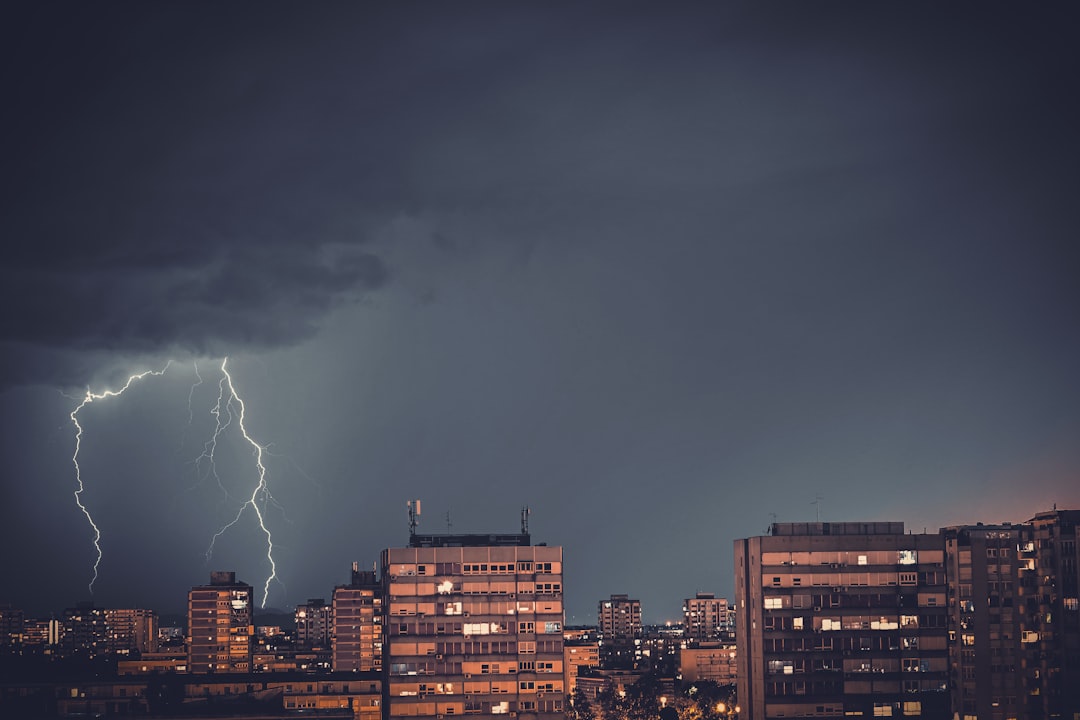
When Lightning Strikes Your Commercial Property, the Real Damage May Be Hidden

Lightning damage to commercial and multifamily properties is far more destructive — and far more complicated to claim — than most property owners realize.

Here’s what you need to know right away:

Key Facts About Lightning Damage to Commercial Properties
⚡ A single strike can carry up to 120,000 amperes and reach 50,000°F — five times hotter than the sun’s surface
�� Damage is often hidden inside walls, electrical systems, and concrete — invisible to a standard inspection
�� The average lightning damage insurance claim costs nearly $30,000, and large commercial losses run far higher
�� Four distinct damage types occur: physical, secondary effects, electromagnetic pulse (EMP), and ground potential surge
⚠️ Insurers frequently push back on ground surge and EMP claims because the damage is hard to see and easy to dispute
�� Lightning strikes are the second most damaging natural hazard after floods, yet claims are routinely underpaid
✅ Commercial policyholders with claims over $250,000 are especially vulnerable to carrier scrutiny and underpayment

Most people picture lightning damage as a scorched rooftop or a burned-out electrical panel — something obvious, immediate, and easy to document. The reality for commercial property owners, apartment operators, and HOA managers is far more complicated. A single strike can send destructive energy racing through your building’s wiring, plumbing, concrete, and structural systems, leaving damage that doesn’t surface for weeks or even months. By then, your window to build a strong insurance claim may already be closing.

Lightning strikes occur roughly 25 million times a year across the United States, causing approximately 4,000 structure fires and over $200 million in property damage annually. For commercial properties — where a single event can mean tenant displacement, revenue loss, lender pressure, and code-upgrade requirements — the financial stakes are exponentially higher than those statistics suggest.

I’m Scott Friedson, a multi-state licensed public adjuster and CEO of Insurance Claim Recovery Support (ICRS), and over 15 years and 500+ large-loss claims I’ve seen how lightning damage to commercial and multifamily properties is systematically undervalued by carriers who treat underpayment as a cost of doing business. In this guide, I’ll walk you through everything you need to protect your property, document your loss, and recover the full settlement you’re entitled to under your policy.

Infographic: Path of a lightning strike through a commercial building — physical, EMP, and ground surge damage types

Key terms for lightening damage:

Understanding Lightening Damage and How It Strikes Commercial Properties

To successfully argue a commercial property claim, we must first understand the physics of how a strike interacts with modern building materials. Lightning is not just a massive spark; it is a complex atmospheric discharge consisting of a rapid sequence of electrical events.

When a storm develops, charge separation in the clouds creates an intense electric field. This field initiates a “stepped leader” downward, which is met by “upward streamers” rising from tall structures on the ground. When these meet, they complete an ionized path, triggering the highly destructive return stroke.

This return stroke is followed by a continuing current—a lower-amplitude, longer-duration flow of electricity that is responsible for the majority of thermal ignition and fire initiation. A single flash can deliver a devastating combination of forces:

  • Heat Generation: The air surrounding the lightning channel is heated to approximately 50,000 degrees Fahrenheit—five times hotter than the surface of the Sun. This intense thermal energy instantly vaporizes moisture in its path.
  • Electrical Current: The average negative cloud-to-ground strike produces 30,000 to 120,000 amperes of current.
  • Charge Transfer: A single strike can transfer up to 350 coulombs of electric charge, overwhelming standard commercial electrical protection systems.

To understand how these forces behave based on the storm type, you can read our guide on Different Kinds Of Lightning and explore the general categories of Damage Caused By Lightning.

Diagram: The cascading physical and electrical effects of a lightning strike on commercial infrastructure

Physical and Secondary Effects of a Strike

The physical force of a lightning strike goes far beyond simple fire damage. When lightning strikes structural concrete or brickwork, it encounters latent moisture trapped within the porous material. The 50,000°F heat instantly vaporizes this moisture, expanding it to more than 1,600 times its liquid volume. The result is explosive concrete damage, where structural columns, foundations, and parapets literally blow apart from internal steam pressure.

In addition to explosive steam expansion, structural shock waves—created by the rapid expansion of air (which we hear as thunder)—can crack brick, stone, and stucco. If you have wondered about the physical force of these shock waves, read more about Can Thunder Cause Damage.

Furthermore, lightning rarely stays contained to its point of impact. It exhibits “side flashes,” where the electrical current jumps from its initial path (such as a metal drainpipe or tree) to adjacent conductive materials like commercial electrical conduits or HVAC ductwork. When lightning strikes trees on a commercial campus, the moisture in the tree’s cambium layer boils instantly, causing violent tree explosions that can send heavy debris crashing into nearby buildings.

Electromagnetic Pulses and Ground Potential Surges

Even if lightning does not make direct contact with your commercial building, a nearby strike can destroy your facility’s infrastructure through two invisible phenomena: Electromagnetic Pulses (EMP) and Ground Potential Surges.

  1. Electromagnetic Pulse (EMP) Damage: The massive, rapid flow of current during the return stroke generates an intense electromagnetic field. This EMP induces high-voltage currents in nearby metal structures, including copper communication lines, internet cables, and electrical wiring. Modern commercial buildings rely on sensitive electronics—such as building automation systems (BAS), fire alarm control panels, and smart HVAC systems—which contain micro-components vulnerable to even minor EMP-induced voltage spikes.
  2. Ground Reference Potential Charge Damage: When lightning strikes the earth, the electrical current disperses through the soil, creating a massive “potential difference” in the ground. If your commercial property has multiple grounding systems that are not properly bonded, this electrical potential will travel up through your building’s grounding system to equalize. This ground reference potential surge can enter your facility from the bottom up, frying main distribution panels and sub-panels.

To safeguard your rights during these complex events, review our articles on what happens to the Ground After Lightning Strike and how these events trigger Lightning Causing Power Surges.

Systemic Insurer Scrutiny and the Cost of Doing Business Model

When dealing with a commercial lightening damage claim exceeding $250,000, policyholders quickly discover that their insurance company is not their partner. Insurance carriers operate on a “cost of doing business” model. Under this model, systematic denial, delay, and underpayment of complex claims are leveraged to protect corporate profit margins.

Damaged commercial electrical room showing burnt wiring and charred panels

Commercial property policies are contracts of indemnity, designed to restore the policyholder to their pre-loss condition. However, carriers routinely treat these claims as negotiable liabilities, applying intense scrutiny to every line item. Because lightning damage is frequently invisible to the naked eye, it is one of the most highly disputed loss types in the commercial sector.

How Carriers Underpay and Delay Lightening Damage Claims

Insurers employ specific tactics to minimize payouts on commercial lightning claims:

  • The “Near Miss” Defense: If there is no visible scorch mark on the building, carriers will argue that the damage was caused by a “near miss” or a general utility power surge, claiming that utility surges are excluded under the policy.
  • Demanding Unreasonable Proof of Direct Physical Loss: Carriers often refuse to pay for electrical system replacements unless you can show melted circuitry or charred components. However, EMPs and ground surges frequently cause latent degradation—weakening solid-state components that will fail weeks after the claim is closed.
  • Exploiting Business Interruption Claims: By delaying the approval of funds to replace critical infrastructure (like commercial chillers or elevator control boards), carriers stretch out the timeline. They then pressure the policyholder to accept a lowball settlement to get their business back online and stop the bleeding from uncompensated business interruption.

To understand how to counter these tactics, see our detailed breakdown of How Does Lightning Damage Electrical Systems And Components and learn the steps to file a successful Lightening Insurance Claim.

Regulatory Precedents and Enforcement Actions

The systemic nature of carrier bad faith is not a theory—it is a matter of public record. In mid-2026, regulatory bodies have intensified their focus on insurance companies that systematically underpay major storm and disaster claims.

For example, State Farm recently faced a massive State Farm $15.6M settlement following widespread allegations of claim handling violations. This follows a broader pattern of scrutiny documented in the NYT California article detailing the insurer crisis, and the formal California Enforcement Action initiated by state regulators. Further reporting by The Guardian and CNN highlights how carriers systematically delay and underpay policyholders after catastrophic events to protect their bottom lines.

While these national enforcement actions often stem from wildfire and windstorm disputes, the underlying corporate behavior is identical to how carriers handle commercial lightning and storm claims in Texas and other states. They rely on policyholder exhaustion to settle claims for a fraction of their true value.

Managing a major property loss at a multifamily housing complex, industrial facility, retail center, or HOA development requires a highly coordinated response. Unlike residential claims, commercial lightning claims must account for tenant safety, strict municipal building codes, and environmental regulations.

Commercial roof inspection after severe storm strike

Environmental Protocols and Dry Log Records

When lightning strikes a commercial building, the resulting physical damage or fire suppression efforts (such as water from sprinkler systems or fire department hoses) can trigger severe environmental hazards.

  • OSHA and Environmental Standards: Any disturbance of building materials in properties built before 1981 requires strict compliance with OSHA standards regarding asbestos abatement and lead paint protocols.
  • Industrial Hygienists: For claims exceeding $250,000, we recommend hiring independent industrial hygienists to perform air quality testing and draft formal remediation protocols.
  • Moisture Mapping and Dry Log Records: If water was used to extinguish a lightning-induced fire, the building must be thoroughly dried. Insurers will demand comprehensive “dry log records” and moisture mapping to prove that the property was dried to industry standards (IICRC S500). Failing to document this process can lead to the denial of subsequent mold claims.

Policy Interpretation and Adjuster Licensing Gaps

One of the greatest challenges commercial policyholders face is the competency gap of the carrier’s assigned adjuster. Many independent adjusters sent by insurance companies are licensed under simplified programs and lack the commercial expertise required to evaluate complex industrial or multifamily infrastructure. They often treat a 100-unit apartment building claim like a basic property claim, completely overlooking the complex mechanical, electrical, and plumbing (MEP) systems involved.

This lack of expertise leads to critical policy interpretation errors and causation disputes. The carrier’s adjuster may categorize a ground surge as “indirect damage” (which may have lower sub-limits or exclusions under certain policies) rather than “direct physical loss by lightning.”

To protect your property from these costly errors, consult our Lightning Damage Insurance Claims Guide.

Myth: Standard Inspections Catch All Lightening Damage

Carrier Says: “Our adjuster inspected the roof and the main electrical room and found no physical evidence of a direct lightning strike. Your claim is denied.”

Translation: We performed a basic visual inspection, ignored your latent electrical degradation, and hope you will accept this denial without hiring independent experts to test your systems.

Standard visual inspections are completely inadequate for detecting the true scope of lightening damage. To uncover hidden damage, we utilize advanced diagnostic protocols:

  • Infrared Thermography: Thermal imaging cameras can detect “latent thermal anomalies”—hot spots in electrical panels, transformers, and wiring that indicate internal damage and imminent failure.
  • Insulation Resistance Testing (Megger Testing): This electrical test measures the integrity of wire insulation. Lightning surges often crack or degrade this insulation inside conduits, creating future fire hazards that a visual inspection would never reveal.
  • Structural Integrity Assessments: Drone-assisted structural inspections and engineering evaluations ensure that invisible cracks in concrete parapets or masonry chimneys are fully documented.

For a deeper dive into proving these complex losses, read our guide on Lighting Property Damage Insurance Claims.

Frequently Asked Questions About Commercial Storm Claims

Evaluating a commercial storm claim requires clear data. Below is a comparison of how direct strikes and ground surges differ in terms of evidence, damage, and policy handling:

Feature Direct Lightning Strike Ground Potential Surge
Primary Evidence Scorched materials, shattered masonry, blown-out roofing, charred wiring. No visible external burns; failed HVAC compressors, corrupted control boards.
Common Carrier Defense “Wear and tear,” “lack of maintenance,” or “pre-existing structural cracks.” “Utility company power surge,” “lack of direct physical contact.”
Testing Required Visual documentation, structural engineering, moisture mapping. Megger testing, infrared thermography, power quality analysis.
Policy Coverage Covered under standard commercial property forms as a named peril. Subject to causation disputes; requires careful policy interpretation.

How do Texas Statutes 541 and 542 protect commercial policyholders?

In Texas, commercial policyholders are protected by the Texas Insurance Code, specifically Chapters 541 and 542 (often referred to as the Texas Prompt Payment of Claims Act).

  • Chapter 541 (Unfair Claim Settlement Practices): Prohibits insurance companies from engaging in bad faith practices, such as misrepresenting policy provisions, failing to attempt a fair settlement when liability is reasonably clear, or refusing to pay a claim without conducting a reasonable investigation.
  • Chapter 542 (Prompt Payment of Claims): Establishes strict statutory deadlines for insurers. Once a claim is filed in Texas cities like Austin, Dallas, Fort Worth, San Antonio, or Houston, the carrier has 15 days to acknowledge the claim, begin an investigation, and request necessary documentation. Once they receive all requested information, they must accept or reject the claim within 15 business days. If they delay payment unreasonably, they can be held liable for statutory interest (currently 18% per annum for older policies, or 5% plus the prime rate for newer ones) plus reasonable attorney fees.

What is the role of an appraisal award in resolving disputed claims?

When a policyholder and an insurance carrier cannot agree on the scope or value of a lightening damage loss, the “appraisal” clause in the policy can be invoked.

  • The Appraisal Process: Each party selects an independent, competent appraiser. The two appraisers then select an impartial “umpire.”
  • Binding Awards: If the two appraisers agree on the cost of the damage, or if one appraiser and the umpire agree, they sign an “appraisal award.” This award is legally binding on both parties regarding the cost of the loss.
  • Avoiding Litigation: Appraisal is designed to resolve valuation disputes quickly and cost-effectively, helping commercial property owners avoid years of expensive litigation.

Why are Florida litigation costs driving changes in policy interpretation?

The Florida property insurance market has faced severe challenges due to high litigation costs and systemic carrier pushback. In response, carriers in Florida and surrounding states have rewritten policy language to limit their exposure.

These changes include adding strict sub-limits for electrical surges, excluding certain types of cosmetic damage, and introducing complex dispute resolution requirements. Commercial property owners must review their policies annually to ensure that updates in policy interpretation have not stripped away vital lightning and storm damage protections.

Conclusion

Recovering from a major lightning strike requires more than just calling an electrician. To secure a full settlement that covers both visible physical damage and latent electrical degradation, you must present a meticulously documented, code-compliant claim.

If your commercial property, multifamily complex, or industrial facility has suffered a loss exceeding $250,000, do not rely on the insurance company’s adjuster to write your scope of work. At Insurance Claim Recovery Support (ICRS), we represent policyholders exclusively—never the insurance company. We specialize in maximizing settlements, reducing delays, and resolving complex claims with a 90% success rate, helping you avoid unnecessary lawsuits or appraisals.

Let us help you protect your investment and hold your insurance carrier accountable. For professional assistance with your claim, contact us today for expert Claim Help.

Share This

Facebook
Twitter
Pinterest
LinkedIn
ICRS MARKETING IMAGES 2024 08 14 11 15 45

Subscribe to Our Newsletter

Join our mailing list to get the latest updates, news and special offers delivered directly to your inbox.