Does homeowners insurance cover a tornado? Yes, in most cases, standard homeowners insurance does cover damage caused by tornadoes. Key aspects include:
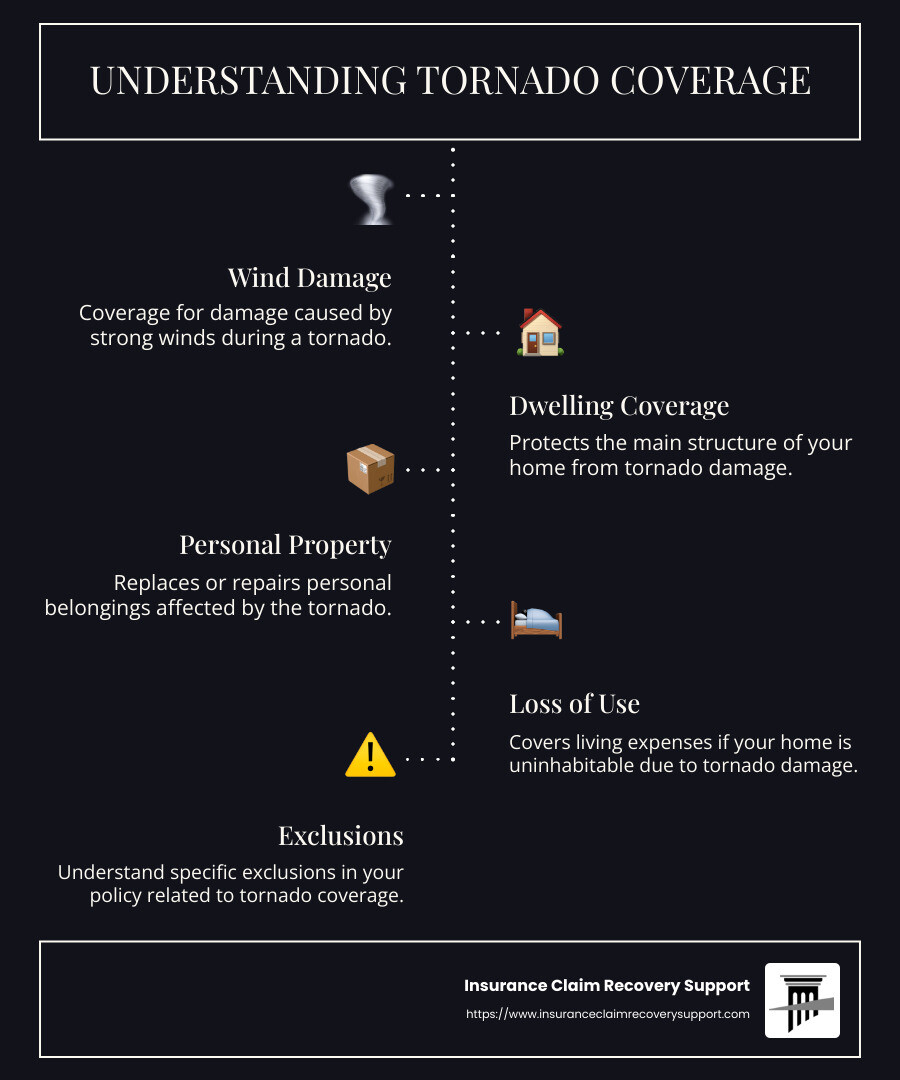
- Wind Damage: Most policies cover wind damage from tornadoes.
- Dwelling Coverage: Protects the main structure of your home.
- Personal Property: Replaces or repairs belongings inside your home.
- Loss of Use: Covers temporary living expenses if your home is uninhabitable.
- Exclusions: Check your policy for specifics on what is not covered.
Tornadoes can strike with little warning, leaving behind destruction and chaos. As a property owner, understanding your insurance coverage is crucial. Does homeowners insurance cover a tornado? You need to know this to safeguard your property and finances.
Preparing your home for a tornado involves more than securing windows and doors. Having the right insurance coverage ensures you won’t face hefty bills alone. Review your current policy, and be proactive by understanding coverage options like dwelling and personal property.
I’m Scott Friedson, an expert with experience in handling tornado-related insurance claims. Overseeing settlements worth millions, I’ve helped many policyholders successfully steer the aftermath of such events. Let’s dig into the essentials of being prepared and protected against nature’s fury.
Does Homeowners Insurance Cover a Tornado?
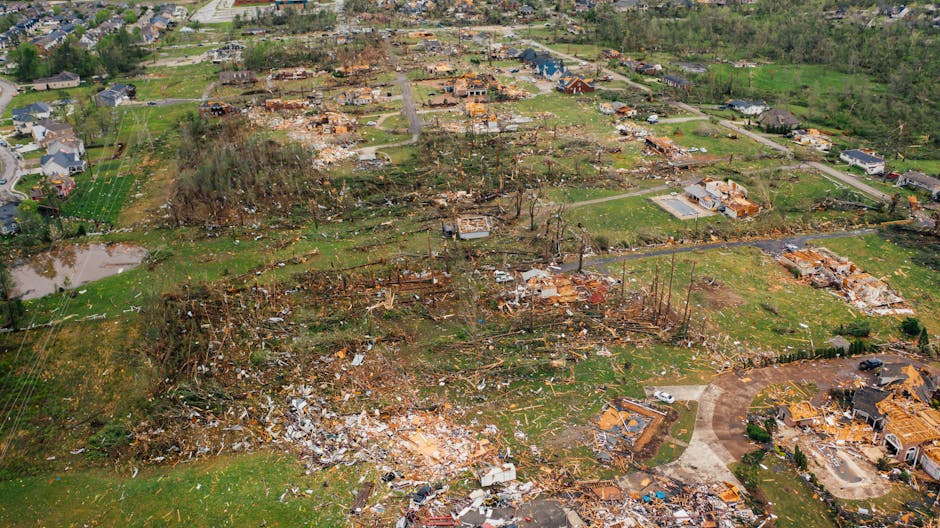
Tornadoes are unpredictable and can cause significant damage to your home. The big question is, does homeowners insurance cover a tornado? The answer is usually yes, but it depends on your policy’s specifics.
Understanding Your Policy
Standard Policies
Most standard homeowners insurance policies include coverage for tornado damage. This typically falls under “windstorm coverage,” which means that if your home is damaged by the high winds of a tornado, your policy should help cover the costs. However, check the details in your policy document to confirm.
Windstorm Coverage
Windstorm coverage is often included in homeowners insurance, especially in areas prone to tornadoes. This coverage protects against damage caused by high winds, which are the primary force in a tornado.
Exclusions
Be aware of exclusions. Some policies might have specific wind exclusions, especially in regions frequently hit by storms. If your policy has a wind exclusion, it might not cover tornado damage. It’s crucial to read the fine print and understand what is and isn’t covered.
Covered Perils
A “covered peril” is an event that your insurance policy protects against. For tornadoes, wind damage is the main covered peril. Make sure your policy explicitly lists windstorms as a covered peril to avoid any surprises when you file a claim.
Filing a Claim
Documentation
After a tornado, documenting the damage is your first step. Take clear photos and videos of the damage to your home and belongings. This evidence is crucial for your insurance claim. Keep a detailed inventory of damaged items and any receipts for temporary repairs or accommodations.
Insurance Adjuster
Once you’ve documented the damage, contact your insurance company to start the claims process. An insurance adjuster will visit your home to assess the damage. It’s helpful to be present during this inspection to point out all damages and provide your documentation.
Filing a claim can be a complex process, but being well-prepared with thorough documentation will help ensure you receive the compensation you’re entitled to. Understanding your policy and knowing what to do after a tornado can make a significant difference in your recovery process.
Types of Coverage for Tornado Damage
Understanding the types of coverage available under your homeowners insurance can make a big difference when a tornado hits. Here’s what you need to know about dwelling coverage, personal property coverage, and loss of use coverage.
Dwelling Coverage
Dwelling coverage is the part of your policy that covers the structure of your home. This includes the walls, roof, and any attached structures like garages or decks. If a tornado causes structural damage to your home, dwelling coverage helps pay for the repair costs or even rebuilding if necessary.
- Repair Costs: Depending on your policy, you might be covered for the full replacement cost of your home, which is the amount needed to rebuild it without considering depreciation. Some older homes might only be covered for the actual cash value, which factors in depreciation, potentially leaving you with higher out-of-pocket expenses.
Personal Property Coverage
Your personal belongings are also at risk during a tornado. Personal property coverage helps you replace items like furniture, electronics, and clothing that are damaged or destroyed.
- Belongings: This coverage typically reimburses you for the cost of replacing your belongings. However, like dwelling coverage, it might be based on replacement cost or actual cash value. Knowing which one your policy covers can help you plan for potential out-of-pocket costs.
Loss of Use Coverage
If a tornado makes your home uninhabitable, loss of use coverage comes into play. This part of your policy helps cover temporary housing and other related living expenses.
- Temporary Housing: If you need to stay in a hotel or rent a temporary home, this coverage can help pay for these costs.
- Living Expenses: In addition to housing, it can also cover other expenses like meals or laundry services while you’re displaced.
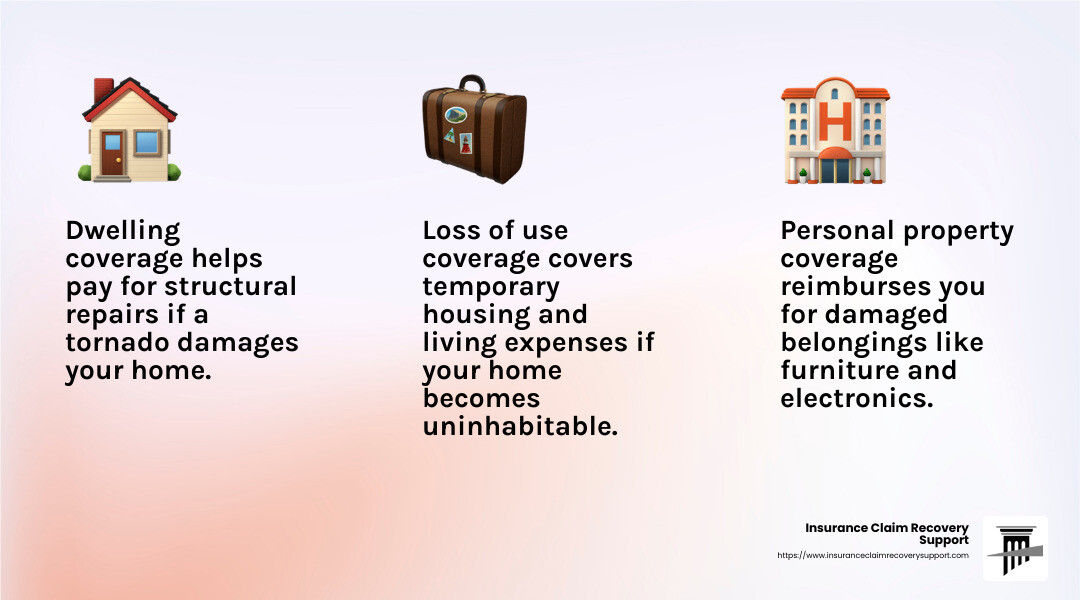
Each of these coverages plays a crucial role in helping you recover financially after a tornado. By familiarizing yourself with your policy’s details, you can better prepare for the unexpected and ensure a smoother recovery process.
Next, we’ll explore how to prepare your home for tornadoes and what safety measures you can take.
Preparing for Tornadoes
When it comes to tornadoes, preparation is key. Let’s explore how you can reinforce your home and create an emergency kit to keep you safe.
Home Reinforcement Tips
Reinforcing your home can significantly reduce damage during a tornado. Here are some essential tips:
-
Windows and Doors: Install impact-resistant windows and doors or use storm shutters. This can help prevent wind from entering and causing internal pressure that might lead to structural damage.
-
Roof Strengthening: Secure your roof with metal straps or clips that connect it to the walls. Use high-quality, impact-resistant materials, and ensure shingles are properly nailed down to withstand strong winds.
These steps can help protect your home’s integrity, though they might not fully prevent damage from the most severe tornadoes.
Creating an Emergency Kit
Having an emergency kit ready is crucial for your safety during a tornado. Here’s what you should include:
-
Essential Supplies: Pack enough water and non-perishable food for at least 72 hours. Include a first-aid kit, medications, and personal hygiene items.
-
Safety Measures: Keep flashlights, extra batteries, and a weather radio on hand. Store important documents like insurance policies and IDs in a waterproof container.
-
Pet Supplies: If you have pets, include food, water, and necessary medications for them too.
An emergency kit ensures you have everything you need in case you’re cut off from resources after a tornado.
By taking these steps, you can better protect your home and ensure your family’s safety when a tornado strikes. Next, we’ll address common questions about tornado insurance to further prepare you for the unexpected.
Frequently Asked Questions about Tornado Insurance
Does homeowners insurance cover tornado damage in Texas?
In Texas, homeowners insurance typically covers tornado damage. Most standard policies include coverage for wind damage, which is the primary cause of destruction during a tornado. However, it’s important to review your policy for any specific exclusions or limitations. In tornado-prone areas like Texas, some insurers might have special windstorm deductibles or conditions.
Regional considerations are crucial. For example, while wind damage is generally covered, flood damage from the heavy rains that accompany tornadoes might not be. For flood protection, you would need separate flood insurance.
What should I do immediately after a tornado?
After a tornado hits, your first priority should be safety. Ensure that everyone in your household is safe and accounted for. Check for injuries and provide first aid if necessary. Once you’re sure it’s safe to do so, begin securing your property to prevent further damage and deter unauthorized access. This might involve boarding up broken windows or covering exposed areas with tarps.
Next, itemize the damage. Document everything by taking photos and making a detailed list of destroyed or damaged items. This helps when filing an insurance claim. Lastly, contact your insurance provider as soon as possible to start the claims process.
How do windstorm deductibles work?
Windstorm deductibles are a key part of understanding your financial responsibilities during tornado recovery. These deductibles are usually calculated as a percentage of your home’s insured value, typically ranging from 1% to 5%.
For example, if your home is insured for $200,000 and your windstorm deductible is 2%, you would be responsible for the first $4,000 of the repair costs.
Financial planning is essential to ensure you can cover this out-of-pocket expense. Consider setting aside an emergency fund specifically for this purpose. Understanding your deductible can help you better prepare financially for the aftermath of a tornado.
Maximize Your Tornado Claim with Insurance Claim Recovery Support LLC
Navigating the aftermath of a tornado can be daunting, but Insurance Claim Recovery Support is here to help. Our mission is to ensure that policyholders receive the maximum settlement they deserve. Tornado damage can be extensive, affecting everything from your home’s structure to personal belongings. We understand the complexities of insurance policies and are equipped to advocate on your behalf.
Maximizing Settlements
Our primary goal is to maximize your settlement. Tornado damage can lead to costly repairs, and ensuring you receive full compensation is crucial. We carefully document damage and negotiate with insurers to secure settlements that cover repair costs, minus any deductibles. For instance, we once assisted a homeowner in Dallas with $50,000 in tornado damage. By thoroughly documenting the damage and negotiating effectively, we helped them secure a comprehensive settlement.
Policyholder Advocacy
We pride ourselves on being staunch advocates for policyholders. When you’re faced with the stress of a tornado’s aftermath, you shouldn’t have to steer the insurance claim maze alone. Our experienced public adjusters work for you, not the insurance company. We ensure your claim is not undervalued or unfairly denied.
In tornado-prone regions like Texas, understanding your policy is vital. Insurance Claim Recovery Support specializes in Texas weather-related claims, focusing on tornadoes. Our expertise in Texas’ unique weather patterns makes us an invaluable ally in storm damage claims.
For more information on how we can assist you with your insurance claim, visit our Tornado Damage Claim Service Page. Let us help you steer the path to recovery.