Understanding What a Tropical Storm Really Means for Property Owners
A tropical storm is a powerful, rotating storm system with a low-pressure center, strong winds from 39-73 mph, and heavy rain. These storms form over warm ocean waters and can cause devastating property damage through wind, flooding, and storm surge. For commercial and multifamily property owners, understanding these risks is crucial for protecting investments and navigating insurance claims effectively.
Quick Facts About Tropical Storms:
- Wind Speed Range: 39-73 mph (34-63 knots)
- Formation Requirements: Ocean temperatures around 27°C (81°F), low wind shear, atmospheric instability
- Primary Hazards: Storm surge, inland flooding, high winds, tornadoes, rip currents
- Atlantic Season: June 1 to November 30 (peaks mid-September)
- Global Frequency: 80-90 named tropical cyclones form worldwide each year
- Intensification Risk: Can rapidly strengthen into hurricanes under ideal conditions
Myth vs. Fact for Commercial Property Owners
-
Myth: Tropical storms are just “weak hurricanes” that don’t cause serious damage.
Fact: Tropical storms can produce catastrophic flooding, significant wind damage to roofs and building envelopes, and storm surge that devastates coastal properties—often resulting in millions of dollars in commercial property claims.
-
Myth: Standard property insurance automatically covers all tropical storm damage.
Fact: Flood damage from tropical storms is typically excluded from standard commercial policies, requiring separate flood insurance. Wind damage may be covered, but disputes over causation, extent, and valuation are common, leading to underpaid or delayed claims.
On average, 86 tropical cyclones of tropical storm intensity form annually worldwide, with 47 reaching hurricane strength. The number of Category 4 and 5 hurricanes in the Atlantic has approximately doubled since 2000, and climate change is increasing rainfall rates during these storms with high confidence. For commercial property owners, multifamily operators, and hospitality managers, understanding tropical storms isn’t just about weather—it’s about protecting assets, minimizing business interruption, and ensuring fair insurance claim settlements when disaster strikes.
As Scott Friedson, CEO of Insurance Claim Recovery Support, I’ve negotiated hundreds of millions in tropical storm and hurricane property damage claims for commercial and multifamily property owners across the country. My experience with large-loss tropical storm claims has shown that policyholders who understand these weather systems and their insurance implications are better positioned to secure fair settlements and avoid unnecessary litigation.
For a deeper scientific background on these systems, see the overview of tropical cyclones.
From Formation to Landfall: The Life Cycle of a Tropical Storm
How and Where Does a Tropical Storm Form?
A tropical storm is a powerful, rotating storm system that forms over warm ocean waters, typically in tropical or subtropical regions. Unlike other storms, it draws its immense energy from the heat of the ocean. This process requires a specific set of conditions: sea surface temperatures of at least 80°F (27°C), low wind shear (minimal change in wind speed or direction with height), and a pre-existing weather disturbance to provide the initial spin.
Globally, 80 to 90 tropical cyclones form each year, with over half reaching hurricane strength. Our focus, however, is on the Atlantic basin, which includes the Gulf of Mexico and the Atlantic Ocean coastlines of the United States, including states like Texas, Florida, Georgia, and the Carolinas.
The Atlantic hurricane season officially runs from June 1 to November 30. While storms can occur outside these dates, the peak activity typically occurs from late August through September, with September 10th being the statistical peak of the season. Understanding how hurricanes form is the first step in preparing for their potential impact on commercial properties. For more general information, you can also refer to our guide on Hurricane phenomena.

Understanding Storm Intensity, Classification, and Movement
Once a tropical disturbance begins to organize and strengthen, it undergoes a classification process based on its sustained wind speeds. This allows meteorologists and emergency managers to communicate the potential threat level to the public and property owners.
Here’s how tropical cyclones are classified:
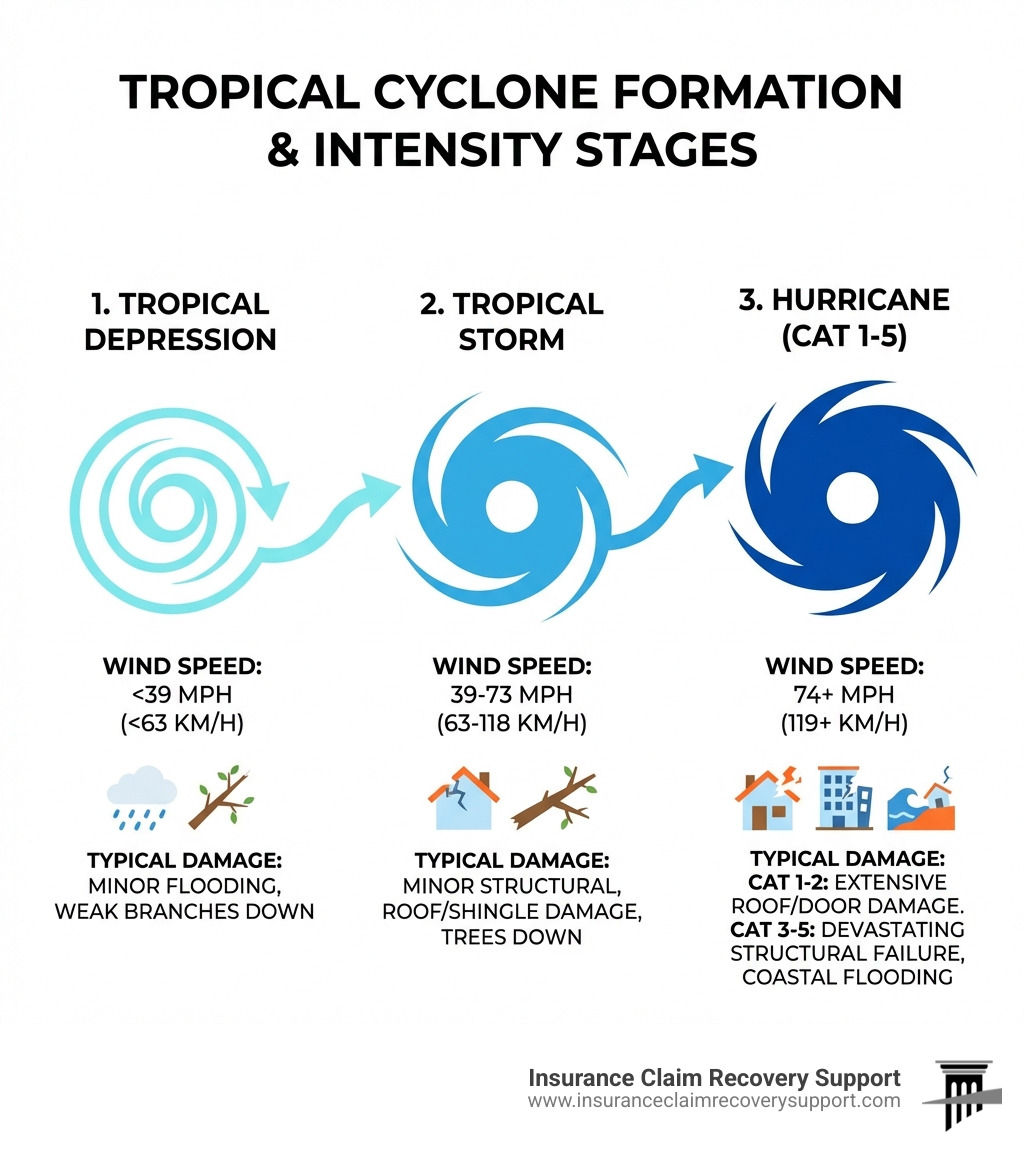
- Tropical Depression: An organized system of clouds and thunderstorms with a defined circulation and maximum sustained winds of 38 mph (33 knots) or less.
- Tropical Storm: When sustained winds reach 39-73 mph (34-63 knots), the system is named and becomes a tropical storm.
- Hurricane: A storm with sustained winds of 74 mph (64 knots) or higher. In other parts of the world, these are known as typhoons or cyclones.
To further categorize the intensity of hurricanes, we use the Saffir-Simpson Hurricane Wind Scale. This is a 1 to 5 categorization based on the hurricane’s sustained wind speed, providing a clear indication of potential damage.
Saffir-Simpson Hurricane Wind Scale
- Category 1 (74-95 mph): Very dangerous winds will produce some damage.
- Category 2 (96-110 mph): Extremely dangerous winds will cause extensive damage.
- Category 3 (major, 111-129 mph): Devastating damage will occur.
- Category 4 (major, 130-156 mph): Catastrophic damage will occur.
- Category 5 (major, 157 mph or higher): Catastrophic damage will occur, with a high percentage of framed homes destroyed.
The movement and track of a tropical storm are influenced by several factors:
- Environmental Steering: The primary factor, driven by the large-scale prevailing winds in the atmosphere that essentially “steer” the storm.
- Beta Drift: A phenomenon that causes a tropical storm to tend to drift poleward and westward, independent of the steering flow.
- Fujiwhara Effect: This describes the interaction between two nearby tropical cyclones, where they can orbit each other or even merge.
- Interaction with Mid-Latitude Westerlies: As storms move poleward, they can interact with the mid-latitude jet streams, causing them to “recurve” poleward and eastward.
For property owners in states like Florida, Texas, and the Carolinas, staying informed about these classifications and forecasts is paramount. We often provide a Hurricane Update during active seasons to help our clients track developing situations.
Assessing the Impact and Navigating Your Recovery
Who is at Risk and What are the Consequences?
The impacts of a tropical storm are far-reaching, affecting not just coastal communities but also inland areas due to heavy rainfall and wind. For commercial property owners and managers, understanding who is most at risk and the potential consequences is vital for preparedness and effective recovery.
Who is Most at Risk?
- Coastal Properties: Those along the immediate coastline are most vulnerable to storm surge, large waves, and direct wind impacts. Properties within 1,500 ft. of the shore and less than 15 ft. above sea level are at high risk for major damage to lower floors. This includes many hotels, resorts, retail centers, and multifamily complexes in Florida, Texas, and the Carolinas.
- Inland Flood Zones: Any property located in low-lying areas or near rivers and streams is at high risk from the heavy rainfall and subsequent inland flooding that tropical storms can bring. This can affect industrial facilities, schools, and even urban commercial districts in cities like Houston, Austin, and San Antonio.
- Properties with Weak Structures: Older buildings, those not built to current wind codes, or properties with compromised roofs and envelopes are particularly vulnerable to high winds.
Consequences for Property, Operations, and Communities
The consequences of a tropical storm can be severe:
- Property Damage: Roof failure, façade damage, window and door breaches, and water intrusion into walls and interiors are common. Damage often extends to internal structures, mechanical/electrical systems, and contents.
- Infrastructure Damage: Prolonged power outages, damaged substations, unsafe water supplies, and disrupted communications can halt operations for commercial and multifamily properties.
- Economic Impacts: The number of $1 billion Atlantic hurricanes almost doubled from the 1980s to the 2010s. Hurricanes Katrina and Harvey each represent approximately $125 billion in damages, making them among the U.S.’s costliest natural disasters. For commercial entities, this translates into business interruption, lost revenue, and extended recovery timelines.
The size of a tropical storm also matters. Larger systems tend to spread wind and flooding impacts over wider areas, affecting multiple properties and entire portfolios at once, which complicates repairs, contractor availability, and insurance negotiations.
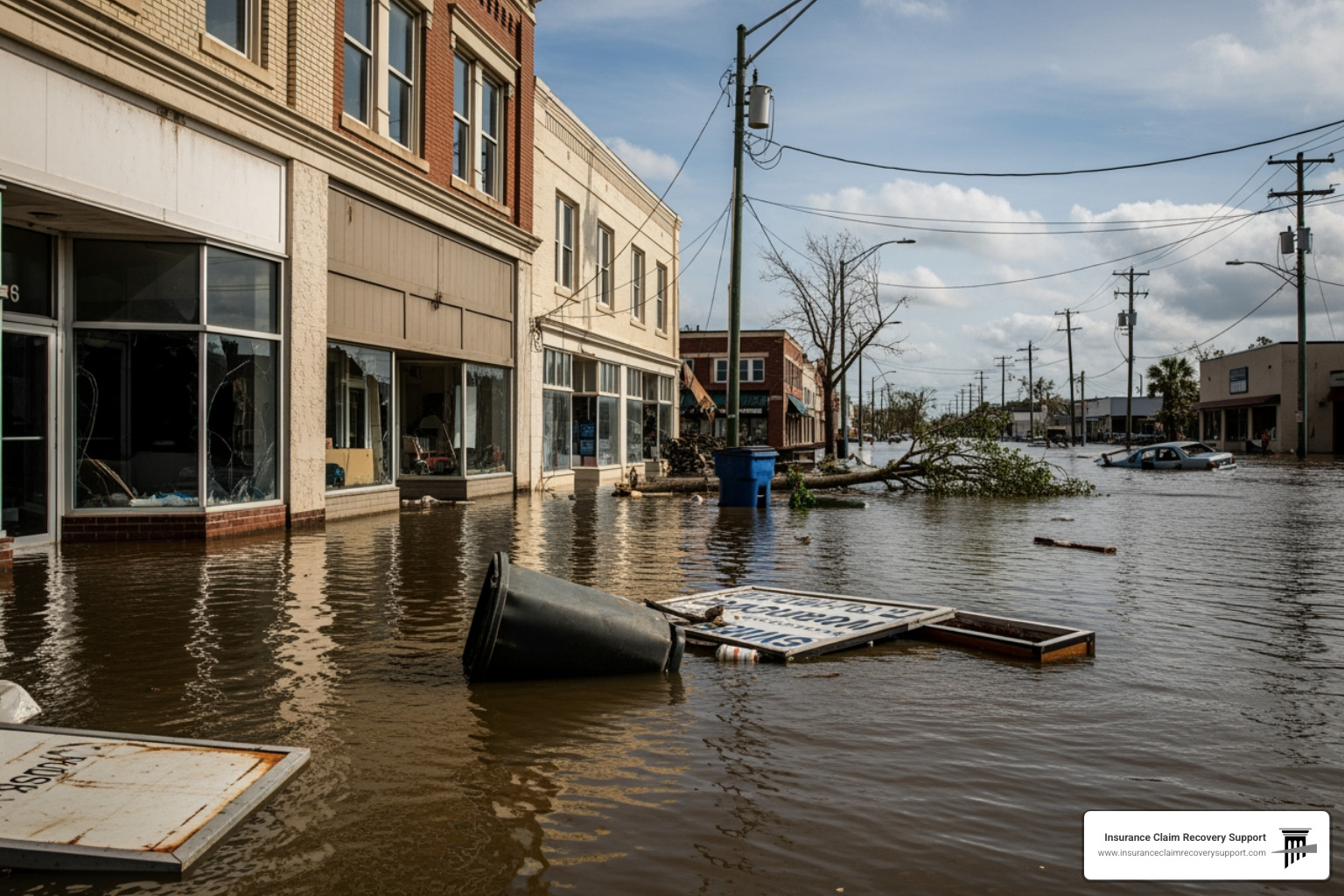
Your Guide to a Tropical Storm Property Damage Claim
When a tropical storm impacts your commercial or multifamily property, the aftermath can be overwhelming. As public adjusters, we at Insurance Claim Recovery Support (ICRS) understand the complexities of these large-loss claims and are here to guide you.
Assessing and Documenting Losses
- Prioritize Safety: Ensure the property is safe before entering.
- Take Extensive Photos and Videos: Document all damage, both interior and exterior, before any cleanup or repairs begin. Capture wide shots and close-ups, noting the date and time.
- Create a Detailed Inventory: List all damaged property, equipment, and contents. Include purchase dates, costs, and any available receipts.
- Secure the Property: Take reasonable steps to prevent further damage, such as boarding up windows or tarping roofs, and keep records of all expenses.
Policy Review: Wind vs. Flood Coverage
- Wind Damage: Damage directly caused by the storm’s winds is typically covered under a standard commercial property insurance policy. This includes damage to roofs, siding, windows, and structural components.
- Flood Damage: Flood damage, defined as water that has touched the ground before entering the property, is almost always excluded from standard commercial property policies. This requires a separate flood insurance policy, often through the National Flood Insurance Program (NFIP) or a private insurer. Many disputes arise when water and wind damage occur simultaneously.
- Business Interruption: For commercial entities, business interruption coverage is essential. This covers lost income and extra expenses incurred while the property is unusable due to covered damage.
For more on how wind losses are evaluated, see our resource on wind damage.
Public Adjuster vs. Lawsuit: Which Path Makes Sense?
Commercial and multifamily policyholders often ask whether they should hire an attorney and sue or start by working with a licensed public adjuster.
Myth: “To get a fair payout after a tropical storm, I have to sue my insurance company.”
Fact: Most large commercial claims can be resolved faster and more cost‑effectively by using a public adjuster to build and negotiate the claim before considering litigation.
Using a Public Adjuster (ICRS):
- Claims are prepared and documented thoroughly from day one, reducing disputes over scope and pricing.
- Negotiations focus on policy language, building codes, and actual construction costs without courtroom delays.
- Fees are typically a small percentage of the claim, and you keep control of the process and repair decisions.
- ICRS resolves about 90% of claims without unnecessary lawsuits or appraisal, helping you return to normal operations sooner.
Pursuing an Insurance Claim Lawsuit:
- Litigation usually begins only after a significant dispute or denial and can take months or years to resolve.
- Legal fees and court costs reduce your net recovery, and outcomes are less predictable.
- Findy, depositions, and expert testimony can consume management time and distract from running your properties.
A strong, well‑documented claim prepared by a public adjuster often puts you in a far better position—either to reach a fair settlement or, if needed later, to support an attorney with organized evidence and expert analysis.
For a comprehensive overview of how to prepare and submit a claim specifically for wind damage, please refer to our guide: How to Submit a Wind Damage Insurance Claim.
Securing a Fair Settlement for Your Commercial Property
After a tropical storm has impacted your commercial property, securing a fair and timely settlement from your insurance company is paramount to recovery. This is where the specialized expertise of a public insurance adjuster, like us at Insurance Claim Recovery Support (ICRS), becomes invaluable.
The Role of a Public Adjuster
We are licensed professionals who exclusively represent policyholders, never the insurance company. Our job is to:
- Independently Assess Damage: We conduct our own investigation of the property damage, documenting all losses, including those the insurer might overlook.
- Interpret Your Policy: We decipher complex commercial insurance policies, ensuring that all applicable coverages, endorsements, and provisions are leveraged in your favor.
- Prepare and Present Your Claim: We compile a detailed claim package, including estimates, reports, and documentation, and present it to your insurance company in a clear, unambiguous manner.
- Negotiate on Your Behalf: We manage communications and negotiations with the insurance company’s adjusters and representatives, advocating to maximize your settlement.
Maximizing Settlements and Avoiding Litigation
- When you file and negotiate alone, you are dealing with a team whose duty is to the insurer, and initial offers often fall short of true recovery costs.
- By engaging ICRS early, many disputes over scope, pricing, and causation are resolved at the adjustment table instead of in the courtroom.
- Our 90% settlement success rate without unnecessary lawsuits demonstrates how an experienced public adjuster can help you avoid protracted litigation while still achieving a strong financial outcome.
We specialize in large-loss commercial, multifamily, and specialty property claims resulting from hurricanes and tropical storms across states like Texas, Florida, Georgia, Colorado, and the Carolinas, including major markets such as Houston, Dallas-Fort Worth, San Antonio, Austin, and coastal communities.
To learn more about how we can help with your claim after a tropical storm or hurricane, visit our guide on the Hurricane Insurance Claim Process. If you’re dealing with property damage from a recent tropical storm or hurricane, don’t hesitate to contact us for help with your hurricane claim.