Introduction
What Are Independent Adjusting Companies — and Why Does It Matter for Your Property Claim?
independent adjusting companies are third-party firms hired by insurance carriers to investigate and settle claims on the insurer’s behalf — not yours.
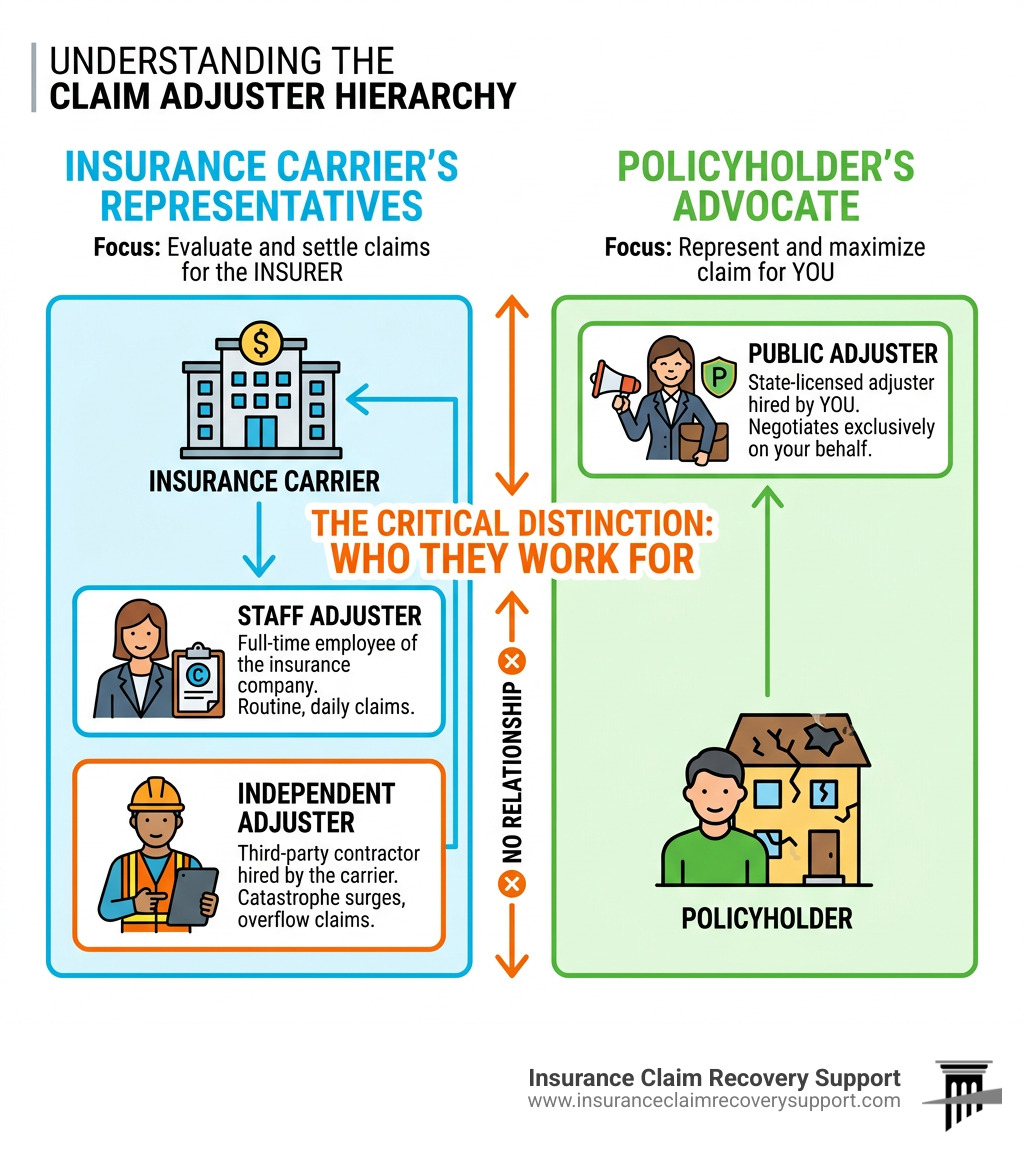
Here’s a quick breakdown of who does what in the claims ecosystem:
| Type of Adjuster | Who They Represent | When They’re Used |
|---|---|---|
| Staff Adjuster | Insurance carrier | Routine, daily claims |
| Independent Adjuster | Insurance carrier | Catastrophe surges, overflow claims |
| Public Adjuster | You, the policyholder | Any time you need an advocate |
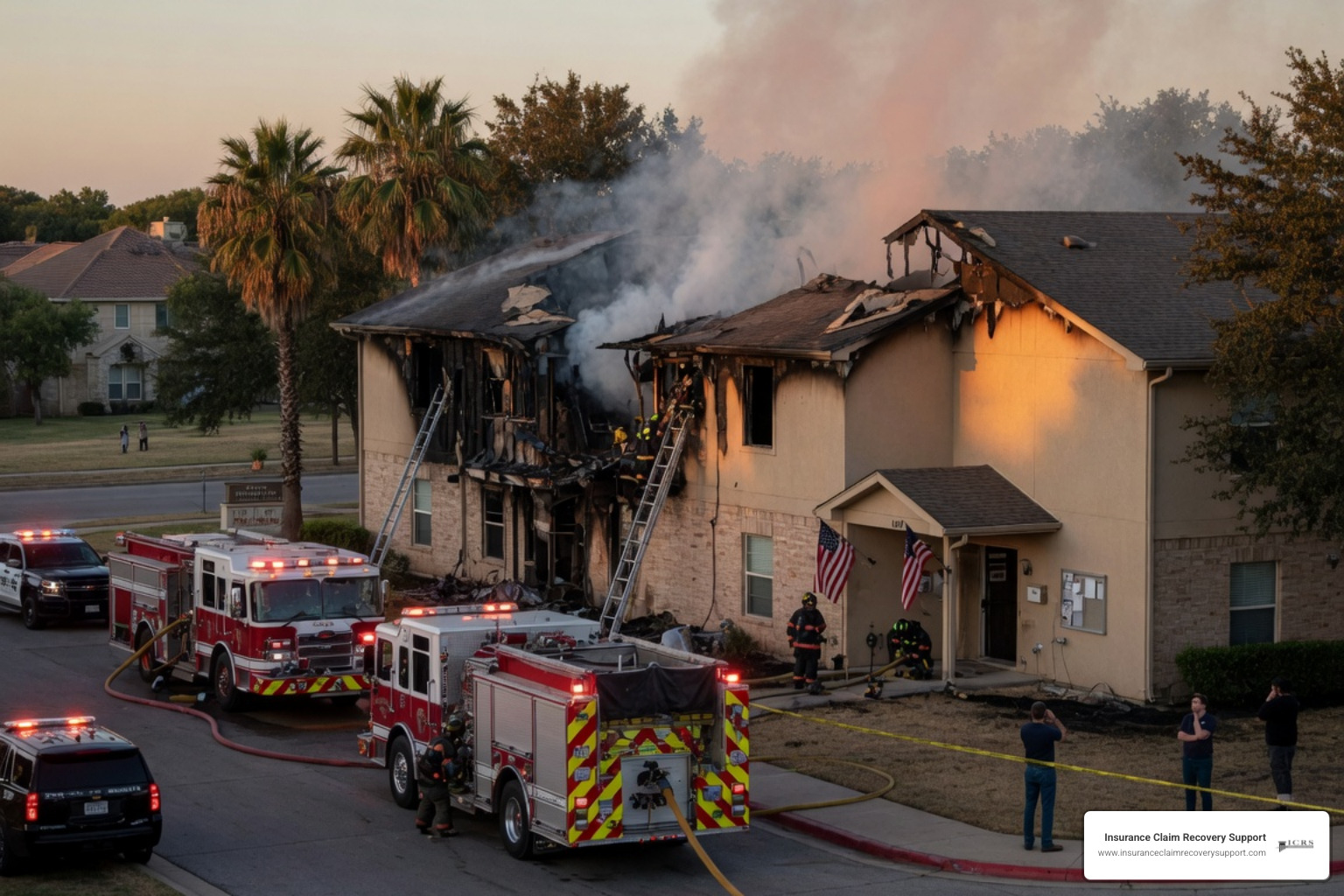
If your commercial building, apartment complex, or multifamily property just took a hit from a hurricane, fire, tornado, or freeze event, there’s a good chance the adjuster showing up at your door works for one of these independent adjusting companies — and is paid by your insurance carrier, not by you.
That distinction matters more than most property owners realize.
When catastrophe strikes and claim volumes spike, insurers rapidly deploy independent adjusting firms to handle the overflow. These adjusters are experienced, but their job is to evaluate and settle your claim efficiently for the carrier. Speed and volume are the priority. Maximum recovery for your property? That’s a different conversation — and a different type of professional.
I’m Scott Friedson, a multi-state licensed public adjuster and CEO of Insurance Claim Recovery Support (ICRS), and over 15+ years I’ve worked alongside, and often in direct negotiation against, independent adjusting companies on hundreds of large-loss commercial and multifamily claims totaling over $250 million in settlements. What I’ve seen repeatedly is that policyholders who understand this landscape recover significantly more — and avoid costly litigation in the process.
Understanding Independent Adjusting Companies and Their Role
When we talk about the claim adjuster meaning, we are generally referring to the person responsible for investigating the extent of damage and determining the payout. Independent adjusting companies act as a scalable workforce for insurance carriers. They are essentially firms comprised of independent contractor adjusters who are hired to handle claims when the insurance company’s internal staff is overwhelmed or lacks a physical presence in a specific region like Texas.

These firms provide specialized services, meaning they can handle everything from property damage to specialty losses like business interruption. While they operate as separate businesses, their fiduciary duty is strictly to the insurance carrier that pays their invoices. In the industry, they are often seen as the “overflow valve” for the insurance ecosystem.
How Independent Adjusting Companies Differ from Staff and Public Adjusters
It is easy to get confused by the titles, but the differences are massive when it comes to your final settlement check.
- Staff Adjusters: These are full-time employees of the insurance company (like State Farm or Travelers). They have a general adjuster definition that centers on following strict corporate guidelines to settle routine claims.
- Independent Adjusters: These work for independent adjusting companies. They are contractors. While they aren’t “employees” of the carrier, they are hired by the carrier. Their loyalty remains with the entity signing their checks.
- Public Adjusters: A public adjuster is the only professional licensed to represent you, the policyholder. We don’t work for the insurance company. Our role is public adjusting firms advocacy—ensuring the carrier doesn’t overlook damage or underpay your claim.
The conflict of interest is inherent: an independent adjuster wants to keep the insurance carrier happy so they get hired for the next storm. A public adjuster wants to get the policyholder the maximum settlement allowed under the policy.
Why Insurers Deploy Independent Adjusting Companies During Catastrophes
In places like Houston, Dallas, or San Antonio, weather can turn from a sunny day to a billion-dollar catastrophe in minutes. Insurance companies cannot afford to keep thousands of adjusters on a full-time payroll just waiting for a hurricane or a massive freeze event. It would be like a restaurant keeping 500 waiters on staff for a lunch rush that only happens once a year.
Instead, they turn to independent adjusting companies for:
- Scalability: They can deploy hundreds of adjusters to a disaster zone within 24–48 hours.
- Specialization: If a claim involves complex industrial machinery or a massive manufacturing facility, they hire a firm with that specific expertise.
- Geographic Reach: In a state as large as Texas, carriers use IA firms to cover remote areas like Lubbock or San Angelo without having to station staff there permanently.
The Limitations of Carrier-Hired Adjusters for Commercial Losses
If you own a shopping plaza in Austin or an apartment complex in Fort Worth, you aren’t dealing with a simple “fix the fence” claim. Commercial losses are incredibly complex. You have to consider what does a commercial claims adjuster do?—usually, they are looking for the fastest way to “close” the file.
Independent adjusters often miss:
- Business Interruption: Calculating lost revenue for a hotel or retail center is a specialized skill.
- Hidden Damage: In fire or hail claims, the obvious damage is just the tip of the iceberg.
- Contents and Inventory: A specialized contents adjuster is often needed to properly value commercial equipment, yet IA firms may use “generalists” to save time.
Navigating the Claims Landscape: Public Adjusters vs. Independent Firms
When an independent adjuster steps onto your property, they are there to document the loss for the insurance company. They use tools like Xactimate or proprietary software like iAdjust™ to generate estimates. However, those estimates are only as good as the data entered. If they don’t see the micro-cracks in a roof or the smoke soot behind the drywall, you don’t get paid for it.
This is where public adjuster services become vital. We don’t just “look” at the damage; we conduct a forensic investigation. We act as an independent loss assessor for the policyholder, preparing a comprehensive claim package that is often three to four times more detailed than what the carrier’s adjuster produces.
Fact vs. Myth: The Reality of Independent Adjuster Neutrality
There is a common myth that because an adjuster is “independent,” they are neutral. This is rarely the case.
Fact: Independent adjusting companies are dependent on insurance carriers for their livelihood. If a firm consistently submits “high” estimates that favor the policyholder, the insurance carrier will simply stop hiring that firm.
In Texas, every adjuster must hold a state of Texas insurance license. While regulatory bodies like the Texas Department of Insurance (TDI) oversee licensing and provide resources on commercial property insurance regulations, they don’t dictate how an adjuster interprets “damage.” An independent adjuster might call a roof “repairable,” while a public adjuster knows that per local building codes in Lakeway or Georgetown, that same roof requires a full replacement.
Avoiding Litigation: The Strategic Advantage of Professional Representation
Many commercial property owners think their only options are to accept the low-ball offer from the insurance company or sue them. Litigation is a nightmare—it takes years, costs a fortune in legal fees, and often ends in a settlement that is eaten up by costs.
At Insurance Claim Recovery Support, we focus on a different path. Our goal is to resolve claims through the adjustment process, not the courtroom. By presenting undeniable evidence and expert reports early, we achieve a 90% settlement success rate without unnecessary lawsuits.
When you look for a public adjuster near me, you are looking for a negotiator. Our public adjuster rates are contingency-based, meaning we only get paid if we recover more money for you. This aligns our interests perfectly with yours—unlike the independent adjuster, whose interest is aligned with the carrier.
| Strategy | Using an Independent Adjuster Alone | Using a Public Adjuster (ICRS) |
|---|---|---|
| Primary Goal | Minimize carrier liability | Maximize policyholder recovery |
| Evidence | Basic photos and carrier-friendly software | Forensic engineering, thermal imaging, expert estimates |
| Speed | Fast (but often incomplete) | Efficient (focused on accuracy) |
| Outcome | Often leads to “underpaid” claims | 90% success in avoiding litigation/appraisal |
As a public adjuster in Texas, we know the “carrier roadmap.” We know how they use independent adjusting companies to delay or deny portions of large claims. We bridge that gap by providing the professional representation required to level the playing field.
Conclusion: Securing Expert Advocacy for Your Property Claim
The insurance ecosystem is designed to protect the carrier’s bottom line. Independent adjusting companies are a key part of that system, providing the manpower the carriers need to manage large-scale disasters. But as a property owner or manager, you don’t have to navigate this system alone.
Whether you are dealing with fire damage in Austin, hurricane recovery in Houston, or severe wind and storm damage in Dallas-Fort Worth, our team at Insurance Claim Recovery Support is here to advocate for you. We specialize in large-loss commercial and multifamily claims, ensuring that your settlement reflects the true cost of restoration.
Don’t let an “independent” adjuster decide the fate of your commercial investment. About Insurance Claim Recovery Support public insurance adjusters—we are your partners in recovery, dedicated to transparency, accuracy, and fairness.
If you are a commercial building owner, professional property manager, or part of an HOA board in San Antonio, Lubbock, Waco, or any of our Texas service areas, reach out to us today. Let’s get your property back to its pre-loss condition without the stress of a legal battle.
Explore our full range of Public Adjusting Services and take the first step toward a fair settlement.