Why a Commercial Fire Claim Demands Your Full Attention
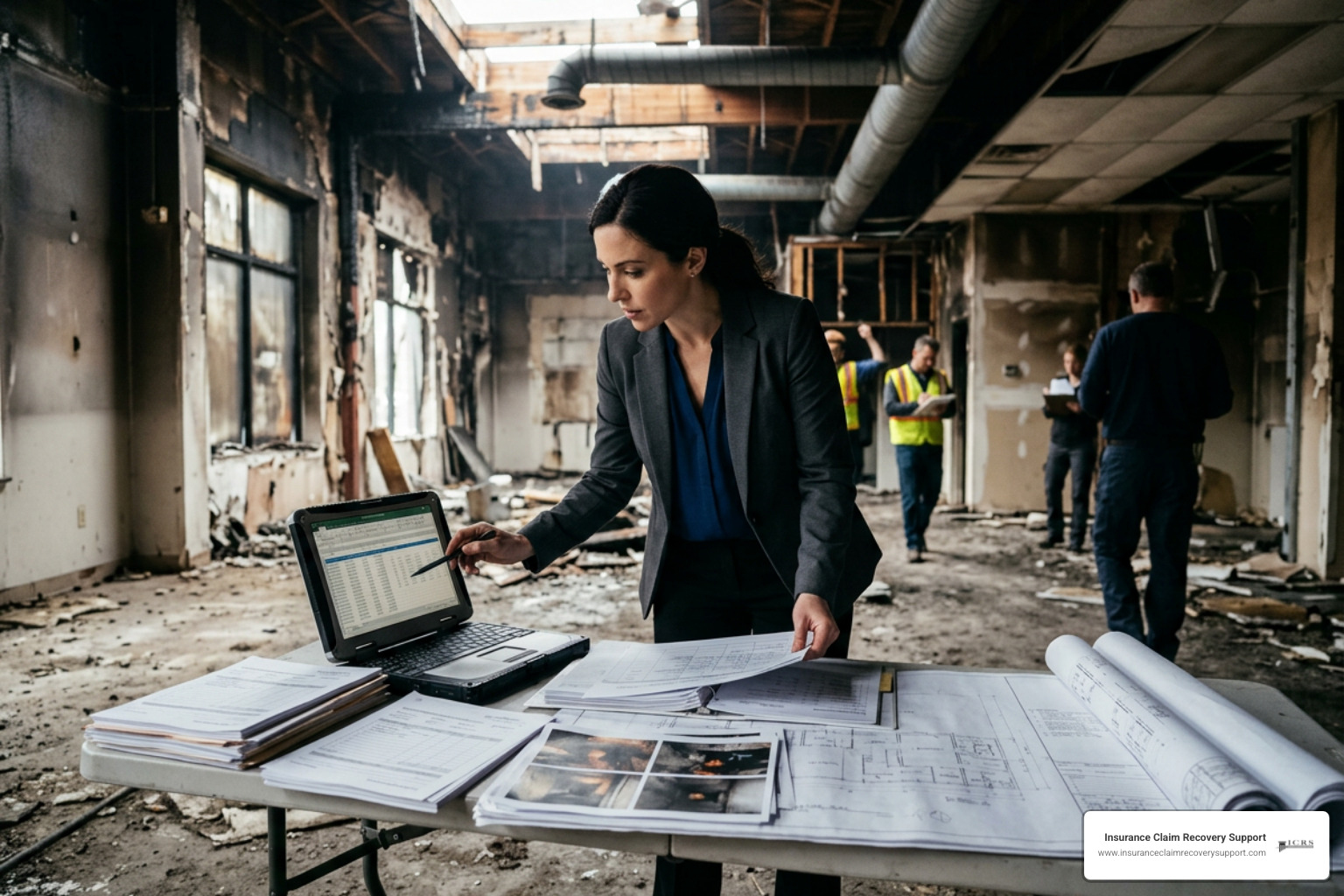
For commercial owners and property managers: organize the building claim, contents and equipment records, and operational losses separately. Use consistent room and system names across photographs, inspection reports and estimates. Identify confirmed damage, proposed work and questions that still require a qualified specialist. Keep repair schedules, invoices and income records together so the claim can be reviewed against the documented facts.
See our fire damage public adjusting services and large-loss claim guide, or request a commercial fire claim review.
A Commercial fire claim is one of the most complex insurance claims a property owner can face. When fire strikes a commercial building, multifamily property, or religious institution, the claims process that follows can determine whether your business survives or struggles for years to come.
Quick Answer: What You Need to Know About Commercial Fire Claims
- Act immediately to secure the property and mitigate further damage.
- Notify your insurer promptly. Review and follow the notice requirements in your policy.
- Document everything with photos, videos, and detailed inventories.
- Understand your coverage, including business interruption and replacement costs.
- Calculate all losses accurately, including lost income and extra expenses.
- Beware of common insurer tactics like low settlement offers and delays.
- Consider hiring a public adjuster early to maximize your recovery.
- Prepare before disaster strikes with updated documentation and adequate coverage.
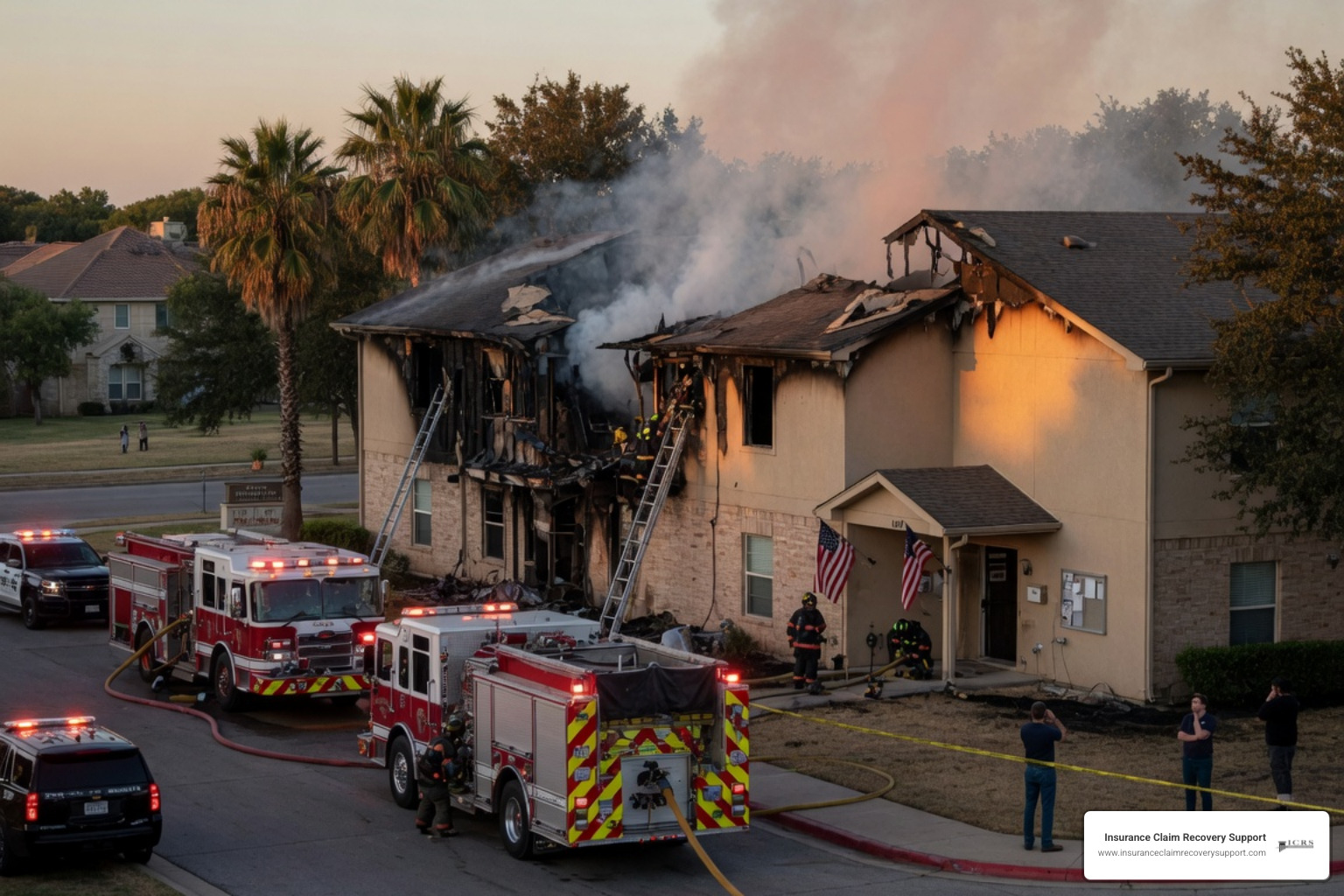
According to the National Fire Protection Association (NFPA), U.S. fire departments respond to over 100,000 commercial property fires annually, causing billions in direct losses. Beyond structural damage, these fires disrupt operations, destroy inventory, and displace tenants, making a thorough claims process critical for financial survival.
As Scott Friedson, CEO of Insurance Claim Recovery Support, I’ve guided hundreds of large-loss Commercial fire claim cases, helping property owners across Texas and nationwide recover fair settlements. This guide distills that experience into eight essential tips to help you protect your rights and maximize your recovery.
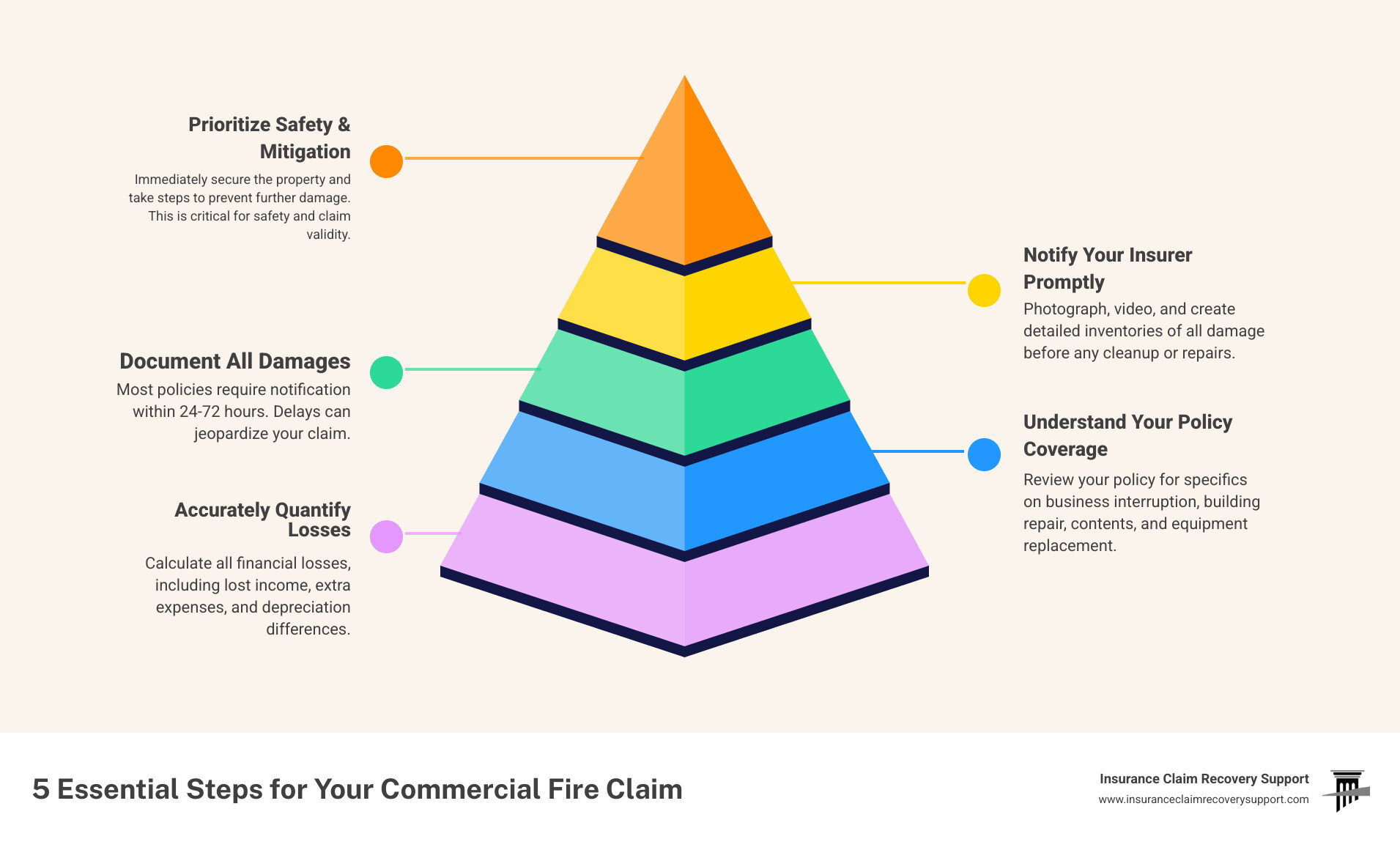
Navigating Your Commercial Fire Claim: 8 Essential Steps for Policyholders
Tips 1-3: Immediate Actions & Documentation
When a fire devastates your commercial property, the moments immediately following are crucial. Your actions during this initial phase can significantly impact the outcome of your Commercial fire claim. Taking the right steps can make all the difference.
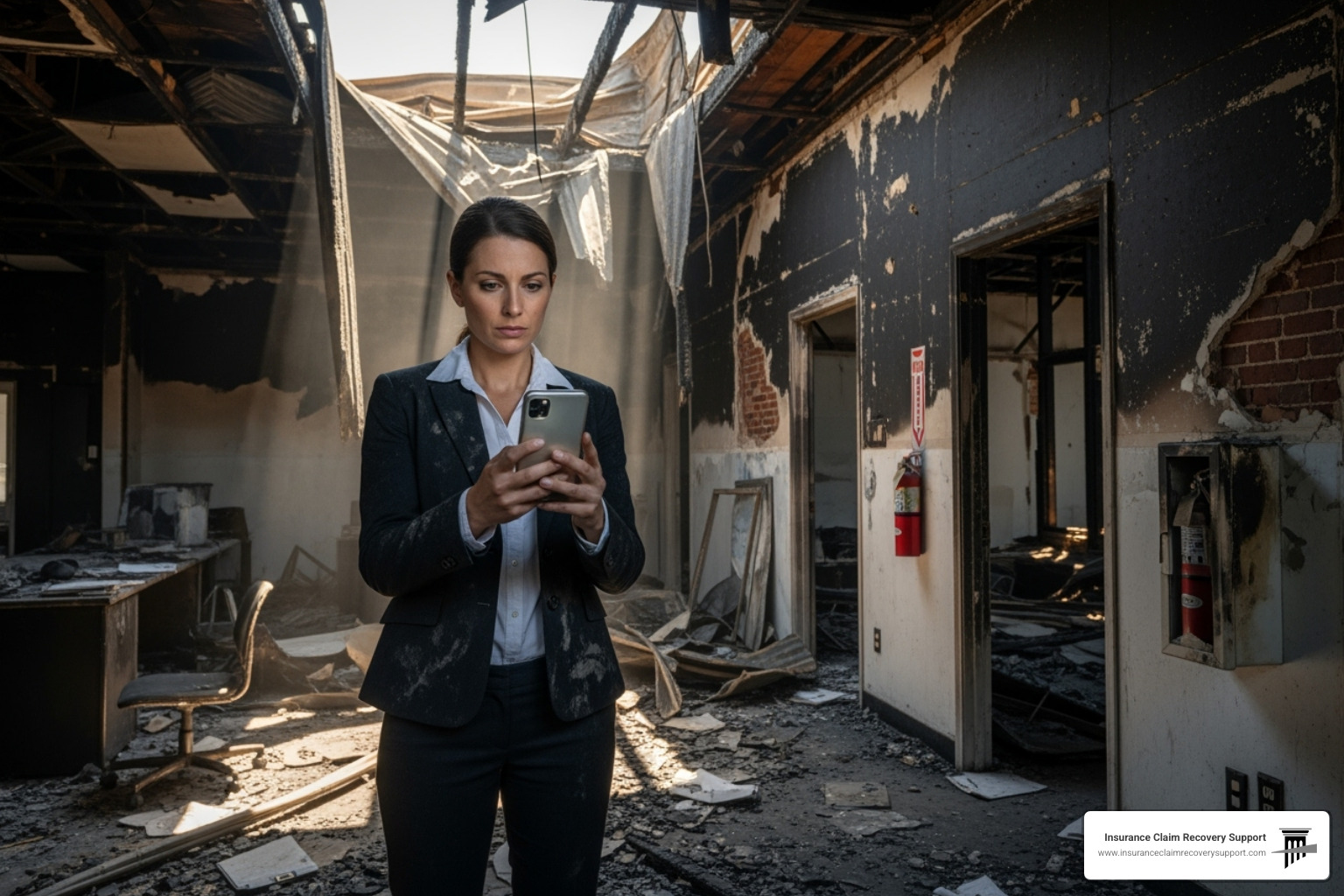
Tip 1: Prioritize Safety & Mitigate Damage
Your first priority is safety. Once emergency services declare the property safe to enter, you must prevent further damage. This “mitigation” is a requirement in your insurance policy. Failure to mitigate can lead to the denial of coverage for additional damages.
Mitigation actions include:
- Securing the perimeter: Boarding up windows and doors to prevent theft.
- Protecting from elements: Tarping damaged roofs to prevent water intrusion.
- Shutting off utilities: Turning off water, gas, and electricity.
If your building is older, be aware of hazardous materials like Asbestos After a Fire. Fire can release dangerous fibers, requiring assessment by certified professionals as part of your mitigation.
Tip 2: Notify Insurer & Understand Policy
Notify your insurance company about the fire promptly and follow the notice requirements in your policy for a commercial fire claim. Immediately request a complete copy of your long-form insurance policy, not just the summary page. Understanding your policy is paramount.
Key aspects to look for include:
- All-Risks vs. Named Perils: Confirm if your policy covers “all risks” unless excluded, or only specifically listed perils like fire.
- Policy Exclusions: Be aware of what your policy doesn’t cover, such as wear and tear or pre-existing conditions.
- Coverage Limits and Deductibles: Know the maximum your insurer will pay and what you are responsible for.
For more insights, refer to our guide on 3 Important Tips for Filing Your Commercial Insurance Claim.
Tip 3: Document Everything
Comprehensive documentation is your best tool. This evidence is vital for supporting your Commercial fire claim and countering any attempts to undervalue your losses.
- Photographs and Videos: Take extensive photos and videos of all damaged areas, including smoke, soot, and water damage.
- Detailed Inventory: Create a list of every damaged item, including its description, age, original cost, and estimated replacement cost. Attach receipts or other proof of ownership.
- Keep Records: Log all communications with your insurance company and contractors. Keep all receipts for emergency repairs and other expenses.
- Preserve Evidence: Do not discard damaged items until your insurer’s adjuster has inspected them, unless they pose a safety hazard.
This thorough documentation forms the backbone of your claim. For additional resources, explore our Commercial Property Damage section.
Tips 4-5: Quantifying Your Losses Accurately
A Commercial fire claim is about a holistic financial recovery that accounts for every aspect of your business’s loss, including the income you lose while operations are interrupted.
Tip 4: Master Financial Recovery Coverages
To maximize your recovery, you need to understand each part of your commercial policy.
-
Business Interruption (BI) Insurance: This is one of the most critical coverages. It compensates for lost income and fixed expenses while your property is being repaired. It covers lost profits, ongoing expenses (rent, salaries), and extra expenses incurred to continue operations from a temporary location.
-
Replacement Cost Value (RCV) vs. Actual Cash Value (ACV): This distinction is vital for your building and contents claims.
| Feature | Replacement Cost Value (RCV) | Actual Cash Value (ACV) |
|---|---|---|
| Definition | Cost to replace damaged property with new, comparable items. | Cost to replace damaged property minus depreciation. |
| Depreciation | Not deducted initially; full cost paid upon replacement. | Deducted based on age, wear, and tear. |
| Payout Process | Initial payment often ACV, remaining RCV paid after replacement. | Single payment reflecting depreciated value. |
Many policies pay the Actual Cash Value (ACV) first, with the remaining amount (recoverable depreciation) paid after you replace the item and provide receipts. Understanding this is key to managing cash flow. For more on this, visit our page on Loss Types: Business Interruption Loss.
Tip 5: Submit a Comprehensive ‘Proof of Loss’
The “Proof of Loss” is a formal, sworn statement detailing your damages and the amount you are claiming. It is a critical legal document.
- What it is: The form lists all damaged property with its value. It is your formal case for compensation.
- Why it’s important: This document is the basis for settlement negotiations. Inaccuracies or omissions can hinder your claim, and misrepresenting facts can lead to denial.
- Deadlines: Policies specify a deadline for submitting the Proof of Loss. Missing this deadline can jeopardize your entire claim.
Preparing this document requires compiling all your documentation and financial calculations. We specialize in this task, ensuring every detail is accurate to prevent disputes.
Tips 6-8: Assembling Your Team and Managing the Process
Navigating a Commercial fire claim can be adversarial. Insurance companies are businesses focused on their bottom line. This is where understanding their tactics and building your own team of advocates becomes invaluable.
Tip 6: Recognize Common Insurer Tactics
Be aware of these strategies used to minimize payouts:
- Undervaluation: Offering a low initial settlement that doesn’t cover your losses.
- Delays: Prolonging the process, hoping you’ll accept a lower offer out of frustration.
- Denial Strategies: Citing policy exclusions or alleging lack of maintenance to deny the claim.
- Pushing for Quick Settlements: Offering a fast but low settlement before you’ve fully assessed your damages. Once you sign, it’s very difficult to reopen the claim.
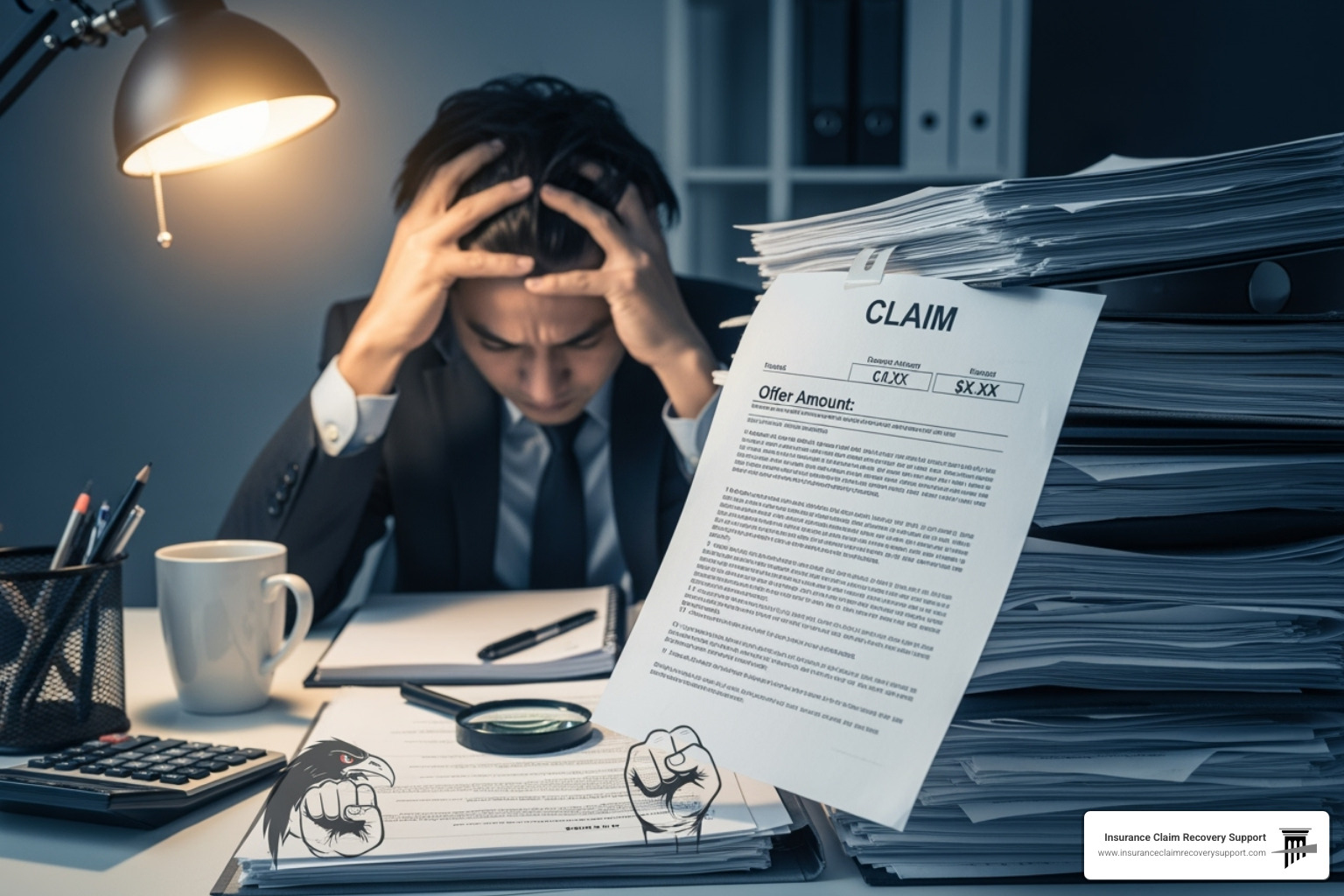
We’ve seen these tactics across Austin, Dallas, Houston, and other Texas cities, and our experience allows us to counter them effectively.
Tip 7: Know When to Hire Professional Advocates
For a complex Commercial fire claim, professional help is critical. A public adjuster from Insurance Claim Recovery Support works exclusively for you, not the insurance company.
- When to Hire Us: Consider hiring a public adjuster if your claim is substantial, you feel overwhelmed, you suspect your insurer is undervaluing your claim, or you want to maximize your settlement while avoiding litigation.
- Maximizing Recovery and Avoiding Litigation: Our goal is to level the playing field. By preparing a thorough claim and expertly negotiating, we aim to secure a fair settlement without resorting to a lawsuit, saving you time, stress, and legal fees.
- Our Fees: Public adjusters typically work on a contingency basis, charging a percentage of the final settlement. We only get paid when you get paid. For details, visit Public Adjuster Fees for Property Damage Claims.
We serve commercial property owners nationwide, including those in Austin, Dallas, Fort Worth, San Antonio, and Houston. Learn more at our Commercial Property Public Insurance Adjusters page.
Tip 8: Prepare Before a Fire
The best time to prepare for a claim is before a fire occurs.
- Regular Policy Review: Annually review your policy to ensure coverage limits are adequate for current replacement costs.
- Pre-Loss Documentation: Keep an up-to-date inventory with photos and videos stored off-site or in the cloud.
- Emergency Contacts: Maintain a list of emergency services, key employees, and your public adjuster.
- Business Continuity Plan: Develop a plan for how your business will operate after a major disruption.
Following these Best Practices Commercial builds a resilient foundation for your business.
Advanced Topics and Finalizing Your Claim
Overcoming Complex Challenges in Your Commercial Fire Claim
As you move past the immediate aftermath, a Commercial fire claim can reveal deeper complexities during the reconstruction and settlement phases. These challenges require specialized expertise.
Rebuilding Challenges: Bylaw and Code Upgrade Coverage
You can’t simply rebuild your property as it was. Modern building codes have likely changed, and your rebuilt structure must comply with current regulations. These upgrades—such as new sprinkler systems, electrical standards, or accessibility features—can add significant costs to your project.
Ordinance or Law coverage is designed to cover these mandated upgrades. Without it, you could face a devastating financial shortfall. We work with experts to identify all required upgrades and ensure they are properly included in your Commercial fire claim.
Subrogation Process: When a Third Party is at Fault
If a fire starts elsewhere and spreads to your property, the principle of subrogation applies. This is when your insurance company pays your claim and then seeks reimbursement from the at-fault party. Your first step should always be to file a claim with your own carrier. They have a contractual obligation to you and will handle the complexities of recovering their payout from the negligent party’s insurer behind the scenes. This approach protects you from delays and disputes.
Hidden Damage: Smoke, Soot, and Water
Some of the most destructive damage from a fire is not immediately visible.
- Smoke and Soot: Microscopic particles infiltrate porous materials like drywall, insulation, and ductwork, leaving corrosive residues that cause long-term damage and persistent odors.
- Water Damage: Water from firefighting efforts can saturate walls, floors, and ceilings, promoting rot, rust, and mold growth within 24-48 hours. If your property contains asbestos, water damage complicates remediation further, as detailed in our guide on Asbestos After a Fire.
Identifying these hidden damages requires professionals like industrial hygienists and structural engineers. We coordinate these assessments to ensure every element of damage is documented and included in your claim before it’s settled and closed.

Your Path to a Full Recovery in Texas and Beyond
Finalizing your Commercial fire claim requires understanding its unique complexities and the long-term implications of an inadequate recovery.
Key Differences Between Commercial and Residential Fire Claims
Commercial claims are far more complex than residential ones. Key differences include:
- Business Interruption: This coverage, critical for businesses but rare for homes, requires forensic accounting to calculate lost profits and ongoing expenses.
- Specialized Equipment: Valuing industrial machinery, technology, or specific inventory requires expert assessment.
- Multiple Stakeholders: Commercial claims can involve landlords, tenants, employees, and community members, each with different needs.
- Regulatory Compliance: Rebuilds must adhere to strict building codes, zoning laws, and ADA requirements.
Long-Term Financial and Operational Impacts
Without a full insurance recovery, a fire can trigger a cascade of problems. Businesses can lose market share, key employees, and brand reputation during extended closures. Cash flow becomes critical, as you may need to pay for repairs months before insurance settlements arrive. Robust Business Interruption coverage is essential to provide the financial stability needed to rebuild properly. For details, see our page on Loss Types: Business Interruption Loss.
The Role of a Public Adjuster in Maximizing Settlement
For owners of commercial properties, multifamily units, or religious institutions, hiring a public adjuster is often the most impactful decision you can make. The insurance company’s adjuster works for them; we work exclusively for you.
We bring specialized expertise to document complex losses, identify hidden damage, and counter insurer tactics. Crucially, our involvement often prevents the need for costly litigation. When an insurer sees a professionally prepared claim, they are far more likely to offer a fair settlement. This saves you the time, stress, and legal fees of a lawsuit, allowing you to focus on rebuilding.
We proudly serve commercial property owners nationwide, with deep roots across Texas. Whether you’re in Austin, Houston, Dallas, Fort Worth, San Antonio, Lubbock, or Waco, we bring local knowledge to your Commercial fire claim. You don’t have to steer this process alone.
Resources for commercial fire claim recovery
For owners and managers documenting a major fire loss, these resources can help organize questions and next steps:
- Free Fire Claim Guide – a resource for policyholders navigating fire damage insurance claims.
- Insurance Claim Bible – additional property insurance claim education.
- Texas large property claim services – explore ICRS service areas for commercial buildings, apartment complexes, religious organizations and other major property losses.
For local service information, see Austin, Houston and Katy, and Dallas-Fort Worth.