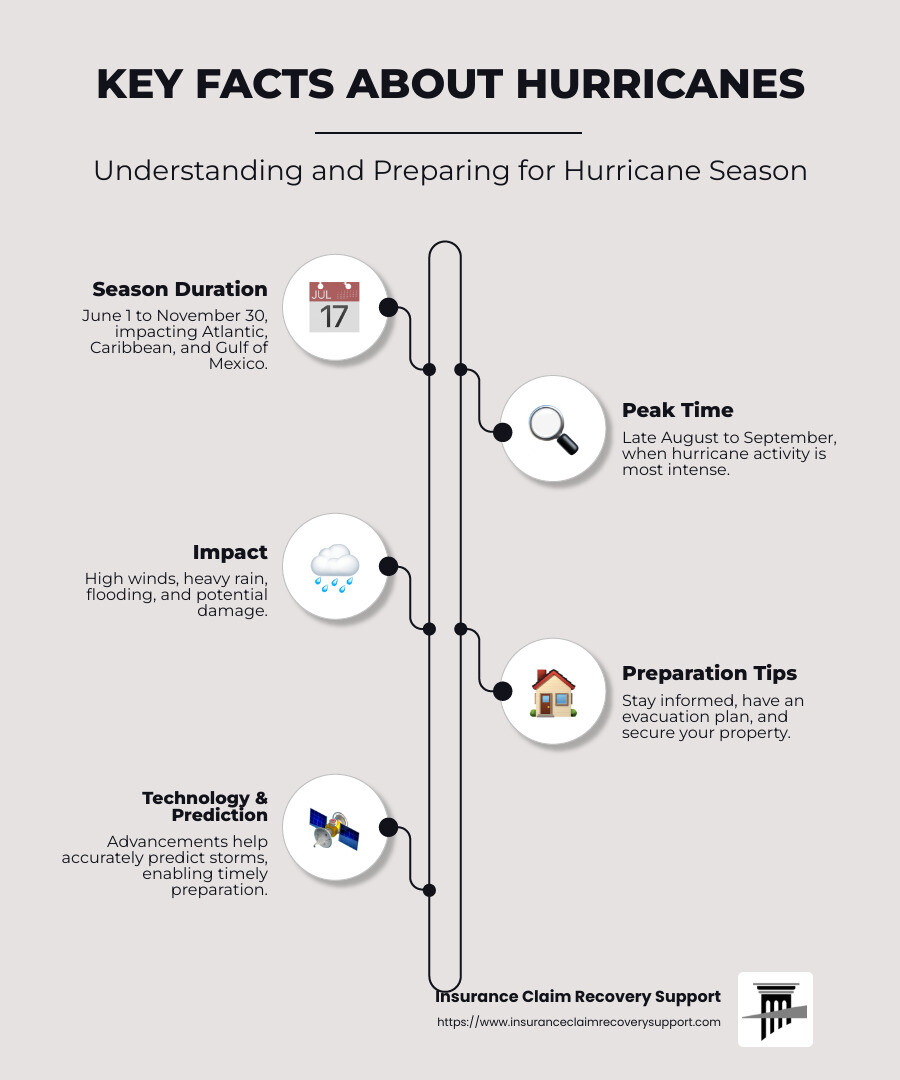
Hurricane season is a time of heightened vigilance for property owners along the Atlantic, Caribbean, and Gulf of Mexico. Here’s what you need to know:
- Season Duration: June 1 – November 30
- Peak Time: Late August to September
- Impact: High winds, heavy rain, and flooding
- Preparation: Stay informed, have an evacuation plan, and secure your property
Every year, the Hurricane season poses significant threats to businesses and properties across these regions. Understanding the cycle and preparing adequately can diminish the risks associated with these powerful storms. Historically, the toll taken by hurricanes extends far beyond immediate damage, affecting everything from local economies to insurance landscapes. With advanced technology, predicting these storms becomes more accurate, helping communities gear up well in time.
I am Scott Friedson, a public adjuster with experience in managing insurance claims related to Hurricane damage. With a robust track record of securing maximum settlements for policyholders, I aim to guide you in safeguarding your interests and ensuring a smooth recovery process.
Hurricane terms to learn:
– how do hurricanes form
– hurricane categories
– hurricanes tropical storms
Understanding Hurricanes
A hurricane is a powerful tropical storm with winds exceeding 74 mph. These storms form over warm ocean waters and can cause massive destruction when they make landfall.
Definition
Hurricanes are complex weather systems. They originate over warm tropical oceans where the sea surface temperature is at least 79 degrees Fahrenheit. This warmth fuels the storm, allowing it to gather strength and energy.
Saffir-Simpson Scale
The Saffir-Simpson Hurricane Wind Scale categorizes hurricanes based on their sustained wind speeds and potential damage. This scale helps us understand the severity of a hurricane:
- Category 1: Winds of 74-95 mph. Minimal damage. You might see some roof and tree branch damage.
- Category 2: Winds of 96-110 mph. Moderate damage. Expect roof and siding damage, and uprooted trees.
- Category 3: Winds of 111-129 mph. Extensive damage. Structural damage to buildings is common.
- Category 4: Winds of 130-156 mph. Devastating damage. Severe structural damage with many trees uprooted.
- Category 5: Winds over 157 mph. Catastrophic damage. Total roof failures and wall collapses are likely.
Categories Explained
Each category on the Saffir-Simpson Scale provides insight into the potential impact of a hurricane:
-
Category 1 and 2 storms are dangerous but usually cause less damage than higher categories. Power outages and minor flooding are common.
-
Category 3 and 4 hurricanes bring extensive damage. They can uproot trees, destroy homes, and cause prolonged power outages.
-
Category 5 hurricanes are rare but extremely destructive. They can lead to catastrophic damage, with buildings destroyed and communities isolated for weeks or months.
Understanding these categories helps in preparing for hurricanes and mitigating their impact. As we continue to monitor current hurricane threats, staying informed about the potential severity of these storms is crucial for safety and preparedness.
Current Hurricane Threats
The Atlantic hurricane season is a period of heightened vigilance and preparation. This season runs from June 1 to November 30, peaking from mid-August to late October. During this time, the Atlantic Ocean, Caribbean Sea, and Gulf of Mexico become hotspots for tropical storms and hurricanes.
Named Storms
In 2023, the Atlantic hurricane season was notably active, with 20 named storms recorded. This made it the fourth-most active season on record, tying with 1933. Despite the presence of the El Niño event, which typically suppresses hurricane formation, the number of storms was higher than expected.
Major Hurricanes
While many storms form, not all reach the status of a major hurricane. A major hurricane is classified as Category 3 or higher on the Saffir-Simpson Scale, with winds exceeding 111 mph. These storms pose significant threats due to their potential for extensive damage.
In 2023, several storms reached major hurricane status, highlighting the importance of preparedness. The unpredictability of these storms, combined with their destructive power, underscores the need for constant monitoring and readiness.
As we look ahead, it’s crucial to stay informed about the Atlantic hurricane season’s developments. The National Hurricane Center (NHC) provides regular updates, helping communities prepare for any potential threats.
Impact of Hurricanes
Hurricanes are powerful forces of nature that can leave a trail of destruction in their wake. Understanding their impact is key to preparing effectively. Here’s a breakdown of the most significant effects hurricanes can have:
Damage
Hurricanes often cause extensive damage to both homes and infrastructure. Coastal areas are particularly vulnerable due to storm surges, which can lead to severe flooding, destroying buildings and eroding shorelines. Inland regions are not immune, as heavy rainfall can result in flash floods and landslides, damaging roads and isolating communities.
-
Property Damage: High winds can shatter windows, tear off roofs, and topple trees. This can result in costly repairs and long-term recovery efforts.
-
Infrastructure: Roads, bridges, and utilities can be severely compromised, making travel and communication difficult in affected areas.
Power Outages
Power outages are a common consequence of hurricanes, often lasting days or even weeks. This can disrupt daily life, affecting everything from food preservation to communication.
-
Electrical Grid: High winds and falling trees can damage power lines, leading to widespread outages.
-
Essential Services: Without power, hospitals, water treatment plants, and emergency services can face significant challenges, impacting community health and safety.
Community Isolation
Hurricanes can isolate communities, cutting them off from essential services and support.
-
Road Blockages: Flooded or debris-covered roads can prevent access to and from affected areas, delaying rescue and recovery efforts.
-
Communication Disruptions: Damaged communication infrastructure can make it difficult for communities to receive updates or call for help.
Understanding these impacts helps communities prepare better for the hurricane season. Being aware of potential threats and having a plan can make a significant difference in recovery and safety.
In the next section, we’ll dive into frequently asked questions about hurricanes to further improve your understanding and preparedness.
Frequently Asked Questions about Hurricanes
Are any hurricanes forming right now?
As of the latest update from the National Hurricane Center, there are no tropical cyclones expected to form in the North Atlantic, Caribbean Sea, or the Gulf of Mexico over the next seven days. This marks the end of the 2024 Atlantic hurricane season, with routine forecasts set to resume in May 2025. Keep an eye on special outlooks that might be issued during the off-season if conditions change.
How bad is a Category 5 hurricane?
Category 5 hurricanes are the most severe on the Saffir-Simpson Hurricane Wind Scale. These storms have sustained winds exceeding 155 mph. The consequences of such a hurricane can be catastrophic:
-
Property Damage: Entire buildings may be destroyed. Trees are often uprooted, and power poles can be snapped, leading to widespread power outages.
-
Infrastructure: Roads, bridges, and utilities can be severely damaged or completely destroyed, making transportation and communication nearly impossible.
The impact of a Category 5 hurricane is not limited to coastal areas. Even regions far inland can experience devastating effects due to wind and rain.
How strong is a 955 MB hurricane?
Barometric pressure is a key factor in classifying hurricanes. A pressure of 955 millibars (MB) typically indicates a strong hurricane, possibly a Category 3 or 4 on the Saffir-Simpson scale. The lower the pressure, the more intense the storm.
-
Wind Speed: A 955 MB hurricane often has sustained winds between 111 and 129 mph, capable of causing significant damage to structures, especially those that are not well-built.
-
Storm Surge and Rainfall: Such a hurricane can produce dangerous storm surges and heavy rainfall, leading to severe flooding and damage.
Understanding the barometric pressure helps in assessing the potential severity of a hurricane, aiding in preparation and response efforts.
In the next section, we’ll explore the conclusion, focusing on how Insurance Claim Recovery Support assists policyholders in maximizing their settlements after a hurricane.
Protect Your Hurricane Claim with Insurance Claim Recovery Support LLC
At Insurance Claim Recovery Support LLC, we understand that dealing with the aftermath of a hurricane can be overwhelming. Our mission is to stand by policyholders, ensuring they receive the maximum settlement they deserve for property damage.
Navigating insurance claims can be daunting. Many homeowners and businesses face challenges with underpayments or denials. That’s where we come in. Our team of experienced public adjusters specializes in negotiating with insurance companies on behalf of policyholders. We focus on securing fair compensation for damages caused by hurricanes, including wind, flood, and structural damage.
Our commitment to policyholders extends beyond just maximizing settlements. We provide guidance through every step of the insurance claim process, from initial damage assessment to filing claims and negotiating settlements. Our goal is to make the process as smooth and transparent as possible, allowing you to focus on rebuilding and restoring normalcy.
If you’re in Texas, including cities like Austin, Dallas, Fort Worth, San Antonio, and Houston, we’re here to help. Our expertise in Texas fire and storm damage news ensures that we stay informed about the latest developments, helping our clients prepare for and respond to disasters effectively.
You don’t have to face the aftermath of a hurricane alone. Let us help you turn a challenging situation into a manageable recovery process. For more information on how we can assist you, visit our Hurricane Damage Recovery page. Together, we can ensure you get the support and settlement you deserve.