Understanding Your Rights When Your Insurer Won’t Cooperate
Bad faith property damage insurance claims happen when your insurance company illegally violates its duty to act fairly and in good faith while handling your claim. This can include unreasonable delays, unjustified denials, lowball settlement offers, or failing to properly investigate your property damage.
When your commercial property suffers major damage, you expect your insurer to honor its promises. Unfortunately, claim denials and lowball offers are common. For commercial property owners, recognizing when an insurer crosses the line from tough negotiation into bad faith is critical to avoiding financial disaster.
Quick Answer: What You Need to Know
- What is it? Bad faith is when your insurer deliberately fails to fulfill its obligations under your policy—going beyond simple mistakes to intentional or reckless misconduct.
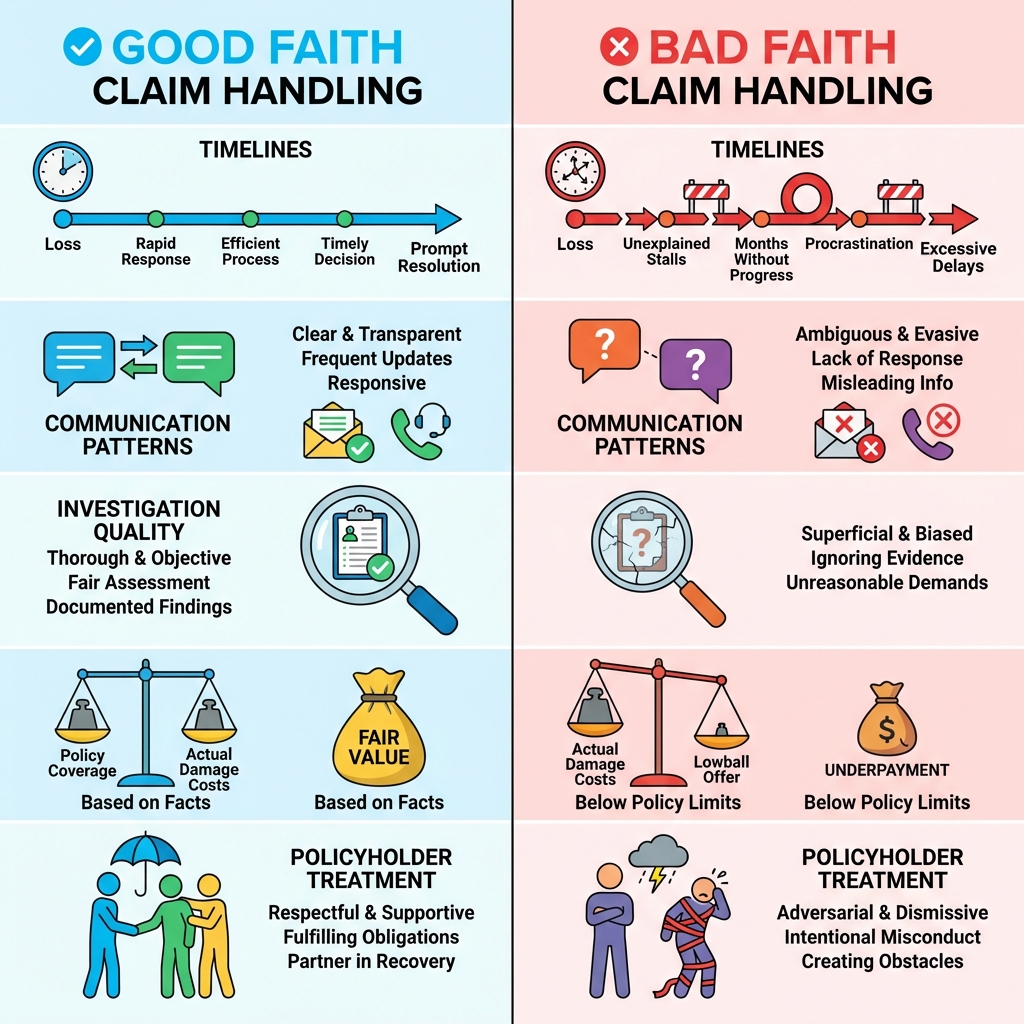
- Common signs: Excessive delays (months without progress), denying valid claims without proper explanation, offering settlements far below actual damage costs, or demanding unreasonable documentation.
- Your rights: You can file complaints with your state insurance department, demand written explanations citing specific policy language, and seek independent assessments of your damage.
- What you can recover: Beyond your original claim amount, you may recover attorney’s fees, consequential damages (like business interruption losses), and in some cases, punitive damages.
- Best path forward: Many commercial property owners avoid costly litigation by working with a public adjuster who can negotiate directly with the insurer and maximize your settlement without a lawsuit.
Fact vs. Myth: Understanding Bad Faith
✅ Fact: Bad faith requires more than your insurer simply being wrong about coverage—it involves unreasonable actions, reckless disregard for your interests, or intentional misconduct.
�� Myth: If your claim was denied, your insurer automatically acted in bad faith.
✅ Fact: Insurers have legal obligations to investigate thoroughly, communicate clearly, and pay valid claims promptly—failure to do so can expose them to damages exceeding your policy limits.
�� Myth: You must immediately file a lawsuit to protect your rights.
✅ Fact: Many disputes can be resolved through proper documentation, escalation within the insurance company, or working with a public adjuster—often faster and less expensively than litigation.
I’m Scott Friedson, a multi-state licensed public adjuster. Over 15 years, I’ve helped commercial property owners, multifamily operators, and hospitality businesses resolve hundreds of millions of dollars in property damage claims, including numerous bad faith property damage insurance claims. We specialize in holding insurance companies accountable, often achieving settlements 30% to 3,800% higher than initial offers without lengthy litigation.
Terms related to Bad faith property damage insurance claims:
Identifying and Proving Bad Faith Property Damage Insurance Claims
What Legally Constitutes Bad Faith? (More Than Just a Mistake)
Bad faith is more than an honest mistake. While an insurer can be wrong about a coverage decision (a breach of contract), bad faith implies intentional or reckless mishandling of your claim. Every insurance policy contains an “implied covenant of good faith and fair dealing,” a legal duty for the insurer to treat you fairly. When they breach this duty, it can lift a simple contract dispute into a tort claim for bad faith.
This distinction is critical: a breach of contract claim typically limits damages to what the policy owes. A successful bad faith claim can open the door to recovering consequential damages, attorney’s fees, and even punitive damages designed to punish the insurer. Proving bad faith often requires showing the insurer acted unreasonably or with reckless disregard for your rights; mere negligence is usually not enough.
| Feature | Simple Claim Dispute | Bad Faith Action |
|---|---|---|
| Insurer’s Conduct | Honest mistake, difference of opinion on value, negligence | Intentional misconduct, reckless disregard, unreasonable actions, improper motive |
| Legal Basis | Breach of Contract | Breach of Contract and Tort |
| Damages | Policy benefits owed, interest | Policy benefits, consequential damages, attorney’s fees, punitive damages |
| Proof Required | Insurer failed to pay what was due under contract | Insurer acted unreasonably/intentionally in denying/delaying claim |
Common Bad Faith Tactics Used Against Commercial Property Owners
Insurers are for-profit businesses focused on minimizing payouts. While not always malicious, this can lead to tactics that cross into bad faith. Here are common red flags for bad faith property damage insurance claims:
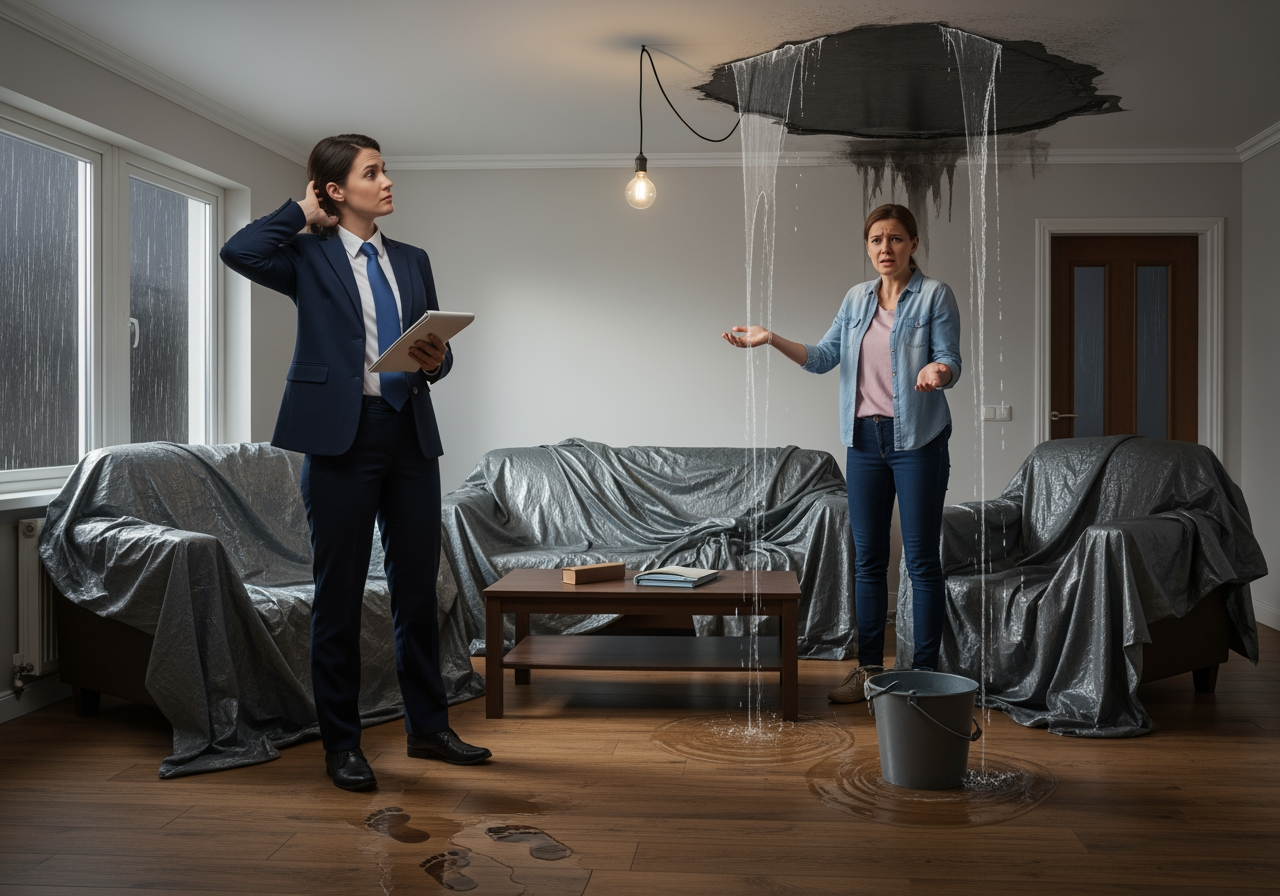
- Unreasonable Delays: Dragging out the claim process for months without a valid reason, hoping you’ll accept a low offer out of desperation.
- Lowball Settlement Offers: Offering a settlement far below the true value of your damages, often based on an incomplete investigation.
- Failure to Properly Investigate: Neglecting to conduct a thorough and prompt investigation, ignoring crucial facts, or using biased experts.
- Misrepresenting Policy Language: Using confusing or incorrect explanations of your coverage to justify a denial or underpayment.
- Shifting Blame to the Policyholder: Unfairly blaming you for the damage (e.g., poor maintenance) without sufficient evidence.
- Demanding Excessive Paperwork: Requiring an unreasonable amount of documentation as a delay tactic.
- Ignoring Evidence Supporting Your Claim: Cherry-picking evidence that supports a denial while ignoring information that validates your claim.
- Poor Communication: Failing to return calls, giving vague answers, or refusing to provide a written explanation for a denial.
Types of Property Damage Claims Most Vulnerable to Bad Faith
Certain high-value, complex claims are more susceptible to bad faith practices due to the large sums of money involved.
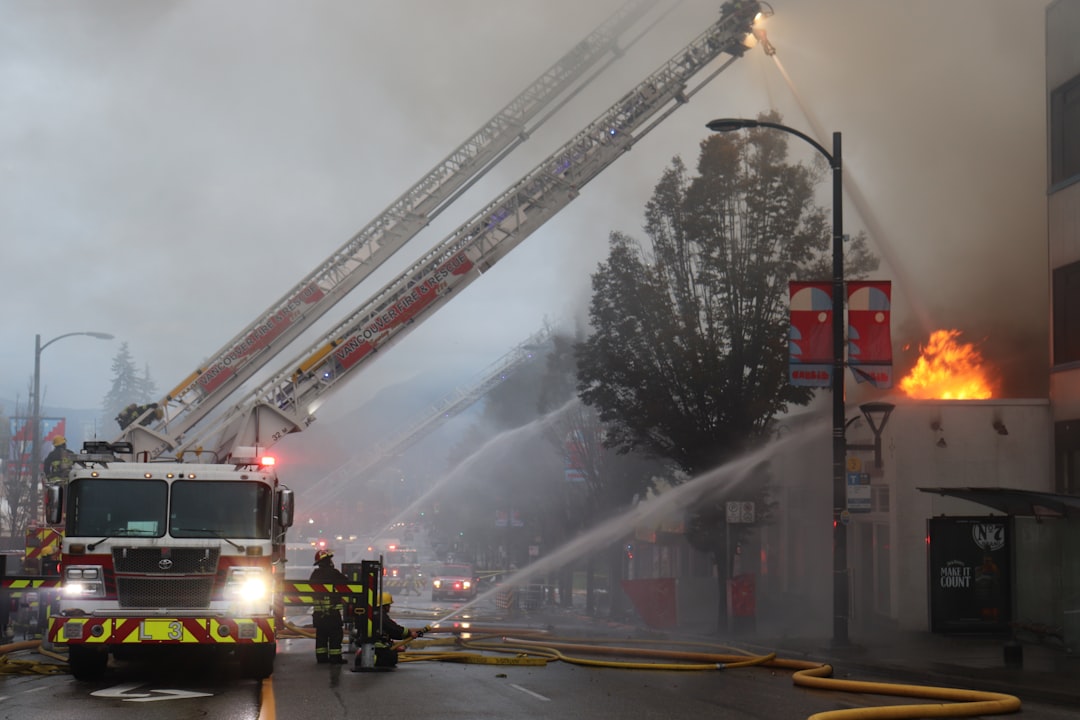
- Fire Damage Claims: Insurers may dispute the cause or undervalue the extensive structural, smoke, and water damage.
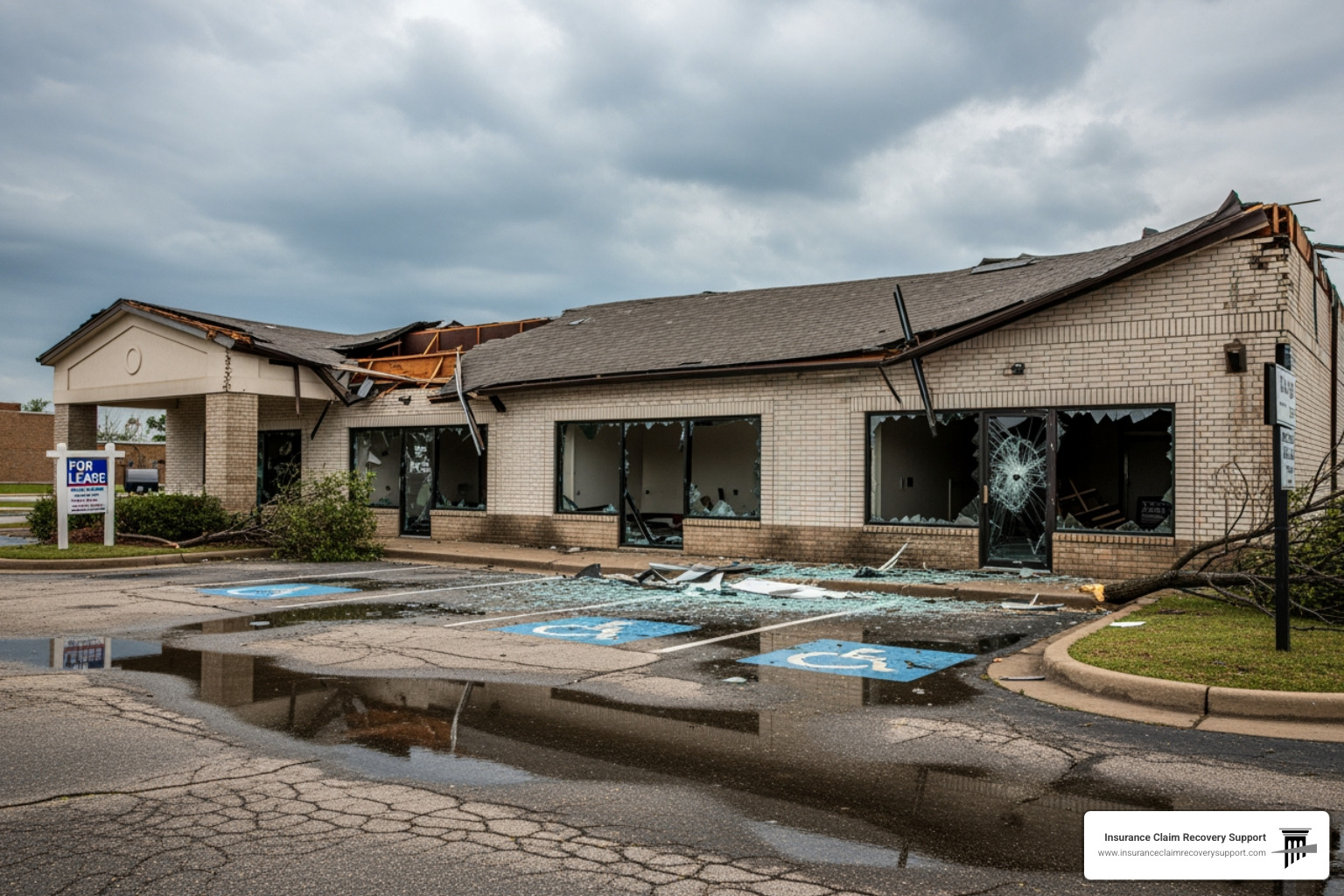
- Hurricane/Windstorm Damage Claims: These complex claims often involve disputes over what is covered (wind vs. flood) and the cost of repairs.
- Water Loss Claims: Insurers may argue about the source of water (e.g., burst pipe vs. excluded flood) to deny coverage.
- Business Interruption Claims: These are notoriously complex, and insurers frequently challenge calculations of lost income and the length of the recovery period.
- Toxic Mold Claims: Insurers often argue that mold is a pre-existing condition from neglect rather than a result of a covered water loss.
- Complex Commercial Claims: Any large-scale claim for an apartment complex, industrial facility, or retail center is a potential target due to its inherent complexity and high value.
For more information, visit our guide on property damage claims.
The Evidence You Need to Build a Case for Bad Faith Property Damage Insurance Claims
Proving a bad faith property damage insurance claim requires meticulous documentation. You must show not only that your claim was valid, but that the insurer handled it improperly. Here’s what to gather:
- Your Insurance Policy: To understand your exact coverage and limits.
- All Claim Communications: Keep every email, letter, and form submitted to or received from the insurer.
- A Detailed Call Log: Note the date, time, person you spoke with, and a summary of every phone conversation.
- Photos and Videos: Document the damage thoroughly from multiple angles and at different times.
- Independent Repair Estimates: Get detailed bids from several reputable, licensed contractors.
- Expert Reports: If you hire engineers, mold specialists, or forensic accountants, their reports are crucial evidence.
- Proof of Financial Loss: For business interruption, this includes profit/loss statements, tax returns, and receipts for extra expenses.
Your Path to a Fair Settlement: Navigating a Bad Faith Dispute
First Steps for Policyholders Suspecting Bad Faith
If you suspect your insurer is acting in bad faith, it’s crucial to respond strategically to protect your commercial property and business operations. Here are the first steps to take:

- Document Everything: Maintain a detailed log of every interaction. Keep copies of all correspondence. This record is your strongest asset.
- Demand Written Explanations: If you receive a denial or low offer, require the insurer to provide their reasoning in writing, citing specific policy language.
- Escalate Within the Company: If your adjuster is uncooperative, ask to speak with a supervisor or claims manager. Clearly state your concerns about potential bad faith.
- File a State Complaint: File a complaint with your state’s Department of Insurance (DOI). This can trigger an official review of your insurer’s conduct and motivate them to reconsider your claim.
- Understand State-Specific Rules: Be aware of procedural requirements in your state, such as filing a Civil Remedy Notice (CRN) in Florida or a proper demand for payment in Georgia, which are often prerequisites for a bad faith lawsuit.
- Mind the Statute of Limitations: Bad faith claims have strict deadlines. Missing the deadline can permanently bar you from recovery, so act promptly.
Fact vs. Myth: Resolving Bad Faith Property Damage Insurance Claims
Misconceptions about bad faith property damage insurance claims can lead commercial property owners down the wrong path. Let’s separate fact from fiction:
Myth: “You always have to sue your insurance company to get a fair settlement.”
Fact: Litigation is a last resort. A skilled public adjuster can often resolve disputes and maximize your settlement without a costly and lengthy lawsuit. At ICRS, we have a 90% settlement success rate without unnecessary litigation.
Myth: “Insurance companies always act in your best interest.”
Fact: Insurers are for-profit businesses. Their adjusters work to protect the company’s bottom line. Working with your own expert, like a public adjuster, levels the playing field.
Myth: “Hiring a public adjuster delays your claim.”
Fact: A public adjuster can actually speed up the process. By managing documentation, meeting deadlines, and pushing the insurer for a fair and prompt response, they help avoid the delay tactics insurers often use.
Myth: “All claim denials are evidence of bad faith.”
Fact: A denial isn’t automatically bad faith. There may be legitimate reasons, like an uncovered peril. Bad faith requires proving the insurer acted unreasonably or with reckless disregard, not just that they made a mistake.
Comparing Your Options: Lawsuit vs. Public Adjuster for Bad Faith Property Damage Claims
When facing a bad faith dispute, you have two main paths: hiring an attorney for a lawsuit or engaging a public adjuster. Understanding the differences is key.
| Feature | Lawsuit (Attorney Representation) | Public Adjuster (ICRS) |
|---|---|---|
| Primary Goal | Legal enforcement, tort damages, punitive damages | Maximize settlement, expedite claim, avoid litigation |
| Process | Formal legal proceedings, findy, depositions, trial | Claims investigation, documentation, negotiation, appraisal |
| Cost | Contingency (33-45% of recovery), plus court and litigation fees | Contingency fee (typically 10-15% of total settlement), no upfront costs |
| Timeline | Years (1-5+ years) | Weeks to months |
| Relationship | Adversarial (suing the insurer) | Negotiational (working with the insurer on your behalf) |
| Expertise | Legal strategy, court rules, tort law | Insurance policy, damage valuation, claims process |
The Lawsuit Path is necessary for suing an insurer but is expensive, slow, and adversarial. Attorneys can seek punitive damages, but the process can take years and involve significant costs beyond the attorney’s fee.
The Public Adjuster Path (Our Approach at ICRS) focuses on resolving the claim without litigation. As public adjusters, we work exclusively for you to document your loss, negotiate with the insurer, and maximize your settlement. Our goal is to get you a fair recovery efficiently, leveraging our claims expertise to achieve a 90% settlement success rate without lawsuits. This approach is faster, less costly, and allows you to focus on restoring your property and business.
If you suspect bad faith, contact us for a free claim review to understand your options.
What Damages Can You Recover?
A successful bad faith property damage insurance claim allows you to recover far more than a simple contract dispute. The law allows for compensation for all harm caused by the insurer’s misconduct.
Here are the types of damages you can potentially recover:
- Policy Benefits Owed: The full amount of your covered losses that the insurer wrongfully denied or underpaid, plus interest.
- Consequential Damages: Financial losses that are a direct result of the insurer’s bad faith delay or denial. This can include lost business income, loss of rental income, or increased repair costs due to delays.
- Attorney’s Fees and Costs: In many states, a successful bad faith claim allows you to recover the legal fees you incurred to pursue the action.
- Statutory Penalties: Some states impose automatic financial penalties on insurers found to have acted in bad faith to deter such conduct.
- Punitive Damages: These are intended to punish the insurer for malicious or fraudulent conduct and deter future wrongdoing. They are awarded only in egregious cases and can be substantial, but the standard of proof is very high.