Why Hotel Insurance Policies Are the Foundation of Your Hospitality Business
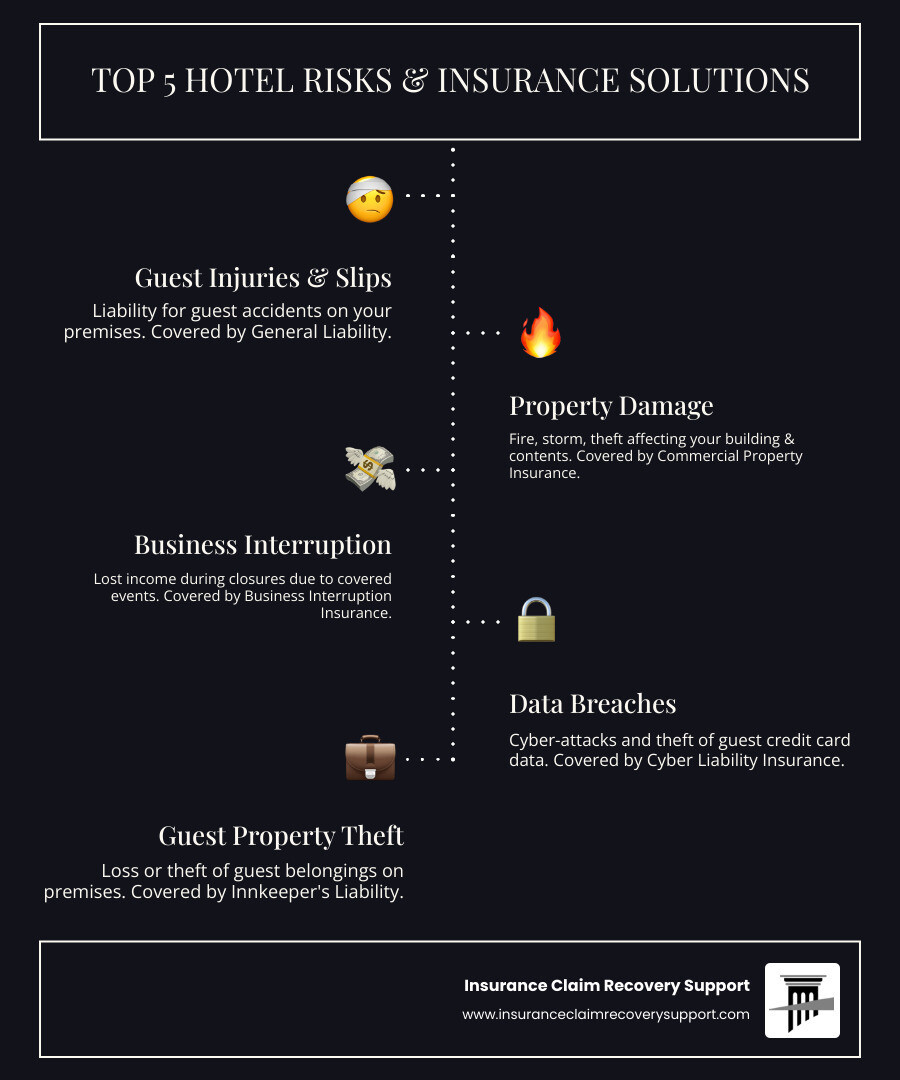
A Hotel insurance policy is a specialized commercial package protecting hotels, motels, and inns from the unique risks of the hospitality industry. It combines property, liability, and business interruption coverage, often improved with industry-specific options like innkeeper’s liability and cyber coverage.
Quick Answer: What Does a Hotel Insurance Policy Cover?
- Property Protection — Building, contents, and equipment against fire, storm, theft, vandalism
- General Liability — Guest injuries, slips/falls, property damage claims (average of 53 claims per 1,000 rooms annually)
- Business Interruption — Lost income during closures due to covered events
- Innkeeper’s Liability — Guest property loss or theft (state-limited, typically $250–$2,000)
- Workers’ Compensation — Employee injuries and illnesses (legally required in most states)
- Cyber Liability — Data breaches, stolen credit card information
- Optional Coverages — Liquor liability, food contamination, equipment breakdown, flood/earthquake
Hotels operate 24/7, meaning risk is constant. A slip by the pool, a kitchen fire, or a data breach can lead to six- or seven-figure losses if you’re underinsured. Unfortunately, navigating the claims process can be a full-time battle, as insurance companies employ their own experts to protect their interests, often leaving hotel owners underpaid.
I’m Scott Friedson, CEO of Insurance Claim Recovery Support (ICRS). For over 15 years, my team and I have helped hospitality owners steer complex Hotel insurance policy claims, from hurricane damage to business interruption disputes. We overturn wrongful denials and increase recoveries, ensuring hotel owners get the full settlement they deserve without unnecessary litigation.
What is Hotel Insurance and Why is it Non-Negotiable?
At its heart, hotel insurance is a custom financial shield for your hospitality business. From guest interactions and property maintenance to employee management, every part of your operation carries potential liabilities. This specialized insurance is an absolute necessity for safeguarding your investment and ensuring business continuity.
Why is it so critical? Hotels face an average of 53 liability claims per 1,000 occupied rooms annually. A robust hotel insurance policy is essential because it:
- Provides Financial Protection: Covers costs from property damage, lawsuits, and business interruptions.
- Ensures Guest Safety: Supports a commitment to guest well-being by covering liabilities from on-site accidents.
- Guarantees Business Continuity: Provides funds to repair, rebuild, and cover lost income after a major loss.
- Protects Assets: Safeguards your building, equipment, and reputation from perils like fire, storms, and theft.
- Offers Peace of Mind: Lets you focus on guest experiences instead of potential disasters.
Without comprehensive coverage, a single event could be financially devastating. The cost of insurance is a small price for the extensive protection it offers, making it vital to ensure your policy aligns with your hotel’s true value and risks.
Deconstructing a Comprehensive Hotel Insurance Policy
A hotel insurance policy is a package of various coverages addressing specific hospitality risks. Understanding these components is key to building a resilient insurance program.
Core Coverages Every Hotel Needs
-
General Liability Insurance: Protects your hotel from third-party claims of bodily injury or property damage on your premises. A guest might slip on a wet floor, or an employee could damage a visitor’s luggage. This covers medical expenses, legal fees, and settlements. You can find more info about commercial property damage claims which often stem from liability incidents.
-
Commercial Property Insurance: This protects your physical assets—buildings, contents (furniture, equipment), and outdoor property (signs, landscaping)—from perils like fire, wind, and vandalism. This coverage pays for repairs or replacement. It’s crucial to ensure your policy covers replacement cost (new for old) and includes “ordinance or law coverage” for the increased cost of rebuilding to current codes.
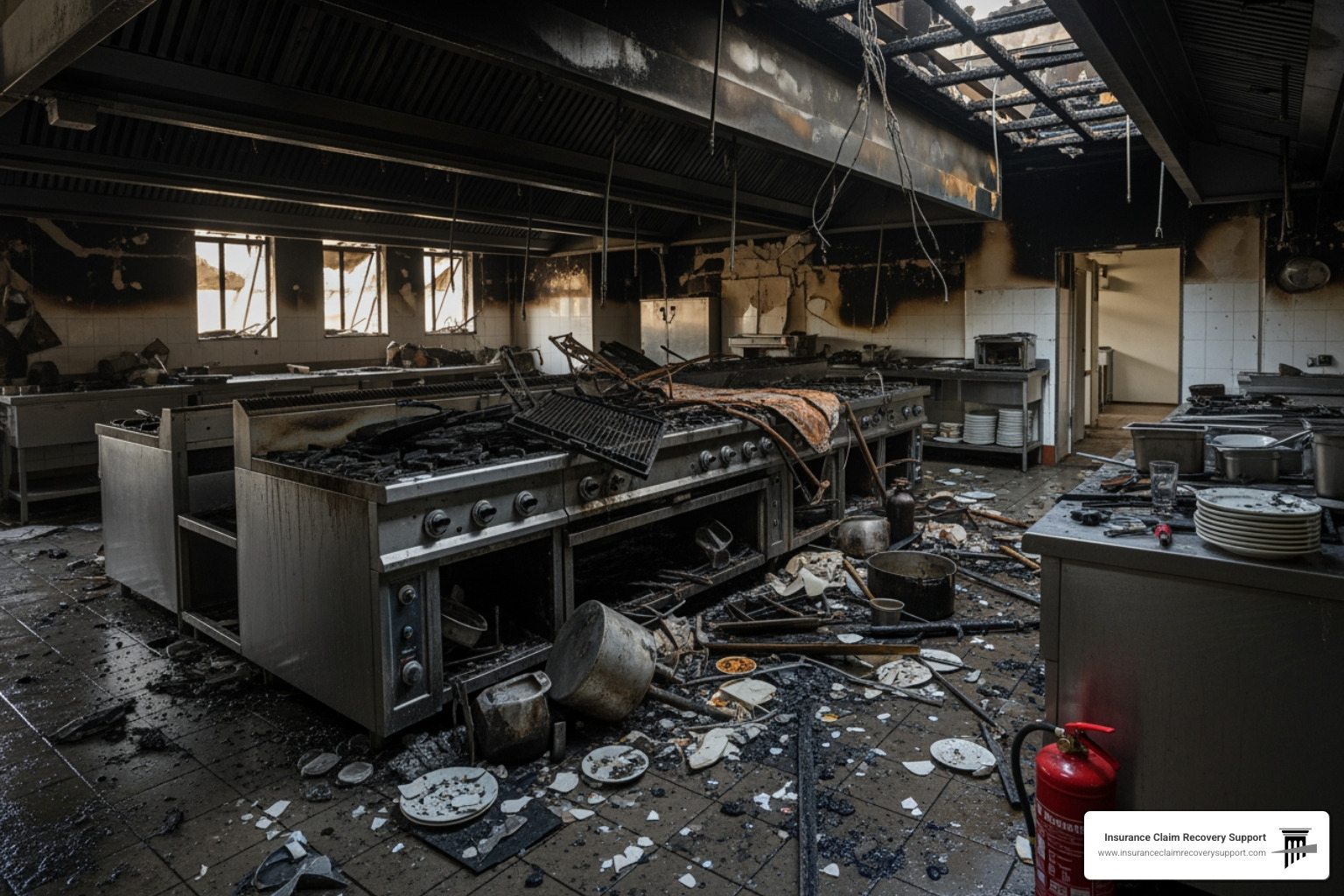
If a fire damages your hotel, [more info about fire-damage](https://insuranceclaimrecoverysupport.com/fire-damage/) can guide you through recovery.
- Business Interruption Insurance: Also called business income coverage, this is a lifesaver if your hotel must close temporarily due to a covered event. It compensates for lost income and covers ongoing expenses like payroll and rent during the restoration period. Learn more info about business interruption claims and how they protect your bottom line.
Specialized Protections for the Hospitality Industry
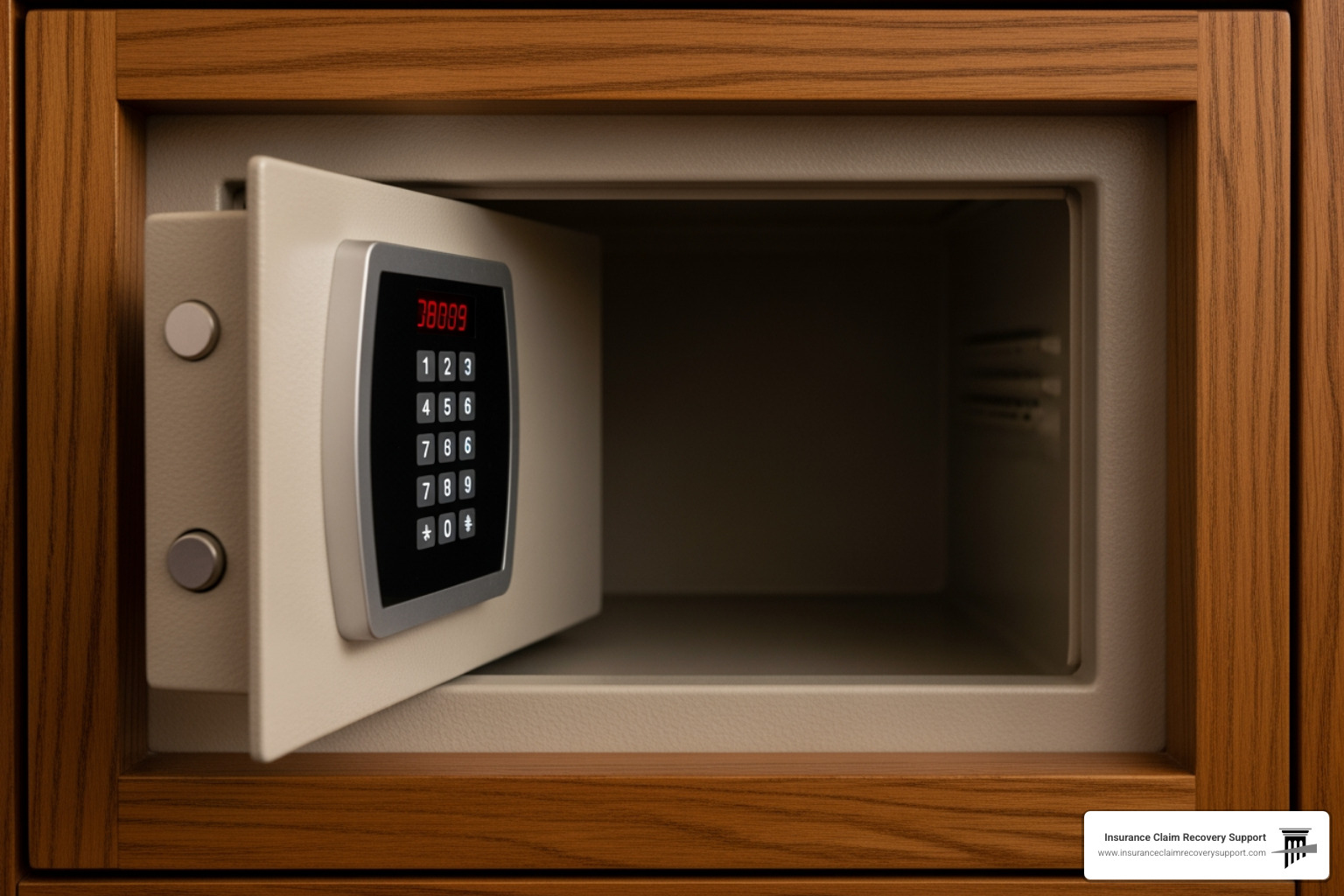
- Innkeeper’s Liability: Addresses your legal responsibility for loss or damage to guests’ property. State laws often limit this liability (typically $250 to $2,000) if you provide a safe for valuables and post notices about it.
-
Cyber Liability Insurance: Hotels are prime targets for data breaches. This coverage helps you recover by covering costs like guest notification, credit monitoring, and legal defense.
-
Liquor Liability Insurance: If you serve alcohol, this is indispensable. It protects you from claims arising from the actions of an intoxicated guest.
-
Food Contamination Coverage: For hotels with restaurants, this covers losses from foodborne illness incidents, including recall expenses and medical claims.
Customizing Your Hotel Insurance Policy Program
A truly comprehensive policy is customized to your specific operations.
-
Optional Coverages: Consider adding equipment breakdown, flood insurance (typically excluded from standard policies), commercial umbrella liability (for extra protection), crime insurance (for employee dishonesty or theft), Directors & Officers (D&O) coverage, and Employment Practices Liability Insurance (EPLI).
-
Franchise Requirements: If you operate under a franchise, the franchisor will mandate specific coverages and limits to protect the brand. They will typically require being named as an “additional insured” on your policies.
-
Insurance Needs for Various Hotel Types:
| Hotel Type | Key Insurance Considerations |
|---|---|
| Boutique | May need higher contents coverage for unique decor and robust business interruption due to a niche clientele. |
| Luxury | Requires significantly higher property limits for high-value assets, specialized art/antique coverage, and robust liquor liability. For assets akin to those in luxury homes, we can provide more info about luxury home claims. |
| B&B / Small Inn | Still needs core property and liability. Innkeeper’s liability is crucial. Workers’ compensation needs vary by state law. |
Understanding Costs and Legal Mandates
The cost of your hotel insurance policy is influenced by factors like location, size, amenities, claims history, and construction type.
-
Legal Requirements: Workers’ Compensation Insurance is mandatory in most states. It covers medical expenses and lost wages for employees with work-related injuries or illnesses. Failure to carry it can lead to severe penalties.
-
The Dangers of Underinsurance: Being underinsured means your coverage is insufficient to cover a full loss. According to some industry analyses, as many as 75% of U.S. businesses are underinsured, a gap that can be catastrophic. A common pitfall is the coinsurance penalty, where your insurer reduces your claim payout if you fail to insure your property to a certain percentage of its value (e.g., 80%). This makes accurate property valuation essential.
Navigating Claims and Protecting Your Investment
Even with a perfect hotel insurance policy, the true test is the claims process, where expert guidance becomes invaluable.
The Claims Process After a Disaster
When disaster strikes, knowing the right steps can significantly impact your recovery.
- Filing a Claim: Notify your insurer immediately.
- Documenting Damage: Take extensive photos and videos of all damage. Create detailed lists of destroyed property. For specific guidance, you can find more info about fire-damage.
- Dealing with Adjusters: Your insurer’s adjuster protects the insurance company’s interests, not yours. They may look for ways to minimize the payout. Be aware of common tactics designed to delay, underpay, or deny claims. For insights, review more info about 8 sneaky tricks insurance companies use.
- Evolving Risks: The COVID-19 pandemic highlighted gaps in many policies, leading to new coverage options for health crises and supply chain disruptions. It’s vital to reassess your policy regularly for evolving global risks. For hotels in coastal areas, preparing for severe storms is critical. If you’re dealing with storm aftermath, you’ll need more info about commercial hurricane damage claims.
To stay on top of broader risk trends that affect hospitality and commercial real estate owners, you can also monitor industry data from sources like the Insurance Information Institute, which tracks property claim patterns and losses nationwide.
Why a Public Adjuster is Your Best Advocate for a Hotel Insurance Policy Claim
Navigating a complex hotel property damage claim is a full-time job. A public adjuster is your most valuable asset.
-
Role of a Public Adjuster: Unlike the insurance company’s adjuster, a public adjuster works exclusively for you. We interpret your hotel insurance policy, document the full extent of your damages, and negotiate with the insurer on your behalf to ensure you are paid fairly. If you’re wondering what is a good public adjuster, it’s an experienced advocate dedicated solely to your recovery.
-
Maximizing Settlements and Avoiding Litigation: Our expertise in large-loss commercial claims means we know how to secure every dollar you’re owed. At Insurance Claim Recovery Support (ICRS), we specialize in maximizing settlements while avoiding lengthy and expensive legal battles. An insurance claim lawsuit can take years and cost a fortune in legal fees. In contrast, our public adjusters manage the entire process to achieve a fair settlement outside of court, with a 90% success rate.
Fact vs. Myth: Lawsuits vs. Public Adjusters for Property Damage Claims
- Myth: “To get a fair settlement on a large hotel loss, you have to sue your carrier.”
-
Fact: Most commercial and multifamily property damage claims can be resolved without litigation when policyholders are represented by an experienced public adjuster who understands coverage, documentation, and carrier timelines.
-
Myth: “Hiring a lawyer right away is the only way to pressure the insurer.”
-
Fact: Lawsuits often trigger formal findy, court schedules, and appeals that can delay recovery for years. A public adjuster focuses on building a detailed, policy-supported claim file that gives carriers fewer grounds to delay or deny, helping you recover faster and often at lower total cost.
-
Myth: “Adjusters provided by the carrier will fully protect my interests.”
- Fact: Company and independent adjusters ultimately answer to the insurer. A licensed public adjuster is the only type of adjuster that legally represents the policyholder’s side of a property damage claim.
Public Adjuster vs. Lawsuit: What Hotel, Commercial, and Multifamily Owners Should Know
-
Insurance Claim Lawsuit Path (Property Damage):
- Typically pursued after a dispute has escalated or deadlines have passed.
- Involves retaining legal counsel, paying retainers and potentially expert witness fees.
- Court calendars and procedural steps (findy, motions, trial, appeals) can extend resolution timelines to years.
- May be necessary in some bad-faith or complex coverage disputes, but often becomes a last resort due to cost and delay.
-
Public Adjuster Path:
- Engaged early, often immediately after a loss, to guide notices, documentation, and negotiations.
- Focused on accurate damage assessment, policy interpretation, and carrier communication to keep the claim on track.
- Seeks to resolve disputes at the adjusting and negotiation level, before they become lawsuits or lengthy appraisals.
- Helps owners and managers of hotels, multifamily communities, and other commercial properties maintain cash flow and business continuity by shortening the time between loss and recovery.
-
How They Work Together:
- In some cases, attorneys and public adjusters collaborate: the public adjuster builds the claim file and damage model, while counsel handles specific legal issues.
- Many policyholders find that starting with a public adjuster prevents disputes from escalating to the point where full-scale litigation is necessary.
-
ICRS: Your Trusted Partner: As a Texas-based firm licensed in numerous states (including FL, GA, CO, NC, SC, OK, PA, OH, IN, KS, KY, MD, UT, NE, NV, and more), we understand local insurance legislation and the challenges hotel, commercial, and multifamily owners face. We advocate for hospitality operators and other property stakeholders dealing with fire, hurricane, tornado, freeze, and business interruption losses across Texas cities like Austin, Dallas-Fort Worth, Houston, San Antonio, Waco, Lubbock, San Angelo, Round Rock, Georgetown, Lakeway, and surrounding markets. For more info about commercial insurance claims and how we can help, reach out to us.
A comprehensive hotel insurance policy is a critical investment. With the right coverage and expert advocacy from a public adjuster, you can protect your hotel and other commercial assets and ensure a swift, cost-effective recovery.