When the Sanctuary Springs a Leak
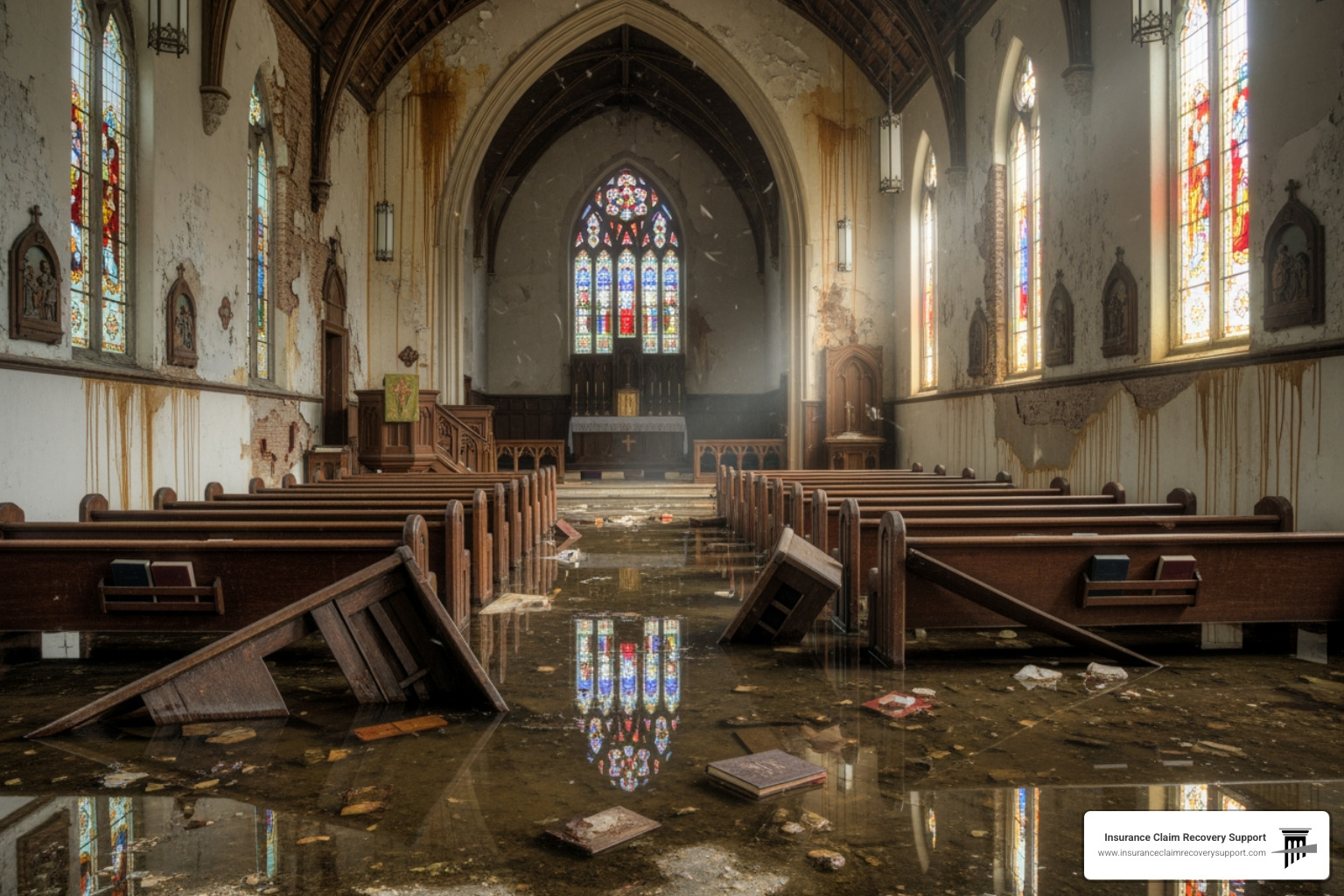
Church water damage can strike without warning, turning a sacred space into a disaster zone. From a burst pipe in the fellowship hall to floodwaters in the sanctuary, the impact on your congregation and community can be devastating. When Greater Mt. Sinai Church in Milwaukee was flooded, damages were estimated at $1.5 million, a staggering sum that flood insurance wouldn’t fully cover.
Quick Answer: What You Need to Know
- Common Causes: Burst pipes, roof leaks, ice dams, external flooding, and HVAC failures.
- Immediate Steps: Turn off electricity, stop the water source, document all damage with photos/videos, and contact your insurance company and a water damage restoration professional immediately.
- Costs & Insurance: Minor leaks can cost thousands, while major floods can exceed $1 million. Standard insurance often excludes external flooding and severely limits mold coverage, making a separate flood policy essential.
Churches face unique vulnerabilities, including complex architecture, historical elements like organs and stained glass, and limited budgets. This makes a swift, informed response critical.
Common Myths vs. Facts
- Myth: Our church insurance covers all water damage.
-
Fact: Most policies exclude external flooding and cap mold remediation at low amounts (e.g., $5,000). A separate flood policy is required.
-
Myth: We can wait a few days to start cleanup.
-
Fact: Mold can grow within 24 hours. Delaying cleanup increases damage and costs exponentially.
-
Myth: Small leaks aren’t a big deal.
- Fact: Gradual leaks cause massive structural damage over time and are often excluded from policies that only cover sudden incidents.
As Scott Friedson, CEO of Insurance Claim Recovery Support, I’ve helped religious institutions steer church water damage claims, recovering 30% to 3,800% more than initial offers. This guide will walk you through everything from emergency response to maximizing your insurance settlement.
A Comprehensive Guide to Church Water Damage
When water invades your church, it threatens not just the building, but the heart of your community. Understanding the causes, consequences, and proper response to church water damage is critical for any church leader.
Common Causes and Immediate Emergency Response
Recognizing common water threats and acting fast can significantly mitigate damage.
Common Causes of Church Water Damage:
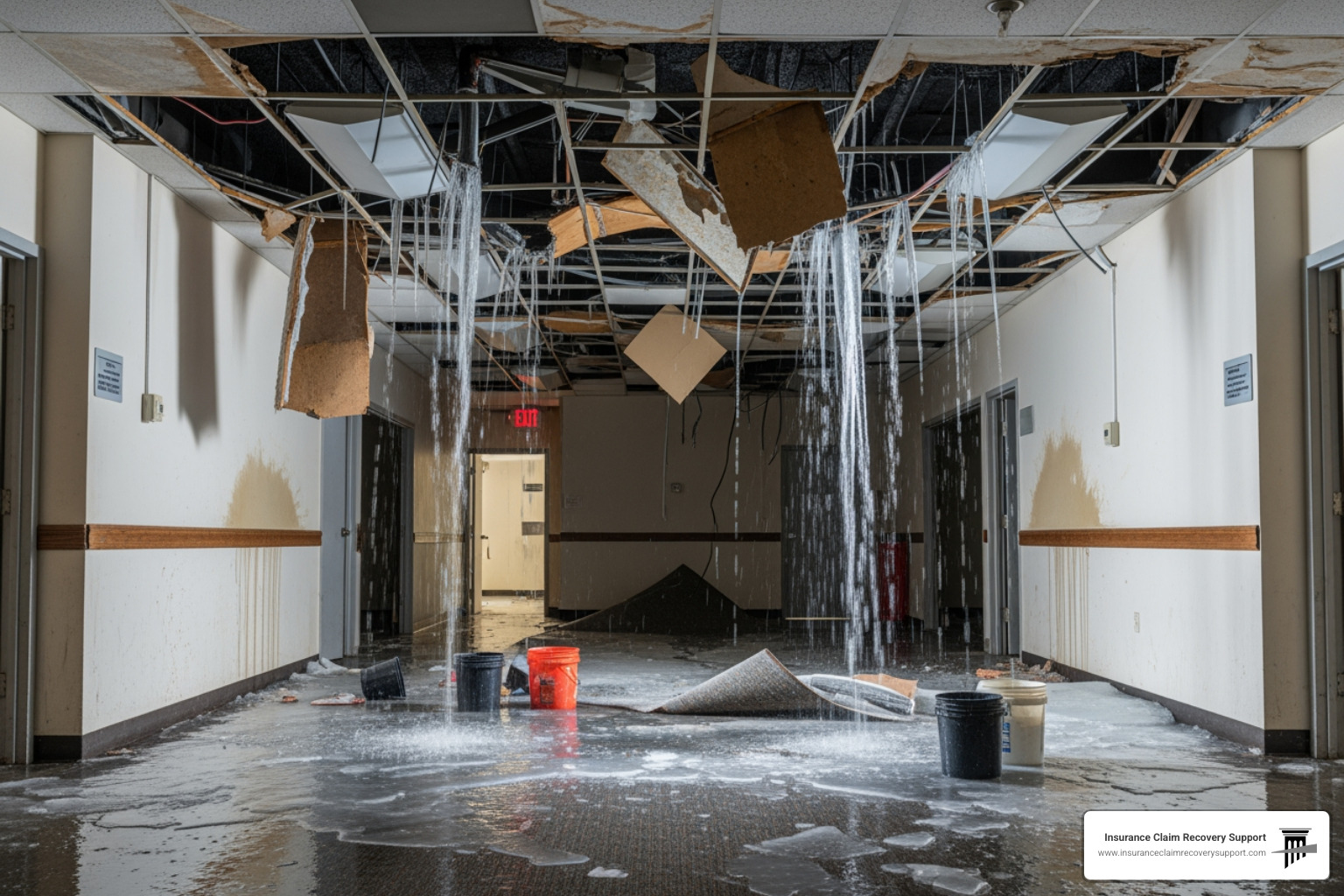
- Burst or Frozen Pipes: A frequent issue in colder climates (Ohio, Pennsylvania, Colorado), especially with fire suppression systems that can flood large areas.
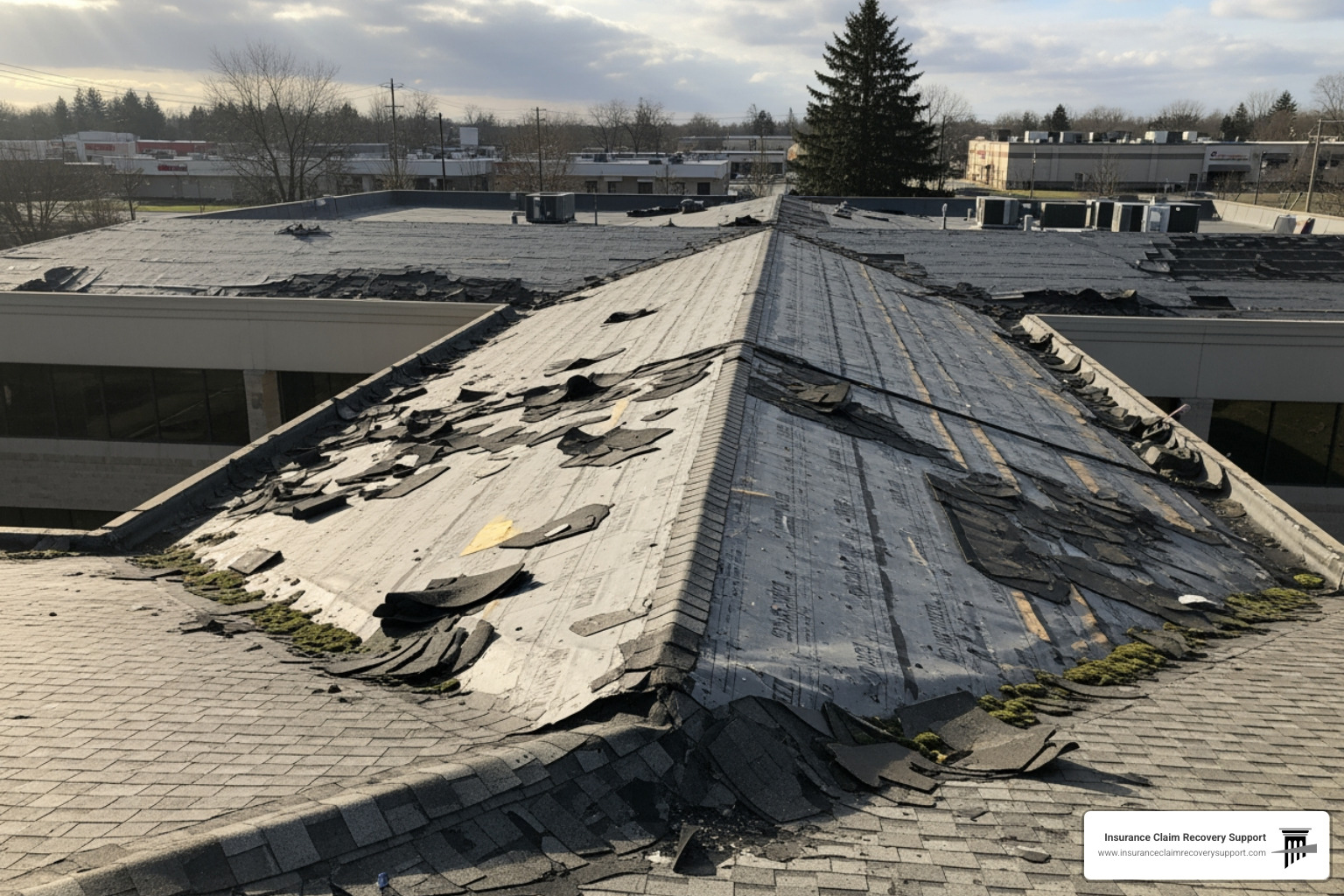
- Roof Leaks: Old or damaged roofs are a common entry point for water, particularly during extreme weather in states like Texas and Florida.
- Ice Dams: In winter storm-prone states, ice dams can force melting snow under shingles and into the church interior.
- Flooding: External flooding from storms or overflowing creeks can be devastating, destroying everything from mechanical systems to pews.
- Water Main Breaks: A municipal water main break can cause rapid and significant flooding, damaging sanctuaries and basements.
- HVAC System Failures: Malfunctioning units can lead to condensation leaks or burst lines, introducing water into ceilings, walls, and floors.
Immediate Steps When Water Damage Occurs:
Time is of the essence. Your immediate actions can drastically reduce damage and costs.
- Safety First: Shut Off Electricity: Before entering a flooded area, turn off the power to prevent electrocution.
- Stop the Water Source: If possible, locate and turn off the main water shut-off valve.
- Document Everything: Immediately take photos and videos of all affected areas. This evidence is crucial for your insurance claim.
- Initial Water Removal: If the water is clean and it’s safe, begin removing it with mops or a shop vac. Avoid contact with contaminated water.
- Contact Restoration Professionals: A professional remediation company can extract water and dry the premises to prevent mold, which can grow within 24 hours.
- Notify Your Insurance Company: Report the loss to your insurance agent or carrier as soon as possible.
For a deeper dive into the claims process, visit our guide on More on Water Damage Insurance Claims.
Long-Term Consequences of Church Water Damage
The visible damage is just the beginning. Long-term consequences can be far more insidious and costly.
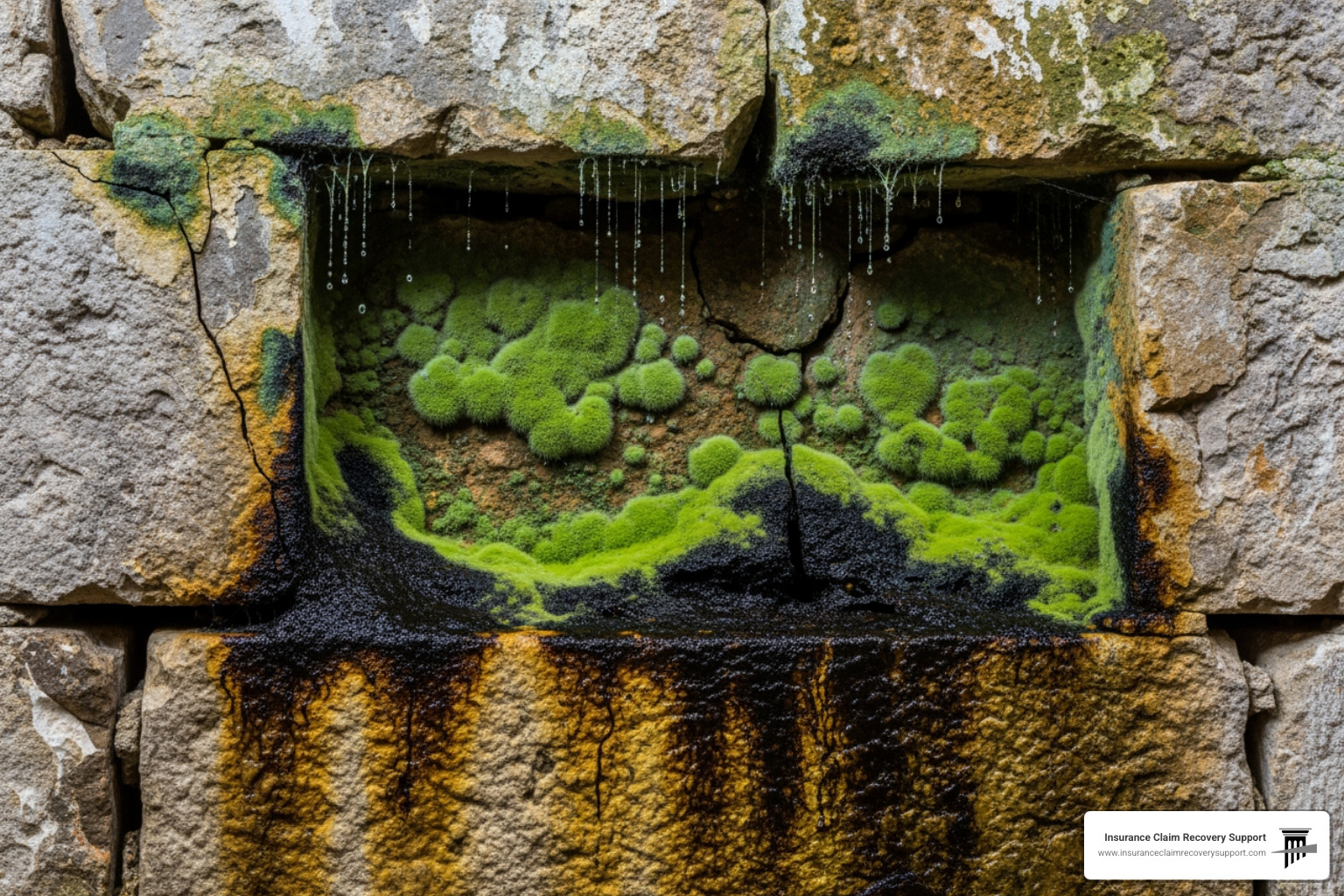
Structural and Health Risks:
- Structural Damage: Prolonged moisture leads to wood rot in beams and flooring and can compromise the building’s foundation.
- Mold Growth: Mold can grow in under 24 hours, causing allergies, asthma, and other respiratory issues for your congregation. Remediation is often extensive.
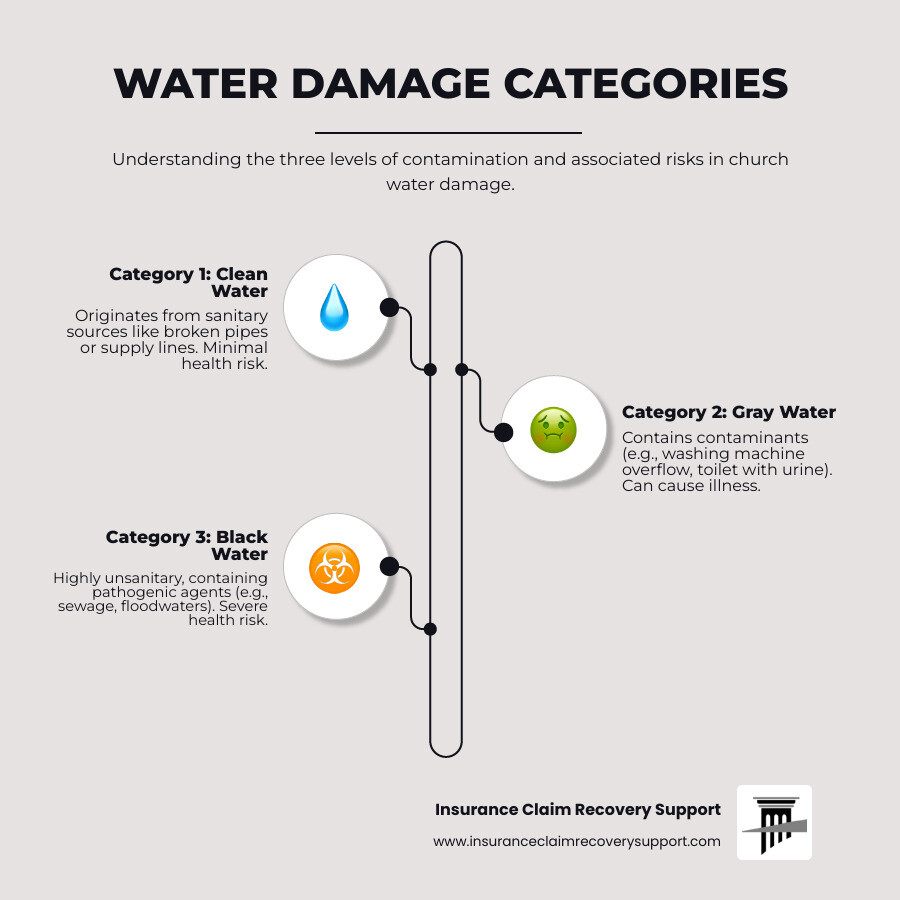
- Contaminated Water: Floodwater or sewage (black water) introduces harmful bacteria and pathogens, posing significant health risks.
Historical and Architectural Preservation Concerns:
Churches often contain priceless and delicate items that require specialized care:
- Pews and Woodwork: Water can warp, swell, and stain wooden pews, altars, and architectural details.
- Organ Damage: These complex instruments are highly susceptible to moisture, leading to expensive repairs or replacement.
- Artwork and Stained Glass: Water can devastate paintings, murals, and historical documents. Moisture can also weaken the lead caming in stained glass.
Understanding these impacts underscores the urgency of addressing church water damage comprehensively. Learn more by reading our insights on Understanding Building Damage.
The Financial Realities and Insurance Maze
Church water damage presents a significant financial burden, and navigating insurance is often a complex challenge.
- Restoration Costs: Costs vary widely. A minor leak can cost thousands, while major flooding can easily exceed $1 million, as seen in cases in Milwaukee and Texas.
- Insurance Coverage & Exclusions: Understanding your policy is paramount before a disaster. Most policies cover “sudden and accidental” damage (like a burst pipe) but exclude gradual leaks. The biggest hurdle is often flooding; standard policies exclude damage from external water sources like storm surges or heavy rain. For this, you need a separate policy, typically through the National Flood Insurance Program (NFIP) or a private insurer. Furthermore, mold remediation is often severely limited, with caps as low as $5,000.
- Common Claim Challenges: Policyholders frequently face underpayment, delays, and denials, especially without proper documentation or when dealing with complex historical restorations.
Navigating this maze requires expertise. Our Insurance Claim Process Complete Guide can provide further insights.
Proactive Prevention and Finding Support
An ounce of prevention is worth a pound of cure.
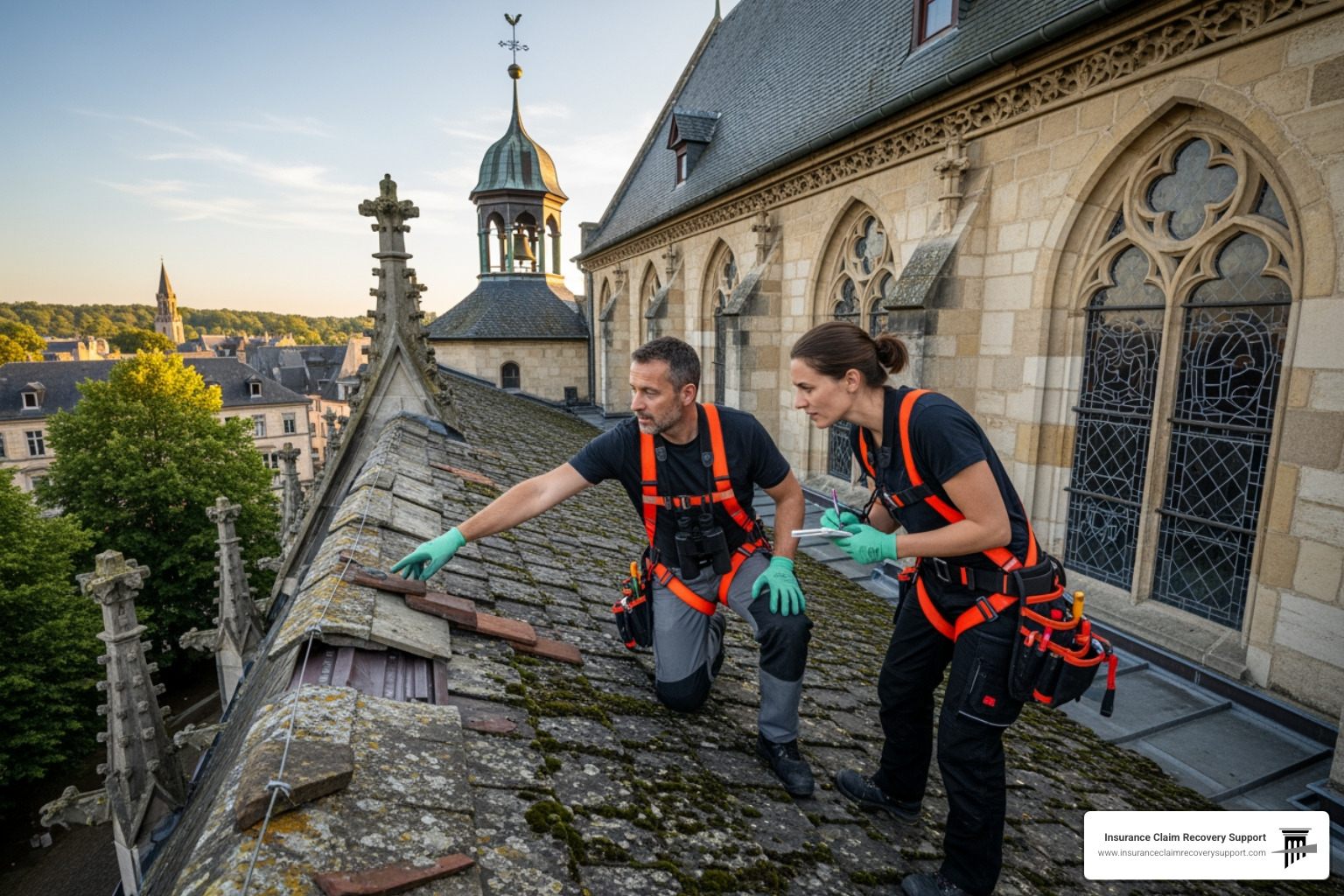
How to Mitigate Risk:
- Regular Maintenance: Conduct bi-annual roof inspections, clear gutters, check plumbing and HVAC systems, and ensure proper exterior drainage.
- Develop an Emergency Response Plan (ERP): Create a plan that identifies shut-off valve locations, key contacts (restoration company, public adjuster), and procedures for documenting damage.
Community Impact and Support:
Water damage disrupts services and takes an emotional toll on the congregation. It’s vital to have a plan for relocating services and maintaining ministry. When disaster strikes, you are not alone. Look for support from:
- Government Grants: After a declared disaster, agencies like FEMA may offer grants or support for rebuilding.
- Charitable Organizations: Some charitable trusts in the U.S. provide grants for essential repairs to historic or community-focused churches.
- Professional Associations: Your denominational body may offer resources or guidance for recovery.
Rebuilding Your Foundation with the Right Support
Facing church water damage is overwhelming, but your congregation can rebuild stronger. The path to recovery involves acting fast, documenting everything, understanding your policy, and seeking professional help.
The Role of a Public Adjuster: Your Advocate in Recovery
When your church has a major claim, the insurance process is daunting. A licensed public adjusting firm like Insurance Claim Recovery Support (ICRS) works exclusively for you, the policyholder—never the insurance company.
- Policyholder Advocacy: Our sole purpose is to advocate for your church’s best interests.
- Maximizing Settlements: Our expertise in damage assessment and policy interpretation helps religious institutions recover substantially more than initial offers, with increases ranging from 30% to 3,800%.
- Reducing Delays: We manage communication and documentation to prevent the frustrating delays that plague complex claims.
- Expert Assessment: We ensure nothing is overlooked, from hidden mold to the specialized needs of historical preservation.
Myth vs. Fact: Do I Need to Sue My Insurance Company?
- Myth: If the insurance company offers too little, my only option is to sue them.
- Fact: False. A public adjuster is your first and best line of defense. Our goal is to achieve a fair settlement through expert negotiation and meticulous documentation, avoiding costly and time-consuming litigation. We have a 90% success rate in settling claims without needing lawsuits or appraisal, ensuring a smoother, faster recovery for your church.
The resilience of your congregation is a powerful force, and your church deserves a full and fair recovery. We’re here to help you rebuild your foundation, ensuring your sacred space can continue its vital role. For professional assistance with your church water damage claim, connect with us at Get professional help with your Church Insurance Claim. We’re licensed in Texas, Florida, Georgia, Colorado, North Carolina, South Carolina, Oklahoma, Pennsylvania, Ohio, Indiana, Kansas, Kentucky, Maryland, Utah, Nebraska, and Nevada, and ready to assist churches in Austin, Dallas, Fort Worth, San Antonio, Houston, Lubbock, San Angelo, Amarillo, Lakeway, Bee Caves, Georgetown, and Waco.