What to Do Immediately After a Hail Storm Insurance Claim
If your property was just hit by a hailstorm, here’s a quick rundown on filing a Hail storm insurance claim:
For a practical companion resource on documenting this kind of loss, see the ICRS Hail & Wind Claim Guide. Coverage and next steps depend on the facts and policy terms.
- Document the damage immediately — Take photos and videos before making repairs.
- Review your insurance policy — Understand your coverage and deductible.
- Contact your insurance provider — Notify them as soon as possible to file your claim.
- Get professional estimates — Obtain multiple repair quotes from licensed contractors.
- Meet the insurance adjuster — Ensure a contractor is present during the inspection.
Hailstorms can cause serious damage that isn’t always clear right away. Even seemingly minor hail impacts can lead to costly leaks or structural damage down the road. And if you wait too long, your claim may be denied due to filing deadlines.
I’m Scott Friedson, a public adjuster with extensive experience settling hundreds of millions in Hail storm insurance claim cases for commercial and multifamily properties, hospitals, industrial parks, retail centers, and more. Let’s explore how you can ensure your claim goes smoothly and fairly.

Simple guide to Hail storm insurance claim terms:
– assistance with insurance claims
– insurance claim assistance for roofs in texas
– insurance claims dispute assistance
Understanding Hail Damage and Its Impact on Your Property
Hailstorms can be awe-inspiring to watch—but they’re not exactly something you want visiting your property. Those icy nuggets falling from the sky can range anywhere from pea-sized pellets to grapefruit-sized ice bombs. And when you consider they’re falling at speeds of around 44 to 72 mph, it’s easy to see why hailstorms can cause such significant damage.
In fact, a single severe hail event in the Dallas-Fort Worth area once led to a jaw-dropping $7 to $10 billion in insured losses alone. Texas often tops the charts for hail-related weather events, recording over 1,100 occurrences in one recent year according to the National Oceanic and Atmospheric Administration (NOAA).
Even hailstones smaller than an inch across can wreak havoc. According to the National Severe Storms Laboratory at NOAA, “Even a small stone (less than one inch in diameter) can fall at speeds of 25 mph, chipping paint, cracking windows, and denting roofs and hoods.”
The extent and type of damage your property sustains depend on a few key factors. First, the size of the hailstones is crucial. Typically, hailstones larger than about an inch (think quarter-sized or bigger) can cause substantial roof damage. Smaller stones might not seem scary, but at the speeds they travel, they can still chip paint, dent gutters, and crack windows.
Wind also plays a major role. Strong wind gusts can send hail sideways, increasing the damage to your property’s siding, windows, and even outdoor air conditioning units. And the longer the hailstorm lasts, the higher the likelihood you’ll have significant damage.
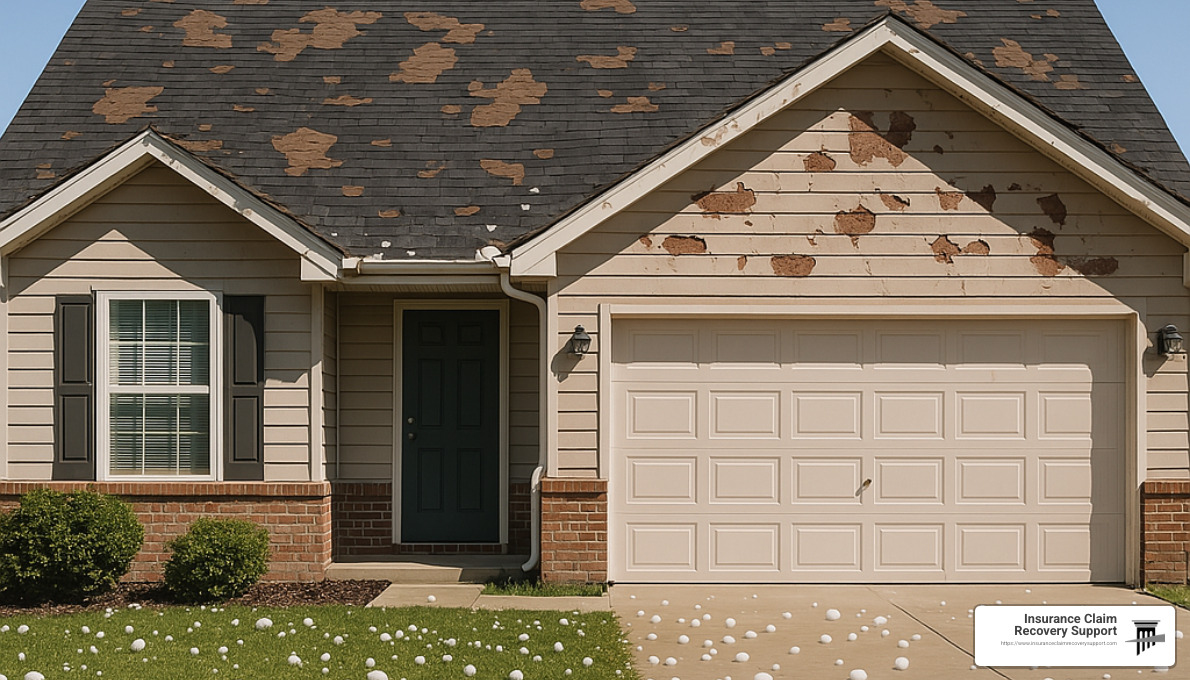
Of course, the materials your property is made of also influence how much damage you’ll see. Roofing materials like metal, asphalt shingles, ceramic tiles, and modified bitumen all react differently to hail impacts. For example, asphalt shingles might lose their granules (you might notice small granules collecting in your gutters), while metal roofs and gutters often show visible dents and punctures.
The truth is, hail damage isn’t always immediately obvious. Sometimes you’ll spot missing shingles or cracked tiles right away, but other signs might be subtle, like soft “bruised” spots on shingles when you press them gently or small circular marks on a flat roof. You could also see damage in less obvious areas, like flashing or downspouts, which can lead to leaks and other issues down the line.
One critical point many property owners overlook: you don’t need a visible leak to have valid roof hail damage. Many people mistakenly believe that if they don’t see water inside their home or building, then their roof must be fine. Unfortunately, hail impacts often weaken roofing materials, creating tiny cracks and vulnerabilities that might not lead to leaks for months—or even years—after the storm.
Experienced public adjuster Art Jansen notes: “Hail is common during this time of year, however sometimes the damage is not immediately seen. It may take up to three years after a hailstorm for a roof to leak, so many business owners may not even know their property was damaged until it’s too late to file an insurance claim.”
Here’s a useful rule of thumb: if other items around your property—like outdoor furniture, garage doors, gutters, screens, siding, landscaping, or even your air conditioning unit—show signs of hail damage, there’s a very good chance your roof has also sustained damage. Even if you don’t spot obvious problems, it’s always wise to get a professional inspection after any significant hailstorm.
The sooner you can identify and document damage, the easier it will be to steer your Hail storm insurance claim and ensure you receive the settlement you deserve.
Does Homeowners Insurance Cover Hail Damage?
Here’s some reassuring news: standard homeowners insurance typically covers hail damage in most cases. When a hailstorm strikes, your policy often considers it a covered peril under your dwelling coverage—that’s the portion of your insurance designed to repair or replace the structure of your home.
In practical terms, this means your insurance usually covers hail-related damage to your roof, siding, windows, attached structures like garages, and even damage inside your home—provided the hail created an opening that led to interior damage. Personal belongings damaged by hail entering your home are also generally protected.
But (and here’s where things can get a bit tricky) insurance policies are not created equal. If you live in a hail-prone state like Texas, your insurer might have specific rules, exclusions, or limits regarding hail damage claims. That’s why it’s extremely important to carefully review your policy details and understand exactly what’s covered—and what’s not.

Understanding Your Policy’s Hail Damage Coverage
The secret to navigating your Hail storm insurance claim smoothly is knowing what your policy says about hail damage coverage.
First up: deductibles. In hail-heavy states, insurance companies often set up special deductibles just for wind and hail claims. Instead of your standard deductible, you might see a separate, higher deductible specifically for hail damage. This deductible could be a set amount—like $2,500 or $5,000—or a percentage of your home’s insured value, typically between 1% and 5%.
So, for instance, if your home is insured for $300,000 and your policy lists a 2% hail deductible, you’re responsible for the first $6,000 of repairs before your insurance kicks in. Being aware of this ahead of time can save you some serious financial surprises down the line.
Another key policy detail involves the difference between cosmetic and functional damage. Some insurance providers have begun distinguishing between these two types of damage. Functional damage is anything affecting your home’s structure or ability to keep out the elements—like holes, cracks, or missing shingles. Cosmetic damage, on the other hand, is superficial—think small dents in your metal roof or siding that don’t actually compromise your home’s ability to protect you.
Here’s the catch: newer policies sometimes exclude cosmetic damage entirely. That means your insurer won’t cover repairs for something that simply looks bad but still works just fine. Understanding this distinction early can save you frustration later.
Finally, your policy will specify how payouts are calculated. Policies generally fall into two categories: Replacement Cost Value (RCV) or Actual Cash Value (ACV).
With a Replacement Cost Value (RCV) policy, your insurance covers the full cost to repair or replace the damaged property with similar materials—minus your deductible. In contrast, an Actual Cash Value (ACV) policy factors in depreciation. This means if your 10-year-old roof costs $30,000 to replace, an ACV policy might only pay around $15,000 because of wear and tear, minus your deductible. Clearly, an RCV policy is often better in the long run, even if it costs a little more upfront.
As Scott Friedson of Insurance Claim Recovery Support likes to remind homeowners: “If your property has suffered in a hailstorm, hail damage insurance claims can help you bounce back financially.” But knowing exactly what your coverage includes (and doesn’t) can make all the difference in getting the maximum amount you’re entitled to.
Steps to Filing a Hail Storm Insurance Claim
Experiencing a hailstorm can leave you feeling overwhelmed and unsure of what to do next. Don’t worry, though—you’re not alone. We’ll guide you step-by-step through the process of filing your hail storm insurance claim to help ensure you get a fair and efficient settlement.
Step 1: Document the Damage Immediately
The very first thing you should do after a hailstorm hits is carefully document the damage. Hail melts quickly, and your insurance company will need concrete evidence of the storm’s impact on your property, so act right away.
As insurance experts often say, “Take extensive photographs from the ground to document damage.” Grab your smartphone or camera and snap date and time-stamped photos and videos of all visible damage. Capture multiple angles of your roof, windows, siding, gutters, and outdoor belongings. If possible, safely gather a few hailstones and photograph them next to common items (like coins or rulers) to clearly show their size.
You’ll also want to create a detailed written inventory listing each damaged item, along with brief descriptions. Saving local weather reports from the day of the storm adds additional credibility to your claim. And don’t forget to jot down notes any time you talk with your insurance company, including names, dates, and conversation summaries.
Safety first! Please don’t climb onto your roof to document damage; leave that to trained professionals with proper safety gear. Your documentation should always be done safely from ground level.
Step 2: Contact Your Insurance Company Promptly
Once you’ve documented the damage, notify your insurer promptly. Claim-reporting deadlines depend on the policy and the type of coverage; do not assume you have two years from the storm date to report a hail claim. Check the policy and ask the insurer to confirm the applicable deadline in writing.
Before picking up the phone, take a few minutes to review your policy details. Get familiar with your coverage, deductible, and any specific requirements related to hail damage claims. When contacting your insurer, ask for your claim number and the name of your assigned adjuster. They’ll explain the next steps and let you know if further documentation is needed.
If your property needs urgent temporary repairs (covering broken windows or placing tarps over holes in the roof), it’s okay to proceed—but always keep receipts. Often, these temporary repairs are reimbursable under your policy.
Step 3: Obtain Repair Estimates
Next, gather repair estimates from several licensed local contractors. Why is this important? Having multiple quotes gives you a clear picture of realistic repair costs and provides crucial leverage during negotiations with your insurance company.
Aim for at least three reputable contractors who have solid experience with hail damage repairs and insurance claims. Check their credentials, references, and online reviews carefully. It’s tempting to choose the first friendly face that knocks on your door after a hailstorm—but beware of storm chasers who may perform substandard work or scams.
In Texas, the #NoRoofScams campaign provides helpful tips to avoid contractor fraud. Protect yourself by avoiding contractors who:
- Offer to cover your deductible (this practice is illegal in Texas!)
- Pressure you into signing a contract on the spot
- Request full upfront payment
- Lack a local presence or references
Instead, choose trustworthy professionals familiar with the insurance claims process, ensuring you’re in good hands when repairing your roof storm damage insurance.
Step 4: Meet with the Insurance Adjuster
After your claim is filed, your insurance company will send an adjuster to inspect your property and assess the damage. This step is vital since their assessment directly affects your payout amount.
To ensure your claim is evaluated fairly, have a trusted contractor present during the adjuster’s visit. Contractors often notice subtle damage that adjusters might overlook, helping you get a complete and accurate damage assessment.
During the inspection, share copies of your photos, videos, inventories, and repair estimates with the adjuster. Feel free to ask questions about their observations and take notes on everything discussed. Remember—the adjuster works for the insurance company, not you, and their assessment might not always align with your repair needs.
If you feel their evaluation misses important damage, don’t hesitate to politely request a re-inspection or consider hiring a public adjuster to advocate on your behalf.
Step 5: Receive Your Insurance Payout
Once the insurance adjuster completes their inspection, you’ll receive your insurance company’s settlement offer. Typically, payments happen in one of two ways:
- Single payment—One check covering the total approved amount, minus your deductible.
- Multiple payments—An initial payment based on actual cash value, followed by additional payments once repairs are completed. This method is common under replacement cost policies.
If your home has a mortgage, your lender’s name might also appear on the check. In this case, work closely with your mortgage company to have the funds released promptly.
Carefully review your payout offer before accepting it. If the amount seems insufficient compared to your contractor estimates, it’s okay to ask your insurer for clarification on their calculations. Submit additional supporting documentation if needed, and negotiate directly with the claims department. At this point, many property owners find significant value in hiring a public adjuster to assist with negotiations and represent their best interests.
Even after accepting an initial payment, your claim might remain open if you uncover more damage during repairs. Most insurers allow for supplemental claims, providing flexibility if unexpected issues arise.
By following these straightforward steps, you’ll be well-equipped to steer your hail storm insurance claim and secure the funds you need to restore your home and peace of mind. You’re never alone in this process—professional help from experienced public adjusters like us at Insurance Claim Recovery Support is always available to guide you every step of the way.
How to Maximize Your Hail Damage Insurance Claim
When your home gets hit by a hailstorm, you want to ensure you’re getting every penny you deserve from your claim. Unfortunately, just filing the paperwork and hoping for the best usually doesn’t cut it. Maximizing your settlement involves being proactive, prepared, and knowing exactly how to steer the claims process. Let’s explore some proven strategies that can help you secure the best possible outcome.
Tips for a Successful Hail Storm Insurance Claim
The key to a successful hail storm insurance claim isn’t just submitting paperwork—it’s about being thorough, patient, and informed.
First and foremost, document everything in detail. Immediately after the storm, take clear, date-stamped photos and videos of all damages from multiple angles. Include measurements or common objects like coins to show scale. The more evidence you have, the stronger your claim will be.
Next, fully understand your policy. Many homeowners don’t realize all the coverage they’re actually entitled to. For example, if your roof needs replacing and the siding can’t be matched, your policy might cover matching siding replacements too. So, carefully read the policy and don’t leave money on the table.
When the insurance company offers their first settlement, don’t rush to settle. Initial offers often fall short of the actual repair costs, especially when damages aren’t immediately obvious. Take time to thoroughly assess all damages. If you’re unsure, get multiple estimates from licensed contractors to ensure you’re getting a fair deal.
Throughout the entire claims process, it’s important to keep detailed records. Maintain a claim journal that notes dates, times, conversations, and the names of everyone you speak with from the insurance company or your contractors. This paper trail can be a lifesaver in case of disputes later on.
Another critical step is to be present for all inspections. Walking through your property with the insurance adjuster ensures no damage goes unnoticed. It’s a good idea to have your trusted contractor present too, as they can point out issues the adjuster might otherwise miss.
Don’t forget about deadlines within your policy—mark those dates on your calendar. Some insurance policies have strict time limits for filing claims and supplemental claims. Missing a deadline can mean missing out on compensation.
Lastly, always think about the long-term. Some hail damage, especially to roofs or siding, may not show up as leaks or structural issues until months or even years down the road. It’s essential to make sure your claim accounts for possible future problems stemming from the hailstorm.
For detailed guidance in handling the complexity of your claim, visit our page on Hail Damage Adjuster.
Working with a Public Insurance Adjuster
Navigating a hail damage insurance claim can feel overwhelming, especially when you’re dealing with adjusters from your insurance company. That’s why many property owners in Texas—from Austin and Dallas to San Antonio and Houston—choose to work with a public insurance adjuster instead.
A public adjuster is different from the adjuster sent by your insurance company. Your insurer’s adjuster represents the interests of the insurance company, meaning they’re focused on protecting their company’s bottom line. A public adjuster, on the other hand, exclusively advocates for you, the policyholder.
At Insurance Claim Recovery Support, we specialize in representing property owners throughout Texas, including Fort Worth, Lubbock, San Angelo, Waco, Round Rock, Georgetown, and Lakeway. Our experienced team thoroughly evaluates your property, professionally documents your damage, and negotiates skillfully with your insurer, ensuring you receive fair compensation.
Hiring a public adjuster provides several key benefits. With their expert evaluation, you’ll have a clear understanding of the full extent of your property damage—even hidden issues you might overlook. They handle all the detailed documentation and complex negotiations, saving you countless hours and headaches. Most importantly, having a skilled public adjuster on your side often results in significantly higher settlements compared to those who go it alone.
Scott Friedson, an experienced public adjuster, sums it up best: “If your property has suffered in a hailstorm, hail damage insurance claims can help you bounce back financially—but swift, well-documented action is key.”
Public adjusters usually work on a contingency fee basis, meaning they’re paid a percentage of your settlement amount. It’s a win-win arrangement that aligns their goals directly with yours—securing the best possible settlement.
Learn more about how our public adjusters can help you through our Public Adjuster Services.
Dealing with Claim Denials or Underpayment
Even when you do everything right, insurance companies sometimes deny valid claims or offer settlements that fall short of covering repair costs. While it can be frustrating, don’t lose hope—you still have options and resources available.
Claim denials or underpayments can happen for several reasons. Some insurers claim the damage existed before the storm (pre-existing damage), attribute the damage to age or poor maintenance (normal wear and tear), classify the damage as purely cosmetic, argue about missed filing deadlines, or reference specific policy exclusions.
If your claim is denied or the settlement feels unfair, start by asking for a detailed written explanation from your insurance company. Then, carefully review your policy to confirm your rights and coverages. Gather additional evidence—like expert opinions or contractor assessments—to strengthen your case.
Filing a formal appeal with your insurer is often the next step. Clearly state your reasons, provide your additional evidence, and make a strong case. If you haven’t already, consider hiring a public adjuster—they can be invaluable in navigating appeals and negotiations.
If the insurance company remains uncooperative, filing a complaint with your state’s Department of Insurance can add pressure on the insurer. And if none of these methods work, consulting an attorney specializing in insurance claims may be necessary.
Insurance companies often count on policyholders giving up after initial denials or low offers. But persistence really does pay off. For more details and support dealing with denied or undervalued claims, visit our resource on Denied Storm Damage Insurance Claim.
When it comes to a hailstorm insurance claim, knowledge and persistence are your best allies. With preparation, patience, and sometimes a bit of professional help, you’ll greatly increase your chances of receiving the settlement you rightly deserve.
Frequently Asked Questions about Hail Storm Insurance Claims
How long do I have to file a Hail Storm Insurance Claim?
One of the most common questions we get after a hailstorm is about how long you have to submit your hail storm insurance claim. The answer can vary depending on your insurance policy and state regulations, but generally speaking, it’s best to act fast.
Check your policy for the notice and claim-filing requirements that apply to your loss. Some policies set a one-year claim-filing period, while others differ. Notify your insurer promptly and keep a record of when and how you reported the damage.
A deadline to sue is different from the deadline to report a claim. Both can depend on the policy, the insurer, and the facts of the dispute. If a deadline is in question, have the policy and claim history reviewed promptly by a qualified professional.
The best approach? File your claim immediately after the storm. Prompt filing helps clearly connect the damage to the specific storm event. It also prevents further damage that might result from letting the initial issues go unrepaired. Waiting until you see visible problems like leaks could give the insurance company grounds to argue you didn’t mitigate (limit) the damage.
Bottom line: Don’t wait! Even if the damage seems minor at first glance, getting your claim in sooner rather than later can make all the difference.
Will filing a Hail Storm Insurance Claim increase my insurance premiums?
This is a topic that understandably causes concern for many Texas homeowners. The good news? Filing a hail damage claim usually doesn’t immediately trigger a premium increase—especially if it’s your first one. That’s because hail claims fall under the “Act of God” or “no-fault” category, meaning they’re not caused by anything you did.
However, premium increases aren’t always black-and-white. A few factors can come into play. Multiple claims within a short window (think 3-5 years) might lead your insurance carrier to bump up your rates. Similarly, very large claims or frequent severe weather activity in your area can also factor into rate hikes.
Interestingly, even if you don’t file a claim yourself, widespread hail damage in major Texas cities such as Austin, Dallas, Fort Worth, San Antonio, or Houston might still cause premiums to rise across the board. Insurers often adjust their rates based on overall risk assessment for certain regions.
So, should you file a claim or pay out-of-pocket? Consider the cost of repairs versus your deductible. If repair costs are just barely higher than your deductible, you might want to handle it yourself. But if the damages are significant, filing a claim usually makes the most sense financially—even if there’s a small risk of a premium increase later on.
The bottom line here: While filing doesn’t necessarily mean higher premiums, understanding your policy details and weighing your options carefully can help you make the best decision.
What should I do if my Hail Storm Insurance Claim is denied?
Having your hail damage claim denied can be incredibly frustrating, especially when you’re counting on your insurance to get your property back in shape. But don’t despair—getting denied isn’t always the end of the story. Often, insurers initially deny claims hoping homeowners will just accept the decision.
First things first, take a deep breath and carefully read through the denial letter. Understand exactly why your insurer denied your claim. Maybe they cited pre-existing damage, normal wear-and-tear, or policy exclusions. Once you know their reason, grab your insurance policy and compare the denial letter against the fine print of your coverage. Sometimes claims are denied due to misunderstandings or simple mistakes.
Next, gather additional evidence to support your case. Weather reports proving hail fell in your area, statements from neighbors who’ve experienced similar damage, and expert evaluations from trusted contractors are all helpful. Don’t hesitate to request a re-inspection by another adjuster—sometimes getting fresh eyes on the problem can reverse the denial.
If you’re still not getting anywhere, filing a formal appeal with your insurance company is your next option. Follow their appeals process closely, submitting all of your additional documentation clearly and promptly.
Not making progress? Consider working with an experienced public adjuster—like our team at Insurance Claim Recovery Support. A public adjuster can advocate for you, building a stronger case with their professional expertise. If all else fails, filing a formal complaint with the Texas Department of Insurance or consulting an attorney who specializes in insurance claims can help you push forward.
At Insurance Claim Recovery Support, we’ve helped countless homeowners across Texas cities like Lubbock, San Angelo, Waco, Round Rock, Georgetown, and Lakeway successfully steer denied or underpaid claims. Persistence, patience, and proper documentation are key—so don’t give up!
Hail claim help for larger properties
For help with a commercial or multifamily loss, see our hail damage insurance claim support page. The Hail & Wind Claim Guide covers documentation, and this documented industrial hail and wind claim result shows how a complex property loss was presented. Results depend on each claim’s policy and facts.
Conclusion
Navigating a Hail storm insurance claim might seem overwhelming at first, especially when you’re dealing with property damage on top of everything else. But with the right knowledge, timely action, and expert guidance, you can secure the financial support you need to get your property back to its pre-storm condition.
The steps you take immediately after a hailstorm can make a significant difference in the outcome of your claim. Acting quickly by thoroughly documenting your damage—through clear photos, videos, and written descriptions—helps build a strong case for your insurance company. Contact your insurer promptly to meet policy deadlines and get the claims process underway without delays.
Understanding your insurance policy is crucial. Make sure you know your deductible, what’s covered under your dwelling coverage, and whether your policy distinguishes between cosmetic and functional hail damage. Being informed helps you avoid unwanted surprises and ensures you receive the full compensation you’re entitled to.
One smart move is to enlist professional help. Licensed, reputable contractors can provide accurate repair estimates and help identify hidden damage a casual inspection might miss. Working alongside a knowledgeable contractor during the insurance adjuster’s visit often helps secure a fairer assessment.
Additionally, partnering with a public adjuster can greatly increase your chances of receiving an optimal settlement. At Insurance Claim Recovery Support, we proudly advocate for property owners throughout Texas—including Austin, Dallas, Fort Worth, San Antonio, Houston, Lubbock, San Angelo, Waco, Round Rock, Georgetown, Lakeway, and beyond. We help policyholders steer the complexities and frustrations of insurance claims, ensuring their interests are front and center, every step of the way.
If your insurance company denies your claim or offers less than what you need, don’t lose hope or settle for less. Insurance companies sometimes count on policyholders feeling discouraged and walking away. But you have options—disputing your insurer’s decision, filing an appeal, and bringing in professional assistance from a public adjuster or legal counsel can turn things around.
Hail damage can be deceptive. Even minor impacts from hailstones can weaken the integrity of your roof or siding, triggering costly leaks and structural issues down the road. That’s why a comprehensive professional inspection soon after a storm is so important. It’s always better to be proactive than to find problems when it’s too late.
For Texans, preparing for hail damage isn’t just wise—it’s practically required. Texas consistently ranks #1 for hail-related insurance claims, so having a clear strategy is essential to protecting your property investment.

At Insurance Claim Recovery Support, our mission is simple: we stand by your side throughout the hail damage claim process. As Scott Friedson, our expert public adjuster, often says, “If your property has suffered in a hailstorm, hail damage insurance claims can help you bounce back financially.” But the key is knowing exactly how to document, file, and negotiate your claim.
To learn more about how we can support you through your claim, visit our dedicated resource page on Hail Damage Claims.
When hail hits home, you don’t have to go it alone. With thorough documentation, timely action, and the right team advocating for you, you’ll be well-equipped to restore your property and gain peace of mind.
Related hail-claim resources
For roof-specific documentation and policy issues, visit our roof hail damage claim guide. You can also browse documented ICRS claim results.