What Every Property Owner Must Know About Hurricane Classification
Hurricane classification is the system meteorologists use to rate a storm’s intensity — and understanding it can mean the difference between a well-prepared property and a catastrophic, underinsured loss.
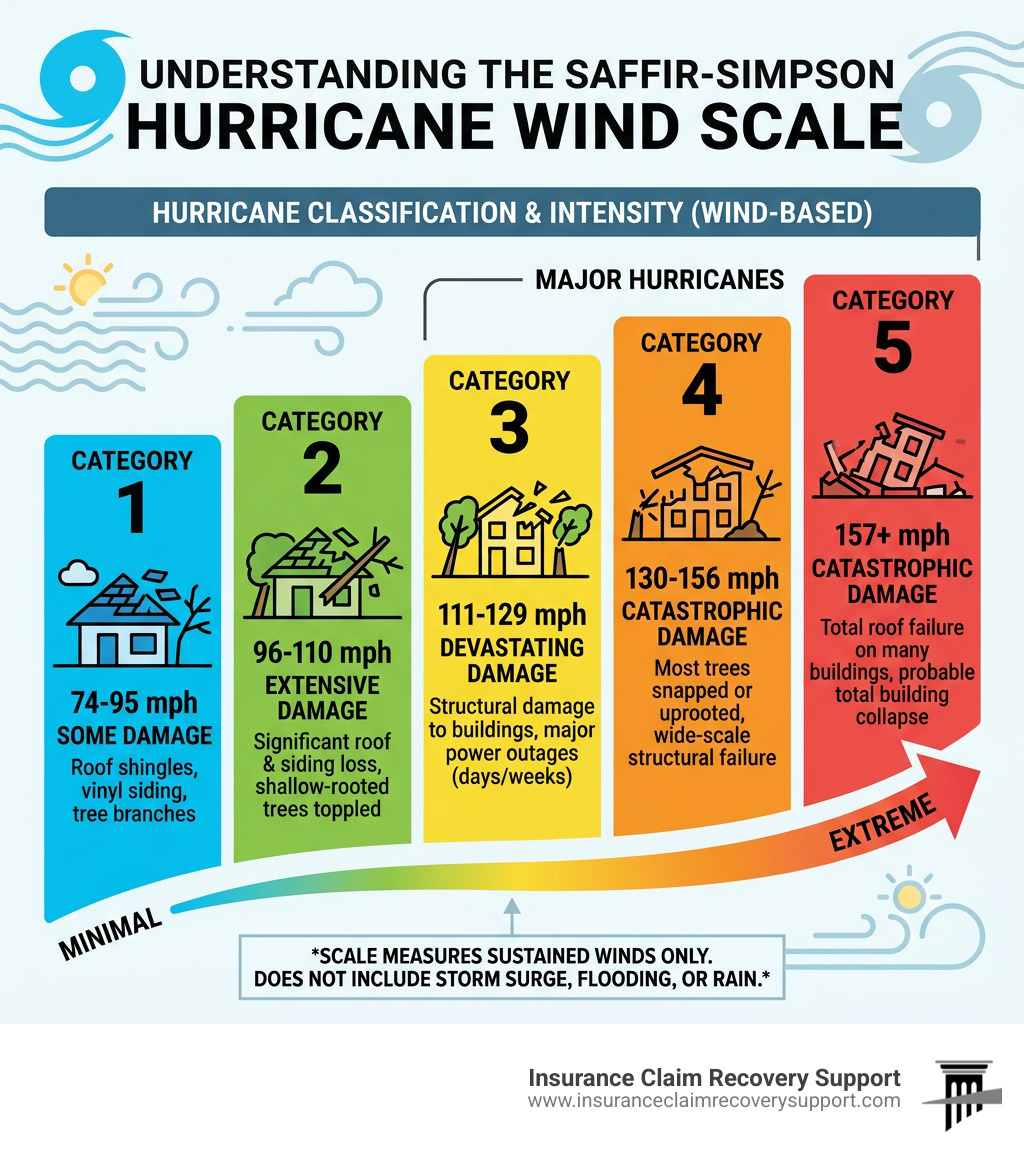
Here’s a fast-reference breakdown of the official classification system:
| Category | Wind Speed | Damage Level |
|---|---|---|
| 1 | 74-95 mph | Some damage — roof, siding, trees |
| 2 | 96-110 mph | Extensive damage — major roof and siding loss |
| 3 | 111-129 mph | Devastating — structural damage, major power outages |
| 4 | 130-156 mph | Catastrophic — most trees snapped, widespread structural failure |
| 5 | 157+ mph | Catastrophic — total roof failure, building collapse likely |
✅ Categories 3, 4, and 5 are classified as “major hurricanes” — capable of catastrophic wind damage and significant loss of life from wind alone, before storm surge or flooding even enters the picture.
But here’s what most commercial and multifamily property owners get wrong: a storm’s category number is only part of the story. Hurricane Sandy was a Category 1 at landfall and caused nearly $86 billion in damage. Hurricane Helene hit as a Category 4 and damaged or destroyed more than 125,000 housing units in western North Carolina alone — many of them far from the coast. The number on the scale tells you about wind. It says nothing about storm surge, rainfall flooding, or what your insurance policy actually covers.
That gap between what a category implies and what a storm actually does to your property — and your claim — is exactly what this guide is designed to close.
I’m Scott Friedson, a multi-state licensed public adjuster and CEO of Insurance Claim Recovery Support (ICRS), with more than 15 years of experience handling large-loss hurricane classification-related property damage claims for commercial and multifamily owners across the country. Over 500+ claims and $250 million in settlements, I’ve seen how misunderstanding a storm’s true impact — beyond its category — leaves property owners severely underpaid.
Hurricane classification further reading:
The Science of Hurricane Classification
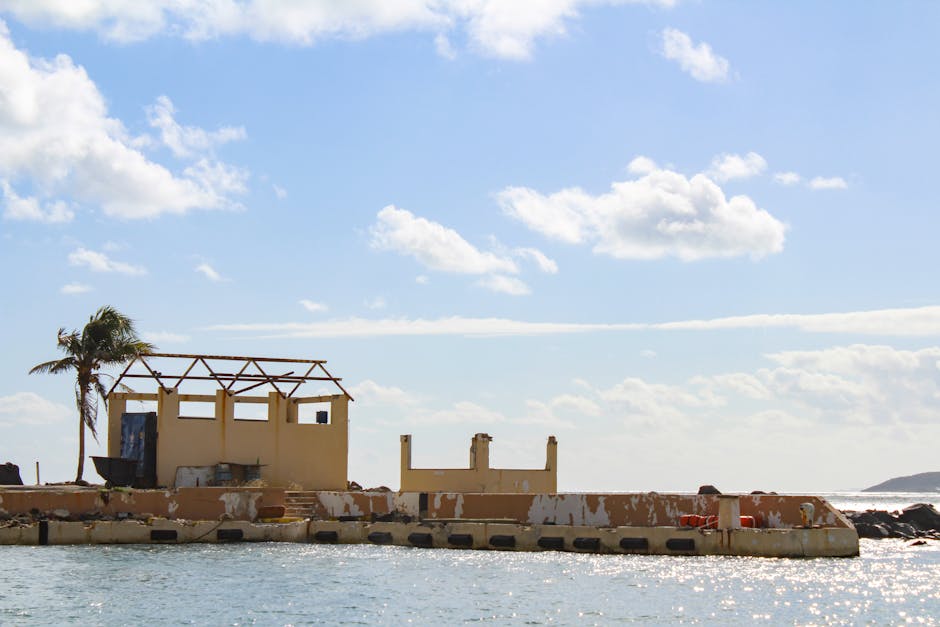
When we talk about hurricane classification, we are almost always referring to the Saffir-Simpson Hurricane Wind Scale. Developed in 1969 by civil engineer Herbert Saffir and meteorologist Robert Simpson, this scale was born out of a need to describe the potential impact of tropical cyclones on human-made structures. Interestingly, Saffir originally created the scale to help the United Nations study low-cost housing in hurricane-prone areas.
The scale is based on a 1 to 5 rating determined solely by a hurricane’s maximum sustained wind speed. Specifically, it measures 1-minute sustained winds at a height of 10 meters (33 feet) above the surface. While the scale used to include barometric pressure and storm surge ranges, the National Hurricane Center (NHC) modified it in 2009 and 2012 to focus strictly on wind. Why? Because factors like storm surge and rainfall are highly dependent on local geography and the storm’s physical size, making them “scientifically inaccurate” to tie directly to a wind speed number.
For those of us managing assets in the atlantic-hurricane-season, this scale is our primary yardstick. It tells us what kind of structural “rupturing damages” to expect. According to scientific research on the Saffir-Simpson Scale, once winds exceed 155 mph, the damage is considered total regardless of how well a building is engineered.
The Saffir-Simpson Hurricane Classification System
The scale begins the moment a tropical cyclone reaches sustained winds of 74 mph. Anything lower is classified as a tropical storm (39-73 mph) or a tropical depression (38 mph or less).
- Category 1 (74-95 mph): Very dangerous winds will produce some damage. You’ll see damage to roofs, shingles, vinyl siding, and gutters. Large branches will snap, and shallowly rooted trees may be pushed over.
- Category 2 (96-110 mph): Extremely dangerous winds will cause extensive damage. Well-constructed frame homes could sustain significant roof and siding damage. Many shallowly rooted trees will be snapped or uprooted, and near-total power loss is expected.
- Category 3 (111-129 mph): Devastating damage will occur. This is where we enter “Major Hurricane” territory. Electricity and water will be unavailable for several days to weeks after the storm passes.
- Category 4 (130-156 mph): Catastrophic damage will occur. Well-built homes can lose most of the roof structure and/or some exterior walls. Most of the area will be uninhabitable for weeks or months. This is how-hurricane-florence-compares-to-other-storms in terms of sheer wind force, though Florence’s primary legacy was its record-breaking rainfall.
- Category 5 (157+ mph): Catastrophic damage on a total scale. A high percentage of framed homes will be destroyed, with total roof failure and wall collapse.
Major Hurricanes vs. Lower Categories
In hurricane classification, the jump from Category 2 to Category 3 is a massive threshold. Category 3, 4, and 5 storms are officially termed “Major Hurricanes.” This isn’t just a fancy label; it’s a warning that the storm is capable of devastating to catastrophic wind damage and significant loss of life.
Consider the statistics: of the 45 hurricanes that have reached Category 5 status in the Atlantic, only 10 had wind speeds at 180 mph or greater. These are rare but world-altering events. Hurricane Michael (2018) and Hurricane Andrew (1992) are prime examples of the absolute destruction these major storms bring to commercial and multifamily assets. More recently, hurricane-ian-property-damage-insurance-claims highlighted how a high-end Category 4 storm can effectively dismantle modern infrastructure, leaving property managers with months of recovery work.
Beyond Wind: Storm Surge and Flooding
As public adjusters, we often have to remind our clients that the Saffir-Simpson scale is a “wind scale,” not an “everything scale.” It ignores the deadliest aspect of these storms: storm surge.
Storm surge is the abnormal rise of water generated by a storm, over and above the predicted astronomical tide. In the Gulf Coast region, 27% of major roads are at or below 4 feet in elevation. When a Category 5 storm brings a surge greater than 18 feet, those roads — and the buildings along them — don’t just get wet; they are inundated.
While wind classification gets the headlines, storm surge warnings are often more critical for life safety. A “Storm Surge Watch” means life-threatening inundation is possible within 48 hours, while a “Warning” means it is expected within 36 hours. Even a Category 1 storm can produce a “High” (6-9 ft) or “Extreme” (9+ ft) surge depending on the slope of the continental shelf. We’ve seen this in texas-floods-2025, where rainfall and surge caused more commercial loss than wind ever could.
Global Variations in Hurricane Classification
While we use Saffir-Simpson in the Atlantic and Eastern Pacific, the rest of the world has its own dialect.
- Typhoons: In the Western North Pacific, the same phenomenon is called a typhoon. If winds exceed 150 mph, they are called “Super Typhoons.”
- Cyclones: In the South Pacific and Indian Ocean, they are simply called cyclones.
The biggest hurdle in global comparison is the “averaging period.” The U.S. uses a 1-minute average for sustained winds. Most other countries, following World Meteorological Organization (WMO) guidelines, use a 10-minute average. Because a 1-minute average captures higher peaks, U.S. wind speeds usually look about 14% higher than international reports for the exact same storm. You can find more scientific research on global cyclone scales to see how these metrics vary by basin.
Watches vs. Warnings: Timing Your Response
Understanding the timing of NHC alerts is vital for protecting multifamily complexes and commercial shopping centers.
- Hurricane Watch: Issued when hurricane-force winds (74+ mph) are possible within 48 hours. This is your cue to begin window boarding and securing loose equipment.
- Hurricane Warning: Issued when hurricane-force winds are expected within 36 hours. At this point, all preparations should be complete, and evacuation orders should be followed immediately.
A hurricane-warning may stay in effect even if winds drop below hurricane strength if other hazards like storm surge or flooding remain a threat to life and property.
The “Category 6” Debate and Scale Limitations
With the rise of “super-storms” like Hurricane Patricia (which saw winds of 215 mph), there is an ongoing debate about adding a Category 6 to the hurricane classification system. Some scientists propose that any storm with winds exceeding 192 mph should be a Category 6.
However, the co-creator of the scale, Robert Simpson, argued against it. His logic was simple: the scale is designed to measure damage to human structures. Since Category 5 winds already cause “maximum rupturing damage” (total destruction), a Category 6 wouldn’t provide any additional practical information for emergency responders or building owners. If the building is already gone at 157 mph, it doesn’t matter much to the insurance claim if the winds were actually 195 mph.
We saw the limits of the scale during the damage-assessment-hurricane-laura, where the sheer speed of intensification caught many off guard, proving that the rate of change is often as dangerous as the category itself.
Navigating the Aftermath: Classification vs. Reality
When the clouds clear and you’re standing in front of a mangled multifamily roof or a flooded retail center, the hurricane classification doesn’t matter as much as your insurance policy’s “Declarations Page.”
Insurance companies often use the storm’s category as a psychological tool. They might suggest that because a storm was “only a Category 1,” the damage couldn’t possibly be structural. We know better. We’ve seen Category 1 storms like Sandy or Irene cause billions in losses because of their size and duration.
Public Adjusters vs. Insurance Company Adjusters
When you file hurricane-damage-claims, the insurance company sends their own adjuster. It is important to remember that they represent the insurance company’s interests — not yours.
At Insurance Claim Recovery Support (ICRS), we represent policyholders only. We specialize in large-loss commercial and multifamily claims. While an insurance company might offer a settlement that barely covers the deductible, our goal is to maximize your settlement by documenting every inch of damage, from the roof membrane to the business interruption losses.
Lawsuit vs. Public Adjuster: A Better Way
Many property owners think their only options are to accept a low-ball offer or sue the carrier. Litigation is expensive, takes years, and often leaves the property in disrepair during the process.
The ICRS Approach: We have a 90% settlement success rate without the need for unnecessary lawsuits. By bringing in a licensed public adjuster early, we can often resolve the claim through high-level negotiation and expert documentation, avoiding the “appraisal” or “litigation” traps entirely.
Fact vs. Myth: Hurricane Damage
- Myth: “My property is inland (like Austin or Dallas), so I don’t need to worry about hurricane classification.”
- Fact: Hurricane Helene proved that inland flooding and wind can be just as destructive as coastal landfalls. We serve clients across Texas (Houston, San Antonio, Fort Worth) and many other states who face massive losses far from the beach.
- Myth: “If the roof looks okay from the ground, there is no wind damage.”
- Fact: High-category winds often “uplift” roof membranes without tearing them, destroying the structural integrity of the roof while leaving it looking “fine” to the untrained eye.
Why Readiness Saves Settlements
Whether you are in Lakeway, Georgetown, or the heart of Houston, being “Hurricane Fluent” means knowing that the category is just the beginning of the conversation. If you own or manage commercial assets, your recovery depends on having an advocate who understands the engineering of a building as well as the fine print of an insurance policy.
For more information on how to protect your assets and ensure a fair recovery, explore more info about hurricane classification and recovery.
If your property has been impacted by a storm, don’t wait for the insurance company to tell you what they think the damage is worth. Contact us at Insurance Claim Recovery Support. We serve Texas, Florida, the Carolinas, and beyond, ensuring that commercial and multifamily owners get the settlements they deserve to rebuild and move forward.